








 Contact Platform Support
 Help Center
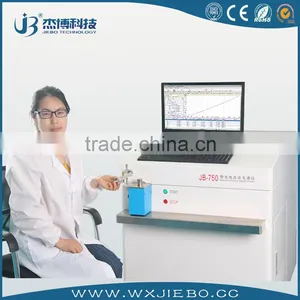
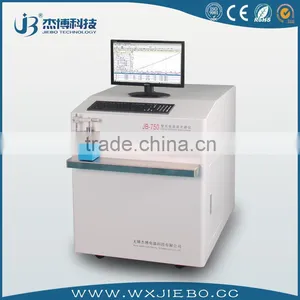
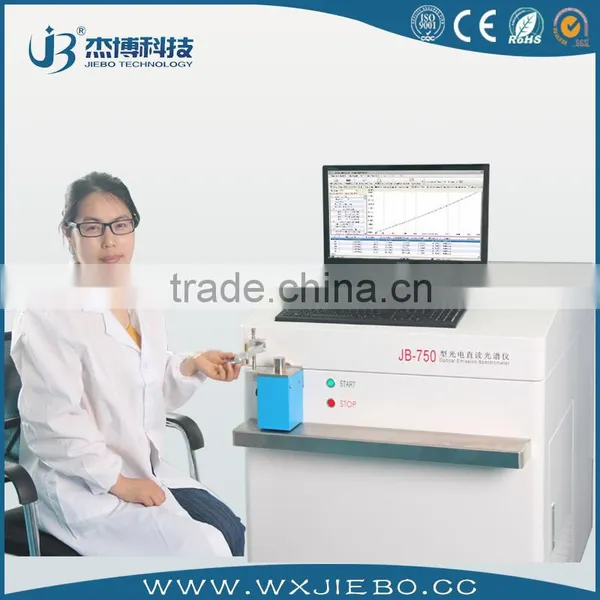
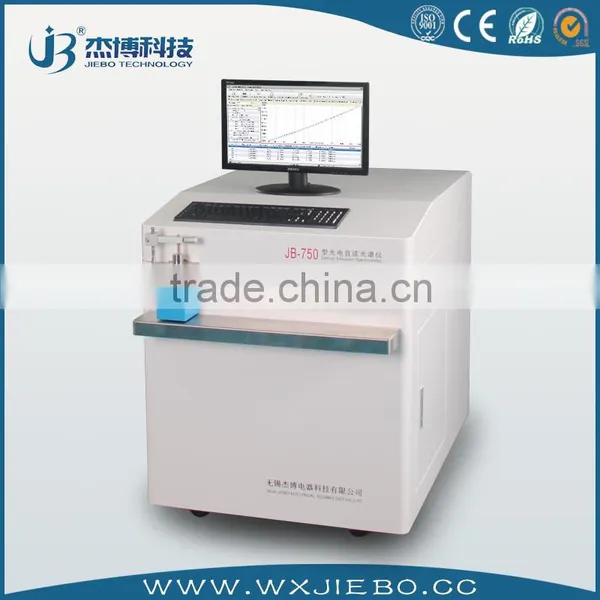
Ferrous Metal Spectrometer for Cast Iron Model JB-750







Related Products
-
 Ferrous Metal Spectrometer for Ferrous MatrixUS$ 10,000 - 25,000MOQ: 1 Set
 -
Ferrous Metal Spectrometer With Dependable PerformanceUS$ 10,000 - 25,000MOQ: 1 Set
-
Superior Ferrous Metal Spectrometer Used in Fe AlloyUS$ 10,000 - 25,000MOQ: 1 Set
-
Hot Sales Ferrous Metal SpectrometerUS$ 10,000 - 25,000MOQ: 1 Set
-
JB-1000 Inductively Atomic Emission Spectrometer With High AccuracyUS$ 15,000 - 35,000MOQ: 1 Set
Ferrous metal spectrometer for cast iron model JB-750
Introduction
Optical emission spectroscopy (OES), also called atomic emission spectroscopy (AES) or arc spark emission spectroscopy, is an important tool for fast and accurate elemental analysis of metals and semiconductors.
Optical emission spectrometry involves applying electrical energy to a metal sample to excite the evaporated and vaporized atoms. In this case, "applying electrical energy" means an electrical discharge between the sample and an opposing electrode.
Spectral lines:
These excited atoms and ions in the discharge plasma create a unique emission spectrum for the element, as shown on the right. It can be seen that even a single element generates numerous emission spectral lines.
Therefore, the light generated by the discharge can be said to be a collection of the spectral lines generated by the elements in the sample. This light is split by a diffraction grating to extract the emission spectrum for the target elements. The intensity of each emission spectrum depends on the content of the element in the sample. The detectors (photomultiplier tubes) measure the absence or presence of the spectrum extracted for each element and the intensity of the spectrum to perform the qualitative and quantitative analysis of the elements.
In the broader sense, optical emission spectrometry includes ICP optical emission spectrometry that uses an inductively coupled plasma (ICP) as the excitation source. The terms "optical emission spectrometry" or "photoelectric optical emission spectrometry," however, generally refer to optical emission spectrometry using spark discharge, direct-current arc discharge, or glow discharge as excitation discharge.
JB-750 optical emission spectrometers feature Pulse Distribution Analysis (PDA) to enhance the measurement reproducibility (accuracy). This method involves statistically processing the emissions from the spark pulses obtained from spark discharges in an argon atmosphere. The optical emission spectrometer achieves rapid elemental analysis of solid metal samples, making it an indispensable instrument for the control of steel making and aluminum metallurgy processes.
Allocating and analyzing channel and quantitative work scale
Features
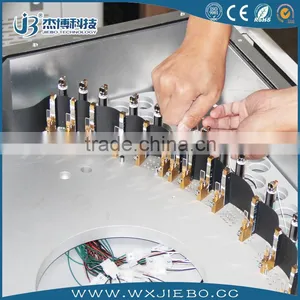
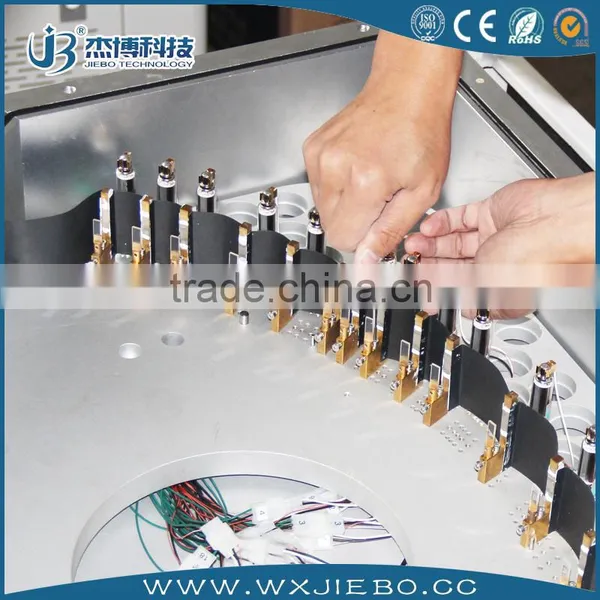
- 750 mm focal length grating design with palmer type-runge device which has the features of high vacuum, high resolution and high sensitivity etc.
- Adopt high stability digital sources. You can choose different excitation parameters to analyze different samples which can get the best analysis results.
- The automation is very high which adopts high integration of the acquisition and control system.
- The photomultiplier tubes from Hamamatsu which has the features of low dark current, high signal-to-noise ratio, long service life etc.
- It can be used for variety of bases such as Fe, Al, Cu, Co, Ni, Pb, Mg, Zn, Sn etc.
- The temperature of the optical part is stable which ensure the instrument running well and reduce the requirement of the environment.
- The system adopts independent power supply and becomes unit which is easy to use and simple maintenance.
- The computer adopts Windows 7 system and English operation software which is simple to understand.
Optical System: |
Excitation Desk: |
|
|
Excitation Light Source: | |
| |
Working Environment and Power Supply: | |
| |
Requirement of Argon Gas: | |
|
Size and Weight: |
|
Main Parameters
Excitation light source:
Supply voltage: 50Hz, 220V ± 1%
Input power: 1.0KVA
Charging capacitor: pre-combustion 8μF, exposure 1.5μF
Peak Current: pre-combustion 100A, exposure 20A
The main circuit peak pressure: 300VDC (with automatic adjustment of peak pressure)
Ignition circuit: pulse amplitude: +15 KV
Auxiliary gap: Using Tunnel Diode
Discharge frequency: 200 Hz ~ 600 Hz
Sample sets of gap: 4mm
Spectrometer:
Analysis band range: 160 ~ 650nm
Machine engraved concave grating: Curvature radius of 750mm
Depicts the density: 1667/mm
Incidence angle: 35 degrees
Allows a maximum of channels: 40 (expandable to 64 channels)
Spectrometer Local temperature: 35 °C ± 0.5 °C
Control System:
Measurement and Control System: The single board computer measurement and control, data exchange with the Host Computer
Reproducibility: RSD ≤ 0.2%
Photomultiplier tube high voltage power supply:
Stability: 8 hours is better than 0.5%
Ferrous metal spectrometer for cast iron model JB-750

Send Inquiry to This Supplier

You May Also Like
-
Next-Gen Digital OES Analyzer | Multi-Element Detection Spark Spectrometer for Non-Ferrous & Ferrous Metals | ISO StandardsUS$ 16500 - 25000MOQ: 1 Set
-
Digital Portable Spectrum Analyzer for LED TestingUS$ 1,500 - 2,000MOQ: 1 Set
-
752 UV-VIS SPECTROPHOTOMETERUS$ 1,000 - 1,200MOQ: 1 Set
-
Visible Spectrophotometer 721/722NegotiableMOQ: 1 Set
-
Blacked Stainless Steel Pinholes for Optical SystemsUS$ 10 - 30MOQ: 1 Piece
-
Supply of Heavy Metal Spectrum Analyzer for Leather and Fur, Mingrui Icp700t Model, Detector for Harmful Substances in Leather and Fur ProductsUS$ 45846.15 - 50461.54MOQ: 1 Unit
-
Tuohe Ultra-Micro Spectrophotometer UV Tnano-800 Laboratory Photometer for 0.5-2ul Sample Detection of Nucleic Acids, Proteins, and Cell SolutionsNegotiableMOQ: 1 Piece
-
I-CHEQX GEN 3 Handheld XRFNegotiableMOQ: 1 Piece
-
NANBEI Digital Single Beam NV-T5C UV Visible SpectrophotometerNegotiableMOQ: 1 Set
-
T-6 /T-6m UV-Visible SpectrophotometerUS$ 300 - 1,500MOQ: 1 Set


