Contact Platform Support
 Help Center
Mechanical Properties of Vinyl Ester Resin Fiberglass Reinforced Plastic
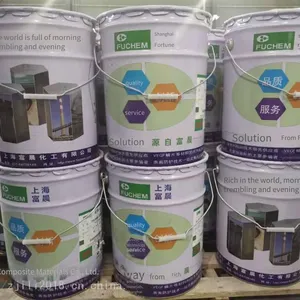
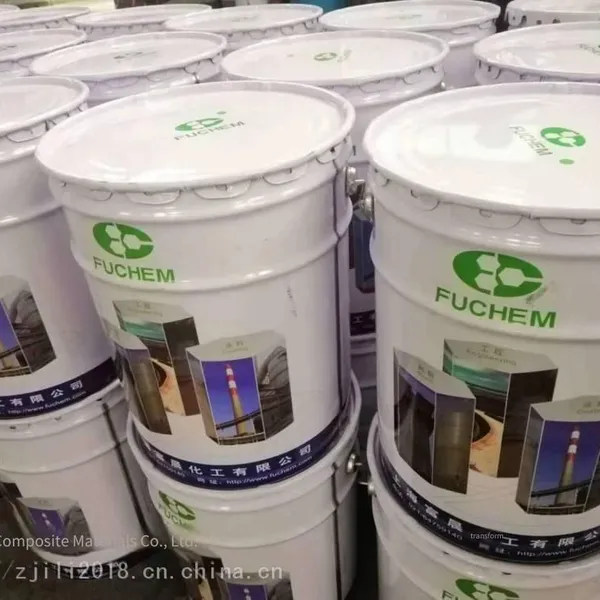
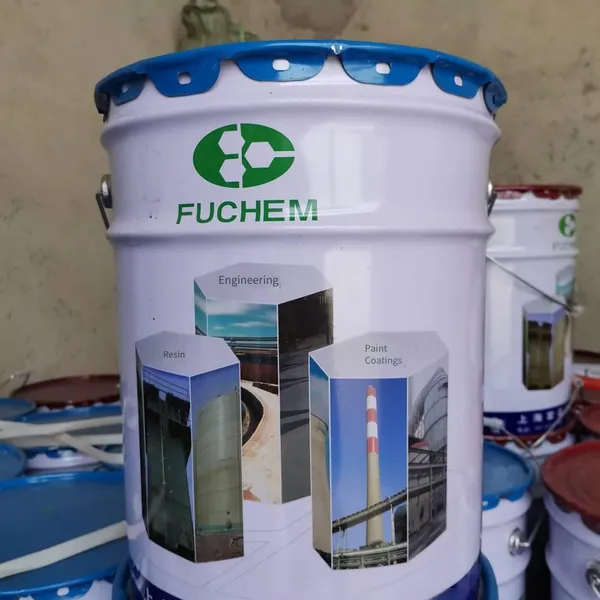



Related Products
-
 Vinyl Ester Resin Heavy-duty Anti-corrosion Floor and Ground EngineeringUS$ 3.23 - 3.38MOQ: 100 Kilograms
 -
Application of Vinyl Ester Resin in Sulfur, Sulfuric Acid and Sulfuric Acid IndustryUS$ 3.23 - 3.38MOQ: 100 Kilograms
-
Applications of Vinyl Ester Resin in Sodium Hydroxide and Caustic Soda IndustriesUS$ 3.23 - 3.38MOQ: 100 Kilograms
-
Anti - Corrosion of Vinyl Ester Resin Brick LiningUS$ 3.23 - 3.38MOQ: 100 Kilograms
-
Application of Vinyl Ester Resin in IndustryUS$ 3.23 - 3.38MOQ: 100 Kilograms
High-temperature resistant vinyl resin
The molecular backbone of vinyl resin is epoxy resin. If phenolic epoxy resin is used as the raw material, the synthesized NOVOLAC-type vinyl resin has good corrosion resistance, solvent resistance, and high-temperature resistance. We tested the phenolic epoxy vinyl ester resins from well-known domestic and foreign manufacturers according to relevant Chinese national standards. The results show that the heat distortion temperature (HDT) of these resins is between 132 - 137℃, while the heat distortion temperature of phenolic epoxy vinyl resins from some domestic manufacturers is even lower, below 125℃. However, in some industrial practical applications, higher requirements have been put forward for the heat resistance of the resin. In the early 21st century, a few domestic and foreign manufacturers such as Shanghai Fuchen provided the high cross-linking density vinyl resin 898, whose heat distortion temperature can reach over 150℃. The molecular structure of this type of resin has been modified to optimize its heat resistance characteristics, and the styrene content has also been reasonably adjusted to meet the actual usage requirements. Compared with conventional phenolic epoxy vinyl resins, it has a higher temperature resistance and can be applied in a strongly corrosive environment of 200℃ gas phase for a long time. At the same time, our usage experience shows that this type of resin can withstand a temperature shock of 300℃ within 2 - 3 minutes. This unique application is in insulation applications, and it can fully reach above Class C insulation rating.
This type of resin can be widely used in high-temperature applications such as some smelting and power flue gas desulfurization (FGD) equipment, like cooling towers, chimneys, and chemical pipelines. At the same time, this type of resin also has the characteristics of resistance to strong solvents and strongly oxidizing media.
5 Photosensitive vinyl resin
Since the unsaturated double bonds in vinyl resin are at the end of the molecular chain and have high activity, combined with molecular design, such as using epoxy resin with high epoxy value and synthesizing vinyl resin by replacing methacrylic acid with acrylic acid, and adding photoinitiators (such as benzoquinone, benzoin ether, etc.) to absorb ultraviolet energy and transfer it to the resin system, the vinyl resin can be polymerized and cured.
This type of resin can be used in printing, photosensitive inks, etc. It is used as a photosensitive coating in the paint industry and as a photoresist film on PCBs in the radio industry. In addition, in the pultrusion process, if photosensitive vinyl resin is used, the pultrusion speed can be greatly increased. For example, in the pultrusion process of optical cable cores, the speed can reach 10m/min.
6 Air-drying property
Like unsaturated polyester resin, when vinyl ester resin is cured at room temperature, the surface of the product is sticky, which brings inconvenience to the application. The main reason is that oxygen in the air participates in the polymerization reaction on the surface of vinyl ester resin. To overcome this shortcoming, researchers have developed a variety of effective methods. One of them is to synthesize air-drying vinyl ester resin by introducing allyl ether (CH2=CH—CH2—O—) groups into the vinyl ester resin structure. This type of resin is suitable for making high-grade air-drying gel coats, coatings, sealing materials, etc.
It is worth noting that there is a suitable value for the content of allyl ether in the resin. If it is too small, the resin cannot absorb oxygen well. If it is too large, the air-drying property will also decline due to the "automatic inhibition" effect.
7 Low styrene volatilization technology
Vinyl resin generally contains about 35% styrene monomer, and the vapor pressure of styrene is relatively low. Therefore, in hand lay-up molding and spray molding, the resin is laid on the open mold layer by layer. Especially in spray molding, part of the resin becomes mist. Therefore, before the resin is fully cured, styrene continuously volatilizes from the resin. This not only causes the loss of styrene but also pollutes the environment and causes damage to the health of workers. Therefore, countries have successively raised the requirements for the threshold limit value (TLV) of styrene. Therefore, for unsaturated resins including vinyl resin with styrene as the diluent monomer, it is necessary to strive to find a low styrene emission (LSE) technology to solve this problem. Some original manufacturers and countries used to add paraffin as a volatilization inhibitor, but it is easy to cause delamination between layers. However, the development trend in the early 21st century is as follows: First, use a compound of adhesion promoter, such as acrylic acid, a hydrophobic ether or ester with two carboxyl groups (containing double bonds), etc.; Second, use monomers with relatively high vapor pressure, such as methylstyrene or vinyltoluene, etc.; Third, use methods such as molecular structure. Either shorten the main chain molecules while maintaining the overall performance to reduce the amount of styrene, or introduce other groups or segments into the molecular chain segments to further reduce the volatilization of styrene through the interaction between internal molecules of the resin, etc. Based on years of research and experiments, many manufacturers in the world have successively launched low styrene emission technologies with their own characteristics. This technology can be widely used in resin gel coats, insulation applications, etc., especially in insulation applications for medium and high temperature molding.

Send Inquiry to This Supplier


You May Also Like
-
High-temperature Vinyl Scale Mastic for the High-temperature Section of the Flue Gas InletUS$ 3.38 - 3.69MOQ: 20 Kilograms
-
Heavy Anti - Corrosion of Seawater - Resistant Vinyl Resin for Offshore PlatformsUS$ 3.38 - 3.69MOQ: 20 Kilograms
-
Anti - Corrosion of Glass Flake Mortar Lining for Flue Gas Desulfurization and Denitrification Pipelines in Thermal Power PlantsUS$ 3.38 - 3.69MOQ: 20 Kilograms
-
Heavy Anti - Corrosion of Glass Flake Lining for Desulfurization TowerUS$ 3.38 - 3.69MOQ: 20 Kilograms
-
Heavy-duty Anti-corrosion With Glass Flake Lining for Absorption TowerUS$ 3.38 - 3.69MOQ: 20 Kilograms
-
Flue Gas Desulfurization Vinyl Scale MasticUS$ 3.38 - 3.69MOQ: 20 Kilograms
-
Heavy-duty Anti-corrosion of Fiberglass for Sewage PondsUS$ 3.38 - 3.69MOQ: 20 Kilograms
-
Frp Grating Manufacturer in Hengyang, HunanNegotiableMOQ: 0 Square Meter
-
Fiberglass Grating Manufacturers in Shaoyang, HunanNegotiableMOQ: 0 Square Meter
-
Price of Shanghai Fuchen Vegf Glass Flake MortarUS$ 5 - 5.23MOQ: 25 Kilograms