








 Contact Platform Support
 Help Center
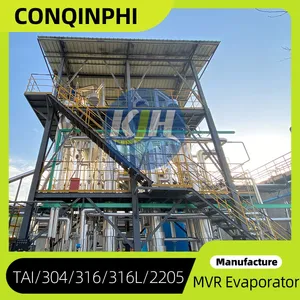
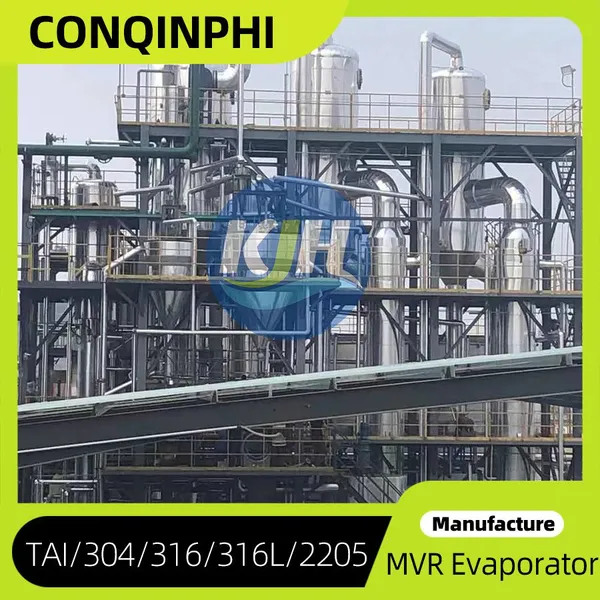
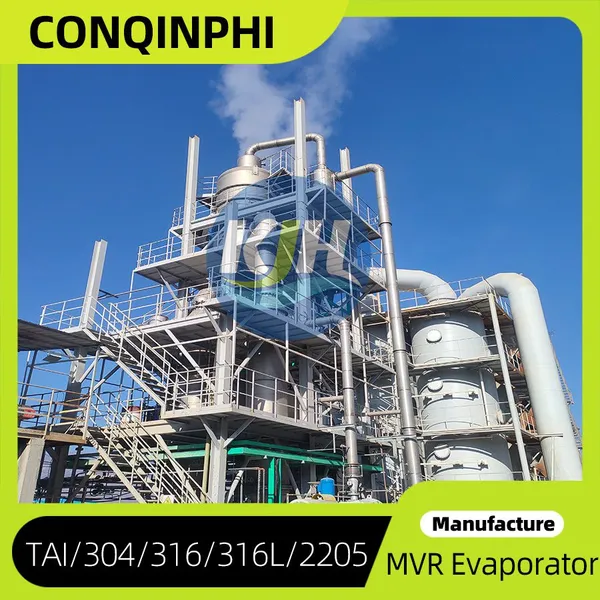
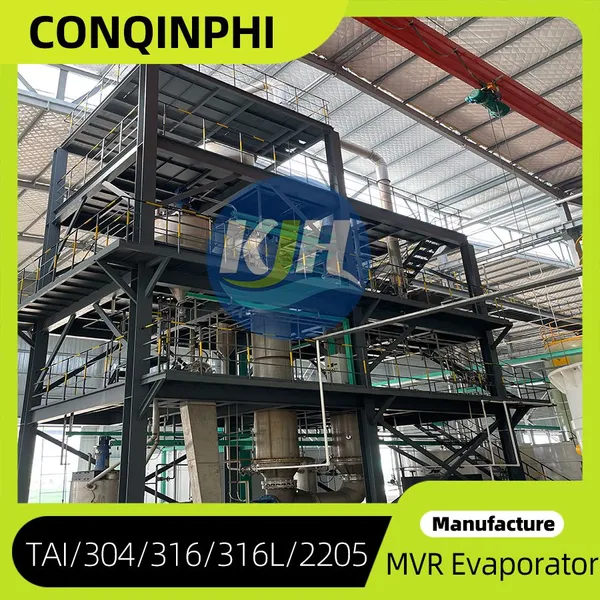
Corrosion-Resistant Titanium Double-effect MVR Evaporator for Chemical Concentration
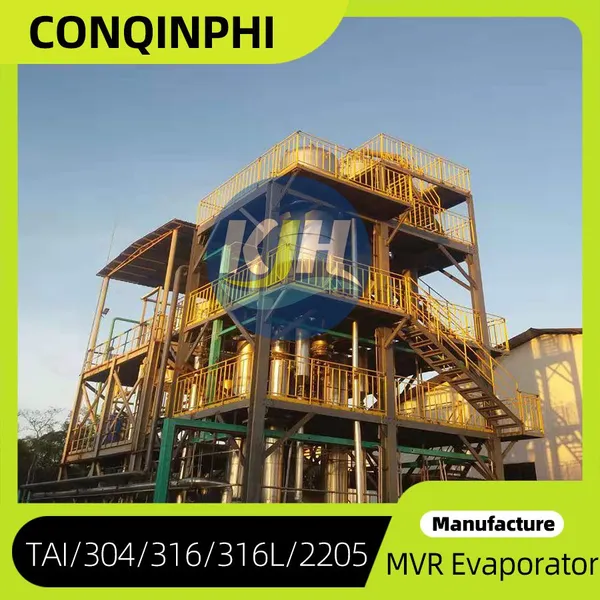
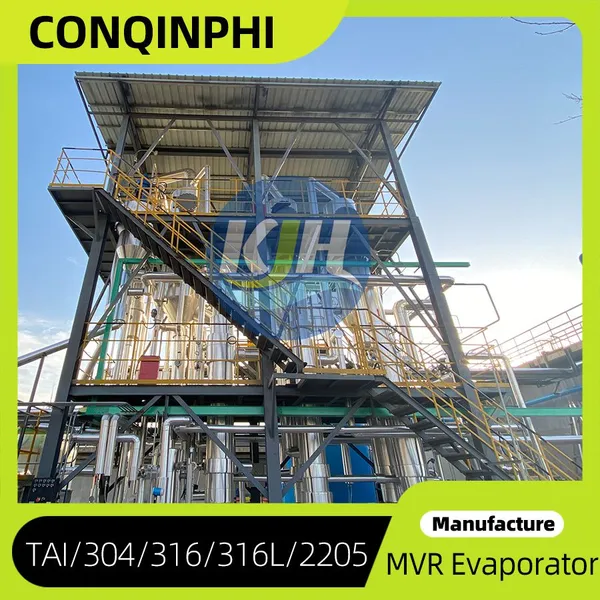
Product Spotlights



Related Products
-
 304 Stainless Steel MVR Forced Circulation Evaporator With PLC ControlUS$ 6480 - 785000MOQ: 1 Combo
 -
MVR Forced Circulation Evaporator Designed for Chemical Industry Solvent RecoveryUS$ 6480 - 785000MOQ: 1 Combo
-
MVR Forced Circulation Evaporator Offering Technical Training and On-site SupportUS$ 6480 - 785000MOQ: 1 Combo
-
MVR Forced Circulation Evaporator System With Remote Monitoring InterfaceUS$ 6480 - 785000MOQ: 1 Combo
-
MVR Forced Circulation Evaporator System for High-Concentration Wastewater TreatmentUS$ 6480 - 785000MOQ: 1 Combo
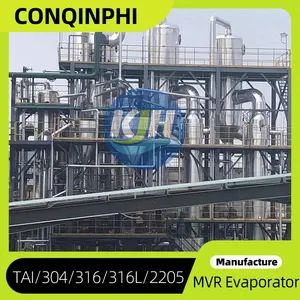
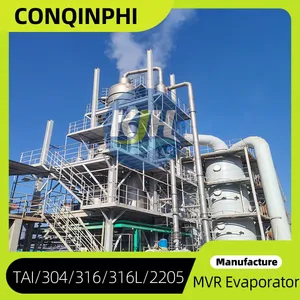
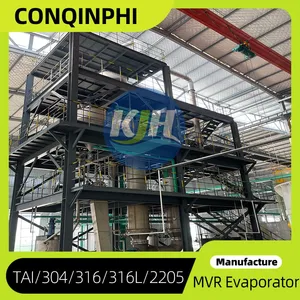
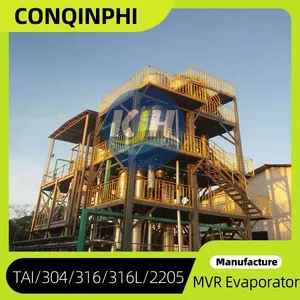
As a leading manufacturer with a 10,000-30,000 square meter production facility, Qingdao Conqinphi Environmental Technology Group is proud to present our advanced Corrosion-Resistant Titanium Double-effect MVR Evaporator. Engineered for demanding chemical concentration processes, this system represents a significant leap in efficiency and durability for industries handling aggressive media. Our decade of experience in environmental technology, combined with a robust annual export value, ensures that we deliver equipment that meets the stringent requirements of global markets from North America to Southeast Asia.
This evaporator is specifically designed to tackle the most challenging concentration tasks where corrosion is a primary concern. By utilizing high-grade titanium construction and a sophisticated double-effect Mechanical Vapor Recompression (MVR) cycle, it offers unparalleled energy savings and operational reliability. We understand that in chemical processing, downtime is costly, which is why every component is selected and assembled with longevity and minimal maintenance in mind.
- Superior Corrosion Resistance: The primary heat exchange surfaces, piping, and vessels in contact with the process fluid are constructed from titanium alloy. This material offers exceptional resistance to chlorides, acids, and alkalis, making it ideal for concentrating corrosive chemical solutions like hydrochloric acid pickling liquor, metal salt solutions, and aggressive wastewater streams.
- High-Efficiency Double-Effect MVR Design: Unlike single-effect systems, our double-effect configuration significantly enhances energy efficiency. The system utilizes two evaporation effects in series. Vapor generated from the first effect is used as the heating source for the second effect, dramatically reducing the primary energy (electricity for the compressor) required per unit of water evaporated.
- Intelligent PLC Control System: The entire evaporation process is managed by an automated Programmable Logic Controller (PLC). This system continuously monitors and adjusts key parameters such as temperature, pressure, level, and concentration, ensuring stable operation, consistent product quality, and allowing for unattended operation.
- Compact & Modular Construction: Designed for easier installation and future expansion, the system features a modular layout. Pre-assembled skids reduce on-site installation time and costs, a crucial factor for our international clients.
| Parameter | Specification / Range | Note |
|---|---|---|
| Evaporation Capacity | 500 - 50,000 L/H (Water) | Customizable based on feed |
| Final Concentration | Up to 40-60% TDS | Depends on solute properties |
| Steam Consumption (if used) | < 0.1 ton / ton water evaporated | For hybrid MVR models |
| Power Consumption (MVR) | 20-40 kWh / ton water evaporated | Varies with boiling point rise |
| Operating Temperature | 60°C - 95°C | Optimizable for heat-sensitive materials |
| Material of Wetted Parts | Titanium (Gr2/Gr5), 316L SS optional | For non-corrosive applications |
- Drastic Reduction in Operating Costs: The double-effect MVR technology can reduce energy consumption by up to 90% compared to traditional single-effect evaporators or thermal evaporation. This translates directly to a lower cost per ton of concentrate produced.
- Extended Equipment Life & Reduced Maintenance: Titanium's corrosion resistance eliminates common failure points like tube leaks and vessel corrosion. This means fewer shutdowns for repairs, lower spare parts inventory, and a much longer overall service life for your capital investment.
- Environmental Compliance & Sustainability: The system produces a highly concentrated slurry or solid for disposal or recovery, drastically reducing wastewater volume. The distilled water (condensate) is of high purity and can often be reused in the plant, supporting zero-liquid-discharge (ZLD) initiatives.
- Process Reliability & Product Quality: Automated controls ensure consistent operating conditions, leading to a stable concentration rate and predictable product quality. This is critical for downstream processes that rely on consistent feed material.
Backed by a team of 201-300 dedicated professionals and a commitment to quality management systems, our manufacturing process is designed to deliver reliable, high-performance equipment. Our established presence in major global markets, from Eastern Europe to Oceania, is a testament to the durability and effectiveness of our solutions. We ship efficiently from the Port of Qingdao, ensuring smooth logistics for our international partners.
Choosing our Titanium Double-effect MVR Evaporator is not just purchasing a piece of equipment; it's investing in a long-term solution for efficient, reliable, and cost-effective chemical concentration. We invite you to contact us with your specific process parameters for a detailed technical proposal and to discover how this system can optimize your operations.
Q1: What is the main advantage of a double-effect MVR system over a single-effect one?
A: The primary advantage is substantially higher energy efficiency. In a double-effect system, the vapor produced in the first effect is used to heat the second effect, effectively reusing the latent heat. This configuration can reduce the compressor's energy consumption by 30-50% compared to a single-effect MVR system for the same evaporation duty.
Q2: Is titanium necessary for my application, or can I use stainless steel to save cost?
A: The material selection depends entirely on the chemical composition, pH, temperature, and chloride content of your feed solution. Titanium is recommended for highly corrosive environments (e.g., with chlorides, strong acids). For less aggressive solutions, 316L stainless steel can be a cost-effective option. Our engineers can perform a corrosion assessment to recommend the most suitable and economical material.
Q3: How does the MVR system handle feed solutions that are prone to scaling or fouling?
A: We integrate several anti-scaling strategies. The system can be designed with forced circulation to maintain high fluid velocity, minimizing scaling. Optional features include CIP (Clean-in-Place) systems with acid or alkali cleaning cycles, and the design allows for easy mechanical access for manual cleaning if required. Pre-treatment recommendations are also provided based on your feed analysis.
Q4: What is the typical delivery and installation timeline for a custom system?
A: The timeline varies based on capacity and complexity. Generally, for a standard design, manufacturing takes 90-120 days after design approval. Installation and commissioning typically require 2-4 weeks on-site, depending on the plant's readiness. We provide detailed project schedules and work closely with your team to minimize downtime.
Q5: Can this evaporator achieve Zero Liquid Discharge (ZLD)?
A: Yes, this MVR evaporator is a core component of a ZLD system. It concentrates the wastewater to a small volume of slurry or solid waste. The pure water condensate produced is suitable for reuse. For complete ZLD, the concentrated slurry can be further processed in a crystallizer or sent to a filter press/solidifier, which we can also supply as part of a complete package.
Q6: What kind of after-sales support and spare parts availability do you offer?
A> We provide comprehensive support including detailed operation manuals, on-site training for your operators, and remote troubleshooting assistance. Critical spare parts (like mechanical seals, gaskets, sensor probes) are recommended to be kept in stock at your facility, and we can supply a starter kit. We maintain an inventory of common parts and offer expedited shipping for our international clients.
Q7: How is the system controlled and monitored?
A> The system is controlled by a PLC with a user-friendly HMI (Human-Machine Interface) touchscreen. It allows for automatic startup, operation, shutdown, and cleaning cycles. Key operational data (flow, temperature, pressure, conductivity) is logged and can often be connected to your plant's DCS or SCADA system for remote monitoring. Alarms for abnormal conditions are standard.
Q8: Can the system handle heat-sensitive materials that degrade at high temperatures?
A> Absolutely. One of the key benefits of MVR technology is the ability to operate at lower temperatures compared to traditional boilers. By adjusting the compressor speed and system pressure, we can set the boiling temperature as low as 60°C or even lower in vacuum operation, which is suitable for many heat-sensitive chemical products or food-grade applications.

Send Inquiry to This Supplier



You May Also Like
-
Automatic MVR Forced Circulation Evaporator for Pharmaceutical Salt RecoveryUS$ 6480 - 785000MOQ: 1 Combo
-
MVR Forced Circulation Evaporator Featuring High-Efficiency Centrifugal CompressorUS$ 6480 - 785000MOQ: 1 Combo
-
Mvr and Tvr Evaporators Machine Water Treatment Plant EquipmentUS$ 2140 - 7500MOQ: 1 Combo
-
Sewage Treatment Equipment Salt Wastewater Water Mvr EvaporatorUS$ 2140 - 7500MOQ: 1 Combo
-
Forced Circulation/Falling Film Single-Effect Mvr Evaporation Crystallization EvaporatorUS$ 2140 - 7500MOQ: 1 Combo
-
Lithium Carbonate in Battery Manufacturing Mvr EvaporatorUS$ 2140 - 7500MOQ: 1 Combo
-
Water Thin Film Aluminium Plate Vacuum Mvr EvaporatorUS$ 480 - 879000MOQ: 1 Combo
-
Falling Film Evaporator Equipment Aluminium Plate Vacuum Mvr Evaporator CondenserUS$ 480 - 879000MOQ: 1 Combo
-
Cold Room Equipment Parts Vacuum Falling Film Nitrogen EvaporatorUS$ 769 - 63700MOQ: 1 Combo
-
Industrial Reverse Osmosis Water Machine System EvaporatorUS$ 380 - 86900MOQ: 1 Combo
