








 Contact Platform Support
 Help Center
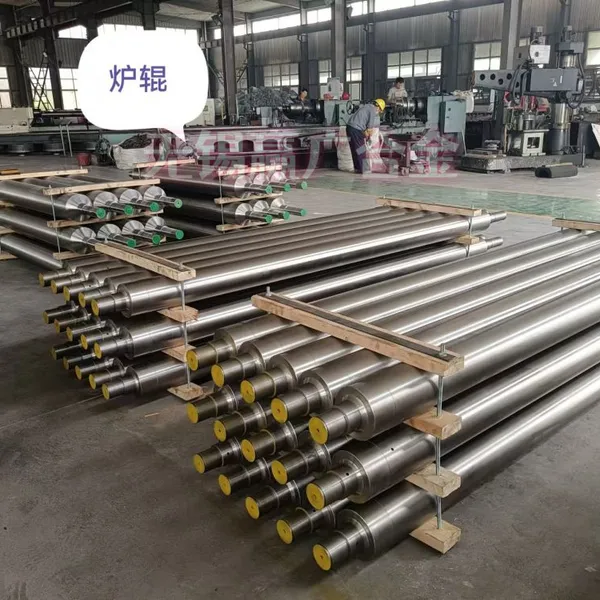
Customized ZG30Cr18Mn12Si2N Cantilever Roller for Roller Furnace Produced by the Manufacturer
Product Spotlights

Related Products
-
 Customized ZG40Cr25Ni20 High-temperature Furnace Tube From Manufacturer, Customized According to the Provided DrawingNegotiableMOQ: 10 Metric Tons
 -
Customized Processing of 1J79 Iron-nickel-molybdenum High Permeability Soft Magnetic Alloy Steel Plates by the ManufacturerNegotiableMOQ: 10000 Kilograms
-
Customized Production of ZG40Ni35Cr26Si2 Cracking Furnace Tubes Resistant to High-temperature Oxidation, Sulfur Corrosion, and CarburizingNegotiableMOQ: 1 Metric Ton
-
High-temperature Alloy, Heat-resistant and Corrosion-resistant ZG45Ni35Cr26 Centrifugal Cast Pipe Processing and Customization ManufacturerNegotiableMOQ: 1 Metric Ton
-
Customized ZG30Cr18Mn12Si2N Cantilever Roller for Roller Furnace Produced by the ManufacturerNegotiableMOQ: 10 Metric Tons
ZG30Cr18Mn12Si2N furnace cantilever
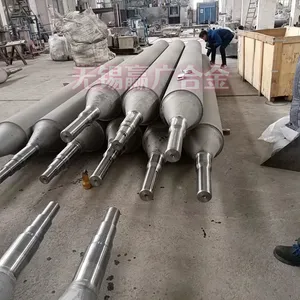
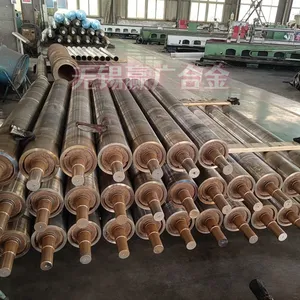
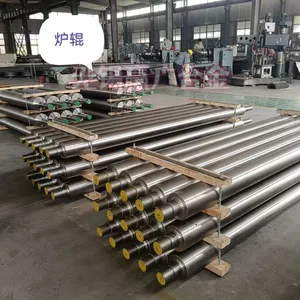
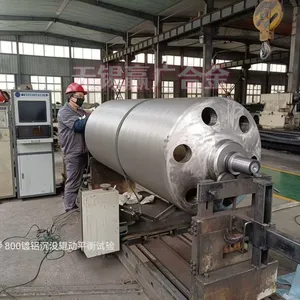
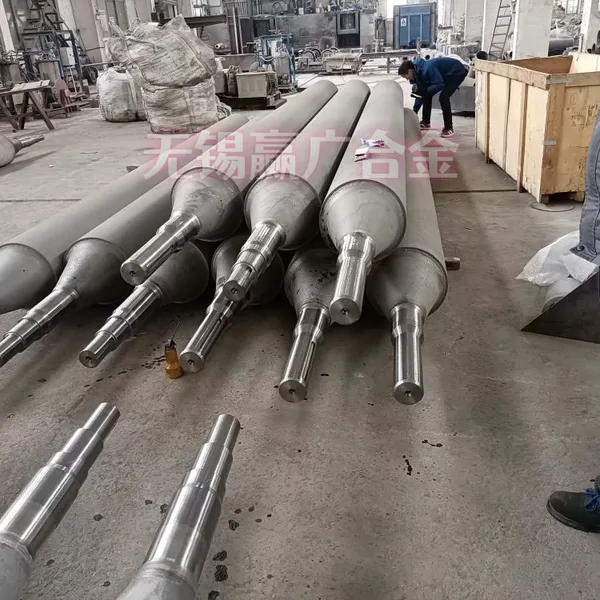
This type of component predominantly adopts the cantilever conveyor roller as its mainstream form, crafted from a nickel-saving chromium-manganese-nitrogen austenitic heat-resistant steel. Its core structure features one end fixed and the other end cantilevered, forming a non-supporting configuration. This design is ideal for medium to high-temperature kilns with narrow furnaces and single-sided drive systems. By substituting high-priced nickel elements with manganese and nitrogen, the material maintains stable performance within the 800–1000℃ temperature range. It excels in thermal fatigue resistance and oxidation resistance, and its cost is over 30% lower than that of cantilever components made of 2520 material of the same specification. It stands as a cost-effective choice for medium-temperature applications.
1. Applicable operating conditions and typical scenarios
temperature range
Recommended long-term continuous use temperature: 800–950℃
Short-term peak temperature tolerance: 1050℃
Intermittent cold and heat cycling conditions can be stably adapted to environments within 1000℃
Applicable scenarios
Metallurgical industry: continuous annealing furnace, galvanizing/color coating line, cantilever conveyor roller of roller hearth heating furnace, workpiece conveying station with narrow furnace chamber and single-side drive
Heat treatment industry: trolley furnaces, pit furnaces, cantilever crane beams and support brackets for quenching furnaces, as well as conveyor roller tables inside furnaces for intermittent production
Others: cantilever blade support for hot blast stove, internal cantilever components of chemical medium-temperature reaction furnace
Atmosphere adaptation
It is suitable for air, conventional combustion flue gas, and weakly sulfur-containing (H₂S) atmospheres, and possesses a certain degree of carburizing resistance, making it suitable for weakly carburizing heat treatment conditions. However, it is not recommended for long-term use in strongly carburizing or high-concentration carbonitriding atmospheres.
II. Core Advantages of Material Adaptation for Cantilever Working Conditions
The cantilever component has been subjected to high-temperature bending loads and alternating thermal and cold stresses for a long time, and the performance matching degree of this material is relatively high:
High temperature creep resistance: Nitrogen interstitial solid solution strengthening, tensile strength ≥45MPa at 1000℃, creep rate
Excellent thermal fatigue resistance: low coefficient of thermal expansion (about 11.5×10⁻⁶/℃), good toughness of austenite matrix, no net-like cracks after hundreds of thermal cycles from 950℃ to room temperature, suitable for intermittent production with frequent start-stop operations
Oxidation resistance and resistance to furnace gas corrosion: With 18% chromium and about 2% silicon, a dense Cr₂O₃+SiO₂ composite oxide film is formed on the surface. The static oxidation weight gain rate at 1000℃ is less than 0.05g/(m²·h), with less peeling and less tendency to contaminate the workpiece
Ultimate cost-effectiveness: By substituting manganese and nitrogen for nickel, the material cost is significantly lower than that of high-nickel heat-resistant steels such as 2520, greatly reducing equipment maintenance and replacement costs
III. Common structural forms
1. Cantilever roller (the most mainstream, mainly produced by centrifugal casting)
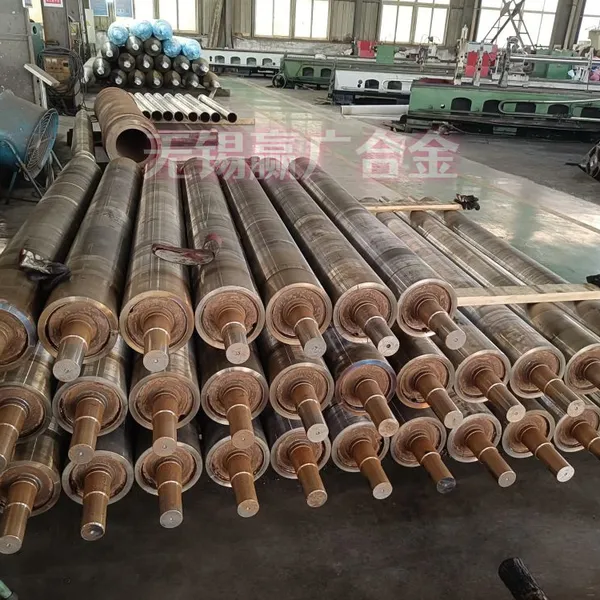
The roller body is processed using centrifugal casting, which is the core form of cantilever for conveying inside the furnace.
Structural composition: centrifugal casting roller body + casting/forging shaft head of the same material (or mounting flange), one end connected and fixed to the transmission mechanism through a bearing, and the other end suspended without support
Roller surface type: Regularly, it is smooth or sandblasted. For special anti-adhesion and wear-resistant requirements, a spray welding wear-resistant layer can be applied
Standard specifications: roller body outer diameter φ50–φ300mm, wall thickness 8–30mm, cantilever length 1–6m, customizable according to furnace chamber size
2. Cantilever support beam / Hanging beam
The beam body is mostly integrally cast, with one end equipped with an installation flange fixed to the furnace wall/roof, and the other end suspended in the air, used for hanging furnace internal tooling, workpieces, or supporting radiation tubes, heat exchangers, and other furnace internal components. Depending on the load, it can be designed as a solid or box-type lightweight structure.
3. Cantilever bracket / support
Precision-cast small components of unusual shape, used for cantilevered fixed supports of furnace pipelines, roller conveyors, and tooling, feature a compact structure that fits well within the limited space inside the furnace.
IV. Manufacturing Process (Centrifugal Casting as the Core)
Standard process for cantilever roller
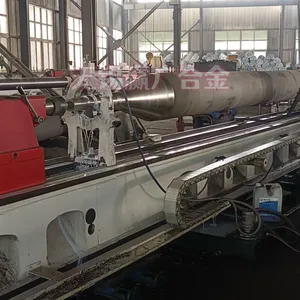
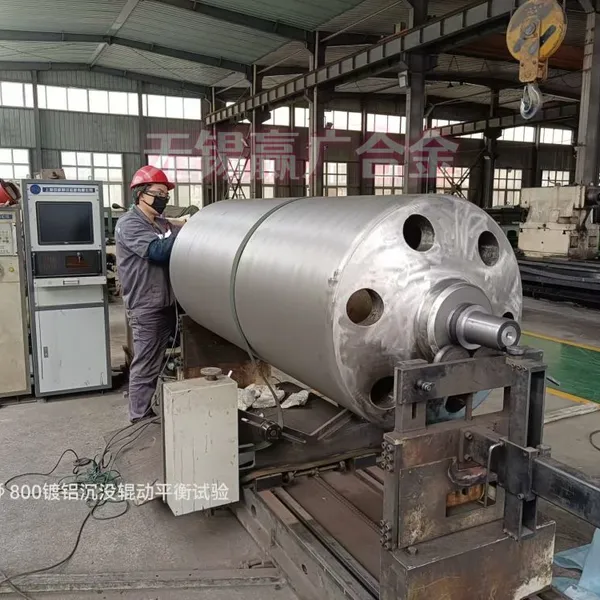
Roll body centrifugal casting: Utilizing the water-cooled metal mold centrifugal casting process, it solidifies and forms under the influence of centrifugal force, resulting in a high density structure, free from shrinkage and porosity defects. The uniformity deviation of wall thickness is ≤0.3mm, and its dynamic balance performance surpasses that of sand casting
Axle head welding: Utilize dedicated welding materials of the same material as the axle head/flange, and perform argon arc welding. After welding, conduct a penetrant flaw detection test on the weld seam
Overall solution treatment: After holding at 1050–1100℃ for 2–4 hours, water cooling is performed to eliminate casting and welding stresses, dissolve coarse carbides and nitrides, obtain a uniform single-phase austenite structure, and ensure toughness and thermal shock resistance
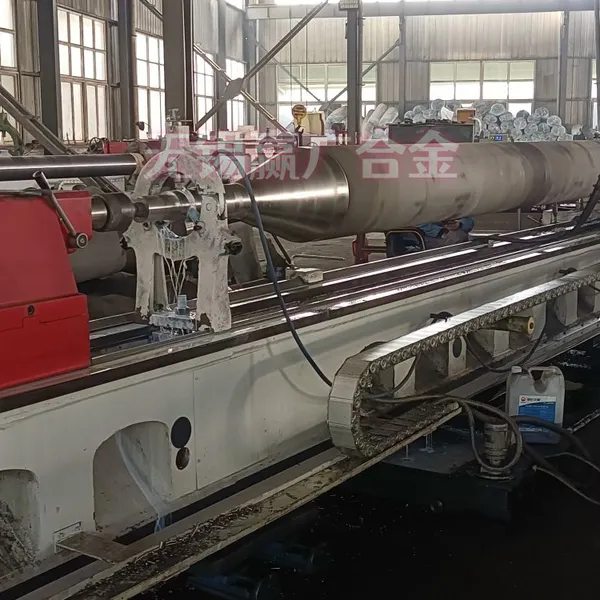
Post-processing: Sandblasting and cleaning of the surface, machining of the mounting surface and the fitting position of the shaft head to ensure dimensional and geometric accuracy
Alien cantilever process
Precision sand casting or lost foam integral casting is employed. After sand removal and grinding, the casting undergoes solution treatment, followed by machining of the installation reference surface.
V. Core Performance Parameters
Room temperature tensile strength: ≥590MPa
Room temperature yield strength: ≥295MPa
Elongation at room temperature: ≥20%
Flexural strength at 900℃: ≥120MPa, deflection under long-term use at rated load ≤1/1000
Thermal expansion coefficient: approximately 11.5×10⁻⁶/℃ (room temperature – 1000℃)
Room temperature hardness: HB 220–240, with good hardness retention at high temperatures and certain wear resistance
VI. Differences from cantilever of the same type of material
ZG30Cr18Mn12Si2N cantilever: suitable for long-term working conditions at 800–950℃, with outstanding thermal fatigue resistance, lowest cost, and a normal working life of 2–3 years. It is the cost-effective choice for medium-temperature non-severe carburizing scenarios
ZG35Cr24Ni7SiN cantilever: suitable for long-term working conditions at 950–1050℃, with superior high-temperature strength and carburizing resistance, a lifespan of 2–3 years, and a moderate price. It is suitable for medium and high-temperature working conditions with higher loads and more complex atmospheres
ZG35Cr25Ni20Si2 (2520) cantilever: suitable for long-term operating conditions at 1100–1150℃, with a high upper temperature limit, strong versatility, a lifespan of 3–4 years, and a relatively high price. It is suitable for high-temperature general-purpose scenarios and intense thermal cycling conditions
VII. Summary of Advantages and Disadvantages
✅ Advantages:
In the medium temperature range, it exhibits both strength and thermal shock resistance, making it less prone to cracking in frequent start-stop scenarios and highly adaptable to intermittent production
The nickel-free formula significantly reduces material costs, and the operation, maintenance, and replacement costs are much lower than those of nickel-containing heat-resistant steel
The welding performance is good, and local damages on the axle head and roller body can be repaired through on-site welding, making maintenance convenient
Centrifugal casting rollers feature high density, uniform wall thickness, excellent dynamic balance performance, and stable conveying operation with minimal vibration
❌ Deficiencies:
Continuous operation at temperatures above 1000℃ for extended periods can lead to the precipitation of nitrogen, deterioration of the structure, and significantly accelerated rates of oxidation and creep
Long-term use in a strong carburizing and high-concentration carbonitriding atmosphere is prone to grain boundary carburization embrittlement, significantly reducing service life
Under conditions of large span (>2m) and heavy load, the deflection is slightly higher than that of 2520 material, necessitating an appropriate increase in wall thickness for reinforcement

Send Inquiry to This Supplier


You May Also Like
-
Zg30cr18mn12si2n Heat-resistant Steel Casting Material Frame, Special for 950℃ Annealing FurnaceUS$ 3.38MOQ: 1 Kilogram
-
Zg30cr18mn12si2n Cast Pipe, Centrifugal Pipe, Lost Foam Casting Reducing Pipe, Heat-resistant and Wear-resistantUS$ 1.69 - 2.15MOQ: 1 Kilogram
-
Oxidation Resistant Nickel Alloy Round Bar Scale Resistant Surface for Heat Treatment Furnace ComponentUS$ 20 - 70MOQ: 100 Kilograms
-
Heat Resistant Inconel 601 Sheet Nickel Alloy Plate for Continuous Annealing and Furnace SystemsUS$ 28.5 - 68.8MOQ: 100 Kilograms
-
Heat-resistant Disposable CupNegotiableMOQ: 50000 Pieces
-
Leixin High-Temperature-Resistant Powder Coating Line Heat-Insulation Spraying Equipment For Furnace Boiler Metal ComponentsNegotiableMOQ: 1 Unit
-
PA66 Resin FG172X61 With Enhanced Heat Resistance for Automotive ComponentsNegotiableMOQ: 1 Kilogram
-
SABIC LEXAN PC 241R‑111 Heat‑Resistant Engineering PlasticUS$ 1.06 - 1.08MOQ: 1 Kilogram
-
High Temperature Resistant Precision Machinable Industrial Metal Castings Furnace Spare PartsNegotiableMOQ: 1 Piece
-
Heat Resistant, High Temperature Resistance, Industrial FurnacesUS$ 1650 - 2650MOQ: 1 Ton


