








 Contact Platform Support
 Help Center
Welding Process Monitoring System



Related Products
With the continuous development of network technology, the application of the Internet of Things in the industrial field is becoming more and more extensive, prompting the traditional industry to continuously transform into intelligent manufacturing. Among them, a typical application is to achieve intelligent monitoring, intelligent diagnosis, intelligent production scheduling of the production process and automatic recording of the quality control process through real-time parameter collection of the production process, equipment monitoring, workstation capacity confirmation, and process inspection.
Currently, the capabilities of welding personnel in some enterprises vary, resulting in deviations in the implementation of welding processes by welders, which seriously affects the welding quality. The welding process monitoring system developed by Dezhou Digete Electronics Technology Co., Ltd. is based on the intelligent transformation of welding machine equipment and the effective integration with the company's ERP system, realizing the informatization management of the welding process, automatic recording of welding parameters, real-time early warning of welding deviations, and production capacity calculation, etc., thus effectively improving the quality control of the welding process and the reasonable arrangement of production.
1 System Overview
The welding process monitoring system (Dezhou Digete Electronics Technology Co., Ltd.) can achieve communication between teams, between welding machines, and between welding machines and people through the networking of ordinary welding machines and intelligent welding machines. Workshop dispatchers can export work orders from the ERP system and distribute them to welders according to the workstation capacity.
Welders carry out welding according to the welding process parameters set by welding engineers in the system. At the same time, they collect welding parameters in real-time and issue alarms for out-of-specification situations. After the welding is completed, inspectors conduct non-destructive testing of the welds. After all the processes are completed and pass the inspection, the system produces completed data reports as needed. This welding process monitoring system supports multiple management modes such as welding machine status management, welder management, and process specification management.
2 System Network Structure
The network structure of the welding process monitoring system is shown in Figure 1. Among them, the Web application server uses the Tomcat application server for the deployment of system programs. The database server mainly installs database management software for storing system data. The file server is mainly used for storing the attachments uploaded in the system. The above three servers can be independently deployed according to the performance of the hardware servers or can be combined. For example, the application server and the file server can be combined into one server. Users' computers can access the system through the IE browser. The wireless router uses the IEEE 802.11b standard, operates in the 2.4GHz frequency band, has a transmission speed of 11Mb/s, and the signal is a spherical signal. Since the network connecting the welding equipment belongs to the industrial control network, according to the requirements of network security management, the industrial control network should be isolated from the office network to ensure the security of the industrial control network and the connected devices.

Figure 1 System network structure
3 System acquisition module
For manual digital welding machines, based on the communication protocol, data interaction with the welding machine is carried out through specific instructions. After analyzing the data obtained from the welding machine, relevant welding machine parameters are obtained, and the data is submitted to the server through the network. The server can input the setting parameters of the relevant welding machine, and realize the setting of remote parameters through the direct conversion of the communication protocol. Each welding machine is connected to a welding machine data acquisition instrument and a gas flow sensor (suitable for gas shielded welding machines) to collect key data such as the start and stop time of the welding machine, the voltage, current and gas flow during operation. The welding speed can be calculated by setting the actual length of the weld and the actual welding time collected. This welding process monitoring system can be connected to ordinary welding machines, various digital intelligent welding machines with open protocols, and welding robots.
4 System main functions
4.1 Equipment management
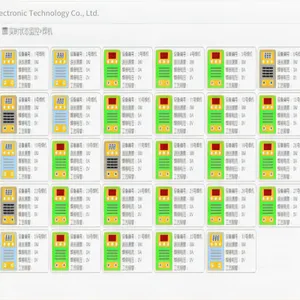
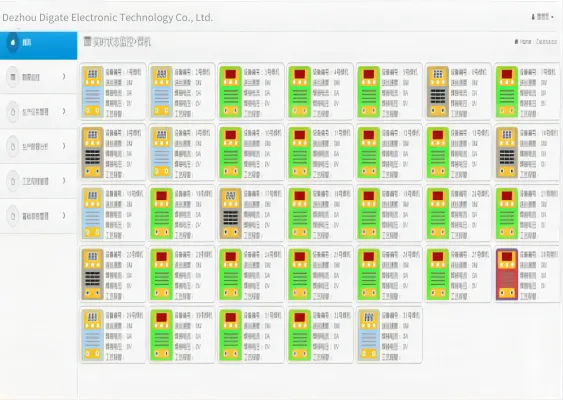
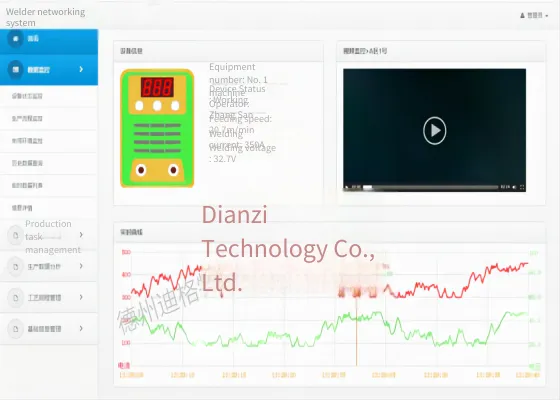
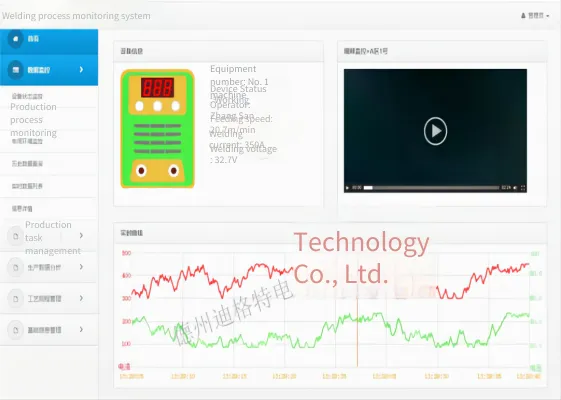
Based on the networking of welding machines, the production department can obtain the actual working conditions of all equipment in the workshop. Through the dashboard, understand the work efficiency, current start and stop status, historical working time, fault status, welding machine gas and wire consumption, welding cost, and team performance of each equipment, so as to realize the global monitoring and management of welding machines. The real-time interface for welding status monitoring is shown in Figure 2.
Figure 2 Interface for real-time welding status monitoring
4.2 Production capacity allocation
The welding process monitoring system is integrated with the company's ERP system, enabling production managers to export work order information from the ERP system to the welding process monitoring system and conduct production capacity division according to the current working conditions of the welding machines. The work order contains specific product information that needs to be welded. Welding personnel can open the work log on the local operation screen to view their work arrangements. After the welder sets the binding of the welding machine, welding can be carried out.
The system can also provide a work order management dashboard, enabling production managers to understand the current execution status of work orders.
4.3 Quality management
When the actual welding parameters exceed the specifications, there will be potential quality risks. Defects such as lack of fusion and undercut may affect the forming or mechanical properties. Each weld is numbered and managed. Operators can follow the instructions and guidance on the terminal in combination with the process card and perform weld operations in sequence according to the welding order requirements. Each weld corresponds to the process specification number. After a welder finishes a process specification, by pressing the operation end button on the touch terminal, the preparation for the next process can be automatically started.
When the welding parameters exceed the specifications, an alarm will be issued by sound or light to remind the welder that the specifications have been exceeded and to correct the deviation. To facilitate on - site quality inspectors to conduct spot checks and monitoring on the welding process, the touch terminal displays the weld being welded in three - dimensional colored graphics during the welding process, which is convenient for inspectors to conduct compliance spot checks, as shown in Figure 3.
Figure 3 Welding process monitoring and alarm process
4.4 Welder management
The welder management module in the welding process monitoring system can record the welder's qualifications, including the evaluated welding methods, certificate evaluation date, and next evaluation time. After setting the welder's qualifications in the welding process, the system can automatically find welders with appropriate qualifications. The welder's workstation can be fixed, or the welder can be bound to welding machines at different workstations as needed to carry out flexible work. The random binding of welders and welding machines is shown in Figure 4. In addition, the system can also query the welder's performance, including the daily workload, the consumption - to - output ratio of welding materials, solder, and energy by the welder, and the statistics of exceeding specifications during the welding process by the welder.
Figure 4 Random binding of welders and welding machines
4.5 Statistical analysis
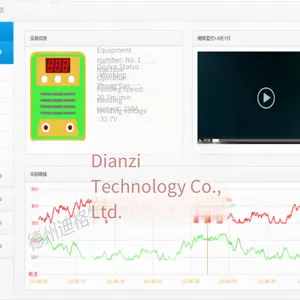
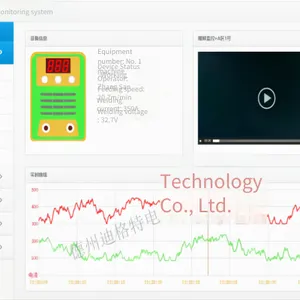
The welding process monitoring system has a flexible data statistics function, which allows employees to browse the required data on the management dashboard and automatically generate various reports or charts to meet the personalized requirements of managers in different roles. It can also graphically display the real-time status of the equipment, as shown in Figure 5. In addition, managers can intuitively understand the work efficiency of the welding workshop, identify progress bottlenecks, and propose targeted solutions.
Figure 5 Graphical display of the welding process
5 Conclusion
Based on the discrete production characteristics of the manufacturing industry and users' high requirements for product delivery time and quality, the networked management of the welding process is the future development trend of welding factories. Dezhou Digete Electronics Technology Co., Ltd. built this system and successfully achieved the networked monitoring and information management of the welding process, and achieved the following results:
(1)Through the networking of welding machines, the visual management of the real-time operating status of each welding machine is realized, which effectively improves the operating efficiency of the welding machines, optimizes the production capacity configuration, and realizes precise measures;
(2)The informatization of equipment management enables timely response to fault maintenance, effectively ensuring productivity;
(3)A wide variety of process documents can be standardized, and the versions are effectively controlled;
(4)Welding personnel only need to perform welding in the order prompted by the computer, avoiding the phenomenon of "two skins" between the regulations in the process documents and the implementation layer;
(5) It has greatly improved the quality management level. Moreover, the welding parameters can be reproduced in real-time, which has changed the current situation of inconvenient and inaccurate manual records and provided objective data support for quality traceability and problem analysis.

Send Inquiry to This Supplier


You May Also Like
-
Welding Gas Flow MeterNegotiableMOQ: 0
-
Scanning and Packing Management SoftwareNegotiableMOQ: 0 Set
-
Welding Machine Voltage and Current CollectionNegotiableMOQ: 0 Set
-
Welding Machine Group Control Management SystemNegotiableMOQ: 0 Set
-
Wire Feeding Speed SensorNegotiableMOQ: 0 Unit
-
Welding Informatization SystemNegotiableMOQ: 0 Set
-
Welding Machine Networked Group Control SystemNegotiableMOQ: 0 Set
-
Welding Data CollectionNegotiableMOQ: 0 Set
-
Welding Information Acquisition and Control SystemNegotiableMOQ: 0 Set
-
Da-500 Intelligent Data Acquisition InstrumentNegotiableMOQ: 0 Unit


