








 Contact Platform Support
 Help Center
Steel Round Bar & Industrial Round Steel,Q235B、Q355B、45#、40Cr、20CrMnTi、65Mn、T8





Related Products
-
 Flat Steel, Carbon Steel: Q235B, Q355B, 45#, SS400, A36, S235JR, S275JR • Low Alloy Steel: Q355 Series • Custom Grades Available Upon RequestNegotiableMOQ: 2 Metric Tons
 -
Steel Round Bar,Material Grade,Carbon Steel: Q195, Q235, Q355, 20#, 45#, A3, SS400 Alloy Steel: 40Cr, 35CrMo, 42CrMo, 20CrMnTiNegotiableMOQ: 2 Metric Tons
-
Channel Steel,Standard: GB/T 707, ASTM A36, JIS G3101 • Material: Q235B, Q355B, SS400, A36• Length: 6m, 9m, 12m or Customized LengthNegotiableMOQ: 2 Metric Tons
-
Steel Billet,3SP / 5SP: GOST Standard Grade, Popular in Central Asia & Africa,NegotiableMOQ: 2 Metric Tons
-
Steel Billet ,- 3SP / 5SP: GOST Standard Grade, Popular in Central Asia & Africa,NegotiableMOQ: 2 Metric Tons
1. Product Definition
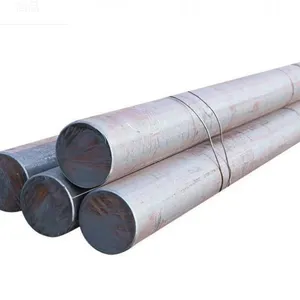
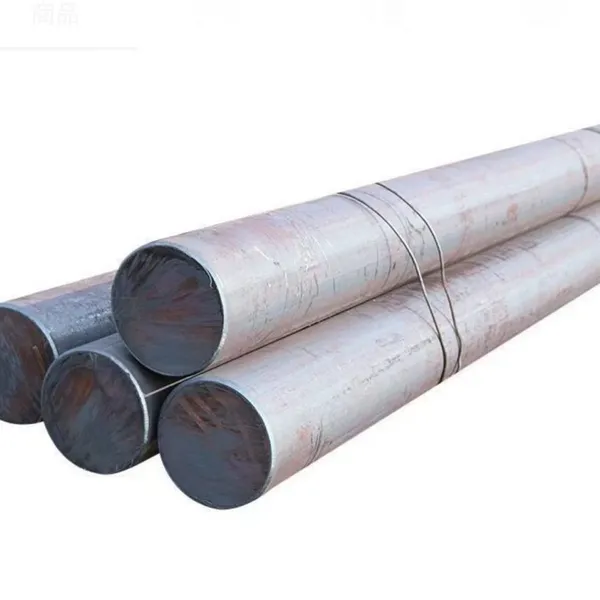
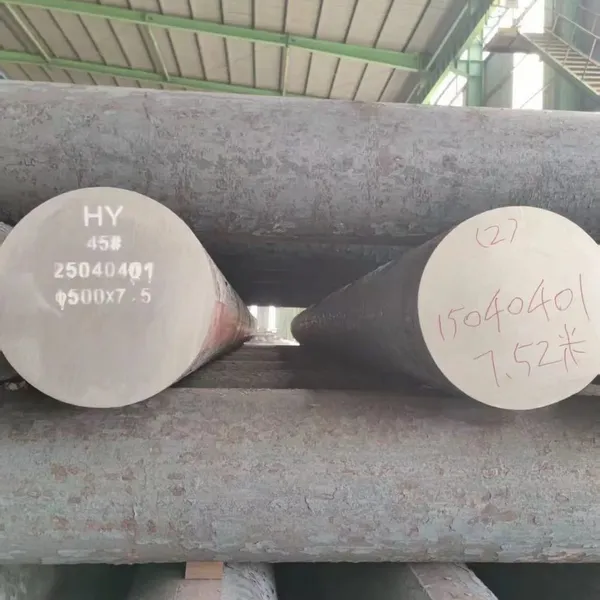
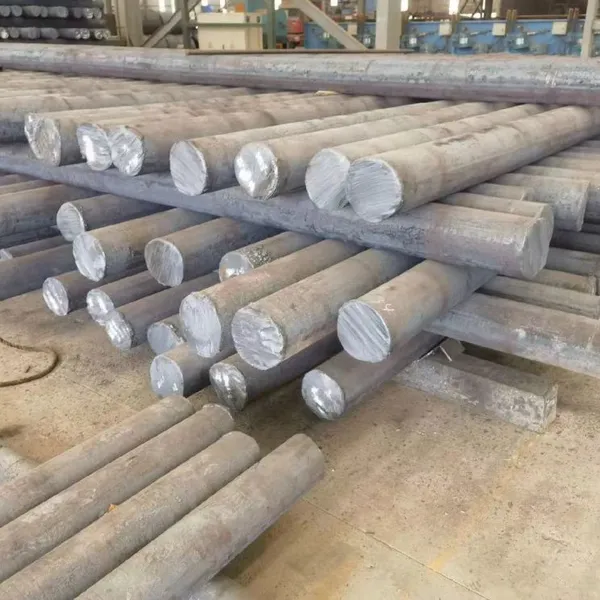
Round Steel is a solid long steel product with a circular cross-section, belonging to the bar category. It features a smooth surface without ribs, and its specification is expressed by diameter (mm). It is widely used in construction, machinery manufacturing and industrial processing fields due to its excellent processability and stable performance.
2. Executive Standards
Hot-rolled Round Steel: GB/T 702 "Dimensions, Shape, Weight and Allowable Deviation of Hot-rolled Round Steel and Square Steel"
Cold-drawn Round Steel: GB/T 905 "Dimensions, Shape, Weight and Allowable Deviation of Cold-drawn Round Steel, Square Steel and Hexagonal Steel"
3. Classification & Material
3.1 Classification by Production Process
Hot-rolled Round Steel: Rolled at high temperature, with oxide scale on the surface and relatively large tolerance. Specification range: φ5.5–250mm. It has the advantages of low cost and large output, suitable for general structural use.
Cold-drawn Round Steel: Cold-drawn after hot rolling, with smooth surface, precise dimension (h8/h9/h10) and high strength. It is suitable for precision shafts, fasteners and other high-precision parts.
Forged Round Steel: Formed by forging, with dense structure and excellent performance. It is used for heavy-duty parts such as large gears and main shafts.
3.2 Classification by Material
Carbon Structural Steel: Q235B, HPB300, 10#, 20#, 45#. It is easy to process and weld, with good comprehensive performance, and is widely used in ordinary structures and mechanical parts.
Alloy Structural Steel: 40Cr, 35CrMo, 42CrMo. It has high strength, wear resistance and fatigue resistance, and is suitable for key mechanical components that bear heavy loads.
4. Specification Parameters
Diameter Range: Hot-rolled φ5.5–250mm; Cold-drawn φ3–80mm; Forged φ50–350mm.
Fixed Length: Regular length 6m, 9m, 12m; Customizable short length or extra-long length is available.
Theoretical Weight: $$W(kg/m) = d^2 \times 0.00617$$ (d = diameter in mm). Example: φ20 = 2.47kg/m; φ50 = 15.42kg/m.
5. Production Process Flow
Smelting → Continuous Casting Billet (Square Billet/Round Billet) → Heating (1100–1250℃) → High-pressure Water Descaling → Rough Rolling → Intermediate Rolling → Finish Rolling → Controlled Cooling → Straightening → Fixed Length Cutting → Flaw Detection/Inspection → Bundling & Labeling → Warehousing
6. Main Applications
Construction Engineering: Stirrups, anchor bolts, embedded parts, steel structure connectors.
Mechanical Manufacturing: Shafts, gears, flanges, bolts, nuts, cutting tools, mold blanks.
Industrial Processing: Seamless steel pipe blanks, forging blanks, hardware tools, raw materials for standard parts.
7. Performance Characteristics
Good Plasticity: Easy to bend, weld and cut.
Moderate Strength: Carbon steel meets the needs of general structures, while alloy steel can bear heavy loads.
Smooth Surface: No ribs, weak bond with concrete (not used as main reinforcement).
Complete Specifications: Wide diameter coverage and flexible length customization.
8. Packaging & Delivery
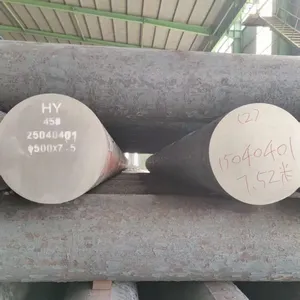
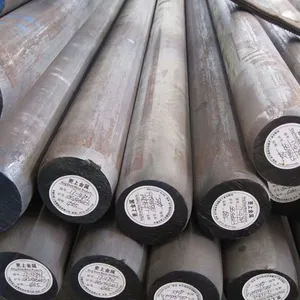
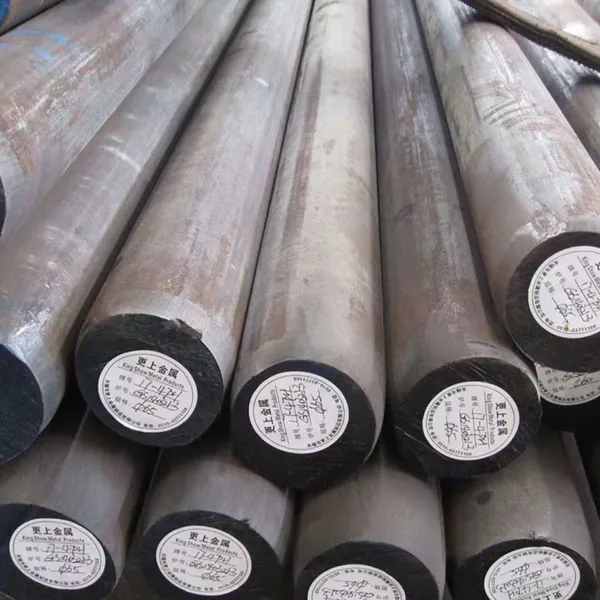
Packaging: Straight bars are bundled (2–5 tons per bundle), firmly bound, with labels attached to the ends (indicating material, specification, heat number, batch number).
Delivery Condition: Hot-rolled (black skin), cold-drawn (bright surface), forged (black skin/polished), heat treatment (normalizing/quenching and tempering).
9. Difference from Ribbed Steel
Surface: Round steel is smooth; ribbed steel has ribs (crescent ribs/spiral ribs).
Bonding Force: Round steel has weak bonding with concrete; ribbed steel has strong mechanical interlocking and is used as load-bearing main reinforcement.
Application: Round steel is mostly used for structural parts and processed parts; ribbed steel is specially used for reinforced concrete structures.
Product Advantages
✅ Stable Material: Produced according to national standards, with uniform composition and reliable performance.
✅ Excellent Processability: Easy to turn, weld and forge, suitable for various processes.
✅ Flexible Specifications: Customizable diameter and length to meet diverse needs.
✅ High Cost-Effectiveness: Carbon steel has low cost, alloy steel has excellent performance, and both can meet different budget and usage requirements.

Send Inquiry to This Supplier



You May Also Like
-
Steel Wire Rope,6×7 Wire Rope Thick Outer Wires, High Wear Resistance and Strong Compression Resistance.NegotiableMOQ: 2 Metric Tons
-
Steel Wire Rope,6×19 Wire Rope ,Balanced Structure With Good Wear Resistance and Flexibility. It is the Most Universal Type for General Lifting Works.NegotiableMOQ: 2 Metric Tons
-
Steel Wire Rope,6×37 + FC / IWRC High Flexibility, Suitable for Frequent Bending. Usage: Winch, Hoist, Winding Machinery.NegotiableMOQ: 2 Metric Tons
-
Steel Wire Rope, 6×61 + FC Ultra Soft Wire Rope, Super Flexible. Usage: Precision Lifting, Small Hoist Equipment.NegotiableMOQ: 2 Metric Tons
-
Steel Billet,Q235B: Common Carbon Steel, Good Toughness, Easy Processing ,3SP / 5SP: GOST Standard Grade, Popular in Central Asia & AfricaNegotiableMOQ: 2 Metric Tons
-
Flat Steel,- Hot Rolled Flat Bar: GB/T 704-2016 - Cold Drawn Flat Bar: GB/T 3078-2014 - Carbon Structural Steel: GB/T 700-2006NegotiableMOQ: 2 Metric Tons
-
Steel Round Bar,Q235B, Q195, Q215, 20#, 45#, 35#. Comply With GB/T 700, GB/T 699.NegotiableMOQ: 2 Metric Tons
-
Steel Round Bar,Q235B, Q195, Q215, 20#, 45#, 35#. Comply With GB/T 700, GB/T 699. Equivalent International Grades: S235JR, S275JR, ASTM A36, SS400.NegotiableMOQ: 2 Metric Tons
-
Flat Steel,Q345B / Q355B Low Alloy Steel: Higher Strength and Impact Resistance, Ideal for Heavy-load Steel Structures.NegotiableMOQ: 2 Metric Tons
-
Steel Wire Rope,Steel Strand,1×7: General‑purpose for Bridges, Building Beams and Ground Anchors.NegotiableMOQ: 2 Metric Tons


