








 Contact Platform Support
 Help Center
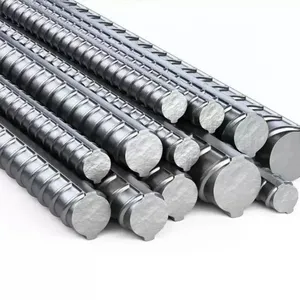
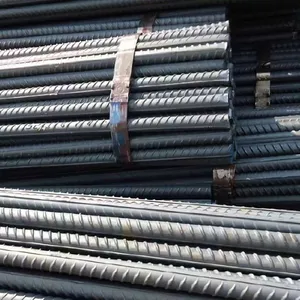
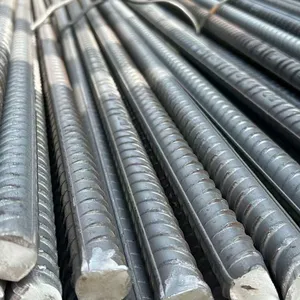
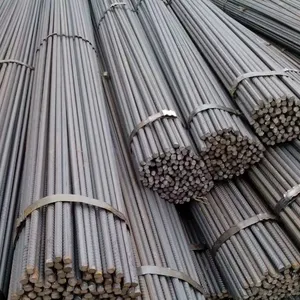
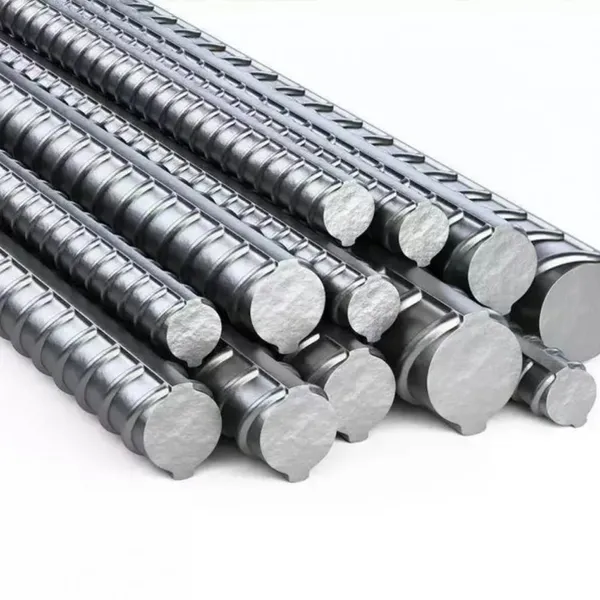
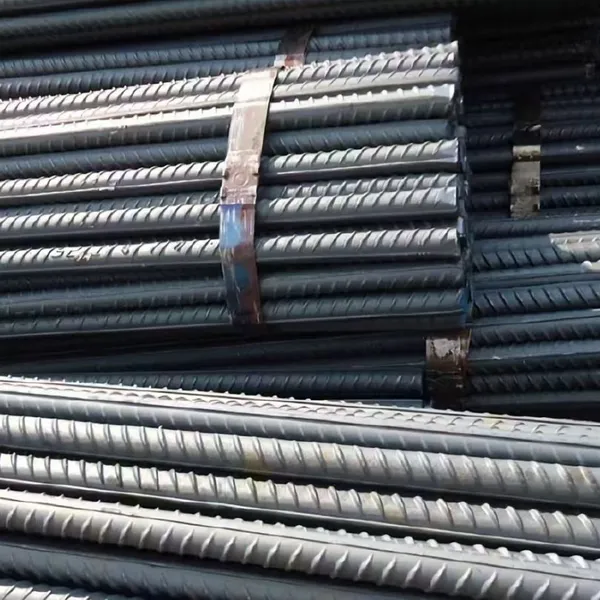
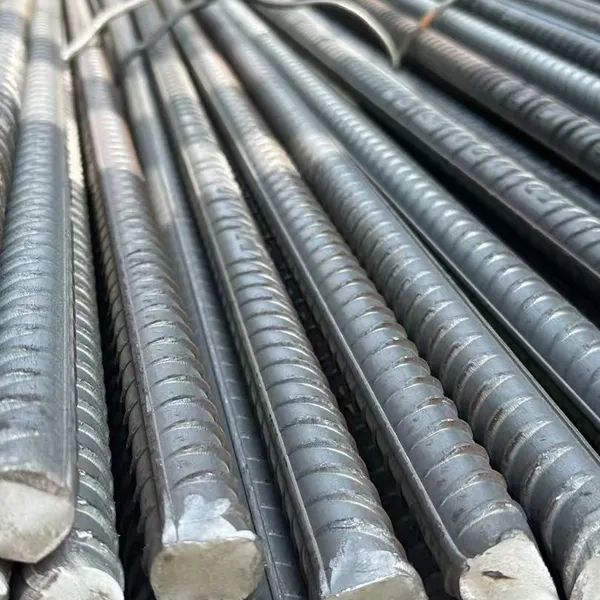
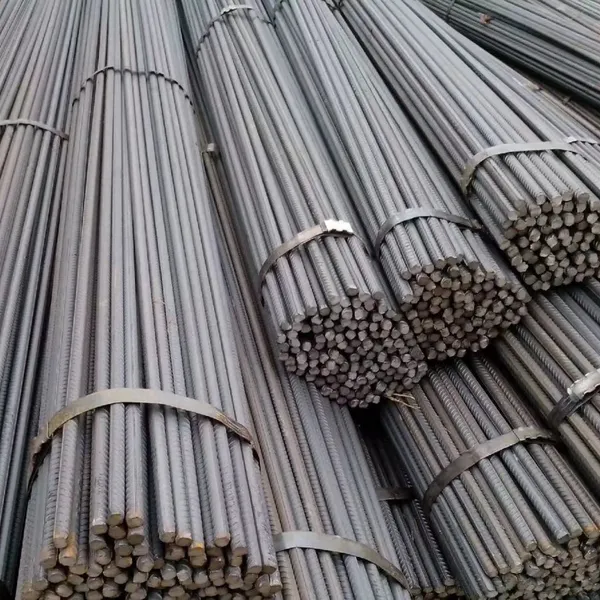
Steel Rebar & Deformed Steel Bar,HPB300、HRB400 (E)、HRB500 (E)、HRB600 (E)


Related Products
-
 Steel Rebar & Deformed Steel Bar,HPB300、HRB400 (E)、HRB500 (E)、HRB600 (E)NegotiableMOQ: 5 Long Tons
 -
Steel Sheet & Plate & Checkered Steel Plate,GB/T 700、GB/T 712、GB/T 4171NegotiableMOQ: 5 Metric Tons
-
Steel Sheet & Plate & Checkered Steel Plate,GB/T 700、GB/T 712、GB/T 4171NegotiableMOQ: 5 Metric Tons
-
Steel Sheet & Plate & Checkered Steel Plate,GB/T 700、GB/T 712、GB/T 4171NegotiableMOQ: 5 Metric Tons
-
Steel Sheet & Plate & Checkered Steel Plate,GB/T 700、GB/T 712、GB/T 4171NegotiableMOQ: 5 Metric Tons
1. Product Overview
Steel bars (also known as deformed steel bars) are core reinforcing materials for reinforced concrete structures. By working cooperatively with concrete, they effectively improve the tensile, bending, shear and seismic performance of structural components. They are widely applied in construction projects, bridges, tunnels, water conservancy and other engineering fields.
This specification is compiled in accordance with GB 1499.1-2024 (Hot-rolled Plain Round Steel Bars) and GB 1499.2-2024 (Hot-rolled Ribbed Steel Bars), applicable to hot-rolled ribbed steel bars, fine-grain hot-rolled ribbed steel bars and hot-rolled plain round steel bars with nominal diameters ranging from 6mm to 50mm.
2. Product Classification and Grades
2.1 Classification by Surface Type
Hot-rolled Plain Round Steel Bar (HPB): Smooth surface without transverse ribs, mainly used for stirrups and structural reinforcement. Common grades: HPB300, HPB400.
Hot-rolled Ribbed Steel Bar (HRB): With crescent-shaped transverse ribs on the surface, featuring strong bonding and anchoring force, serving as the main load-bearing reinforcement.
2.2 Classification by Strength Grade
| Grade | Yield Strength ReL (MPa) | Tensile Strength Rm (MPa) | Main Application |
|---|---|---|---|
| HPB300 | ≥300 | ≥420 | Stirrups, tie bars, small components |
| HRB400(E) | ≥400 | ≥540 | Civil buildings, ordinary beams and columns |
| HRB500(E) | ≥500 | ≥630 | High-rise buildings, long-span bridges |
| HRB600(E) | ≥600 | ≥710 | Super high-rises, heavy-load structures |
Note: Grades marked with E are seismic steel bars, which shall meet the requirements: yield ratio ≥1.25, over-yield ratio ≤1.30, total elongation Agt ≥9%.
3. Dimension, Shape and Theoretical Weight
3.1 Nominal Diameter and Theoretical Weight (Common Specifications)
| Nominal Diameter (mm) | Nominal Cross-sectional Area (mm²) | Theoretical Weight (kg/m) |
|---|---|---|
| 6 | 28.27 | 0.222 |
| 8 | 50.27 | 0.395 |
| 10 | 78.54 | 0.617 |
| 12 | 113.1 | 0.888 |
| 16 | 201.1 | 1.58 |
| 20 | 314.2 | 2.47 |
| 25 | 490.9 | 3.85 |
| 32 | 804.2 | 6.31 |
3.2 Shape Requirements
Ribbed Steel Bar: Uniform and clear transverse ribs, no cracks, scars or folds. Rib height and spacing comply with national standards; relative rib area ≥0.055.
Plain Round Steel Bar: Smooth surface without rust, oil contamination or damage; diameter deviation ≤±0.3mm.
3.3 Length Specification
Straight steel bars: Standard lengths 9m, 12m; customized lengths available from 6m to 15m.
Coiled steel bars: Diameter 6mm~10mm, coil weight ≥1000kg, inner coil diameter ≥800mm.
4. Technical Requirements
4.1 Chemical Composition (Melting Analysis, %)
| Grade | C | Si | Mn | P | S |
|---|---|---|---|---|---|
| HRB400E | 0.25~0.35 | 0.40~0.80 | 1.20~1.60 | ≤0.045 | ≤0.045 |
| HRB500E | 0.28~0.38 | 0.40~0.80 | 1.20~1.60 | ≤0.045 | ≤0.045 |
4.2 Mechanical Properties (Room Temperature Tensile Test)
Yield Strength (ReL): Measured value not lower than standard value and not exceeding standard value +120MPa.
Tensile Strength (Rm): Measured value not lower than standard value; elongation at break A ≥16% for HRB400E.
Cold Bending Performance: No cracks or fractures after 180° cold bending test. Bending mandrel diameter: 3d for diameter ≤25mm; 4d for diameter >25mm.
4.3 Process Performance
Reverse Bending: Seismic steel bars shall pass reverse bending test without cracks after bending.
Fatigue Performance: No fracture after 2 million times of fatigue test (for dynamic load structures).
5. Test Methods
Dimension measurement: Use caliper to measure diameter, rib height and rib spacing; use tape to measure length and coil diameter.
Tensile test: Conducted in accordance with GB/T 228.1 to test yield strength, tensile strength and elongation.
Cold bending test: Follow GB/T 232; inspect surface cracks visually after bending.
Chemical composition: Detected by spectrometer in accordance with GB/T 4336 for C, Si, Mn, P, S content.
Weight deviation: Tested per GB 1499.2; take 10 pieces per batch for weighing, allowable deviation ≤±4%.
6. Inspection Rules
6.1 Batch Division
Each batch shall not exceed 60 tons with the same grade, same furnace number, same specification and same delivery status. Different furnace numbers with similar chemical composition can be combined, with no more than 3 furnace numbers per batch.
6.2 Factory Inspection
Mandatory inspection items: dimension, shape, weight deviation, tensile property, cold bending property and chemical composition.Seismic steel bars additional inspection: yield ratio, over-yield ratio, total elongation and reverse bending.
6.3 Re-inspection and Judgment
If any item fails, double samples shall be taken for re-inspection; the whole batch shall be rejected if still unqualified.If weight deviation is unqualified, piece-by-piece inspection is allowed, and qualified products can be delivered after removing unqualified ones.
7. Packaging, Marking and Quality Certificate
7.1 Packaging
Straight steel bars: Bundled into bundles, each bundle ≤2 tons, fastened with iron wire or steel strip with neat ends.
Coiled steel bars: Firmly bundled, each coil attached with 2 metal nameplates to prevent loosening.
7.2 Marking
Nameplate: Each bundle/coil is fixed with a metal nameplate marked with manufacturer, grade, specification, furnace number, batch number, weight, execution standard and production date.
Surface marking: Grade, specification and factory logo are printed on the steel bar surface with clear and durable marks at spacing ≤2m.
7.3 Quality Certificate
A quality certificate is provided upon delivery, including manufacturer information, product name, grade, specification, furnace number, batch number, weight, chemical composition, mechanical and process performance test results, execution standard, inspection conclusion, delivery date and inspector signature.
8. Transportation and Storage
8.1 Transportation
Avoid rain, moisture and rusting; load neatly to prevent bending, deformation and damage. Separate different grades and specifications, mixed loading is prohibited.
8.2 Storage
Store in dry, ventilated, rainproof and moisture-proof warehouse or shed. Place on supports with height ≥300mm from the ground to avoid rusting. Stack by grade, specification and furnace number with clear identification, follow first-in first-out principle. Stacking height ≤1.5m to prevent collapse; coiled steel bars shall be placed vertically to avoid flattening.
9. Application Notes
Acceptance on arrival: Check nameplates and quality certificates; sample and re-inspect dimension, mechanical properties and chemical composition before use.
Processing requirements: Cutting with steel bar cutter for smooth incision without burrs or deformation; bending with bending machine for accurate angle without cracks or rebound. Welding shall remove rust and dirt in advance with full weld seam free of porosity and inclusion.
Installation requirements: Fasten binding with galvanized iron wire, comply with design spacing and protective layer thickness. Lap length ≥30d for HRB400E; mechanical connection shall comply with JGJ 107.
Seismic requirement: Grade I and II seismic structures must adopt E-grade seismic steel bars with strict control on yield ratio and elongation.
10. Quality Guarantee
Products are manufactured strictly in accordance with national standards, with official quality certificates provided.
The manufacturer shall not be liable for quality problems caused by improper transportation, storage, processing and installation by users.
Under normal storage conditions, the quality guarantee period is 6 months from the delivery date.
11. Delivery Cycle
Delivery cycle: 5-7 working days

Send Inquiry to This Supplier



You May Also Like
-
Steel Coil & Strip & Color Coated Steel Coil,Z80/Z120/Z180/Z275,AZ100/AZ150NegotiableMOQ: 5 Metric Tons
-
Steel Coil & Strip & Color Coated Steel Coil,Z80/Z120/Z180/Z275,AZ100/AZ150NegotiableMOQ: 5 Metric Tons
-
Steel Coil & Strip & Color Coated Steel Coil,Z80/Z120/Z180/Z275,AZ100/AZ150NegotiableMOQ: 5 Metric Tons
-
Steel Coil & Strip & Color Coated Steel Coil,Z80/Z120/Z180/Z275,AZ100/AZ150NegotiableMOQ: 5 Metric Tons
-
Steel Coil & Strip & Hot-Rolled Coil,S235JR、SS400、A36、SPHC/SPHD/SPHE、S355JR、A572Gr50NegotiableMOQ: 5 Metric Tons
-
Steel Coil & Strip & Hot-Rolled Coil,S235JR、SS400、A36、SPHC/SPHD/SPHE、S355JR、A572Gr50NegotiableMOQ: 5 Metric Tons
-
Steel Coil & Strip & Hot-Rolled Coil,S235JR、SS400、A36、SPHC/SPHD/SPHE、S355JR、A572Gr50NegotiableMOQ: 5 Metric Tons
-
Steel Coil & Strip & Hot-Rolled Coil,S235JR、SS400、A36、SPHC/SPHD/SPHE、S355JR、A572Gr50NegotiableMOQ: 5 Metric Tons
-
Steel Coil & Strip & Cold Rolled Steel Coil,DC01、DC03、DC04NegotiableMOQ: 5 Metric Tons
-
Steel Coil & Strip & Cold Rolled Steel Coil,DC01、DC03、DC04NegotiableMOQ: 5 Metric Tons


