








 Contact Platform Support
 Help Center
GE IS200TRLYH1BHH 16-channel Relay Output Board



Related Products
-
 GE DS200UDSAG1ADE Turbine Excitation CardNegotiableMOQ: 1 Piece
 -
GE DS200PCCAG1ACB Power Connect CardNegotiableMOQ: 1 Piece
-
GE DS200SIOCG1AEA Instantaneous Overcurrent CardNegotiableMOQ: 1 Piece
-
GE IS200TBCIH1BBC Contact Input Terminal BoardNegotiableMOQ: 1 Piece
-
GE IS200TPROH1BCB Protective Termination BoardNegotiableMOQ: 1 Piece
I. Basic Information
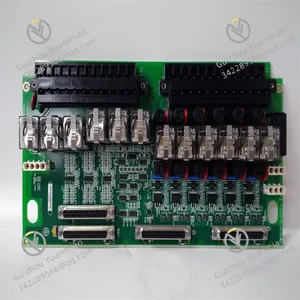
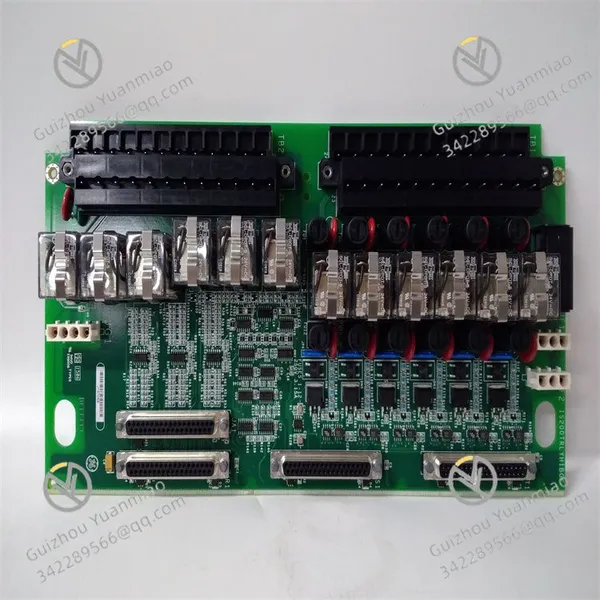
GE IS200TRLYH1BHH is a high-performance relay interface module primarily designed for the Mark V, Mark VI, and Mark VIe series turbine control systems. As a core component for signal conversion, control execution, and equipment linkage in industrial automation, it is widely used in various industrial control scenarios with high requirements for reliability and safety. This module is essentially a relay output module with integrated I/O signal conditioning capabilities. It serves as a bridge between the control system and external actuators (such as pumps, valves, alarms, etc.), and can scale and condition various analog and digital signals to ensure precise execution of control commands and real-time feedback of equipment status. Manufactured in the United States with industrial-grade components, it features high reliability, strong anti-interference performance, and excellent environmental adaptability, making it suitable for complex and harsh industrial field environments, especially for control applications in heavy machinery such as gas turbines. The module has a distinct structural design, including two large black terminal blocks on the left edge with a total of forty-eight silver metal terminals, each marked with white printing. Four connector ports are located on the right edge. Near the center are ten socket‑type sealed mechanical relays in black and white with transparent cube covers. Round black transistors and red MOVs (Metal Oxide Varistors) are installed on both sides of the relays. Components are connected to the PCB via black wiring, resulting in a compact and logically arranged overall structure.
II. Technical Specifications
Power Specification: Input voltage is typically 24V DC (adjustable based on installation requirements). The power input is stable and can accommodate common voltage fluctuations in industrial sites to ensure reliable operation.
Environmental Specification: Operating temperature range is generally -20°C to 60°C, suitable for high and low temperature environments in industrial fields. The protection class complies with industrial standards, effectively resisting dust and mild moisture for use in harsh industrial environments.
Output Configuration: As a relay output module, it is typically equipped with 8 or more relay outputs and supports multiple output configurations, which can be flexibly adjusted according to actual application needs to meet the control requirements of different external devices.
Signal & Isolation: Mainly processes digital signals for control and monitoring applications. Galvanic isolation between input and output effectively prevents signal interference, ensuring accurate signal transmission and equipment safety.
Electrical Performance: Features instantaneous overcurrent protection, capable of detecting stray currents in the system to prevent potential faults and ensure safe operation over a wide frequency range. Supports single‑phase or three‑phase current measurement, allowing users to select input current channels as needed.
Hardware & Installation: Equipped with dedicated processing components and integrated MOV suppression for voltage surge protection, enhancing product safety. With a compact design, it supports DIN rail or panel mounting for easy installation, maintenance, and replacement, enabling seamless integration into GE‑related control systems.
III. Functional Features
Signal Conditioning & Conversion: Capable of scaling and conditioning various analog signals read from terminal boards mounted on the I/O core, including LVDT inputs, servo valve outputs, thermocouple inputs, 4–20mA I/O, and vibration inputs. It also enables digital signal transmission and conversion to ensure signals match control system requirements.
Reliable Relay Control: Fitted with socket‑type sealed mechanical relays for improved durability and long‑term stability. It executes control commands through relay switching to achieve precise control of external devices (pumps, valves, alarms, etc.) across diverse control and monitoring applications.
Safety Protection Functions: Provides instantaneous overcurrent protection and MOV surge protection to effectively defend against abnormal conditions such as current overload and voltage spikes. It also detects system stray currents to prevent potential failures and safeguard the safe operation of the module and the entire control system.
High Reliability & Anti‑Interference: Constructed with industrial‑grade components and rigorously tested for industrial environments. Galvanic isolation between inputs and outputs reduces signal interference significantly. The voted coil drive feedback function monitors relay status in real time, detects anomalies promptly, and improves system reliability.
Flexible Adaptation & Integration: Supports single‑phase or three‑phase current measurement and allows flexible parameter configuration via hardware jumpers. Compatible with Mark V, Mark VI, Mark VIe and other turbine control systems, it integrates seamlessly with other GE modules and supports single, dual, and triple redundant systems for versatile platform compatibility.
Easy Installation & Maintenance: Compact structure with standardized mounting for convenient installation and removal. Clearly marked terminals simplify wiring and troubleshooting. The modular design facilitates later maintenance, upgrades, and replacements, effectively reducing operation and maintenance costs.
IV. Application Areas
Power Industry: Mainly used in turbine (especially gas turbine) control systems in coal‑fired power plants, gas‑fired power plants, nuclear power plants, etc. It performs signal conditioning, relay control, and safety protection to ensure stable unit operation and participates in critical processes such as safe shutdown and load regulation.
Petrochemical Industry: Applied in process control systems as an interface between control systems and field equipment. It controls the operation of reactors, valves, pumps, and other devices, monitors key production parameters, and ensures production safety and continuity.
Industrial Automation: Used in the control of various industrial production lines and automated equipment to manage motors, lighting, and other devices, enabling automated monitoring and regulation of production processes. It is also suitable for robotics applications by providing reliable relay output signals for precise robot control.
Building Automation: Deployed in building control systems to control and monitor HVAC, lighting, and other systems, supporting rational energy management and coordinated equipment operation in buildings.
Other Fields: Also used in aerospace, transportation (e.g., rail transit), renewable energy management, and other scenarios. It provides relay interface and signal conditioning services for high‑reliability control systems and adapts to the requirements of complex industrial environments.
V. Operating Notes
Installation Standards: Install in well‑ventilated locations, away from high‑temperature, high‑humidity, and strong electromagnetic interference equipment, with sufficient heat dissipation space. Securely mount according to DIN rail or panel requirements to avoid vibration affecting terminal connections and internal component stability.
Wiring Requirements: Strictly observe polarity for power wiring to prevent module damage from reverse connection. Verify terminal markings during wiring to ensure correct connection of signal and power circuits. Route input and output cables separately to avoid cross‑interference. Shielded cables are recommended to reduce electromagnetic interference on signal transmission.
Parameter Configuration: Set output current ranges, signal types, and other parameters appropriately via hardware jumpers according to control system requirements and external equipment specifications. Conduct testing after configuration to verify correct settings and compatibility between the module and upstream/downstream equipment.
Maintenance: Regularly clean dust from the module surface, inspect for loose terminal connections and aging wiring, and tighten or replace components as needed. Periodically check relay status and MOV protection elements and address abnormalities immediately. Monitor module operation through the control system to troubleshoot overcurrent, signal anomalies, and other issues. Ensure model matching when replacing modules to avoid compatibility problems affecting system performance.
Safe Operation: Do not disassemble or touch internal components randomly during operation. Disconnect power before wiring, maintenance, or other operations to avoid electric shock or equipment damage. Use the module strictly in accordance with operating procedures to prevent failures caused by improper operation.

Send Inquiry to This Supplier


You May Also Like
-
GE DS200SDCCG5AHD Drive Control CardNegotiableMOQ: 1 Piece
-
GE 531X307LTBAKG1 LAN Terminal BoardNegotiableMOQ: 1 Piece
-
GE IS215UCCCM04A Compact PCI Controller BoardNegotiableMOQ: 1 Piece
-
GE G60E00HAHF8LHXXM8LPXXUXXWXX Generator Control RelayNegotiableMOQ: 1 Piece
-
GE VMIVME-7666-111000 Multifunctional I/O ModuleNegotiableMOQ: 1 Piece
-
GE IS420ESWBH2A Non-hosted Industrial Ethernet (IONet) SwitchNegotiableMOQ: 1 Piece
-
GE VMIVME-3215-000 Thermocouple Signal Acquisition ModuleNegotiableMOQ: 1 Piece
-
GE IS215VCMIH2BB VME Bus Master ControllerNegotiableMOQ: 1 Piece
-
GE IS200VCMIH2BCC Communication Interface CardNegotiableMOQ: 1 Piece
-
GE IS200AEPAH1AHD Excitation Power Control (AEPC) BoardNegotiableMOQ: 1 Piece


