








 Contact Platform Support
 Help Center
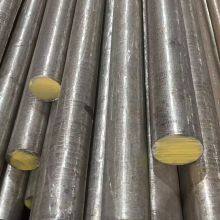
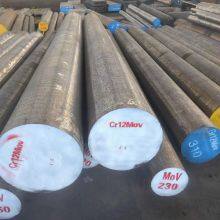
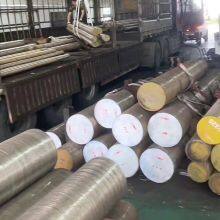
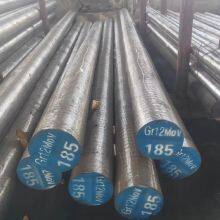
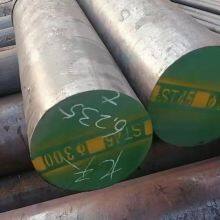
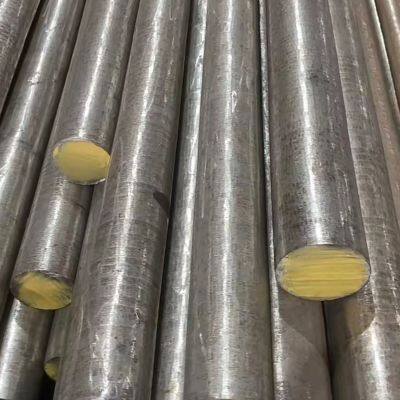
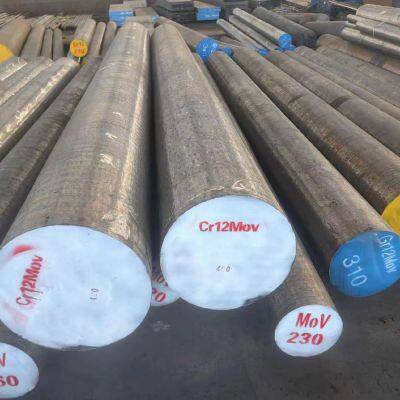
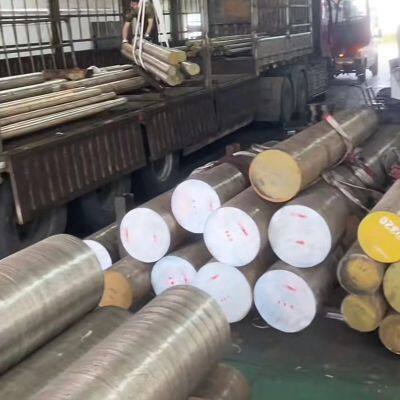
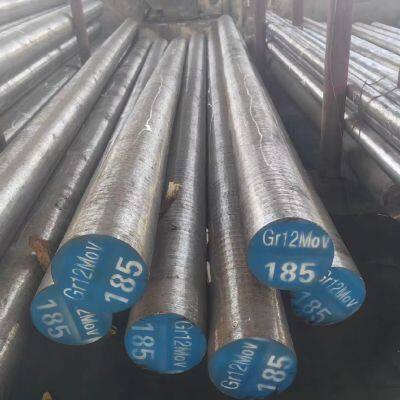
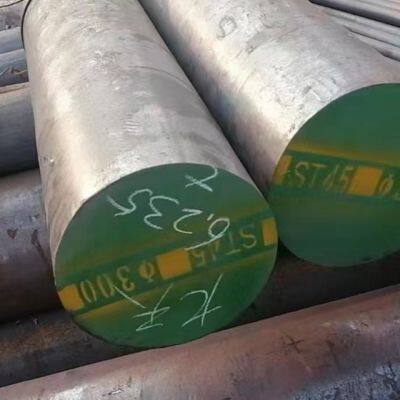
Steel Round Bar & Alloy Steel Round Bar,Cr12Mov


Related Products
-
 Galvanized Steel Bars & Steel Round Bar,GB/T 50046,YB/T 4366,ASTM A767/A767M,BS 4448NegotiableMOQ: 5 Metric Tons
 -
Galvanized Steel Bars & Steel Round Bar,GB/T 50046,YB/T 4366,ASTM A767/A767M,BS 4448NegotiableMOQ: 5 Metric Tons
-
Galvanized Steel Bars & Steel Round Bar,GB/T 50046,YB/T 4366,ASTM A767/A767M,BS 4448NegotiableMOQ: 5 Metric Tons
-
Silicon Steel & Silicon Steel CoilNegotiableMOQ: 5 Metric Tons
-
Silicon Steel & Silicon Steel CoilNegotiableMOQ: 5 Metric Tons
I. Basic Overview
Cr12MoV is a classic high-carbon high-chromium ledeburitic cold work die steel under China's national standard alloy tool steel system. Its mainstream supply form in the market includes hot-rolled, forged, and cold-drawn bright round steel; it features high hardness, high wear resistance, high hardenability, and minimal deformation during heat treatment, making it a core universal steel for heavy-duty cold stamping and cold forming dies.
Corresponding Domestic and Foreign Grades
Chinese Standard: GB/T 1299 Cr12MoV
German Standard: 1.2601
American Standard: Similar to D2 (Cr12MoV has superior toughness compared to ordinary D2)
Japanese Standard: Similar to SKD11 (minor differences in chemical composition)
II. Standard Chemical Composition (Mass Fraction %)
Carbon (C): 1.45~1.70%, Chromium (Cr): 11.00~12.50%, Molybdenum (Mo): 0.40~0.60%, Vanadium (V): 0.15~0.30%, Silicon (Si): ≤0.40%, Manganese (Mn): ≤0.40%, Phosphorus/Sulfur (P/S): ≤0.03% (strictly controlled impurities).
Features: High carbon content ensures hardness and wear resistance; high chromium improves corrosion resistance and hardenability; molybdenum and vanadium refine grains, enhance toughness, and inhibit carbide segregation.
III. Common Supply Conditions & Hardness
1. Annealed Black Round Steel (Mainstream Original Factory Supply)
Surface: Natural oxide scale with dark brown color.
Hardness: 207~255HB.
Performance: Excellent machinability with uniform microstructure, facilitating rough machining processes such as turning, milling, and drilling while reducing tool wear and improving efficiency. It is ideal for preliminary forming after blanking and offers cost-effectiveness, making it the preferred choice for mass-produced dies.
2. Precision Turned, Peeled/Ground Bright Round Steel
Processing: Multi-step precision finishing including peeling (to remove oxide scale and defective layers) followed by precision turning or grinding.
Surface Quality: Smooth and clean without oxide scale, cracks, or scratches.
Dimensional Accuracy: Tolerance up to h8-h9 grade; surface roughness Ra≤0.8μm.
Advantage: No need for additional external precision machining, directly applicable to key components like mold cavities and cores, significantly shortening production cycles.
3. Forged Round Steel
Application: Large specifications (usually diameter ≥100mm) or dies requiring high toughness.
Process Advantage: Repeated forging breaks coarse cast structures, refines grains, and achieves uniform carbide distribution, effectively improving carbide segregation—a common issue in Cr12MoV steel.
Performance: Superior toughness, impact resistance, and fatigue strength compared to hot-rolled round steel, suitable for heavy-duty and complex working conditions.
Note: Higher production cost and longer lead time.
IV. Core Mechanical Properties
1. Hardness Performance
After standard heat treatment (quenching + low-temperature tempering), the hardness stabilizes at 58~62HRC and remains consistent even after multiple tempering cycles. High hardness is the foundation for excellent wear resistance, ensuring dimensional stability of dies during repeated cold stamping and extrusion.
2. Wear Resistance
Abundant alloy carbides (e.g., MC, M6C) formed during heat treatment exhibit ultra-high hardness (Hv 1800~2200) and uniform distribution. This enables effective resistance to abrasive and adhesive wear, resulting in significantly longer service life than carbon tool steel and low-alloy die steel in high-stress applications like thick steel plate stamping and metal cold extrusion.
3. Hardenability
As a high-hardenability steel grade, Cr12MoV has an extremely low critical cooling rate. Even for large-diameter round steel (e.g., φ300mm), uniform hardening can be achieved from surface to core with a hardness difference ≤3HRC, eliminating the "soft core" issue common in ordinary die steel for large-section components.
4. Heat Treatment Deformation
Classified as a micro-deformation steel, Cr12MoV exhibits consistent thermal expansion and contraction due to balanced chemical composition and uniform carbide distribution. The dimensional change rate after heat treatment is typically ≤0.05%, minimizing post-heat treatment correction and ensuring high precision for complex dies.
5. Strength and Toughness
Compared to ordinary Cr12 steel, the addition of molybdenum and vanadium significantly improves toughness. While maintaining high hardness and wear resistance, it offers moderate impact resistance, effectively preventing die chipping and cracking under medium impact loads. Note: Limited cold impact toughness, not suitable for extreme impact applications.
V. Standard Heat Treatment Process (Key Parameters)
1. Spheroidizing Annealing
Purpose: Improve microstructure, reduce hardness, and enhance machinability.
Process: Slow heating to 850~870℃, holding for 2~4 hours, then furnace cooling to below 500℃ followed by air cooling.
Effect: Forms fine, uniform spherical carbides, eliminates internal stress from forging/rolling, and prepares for subsequent machining and final heat treatment.
2. Quenching
Critical Process: Determines core performance; strict temperature and cooling control required.
Parameters: Heating temperature 1020~1040℃ (slow heating to avoid thermal stress); holding time 1.5~3 hours (diameter-dependent, ensuring full carbide dissolution); cooling method prioritizes vacuum quenching or air cooling (reduces deformation and cracking risk). Oil cooling is acceptable with controlled speed to prevent stress concentration.
3. Tempering
Purpose: Eliminate residual stress, stabilize microstructure and dimensions, and enhance toughness.
Process: Low-temperature tempering at 180~220℃ for 2~3 hours, recommended 2~3 cycles.
Result: Final structure consists of tempered martensite + uniformly distributed alloy carbides, achieving optimal comprehensive performance.
VI. Processing Characteristics
1. Machinability
Annealed State: Moderate hardness and uniform structure enable good machinability with high-speed steel or cemented carbide tools. Recommended parameters: low cutting speed, moderate feed rate, and depth of cut; sufficient cutting fluid to reduce temperature and tool wear.
Quenched State: Ultra-high hardness makes conventional machining difficult. Standard process flow: rough machining → heat treatment → precision finishing (grinding, wire cutting).
2. Special Processing Performance
Wire Cutting (Fast/Slow Wire): Control discharge parameters to avoid surface cracking and hardness reduction.
Grinding: Excellent grindability for achieving high precision and surface finish; adequate cooling required to prevent grinding burn and cracks.
Polishing: Can achieve surface roughness Ra≤0.02μm after fine polishing, suitable for high-gloss mold cavities.
3. Weldability
Poor weldability due to high carbon and chromium content, which tends to form hardened structures and cracks at the weld-metal interface. Welding is generally not recommended; for minor repairs:
Preheating: 300~400℃ for the welding area.
Material: Matching alloy electrodes.
Technique: Small current and short arc welding.
Post-Weld: Immediate low-temperature tempering at 200~250℃ to eliminate residual stress.
VII. Common Specifications and Forms
Diameter Range
φ5mm~φ450mm, categorized by application:
φ5mm~φ50mm: Cold-drawn bright round steel and precision peeled round steel for small precision dies.
φ50mm~φ200mm: Hot-rolled black round steel and forged round steel for medium-sized dies and mechanical wear parts.
φ200mm+: Forged round steel for large heavy-duty dies.
Classification by Surface and Process
Hot-Rolled Black Round Steel: Oxide scale surface, cost-effective.
Cold-Drawn Precision Round Steel: High dimensional accuracy, smooth surface.
Forged Round Steel: Superior toughness for large specifications.
Peeled Bright Round Steel: Defect-free surface, ready for direct processing.
Cut-to-Length Round Steel: Custom lengths for immediate use.
VIII. Typical Application Fields
1. Cold Stamping Dies
Core Applications: Cold blanking dies, punch/die inserts, punching dies, blanking dies.
Industry Examples: Stamping dies for automotive structural parts and chassis components; precision dies for electronic device housings, terminals, and heat sinks; forming dies for hardware tools (wrenches, screwdrivers).
2. Cold Forming Dies
Core Applications: Cold extrusion dies, drawing dies, thread rolling dies, thread chasers.
Industry Examples: Extrusion dies for bolts, nuts, and gear blanks (copper, aluminum, steel); deep drawing dies for cans, metal containers, and automotive panels; thread rolling tools for fasteners (ensuring thread precision and tool life).
3. Hardware and Auto Parts Manufacturing
Core Applications: Thick steel plate blanking dies, trimming dies, shear blades.
Advantages: Maintains sharp cutting edges under high shear stress, reducing tool replacement frequency.
Examples: Shear blades for automotive steel plates; trimming dies for hardware stamping parts.
4. Tooling and Gauge Manufacturing
Core Applications: Precision wear-resistant fixtures, templates, gauges, and jigs.
Advantages: High hardness, dimensional stability, and wear resistance for long-term precision retention.
Examples: Locating fixtures for machining; dimensional inspection gauges; mold debugging templates.
5. Metallurgical and Mechanical Equipment
Core Applications: Wear-resistant roll mandrels, cold heading dies, wear-resistant liners, and pins.
Advantages: Withstands severe wear and loads, extending service life and reducing maintenance costs.
Examples: Wear-resistant roll mandrels for cold rolling mills; cold heading dies for metal forming.
IX. Processing and Usage Notes
1. Machining Notes
Tool Selection: Cemented carbide or coated tools (avoid ordinary high-speed steel for high-speed cutting).
Cutting Fluid: Full application to reduce temperature and prevent surface burn.
Stress Relief: Post-rough machining annealing to eliminate internal stress.
Machining Allowance: Sufficient allowance for large-section round steel to accommodate post-heat treatment grinding.
2. Heat Treatment Notes
Heating Rate: Slow heating (segmented heating for large specifications) to avoid thermal shock cracking.
Temperature Control: Overheating causes grain coarsening; underheating results in insufficient hardening.
Cooling Strategy: Step quenching or isothermal quenching for large-section/complex workpieces.
Timely Tempering: Temper within 24 hours after quenching (multiple cycles recommended).
3. Usage Notes
Avoid extreme impact loads (e.g., high-speed stamping of thick steel) to prevent chipping.
Preheating: 100~150℃ preheating for low-temperature environments.
Maintenance: Regular inspection and regrinding of cutting edges; clean and rust-proof precision dies during storage.
X. Procurement and Quality Inspection Guidelines
1. Qualification Verification
Supplier Selection: Reputable manufacturers with original quality certificates, material test reports (MTR), and spectral analysis reports.
Key Documentation: Confirm compliance with GB/T 1299; verify grade, specification, batch number, supply condition, and hardness.
2. Material Differentiation
Hot-Rolled vs. Forged vs. Cold-Drawn: Forged steel for heavy-duty/large dies; cold-drawn steel for precision small dies; hot-rolled steel for cost-sensitive applications.
Grade Distinction: Differentiate Cr12MoV from Cr12, D2, and SKD11 via spectral analysis or MTR verification.
3. Visual and Hardness Inspection
Surface Quality: No cracks, folds, inclusions, or oxide scale peeling; uniform oxide scale for black steel; smooth surface for bright steel.
Hardness Check: 207~255HB for annealed steel (excessive hardness indicates insufficient annealing; low hardness may signal non-compliant composition or improper heat treatment).
4. Internal Quality Inspection
Ultrasonic Testing: For critical dies, detect internal defects (porosity, shrinkage, cracks).
Forged Steel Verification: Request forging process reports (forging times, reduction ratio) to ensure grain refinement.
Metallographic Analysis: Inspect carbide morphology (fine, uniform, and dispersed carbides indicate high quality; avoid aggregated or segregated carbides).
XI.Delivery time
5-7 days.

Send Inquiry to This Supplier



You May Also Like
-
Silicon Steel & Silicon Steel CoilNegotiableMOQ: 5 Metric Tons
-
Steel Billet & Steel Semi-finished Product Q235 Steel Billet SAE1008 / SAE1010 Steel Billet 3SP / 5SP Prime BilletNegotiableMOQ: 5 Metric Tons
-
Steel Billet & Steel Semi-finished Product Q235 Steel Billet SAE1008 / SAE1010 Steel Billet 3SP / 5SP Prime BilletNegotiableMOQ: 5 Metric Tons
-
Steel Billet & Steel Semi-finished Product Q235 Steel Billet SAE1008 / SAE1010 Steel Billet 3SP / 5SP Prime BilletNegotiableMOQ: 5 Metric Tons
-
Steel Round Bar & Mold Steel Bar,Cr12MovNegotiableMOQ: 5 Metric Tons
-
Steel Round Bar & Mold Steel Bar,Cr12MovNegotiableMOQ: 5 Metric Tons
-
Steel Round Bar & Mold Steel Bar,Cr12MovNegotiableMOQ: 5 Metric Tons
-
Steel Billet & Square Steel Billet,A36、A572、ST37、ST52、S235JR、S355JRNegotiableMOQ: 5 Metric Tons
-
Steel Billet & Square Steel Billet,A36、A572、ST37、ST52、S235JR、S355JRNegotiableMOQ: 5 Metric Tons
-
Steel Billet & Square Steel Billet,A36、A572、ST37、ST52、S235JR、S355JRNegotiableMOQ: 5 Metric Tons


