








 Contact Platform Support
 Help Center
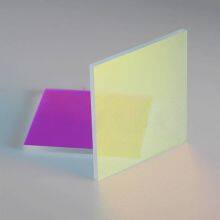
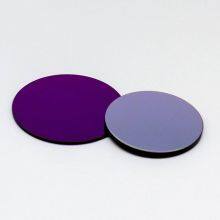
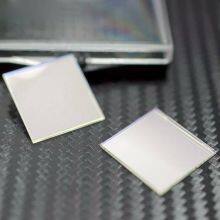
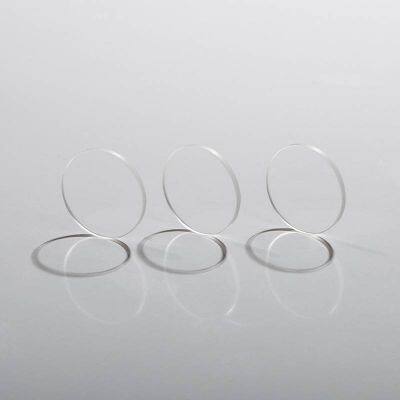
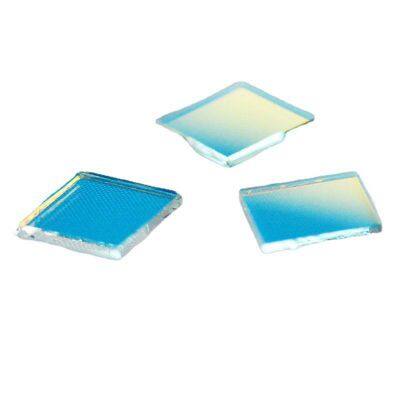
Pingzhi Optical Bandpass Filter; Made of Quartz; Effectively Filters Stray Light


Related Products
-
 Pingzhi Optics High-precision Aerial Camera Lens, Φ25.4mm Infrared Material Convex LensUS$ 2.54 - 2.85MOQ: 1000 Pieces
 -
Pingzhi Optics High Reflectivity Optical Coating Machine Vision Aluminum-coated All-dielectric ReflectorUS$ 1.08 - 1.15MOQ: 1000 Pieces
-
Pingzhi Optics Infrared Bandpass Filter for Lidar and Laser Ranging, Pz-bp850US$ 0.3 - 0.31MOQ: 1000 Pieces
-
Pingzhi Optics Pcr Fluorescence Detection Filter, Poct Excitation 470nm Blue Light Narrowband FilterUS$ 2.77 - 3.08MOQ: 100 Pieces
-
Galvanometer for Laser Cutting Machine; Reflector; 1064 Reflector; 30×14 ReflectorUS$ 2.34 - 2.92MOQ: 1000 Pieces
A filter is an optical device used to select the desired radiation band. Adding a filter to a camera can improve the image quality. The substrates of filters are mostly white glass, colored glass, quartz, plastic, etc. Usually, the filter is installed behind the camera lens, close to the surface of the image sensor. Filters can be classified according to the wavelength band of the passing spectrum: ultraviolet (180~400nm), visible light (400~700nm), near-infrared (700~3000nm), infrared (above 3000nm~10um) filters, etc. According to the spectral characteristics, they can be divided into band-pass, short-wave cutoff, and long-wave cutoff filters. Band-pass means that light in a specific wavelength band passes through. According to the bandwidth, they are divided into narrow-band and wide-band. Usually, they are distinguished by the ratio of the bandwidth to the central wavelength. Narrow-band is less than 5%, and wide-band is greater than 5%. An Optical Low Pass Filter (OLPF) uses the light-splitting effect of birefringent crystals or phase gratings to form a comb filter in the frequency domain. It matches the front-end optical system and the back-end image sensor, attenuates the high-frequency signals in the spatial part of the image, and can well eliminate the Moiré fringes introduced by frequency mixing, playing the role of low-pass filtering. OLPF is widely used in digital imaging systems such as digital cameras and surveillance cameras. Cameras often use Infra-Red Cut Filters (IRCF). The working principle is to alternately coat optical films with high and low refractive indices on the optical substrate using precision optical coating technology, achieving high transmittance in the visible light region (400~630nm) and cutoff in the near-infrared region (700~1100nm). Its main function is to prevent red light/infrared light from entering the image sensor, thereby reducing color cast. Different image sensors have different requirements for infrared cut filters, so the film systems of infrared cut filter products of various manufacturers also vary. Usually, the film system has six to more than ten layers, and more layers result in better effects. The light transmittance of the mirror without IRCF
According to different substrate materials, infrared cut filters can be divided into two types: white glass and blue glass infrared cut filters. The white glass infrared cut filter is coated on ordinary optical glass and is used in low and medium pixel cameras. The blue glass infrared cut filter is coated on blue glass to filter out infrared light (blue glass absorbs infrared light, and the coating reflects infrared light), which can effectively eliminate false colors and is mainly used in cameras with more than 8M pixels. The blue glass infrared cut filter has a higher unit price. With the penetration of high pixels and dual cameras, the market for blue glass infrared cut filters is expected to grow rapidly. The global market scale of infrared cut filters is about 4-5 billion yuan. In 2015, the market shares of IRCF filter companies were as follows: O-film 27%, Crystal-optech 21%, Hawitt 12%, Tanaka Giken 9%, Jingji Optoelectronics 7%, and others 24%. The top five manufacturers account for 76% of the market share, and domestic manufacturers are in the leading position in the market. The iPhone X is equipped with the Face ID function, and the 3D sensing camera needs to use a narrow-band filter. The transmitting end of the 3D sensing system uses an infrared LED or a laser (mainly VCSEL) to emit infrared light signals to the object being photographed. For example, the VCSEL emits near-infrared light with a wavelength of 940nm. The narrow-band filter first filters the infrared light signals reflected back by the object being photographed, removes the ambient light signals outside 940nm, and allows the infrared image sensor at the receiving end to only receive the near-infrared light signals of 940nm. After the signals are processed, the spatial information of the object being photographed is obtained. The infrared light receiving module includes a near-infrared image sensor, a narrow-band filter, and a lens. The narrow-band filter is placed between the lens of the 3D camera and the near-infrared image sensor, allowing near-infrared light to pass through while filtering the ambient light. The narrow-band filter mainly uses the interference principle and requires dozens of layers of optical coatings. Compared with ordinary RGB absorption filters, it has higher technical difficulty and product price, which also creates a high entry barrier. Narrow-band filters can also be used for face recognition, iris recognition, fingerprint recognition, gesture recognition, short-range sensing, etc.
Classify filters by spectral band:
Classify filters into ultraviolet filters, visible light filters, near-infrared filters, infrared filters, and far-infrared filters according to the length of the spectrum (i.e., the region where the spectrum is located).
The spectral wavelength ranges are as follows:
Ultraviolet filter: 180~400nm
Visible light filter: 400~700nm
Near-infrared filter: 700~3000nm
Far-infrared filter: 3000nm~above 10um
2. Classify filters by spectral characteristics:
Band-pass filters, cut-off filters, beam-splitting filters, neutral density filters, reflective filters, and negative filters.
What are the basic concepts and parameters of optical filters?
Band-pass type: The light in the selected band passes through, and the light outside the passband is cut off. Its optical indicators are mainly the central wavelength (CWL) and the full width at half maximum (FWHM). It is divided into narrow-band and wide-band. For example, the narrow-band 808 filter, NBF-808.
Short-wave pass type (also called low-wave pass): The light shorter than the selected wavelength passes through, and the light longer than the selected wavelength is cut off. For example, the infrared cut-off filter, IBG-650.
Long-wave pass type (also called high-wave pass): The light longer than the selected wavelength passes through, and the light shorter than the selected wavelength is cut off. For example, the infrared transmission filter, IPG-800.
3. Explanation of relevant terms of filters:
Central wavelength (CWL): The wavelength used by the filter in practical applications. For example, if the main peak value of the light source is an 850nm LED lamp, then the required central wavelength is 850nm.
Transmittance (T): Suppose the initial value of light is 100%. After passing through the filter, there is some loss. After evaluation, it is found that there is only 85% left. Then the optical transmittance of this filter is only 85%. Simply put, it is how much is lost. Everyone hopes that the loss in all things is as small as possible.
Peak transmittance (Tp) > 85%: The high value of the light that can pass through after the filter loss is above 85%.
Full width at half maximum (FWHM): Simply put, it is the wavelength corresponding to 1/2 of the high transmittance. Subtract the left and right wavelength values. For example, if the peak value is 90%, 1/2 is 45%. The left and right wavelengths corresponding to 45% are 800nm and 850nm. Then the full width at half maximum is 50nm.
Blocking rate (Blocked): The transmittance corresponding to the cut-off region. Since it is very difficult to make the transmittance reach 0%, you should know that the sun can turn the trees underground into charcoal. It is very difficult to cover everything with this thin film. You can only choose the smaller the transmittance of the unwanted spectrum, the better.
Cut-off band: Small area of unwanted wavelengths that can be accepted.
Hard coating: Plated with oxide materials (such as Ta2O5, SiO2, etc.).
Soft coating: Besides oxide materials, such as fluorides (MgF2), sulfides, and commonly used gold, silver, aluminum, etc.
Anti-reflection coating (AR): A coating that reduces reflection and increases the transmission of light, enabling effective utilization of light energy.
BBAR: Broadband anti-reflection coating on the back side.
High reflection (HR): A large amount of light at a certain wavelength is returned or reflected, like an ordinary mirror.
High transmission (HT): Little light is lost at a certain wavelength, like an ordinary glass window, which has high transmission in the visible light range.
4、Classify filters by coating materials:
Soft coating filters, hard coating filters;
Soft coating filters are mainly used in biochemical analyzers; hard coating filters not only refer to the hardness of the thin film, but more importantly, its laser damage threshold, so it is widely used in laser systems.

Send Inquiry to This Supplier


You May Also Like
-
Pingzhi Optics Sapphire Window Protective Glass, Endoscope Glass, Pz-sapphireUS$ 1 - 1.11MOQ: 500 Pieces
-
Pingzhi Optics Pz-lp940 Infrared-transmitting Acrylic Sheet, Infrared Black FilterUS$ 0.31 - 0.34MOQ: 1000 Pieces
-
Pingzhi Optics Long-pass Beauty Instrument Pz-lp Fluorescence Detection Enzyme Infrared Filter LensUS$ 0.46 - 0.54MOQ: 500 Pieces
-
Pingzhi Optics 635nm/650nm Red Light Filter, Narrow Band Filter for Laser Ranging Red LightUS$ 0.32 - 0.38MOQ: 1000 Pieces
-
Pingzhi Optics Photon Hair Removal Device Lp640 - 1200nm Filter, Phototherapy Head Hair Removal FilterUS$ 0.32 - 0.38MOQ: 500 Pieces
-
Pingzhi Optics Temperature-measuring Silicon Lens, Focusing Lens for Long-distance Temperature Measurement, 5.5um Lens SheetUS$ 2.69 - 3.23MOQ: 1000 Pieces
-
Pingzhi Optics 1550nm Protection Window Sheet, Coated Glass Sheet for Lidar, 99% High Transmittance and DustproofUS$ 1.72 - 1.85MOQ: 1000 Pieces
-
Pingzhi Optics Pz-hr Beam Splitter, Reflector, and Light Combining Module for Micro-projection Optical Engine ModulesUS$ 0.26 - 0.38MOQ: 1000 Pieces
-
Pingzhi Optics Ipl Skin Rejuvenation and Hair Removal Device Lenses, Beauty Instrument Optical Filters, Colored Glass LensesUS$ 0.77 - 0.85MOQ: 100 Pieces
-
Pingzhi Optics 550nm Orange Filter for Ice-point Beauty, Sapphire Filter for Ice-point Hair Removal DeviceUS$ 0.31 - 0.49MOQ: 1000 Pieces


