








 Contact Platform Support
 Help Center


Related Products
-
 FRP Storage Tank 100 Cubic Meter Vertical Horizontal Hydrochloric Acid Tank for Chemical Substance StorageUS$ 999 - 1000MOQ: 10 Cubic Meters
 -
GRP Buried Municipal Sewage Pipe Installation, Quick and Easy MaintenanceUS$ 98 - 100MOQ: 10 Meters
-
GRP Molded Grille Adopts Molding Process for Corrosion Resistance and Pressure ResistanceUS$ 32 - 33MOQ: 10 Square Meters
-
High-Precision FLS F3.10 Turbine Flow Sensor With ABS/PVDF Body – Ideal for Water Treatment & FiltrationNegotiableMOQ: 100 Pieces
-
Municipal Water Treatment Liquid Mixing Tank for Efficient Flocculation and Purification ProcessesNegotiableMOQ: 1 Unit
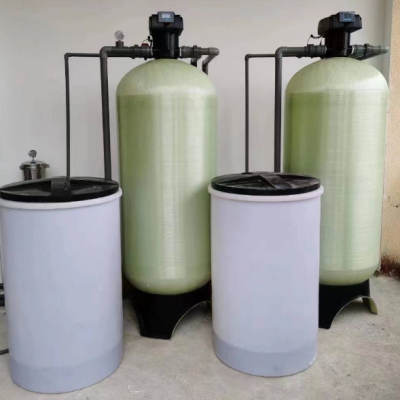
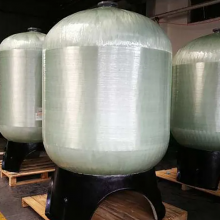
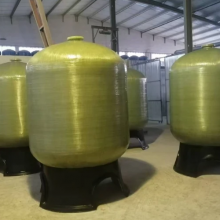
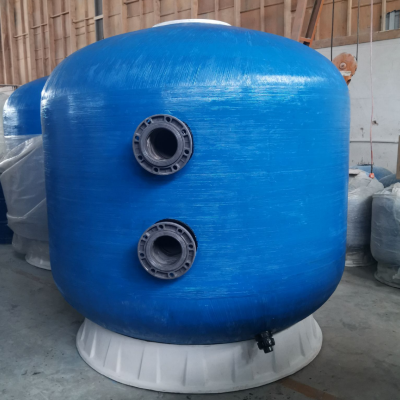
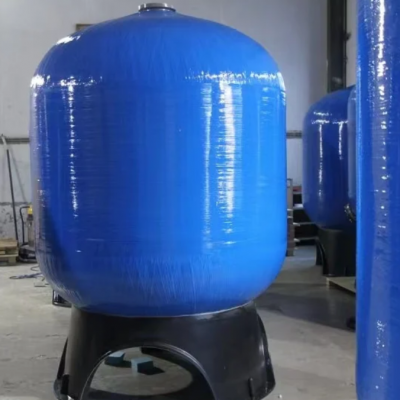
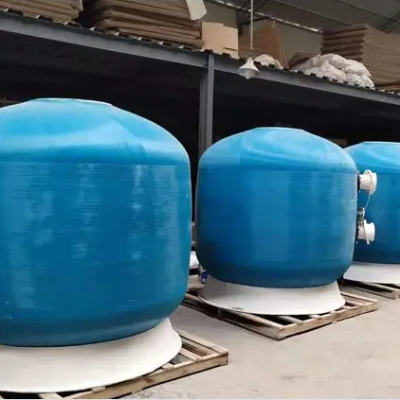
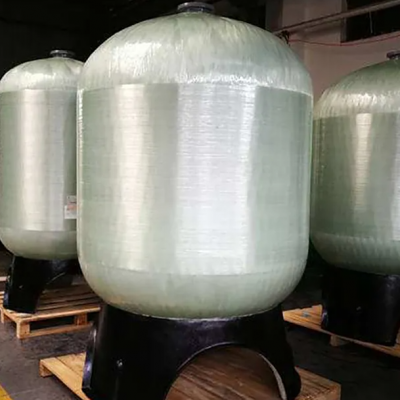
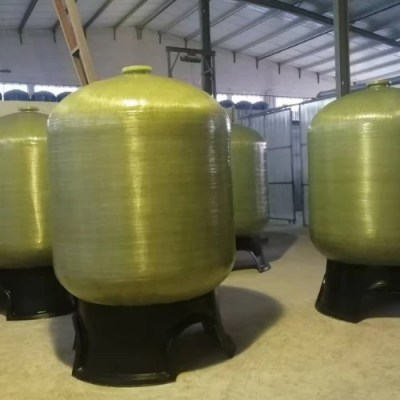
FRP material large filter for water treatment filtration tank
The fiberglass pressure filtration tank is internationally referred to as an FRP (Fiber Reinforced Plastic) Media Tank or Composite Pressure Vessel. It is a pressure vessel specifically designed for the water treatment industry, primarily used to hold filtration media such as quartz sand, activated carbon, and ion exchange resins for water purification.
Core Features and Advantages:
· Exceptional Corrosion Resistance: Completely immune to rust and electrochemical corrosion, offering a service life far exceeding that of carbon steel tanks. Particularly suitable for various water conditions in municipal, industrial, and reverse osmosis pre-treatment systems.
· High Strength and Light Weight: Manufactured using glass fiber filaments wound with epoxy resin, providing high strength while weighing only about one-third of an equivalent steel tank. This significantly reduces transportation and installation costs.
· Reliable Structural Design: Mainstream products feature a seamless rotationally molded polyethylene (PE) or ABS inner liner, overwrapped with a structural FRP layer to ensure leak-proof integrity. The design safety factor is typically 4:1, with a burst pressure far exceeding the working pressure.
· Wide Range of Specifications: Available in diameters from 6 inches to over 48 inches, with capacities covering residential, commercial, and large-scale industrial project requirements.
Typical Operating Parameters:
· Maximum Working Pressure: Typically 100 psi (0.7 MPa) or 150 psi (1.0 MPa).
· Working Temperature: Generally ≤ 49°C (120°F).
2. Core Filtration Media: The Key to Multi-Layer Deep Purification
The performance of the filtration tank largely depends on the media packed inside. Multi-layer media combinations are the standard solution for achieving deep purification.
Quartz Sand
· Role: Typically serves as the first filtration layer, primarily for physical interception.
· Function: Effectively removes suspended solids, silt, colloidal particles, and larger organic matter from water, reducing turbidity. The formed filter bed enables three-dimensional depth filtration with strong dirt-holding capacity.
· Characteristics: High mechanical strength, chemically stable, wear-resistant.
Activated Carbon
· Role: Follows the quartz sand layer, responsible for chemical adsorption.
· Function: Leverages its immense specific surface area (500-1700 m²/g) to efficiently adsorb residual chlorine, odors, organic compounds (e.g., pesticide residues), certain heavy metals, and colorants from water. This is crucial for protecting downstream reverse osmosis membrane elements.
· Characteristics: Has a finite adsorption capacity and requires periodic replacement or regeneration.
Ion Exchange Resin
· Role: Used for water softening or desalination.
· Function: Through ion exchange reactions, effectively removes calcium and magnesium ions (which cause scale) or specific anions/cations from water.
· Characteristics: The resin tank is the core component of water softeners and demineralization systems.
Media Combination Example:
A typical pre-treatment filtration tank may employ a dual-media configuration of "Quartz Sand + Activated Carbon." The quartz sand removes most suspended solids first, followed by the activated carbon adsorbing chlorine and organics. This combination significantly improves water quality and protects sensitive downstream membrane systems.
3. System Performance and Technological Innovation
The performance of modern fiberglass filtration tank systems is reflected in their efficiency, stability, and intelligence.
Efficient Filtration and Backwash
· Filtration Precision: Quartz sand filtration can effectively remove particles larger than 20 microns, achieving effluent turbidity below 5 NTU.
· Self-Adapting Filter Bed: During operation, the filter bed naturally forms an ideal "loose on top, dense on bottom" stratification, enhancing dirt-holding capacity and effluent quality.
· Automatic Backwash: Triggered by pressure differential or time control, the system automatically initiates a backwash cycle. This uses a reverse water flow to flush out trapped contaminants from the media, restoring filtration capacity and enabling continuous operation.

Send Inquiry to This Supplier


You May Also Like
-
80g/h Ozone Generator With Inset Oxygen Concentrator for Swimming Pool And Drinking Water TreatmentNegotiableMOQ: 1 Set
-
Stainless Steel Pressure Reducing Valve for Water Treatment Plants and Filtration SystemsNegotiableMOQ: 100 Pieces
-
Aquarium Filter Media/plastic Bio Carrier for Waste Water Treatment Plant/bio Pond Filter in Anox TankUS$ 1873.70 - 2637.05MOQ: 5 Cubic Meters
-
Air Flotation Filtration for Water TreatmentUS$ 15,000 - 60,000MOQ: 1 Set
-
ShuoBao Water Filtration Cartridge for Electroplating, Water TreatmentUS$ 5 - 10MOQ: 100 Pieces
-
Mineral Water Ultra Filtration Treatment SystemUS$ 300 - 6,000MOQ: 1 Set
-
Best Water Purifier Residential Water Filtration ro Water Treatment SystemUS$ 76.9 - 83.9MOQ: 100 Units
-
Anaerobic Bio Tank for Water TreatmentUS$ 5,000 - 29,000MOQ: 1 Set
-
Water Treatment Tank,water Well Sand FilterNegotiableMOQ: 1 Strand
-
FRP Water Tank For Water Treatment PlantNegotiableMOQ: 1 Set


