








 Contact Platform Support
 Help Center
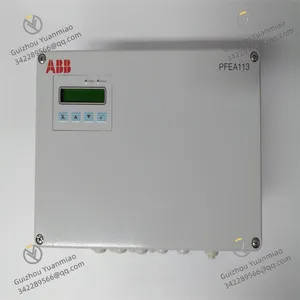
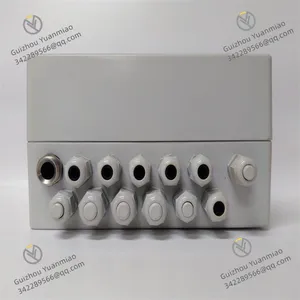
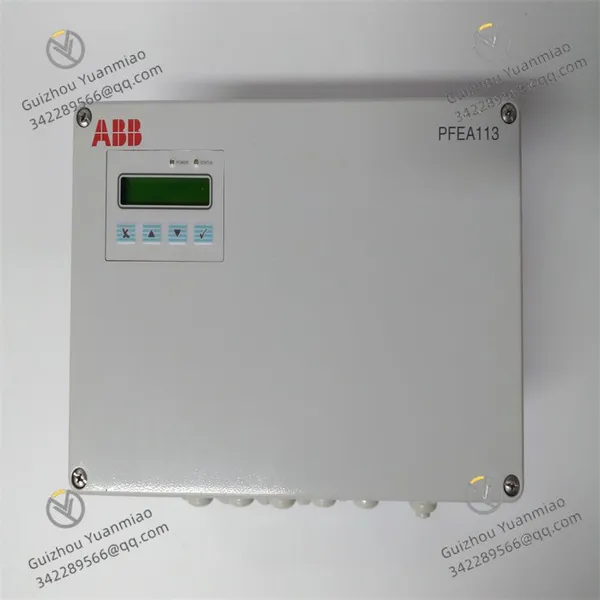
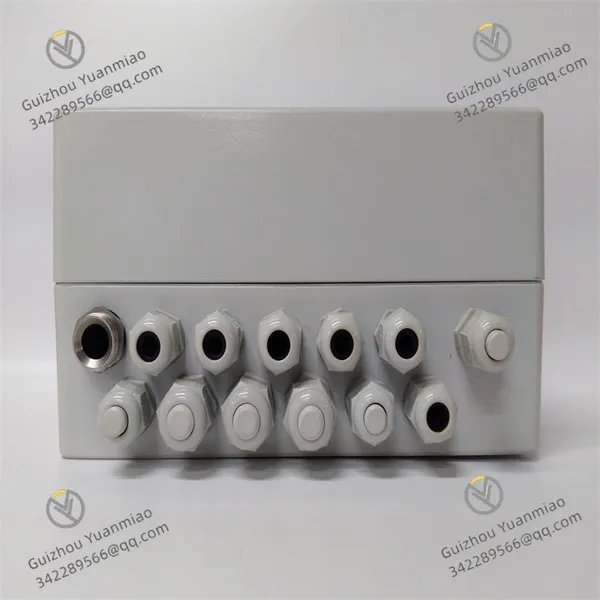
ABB PFEA113-65 3BSE050092R65 Tension Electronics



Related Products
-
 ABB UAD142A01 3BHE012551R0001 Analog Input ModuleNegotiableMOQ: 1 Piece
 -
ABB RXIDK 2H 1MRK000838-HA Relay ModuleNegotiableMOQ: 1 Piece
-
ABB PFSA103D 3BSE002492R0001 Relay ModuleNegotiableMOQ: 1 Piece
-
ABB AO2040 Industrial Gas AnalyzerNegotiableMOQ: 1 Piece
-
ABB 3HAB8101-19 DSQC545A Modules Drive SystemNegotiableMOQ: 1 Piece
ABB PFEA113-65 (Order No.: 3BSE050092R65) is an industrial-grade process signal conditioning and control module belonging to the I/O expansion product line of the AC 800M DCS (Distributed Control System). As a key signal processing unit connecting on-site sensors/transmitters and the main controller, it is specially designed for process control scenarios in the power, petrochemical, metallurgical and other industries. Its core functions include high-precision analog signal conditioning, auxiliary closed-loop control and multi-scenario signal adaptation. It can effectively solve the pain points in industrial processes such as analog signal distortion, severe interference and insufficient control accuracy. With high stability, strong anti-interference performance and flexible expandability, it can be seamlessly integrated into the ABB AC 800M DCS system to meet the requirements of various harsh industrial process control applications.
I. Core Positioning and Advantages
Product Positioning
PFEA113-65 3BSE050092R65 is an industrial-grade high-precision signal conditioning and control module. Its core function is to accurately process the analog signals output by on-site sensors (such as pressure, temperature and liquid level transmitters), and provide simple closed-loop control and logic execution functions at the same time. It builds a reliable signal transmission bridge between on-site detection equipment and the AC 800M main controller, reduces the computing load of the main controller, and improves the control accuracy and stability of the entire control system. Compliant with the relevant standards of CE certification, it meets the requirements of electrical equipment safety and electromagnetic compatibility regulations in the EU and the UK.
Core Advantages
High-precision signal conditioning: It supports 4 independent analog input (AI) channels and 2 analog output (AO) channels, and can accurately process standard 4-20mA/0-10V analog signals. Through amplification, filtering and linearization processing, it effectively corrects the attenuation and distortion during signal transmission. The input signal accuracy reaches ±0.05% FS (Full Scale) and the output accuracy is ±0.1% FS, providing accurate and reliable process data for the main controller.
Strong anti-interference performance and high reliability: Adopting a dual anti-interference design of "optoelectronic isolation + electromagnetic shielding", the isolation voltage of input/output channels is 2500V AC for 1 minute, and the inter-channel crosstalk rejection ratio is ≥85dB. Compliant with the IEC 61000-6-2 industrial environment immunity standard, it has a surge immunity of ±6kV and an ESD immunity of ±8kV, and can resist strong electromagnetic interference generated by frequency converters and high-voltage equipment. Using wide-temperature industrial components, its Mean Time Between Failures (MTBF) is ≥120,000 hours, suitable for long-term stable operation in harsh industrial scenarios.
Flexible control and expandability: Built-in simple PID control algorithm, it can independently realize small-scale closed-loop control (such as local liquid level and pressure regulation) without relying on the main controller. It supports custom logic programming through ABB Control Builder M software to realize functions such as signal interlocking and time-delay control with a response time of ≤10ms, ensuring the real-time performance of control actions. It can be seamlessly connected to the ABB AC 800M main controller to adapt to the later I/O channel expansion requirements of the system.
Wide environmental adaptability and convenient operation & maintenance: The operating temperature ranges from -20℃ to +60℃, and it can withstand a high humidity environment of 5%-95% RH (non-condensing), enabling stable operation in harsh scenarios such as boiler control rooms of thermal power plants and petrochemical refining units[5]. Equipped with intuitive LED status indicators, the module can display power, signal and fault status in real time, and supports online fault diagnosis, facilitating maintenance personnel to quickly troubleshoot problems and reduce operation and maintenance costs.
Applicable Fields
It is mainly applied in the power industry (boiler control of thermal power plants, process monitoring of digital substations), petrochemical industry (temperature/pressure signal conditioning of chemical reactors, control of refining units), metallurgical industry (process parameter monitoring of rolling mills, signal processing of smelting equipment). It is also suitable for precision process control scenarios in industries such as printing and packaging, wire and cable manufacturing, textile dyeing and finishing, lithium battery and photovoltaic. Used in core links such as on-site analog signal conditioning, small-scale closed-loop control and signal interlocking, it is a key supporting I/O module for the ABB AC 800M DCS system.
II. Technical Parameters
| Parameter Category | ABB PFEA113-65 3BSE050092R65 | Remarks |
|---|---|---|
| Full Model Number | PFEA113-65 (Order No.: 3BSE050092R65) | Special I/O module for ABB AC 800M DCS series |
| Product Type | Industrial-grade process signal conditioning and control module | Key signal processing unit connecting on-site sensors and main controller |
| Analog Input (AI) | 4 independent channels, supporting 4-20mA/0-10V analog signals | Accessible to various analog transmitters such as pressure, temperature and liquid level |
| Analog Output (AO) | 2 independent channels, output accuracy of ±0.1% FS | Output signals can be directly connected to actuators or main controller |
| Signal Accuracy | Input accuracy: ±0.05% FS; Output accuracy: ±0.1% FS | Ensuring signal accuracy through filtering and linearization processing |
| Anti-interference Performance | Input/output channel isolation voltage: 2500V AC/1min, crosstalk rejection ratio ≥85dB; Surge immunity: ±6kV, ESD immunity: ±8kV | Compliant with IEC 61000-6-2 industrial immunity standard, resisting strong electromagnetic interference[5] |
| Operating Temperature | -20~+60℃ (operating); -40~+85℃ (storage) | Adapting to harsh working conditions of high/low temperature and high humidity in industrial sites |
| Humidity Resistance | 5%-95% RH (non-condensing) | Stable operation in high-humidity industrial environments |
| Control Function | Built-in simple PID control algorithm, supporting custom logic programming | Independent realization of small-scale closed-loop control, response time ≤10ms |
| Communication Interface | Adapting to the bus interface of ABB AC 800M main controller | Seamless integration into ABB AC 800M DCS system |
| MTBF | ≥120,000 hours | Industrial-grade high reliability, meeting the requirements of long-term continuous operation[5] |
III. Working Principle
Structure and Working Mechanism
The PFEA113-65 3BSE050092R65 module adopts a modular design, and its core consists of four parts: a signal conditioning unit, a control and operation unit, an isolation and protection unit, and a communication interface unit, which collaboratively realize signal processing, control execution and reliable transmission functions. The specific working mechanisms are as follows:
Signal conditioning unit: It receives the 4-20mA/0-10V analog signals (such as pressure and temperature signals) output by on-site sensors/transmitters, suppresses electromagnetic interference through the built-in filter circuit and eliminates signal noise. Then through amplification and linearization processing, it corrects the attenuation and distortion during signal transmission, converts the irregular signals into accurate and stable standard analog signals, and provides reliable data support for control operations.
Control and operation unit: Built-in simple PID control algorithm, it can perform real-time operations on the conditioned signals according to the preset control parameters to independently realize small-scale closed-loop control (such as local liquid level and pressure regulation). It also supports writing custom logic through ABB Control Builder M software to realize functions such as signal interlocking and time-delay control with a response time of ≤10ms, ensuring the real-time performance and accuracy of control actions[5].
Isolation and protection unit: Adopting a dual design of "optoelectronic isolation + electromagnetic shielding", it realizes the mutual isolation of input, output, power supply and communication channels with an isolation voltage of 2500V AC for 1 minute. It effectively resists strong electromagnetic interference in industrial sites, prevents external signals from interfering with the internal circuit of the module, and protects the module and the connected main controller and sensors from damage caused by voltage surges, improving the overall reliability of the system[5].
Communication interface unit: It establishes communication with the ABB AC 800M main controller through a dedicated bus interface, uploads the conditioned accurate signals to the main controller, and receives the control commands issued by the main controller to adjust the working parameters and control logic of the module. Supporting online fault diagnosis, it can feed back the module's operating status and fault information to the main controller in real time, facilitating remote monitoring and troubleshooting by maintenance personnel.
W
orking Process
After the module is powered on, it completes initialization and receives the 4-20mA/0-10V analog signals output by on-site sensors/transmitters (such as temperature signals of petrochemical reactors and pressure signals of power plants) in real time through 4 analog input channels.
The signals enter the conditioning unit, and after filtering, amplification and linearization processing, electromagnetic interference and signal distortion are eliminated, and the signals are converted into standard analog signals with an accuracy of ±0.05% FS. At the same time, signal calibration is completed to ensure data accuracy.
The conditioned signals are transmitted in two ways: one way is uploaded to the control and operation unit. If the built-in PID control or custom logic is enabled, the module will perform real-time operations and issue control commands to on-site actuators through 2 analog output channels to realize small-scale closed-loop control; the other way is uploaded to the ABB AC 800M main controller through the communication interface for the main controller to perform global logic operations and system regulation.
During operation, the isolation and protection unit continues to function, resisting external electromagnetic interference and voltage surges to ensure the stable operation of the module. At the same time, the module monitors its own operating status and input/output signals in real time. If an abnormality occurs (such as signal loss or module failure), it will immediately prompt through the LED indicators, feed back the fault information to the main controller and trigger a system alarm.
During the operation and maintenance phase, maintenance personnel can query the module's operating status and fault information through the main controller or on-site LED indicators. The module supports online parameter calibration and logic modification, enabling maintenance and debugging without shutdown, and reducing the impact of operation and maintenance on production.
IV. Installation Requirements
Heat dissipation installation: The module adopts natural cooling. During installation, ensure unobstructed ventilation in the installation area and keep it away from high-temperature equipment (such as heaters and high-power frequency converters) to ensure the operating temperature is controlled within the range of -20℃ to +60℃ and prevent performance attenuation or failure of the module due to overheating.
Mechanical fixation: Adapting to the standard installation guide rail of the ABB AC 800M DCS system, the tightening torque shall be implemented in accordance with the specifications of the ABB official manual to prevent loosening due to vibration. The installation position shall facilitate the observation of LED status indicators, and sufficient maintenance space shall be reserved for later maintenance, debugging and module replacement.
Electrical connection: Shielded wires shall be used for input/output signal lines, and the wiring shall be kept away from high-voltage circuits (such as high-voltage cables and frequency converter output lines) to avoid electromagnetic interference. The signal wiring shall be firm to ensure no reverse connection of positive and negative poles. The input channels shall be accurately connected to on-site sensors/transmitters, and the output channels shall be correctly connected to actuators or the main controller. Overcurrent and overvoltage protection devices shall be installed in the module power circuit to avoid module damage caused by power grid fluctuations.
Grounding and isolation: The module shall be grounded in accordance with specifications with a grounding resistance of ≤4Ω to ensure the normal operation of the isolation and protection function. Input, output, power supply and communication channels shall be strictly wired separately to avoid inter-channel crosstalk and ensure the stability and accuracy of signal transmission.
Environmental requirements: The installation environment shall be kept clean to prevent dust, oil stains and corrosive gases from entering the module. Avoid installing in locations with high vibration and strong electromagnetic interference (such as near frequency converters). If unavoidable, additional shielding and protection measures shall be taken to ensure the normal operation of the module.
V. Application Scenarios
Reactor control in the petrochemical industry: As the core unit of signal conditioning, it receives the analog signals output by reactor temperature and pressure transmitters, uploads the accurately conditioned signals to the AC 800M main controller, and independently realizes the closed-loop regulation of local temperature and pressure of the reactor by using the built-in PID algorithm to ensure the stability of the reaction process and improve the product qualification rate, adapting to the harsh operating environment of refining units.
Boiler monitoring in thermal power plants: Connecting to various sensors such as boiler furnace temperature, flue gas pressure and water level, it filters and amplifies the analog signals to eliminate signal distortion caused by strong electromagnetic interference around the boiler, provides accurate process parameters for the main controller, ensures the safe and efficient operation of the boiler, and realizes the auxiliary closed-loop control of local water level at the same time.
Signal processing in the precision manufacturing industry: In scenarios such as lithium battery pole piece coating and photovoltaic wafer cutting, it conditions the analog signals output by tension sensors to realize tension control of 0.1-5N (lithium battery) and diamond wire tension fluctuation control of ±0.3μm (photovoltaic), avoiding problems such as pole piece wrinkling and fiber breakage. In printing and packaging, wire and cable manufacturing scenarios, it stabilizes the coil tension signal and eliminates problems such as color register deviation and loose coiling.
Rolling mill control in the metallurgical industry: Connecting to the process parameter sensors of rolling mills, it conditions the analog signals such as thickness and pressure to control the roller speed, ensuring the thickness fluctuation of the stainless steel cold rolling line is ≤±0.01mm and improving product precision[3]. It also realizes the signal interlocking function, which triggers an alarm when parameters are abnormal to avoid equipment damage and production accidents.

Send Inquiry to This Supplier


You May Also Like
-
ABB PFTL201D-100KN 3BSE008922R0100 Pressductor PillowBlock Load CellsNegotiableMOQ: 1 Piece
-
ABB EL3020 Gas AnalyzerNegotiableMOQ: 1 Piece
-
ABB PM150 3BSE003641R1 Processor ModuleNegotiableMOQ: 1 Piece
-
ABB PPD512A10-15000 3BHE040375R1023 Static Excitation Controller ModuleNegotiableMOQ: 1 Piece
-
ABB 3BHB004791R0101 Gate Power Supply UnitNegotiableMOQ: 1 Piece
-
ABB 3BHE029153R0101 Processor ModuleNegotiableMOQ: 1 Piece
-
ABB S-053M 3BHB012897R0003 Phase ModuleNegotiableMOQ: 1 Piece
-
ABB 500SCM01 1MRE450004R1 Communication Coupler ModuleNegotiableMOQ: 1 Piece
-
ABB 1TGE120010R1300 Control RelayNegotiableMOQ: 1 Piece
-
ABB 12NG02I-V0012 GVT8703700R0012 Digital I/O Expansion ModuleNegotiableMOQ: 1 Piece


