








 Contact Platform Support
 Help Center
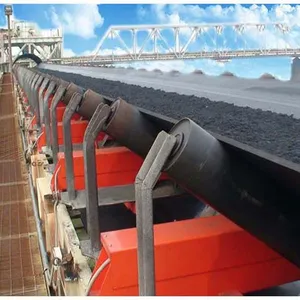
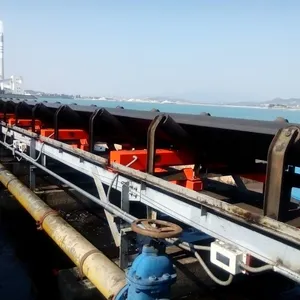
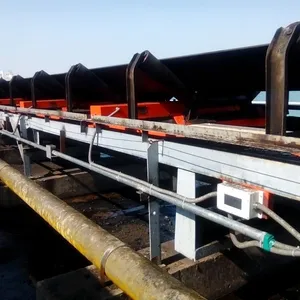
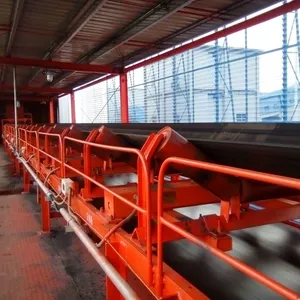
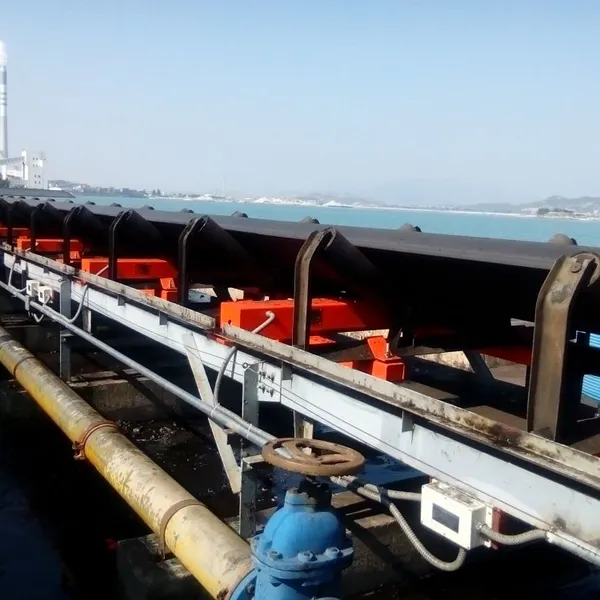
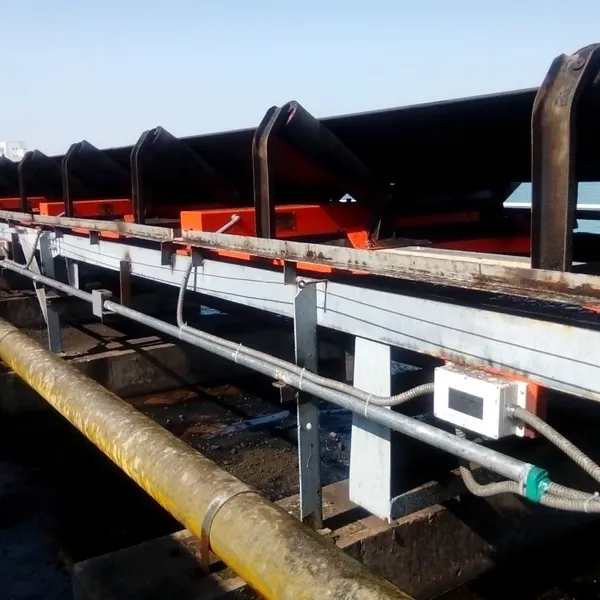
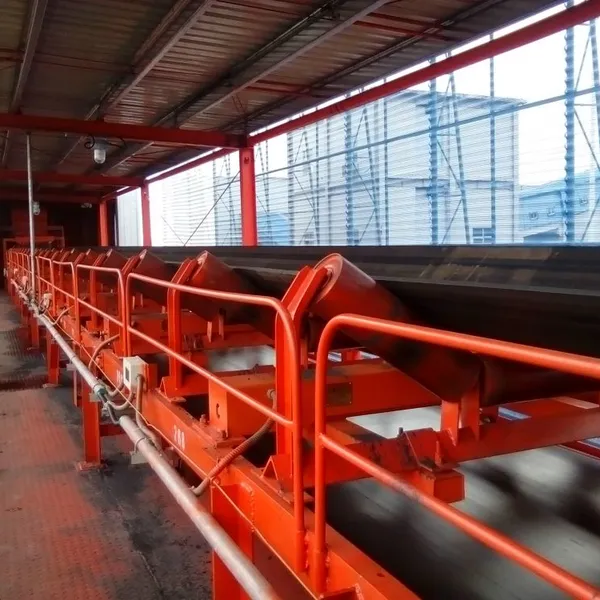
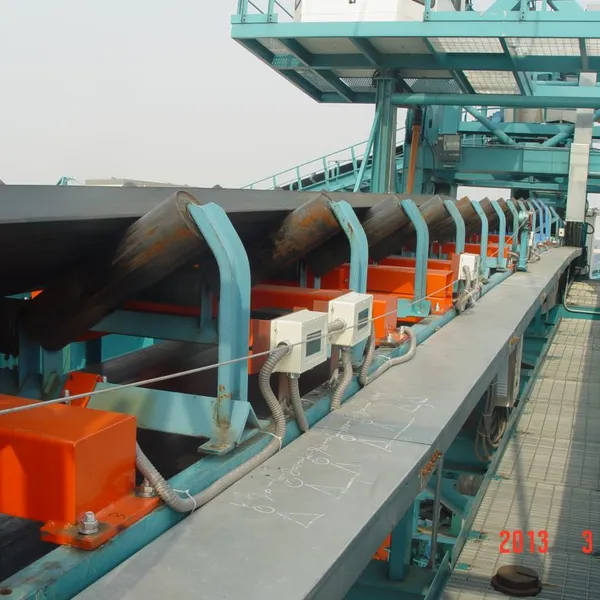
SAIMO ICS-ZL-8 Array-type High-Precision Belt Scale




Related Products
-
 SAIMO ICS-FH-16 High Precision Belt ScaleNegotiableMOQ: 1 Combo
 -
SAIMO ICS-FH-8 Electronic Belt ScaleNegotiableMOQ: 1 Combo
-
SAIMO ICS-FH-4 Electronic Belt ScaleNegotiableMOQ: 1 Combo
-
SAIMO ICS-FH-6 Electronic Belt ScaleNegotiableMOQ: 1 Combo
-
SAIMO F52 Medium-Duty Weighing FeederNegotiableMOQ: 1 Combo
Based on over two decades of research and extensive testing, Saimo San'ai Company has introduced a new belt scale error theory—the internal force theory. This breakthrough has led to the successful development of a new product: the array-type belt scale, which delivers high accuracy, exceptional stability, and maintenance-free performance. Its long-term operational accuracy error can be maintained within 0.2%.
Product Features:
-
The array-type belt scale sustains a long-term accuracy of 0.2%.
-
A patented product (CN200710025317.0) developed under the new belt scale error theory.
-
Composed of multiple weighing units forming a weighing array, ensuring high system accuracy.
-
Exhibits excellent weighing stability and can operate reliably for extended periods in harsh environments.
The array-type belt scale is a new type of belt scale developed by Saimo San'ai Company based on the weighing error theories of "internal force theory" and "belt effect theory." It has been granted a national invention patent (Patent Certificate No.: 200710025317.0). This invention breaks free from the limitations of traditional belt scale error theories by adopting new design concepts, innovative product structures, and advanced computer software technology. As a result, the weighing accuracy of the belt scale has been substantially improved, and its long-term stability has been greatly enhanced. This groundbreaking achievement has overcome the two-decade-long stagnation in global belt weighing technology, reaching a high level of technical advancement.
Definition of Array-Type Belt Scale:
-
Single-Point Suspension Weighing Unit: A specialized weighing sensor serves as a single-point support, featuring a unique scale structure and equipped with two or more sets of weighing idlers to form an independent weighing unit.
Array-Type Belt Scale: A group of units (2–8 or more) are installed consecutively to form a weighing array.
Technological Breakthroughs of Array Belt Scales
Technological Breakthrough 1: Theoretical Innovation
By abandoning traditional belt scale error theories and establishing a new error theory, the primary source of belt scale error—the influence of belt tension—has been fundamentally eliminated.
The "Internal Force Theory" of Array Belt Scales:
For an individual weighing unit, the influence of belt tension is the same as in traditional belt scales. However, in a continuously installed weighing array, the belt tension effects on adjacent units cancel each other out. In other words, the influence of belt tension within a continuously installed weighing array becomes an "internal force," which has zero effect on the weighing process. The influence of belt tension is only present at the units located at the entry and exit points of the array.
The "Belt Effect Theory" of Array Belt Scales:
"Belt effect" refers to the impact of physical properties such as belt hardness and flexibility on the weighing process. Under the influence of belt tension, troughed belts exhibit semi-rigid characteristics. When the support points are not on a perfectly flat plane, the belt develops undulations along the direction of movement, and the resulting impact on weighing is referred to as the "belt effect."
The influence of the "belt effect" varies with factors such as belt hardness, material flow rate, environmental flow conditions, and temperature. Array belt scales address this by detecting and analyzing the sampling values of each unit, establishing a mathematical model of the "belt effect" influence, and applying compensation corrections.
Technological Breakthrough 2: Structural Innovation in Array Belt Scales
Guided by the "internal force theory," a design philosophy entirely different from that of conventional belt scales has been adopted. The overall structure of the weighing unit is highly distinctive, making it particularly suitable for long-term operation under harsh working conditions. This design plays a key role in enhancing the long-term stability of belt scales.
-
Each unit uses a single load cell to support two sets of weighing idler groups.
-
High anti-bending performance structural design is employed.
-
The structure is simple, lightweight, and allows for fast and convenient on-site installation.
-
The weighing idler groups utilize the original idler groups of the conveyor belt.
-
The system requires no maintenance during routine operation.
Technological Breakthrough Three: Single-Point Load Cell
The load cell used in the array belt scale is a specially developed sensor achieved through extensive research. This sensor boasts excellent performance characteristics, such as resistance to horizontal forces and tolerance to off-center loading. When combined with the array structure, the overall performance is significantly enhanced.
Technological Breakthrough Four: Sensor Temperature Compensation Technology
Before use, all sensors undergo comprehensive screening and multiple performance tests to ensure compliance with quality requirements.
Each sensor undergoes wide-range temperature testing under load, with the testing process typically lasting over 48 hours.
Zero-point drift, sensitivity coefficient, and hysteresis within the entire temperature range are all accounted for in the computational compensation, greatly improving the long-term stability of the array belt scale.
Compensated sensors maintain their accuracy under various environmental temperatures.
Technological Breakthrough Five: Belt Speed Measurement Method
-
Top-mounted installation
-
Direct measurement of belt speed in the weighing section
-
Dual large-disk structure
-
Minimal speed measurement error
Technological Breakthrough Six: Powerful Software
-
Tension Compensation and Correction: Compensates for and corrects the effects of tension on the inlet and outlet units.
-
Temperature Compensation and Correction: Compensates for and corrects the impact of environmental temperature changes on the sensors.
-
"Belt Effect" Compensation and Correction: Compensates for and corrects the influence of the "belt effect."
-
Lagrangian Linear Correction: Adjusts for nonlinear effects caused by varying flow rates.
-
Early Fault Detection, Warning, and Automatic Fault Unit Isolation: Proactively detects faults, issues warnings, and automatically disconnects faulty units.
Technological Breakthrough Seven: Simplified and Convenient Calibration with Suspendable Weight Calibration Capability
Supported by the internal force theory, belt effect theory, and various compensation and correction software, the array belt scale has achieved a revolutionary breakthrough in long-term stability, eliminating the need for frequent physical verifications to maintain accuracy. Moreover, by mitigating the influences of belt tension and the belt effect, the array belt scale enables the use of a simple and convenient suspendable weight calibration method.
Technological Breakthrough Eight: Remote Engineer Diagnostic System
The ZLENT wireless telemetry, telecommunication, and remote-control remote engineer diagnostic system, based on IoT technology, provides users with extended services such as equipment fault diagnosis, early warning, and troubleshooting.

Send Inquiry to This Supplier



You May Also Like
-
SAIMO F55 Pressure-Tolerant Weighing Coal FeederNegotiableMOQ: 1 Combo
-
SAIMO F57 Fluidized Bed Boiler Coal FeederNegotiableMOQ: 1 Combo
-
Saimo Electric Model ICS-FH-4 Four-roller Belt Scale High Accuracy WeighingNegotiableMOQ: 1 Piece
-
Saimo F52 Mid Range Weigh Belt Feeder System Weighing FeederNegotiableMOQ: 1 Piece
-
Saimo Model F53 Heavy Duty Weigh Belt Feeder SystemNegotiableMOQ: 1 Piece
-
Saimo Model F65 Weigh Screw Feeder System Weighing FeederNegotiableMOQ: 1 Piece
-
SAIMO Pressure-resistant Gravimetric Coal Feeder, Model F55NegotiableMOQ: 1 Piece
-
SAIMO Coal Feeder for Fluidized Bed Boiler, Model: F57NegotiableMOQ: 1 Piece
-
Saimo Technology ICS-FH-2 Belt ScaleNegotiableMOQ: 1 Piece
-
SAIMO Belt Automatic Sampler Sampling of Belt ConveyorsNegotiableMOQ: 1 Combo


