








 Contact Platform Support
 Help Center
Introduction to China Chaoshengtong Solid State Battery Technology
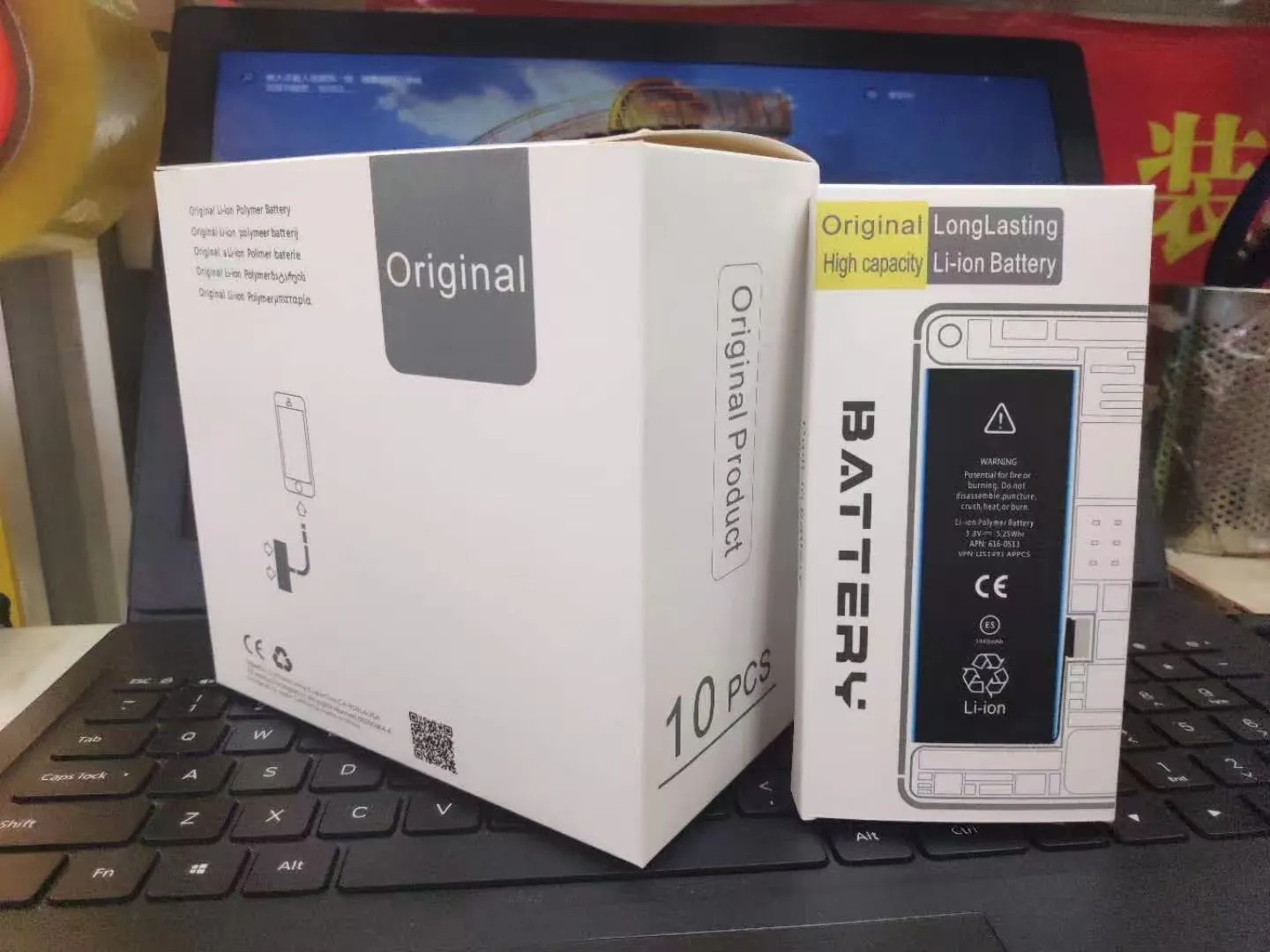
Product Spotlights


Related Products
-
 Various Brands of Laptop Memory Modules, Welcome to Customize and Purchase Branded Memory ModulesNegotiableMOQ: 1 Blade
 -
Desktop Computer Memory Module,Laptop Memory ModuleNegotiableMOQ: 1 Blade
-
Brand Desktop Computer, Laptop, Electronic Memory ModuleNegotiableMOQ: 1 Blade
-
Mobile Phone Battery,productionNegotiableMOQ: 1 Blade
-
Smartphone BatteryNegotiableMOQ: 1 Blade
If you have any needs, please contact us:
whatsapp:+8618923496878
Skype live: pcb-fpcb88@163.com
E-mail : sales@chaoshengpcb-fpc.com
Contact: Mank. LiIntroduction to China Chaoshengtong Solid State Battery Technology
Drone battery, electric vehicle battery, mobile battery, mobile phone battery, car battery
I. Technical Essence: Reconstructing the Core Structure of Batteries
The core innovation of solid-state batteries lies in replacing traditional liquid electrolytes with solid electrolytes, enabling fully solid-state packaging of cathodes, electrolytes, and anodes while completely eliminating the separator component required by liquid batteries. Its working principle is consistent with conventional lithium-ion batteries—lithium ions migrate between the cathode and anode to complete charging and discharging—but the migration medium changes from liquid to solid. This fundamental transformation delivers a comprehensive leap in performance:
Energy density breakthrough: The theoretical upper limit reaches 500-900Wh/kg, far exceeding the 300Wh/kg of current top-tier liquid batteries, increasing range by 40%-50% at the same weight;
Safety attribute reshaping: Solid electrolytes are non-flammable and leak-proof, fundamentally eliminating thermal runaway risks. No explosion hazards were detected in 120℃ high-temperature and nail penetration tests;
Ultimate structural optimization: Without the need for electrolytes and separators, the battery pack volume is reduced by over 30%, and the mass is only 1/3 of traditional ternary lithium batteries at the same capacity.
II. Core Technical Routes: A Tripartite Development Pattern
Currently, solid-state batteries have formed three major technical routes, each with advantages and disadvantages and showing differentiated industrialization rhythms:
Technical Route
Representative Materials
Core Advantages
Key Bottlenecks
Industrialization Progress
Sulfide System
LGPS, LSPSCl
Room-temperature ionic conductivity close to liquid electrolytes; excellent ductility
Releases toxic H₂S when exposed to water; requires inert environment for preparation
Led by Toyota and Samsung SDI; mass production target by 2027
Oxide System
LLZO (Garnet-type), LATP
Extremely high safety (withstands 1000℃ high temperature); chemical stability
Brittle and hard texture; high interfacial contact impedance
Adopted by CATL and Weilan New Energy; semi-solid-state batteries already installed in vehicles
Polymer System
PEO derivatives
Good flexibility; low cost; easy processing
Low room-temperature conductivity; requires operating temperature above 60℃
Applied in small consumer electronics; semi-solid-state transitional solution
Chinese scientists have recently made breakthroughs in three key technologies, effectively solving the solid-solid interface contact problem: the "iodide ion glue" developed by the Institute of Physics, Chinese Academy of Sciences (CAS) automatically fills interface gaps; the "flexible skeleton" from the Institute of Metal Research, CAS enables the battery to withstand 20,000 bends without damage; and the "fluorine reinforcement" technology by Tsinghua University enhances high-voltage stability.
III. Global R&D and Industrialization Progress: 2027 as a Critical Node
1. Regional Competition Pattern
Japan and South Korea lead in all-solid-state batteries: Toyota simplified the lithium metal lamination process (from months to hours) and plans mass production in 2027-2028; Samsung SDI developed samples with over 1000 cycles and energy density of 900Wh/L;
China catches up in semi-solid-state batteries: CATL's 500Wh/kg condensed-state battery has been used in civil aircraft; Weilan New Energy's 360Wh/kg semi-solid-state battery, co-developed with NIO, will be installed in vehicles in 2024; Ganfeng Lithium and Qingtao Energy have built pilot production lines;
Europe and the US accelerate layout: QuantumScape received a $300 million investment from Volkswagen and plans trial production in 2025; Solid Power delivered prototype cells to BMW and Ford.
2. Industrialization Timeline
Before 2025: Semi-solid-state batteries dominate; small-batch applications in high-end models (priced above ¥400,000) such as NIO and IM Motors, with range of 800-1000km;
2026-2027: Small-scale mass production of all-solid-state batteries; launch of first models by Toyota and Nissan, with annual output in the tens of thousands and price premium of 30%-40%;
Before 2030: Penetration rate of all-solid-state batteries in high-end vehicles reaches 10%-15%; cost drops to the level of liquid batteries; semi-solid-state batteries popularize in the mid-range market.
IV. Core Challenges and Breakthrough Directions
1. Existing Bottlenecks
High costs: The cost of all-solid-state battery cells is 2-3 times that of liquid batteries; sulfide and oxide materials are expensive;
Industrial chain shortcomings: The cycle life and interface stability of lithium metal anodes need improvement; new production equipment and processes are required;
Lack of standards: Supporting systems such as safety testing, recycling systems, and charging protocols are not yet improved.
2. Key Breakthrough Points
Material innovation: Composite electrolytes (organic + inorganic) balance high conductivity and interface compatibility; lithium-rich manganese-based cathodes and silicon-carbon anodes improve energy density;
Process optimization: Prelithiation technology enhances initial Coulombic efficiency; 3D porous lithium structure improves cycle life;
Equipment upgrading: Develop specialized equipment for inert atmosphere packaging and interface modification to reduce large-scale production costs.
V. Industrial Impact and Application Scenarios
The maturity of solid-state batteries will reshape the pattern of multiple fields:
New energy vehicles: 1000km range eliminates range anxiety; 10-15 minute fast charging promotes the popularization of ultra-fast charging piles; reduced battery degradation improves used car residual value;
Low-altitude economy: High energy density adapts to electric aircraft and UAVs; lightweight design optimizes flight performance;
Energy storage field: Wide temperature range adaptability and long cycle life meet the needs of large-scale energy storage power stations;
Consumer electronics: Miniaturization and high safety features empower wearable devices and foldable smartphones.
Conclusion
Solid-state batteries are hailed as the "holy grail" in the new energy field and are currently in a critical transition period from laboratory to industrialization. 2026-2027 will be a key window for technical verification: semi-solid-state batteries will take the lead in commercialization, while all-solid-state batteries will gradually break through mass production bottlenecks. For enterprises, deploying core links such as electrolyte materials, lithium metal anodes, and specialized equipment will seize the commanding heights of next-generation battery technology; for consumers, it is rational to view the laws of technological iteration, choose adaptive solutions based on budget and needs—there is no need for blind waiting nor ignoring the trend. An energy revolution led by solid-state batteries has quietly taken shape in all links of the industrial chain.

Send Inquiry to This Supplier


You May Also Like
-
Chaoshengtong IB8P Mobile Phone BatteryNegotiableMOQ: 1 Blade
-
IB16P Mobile Phone BatteryNegotiableMOQ: 1 Blade
-
IB15P Mobile Phone BatteryNegotiableMOQ: 1 Blade
-
IB11P Mobile Phone BatteryNegotiableMOQ: 1 Blade
-
Analysis of China Chaosheng's Ultra-Large-Size Large Gold Surface Circuit Board Production TechnologyNegotiableMOQ: 1 Blade
-
Oversized Large Copper Surface Thick Gold 20U PCB,Large Sized Drone Circuit Board PCBNegotiableMOQ: 1 Blade
-
Vacuum Packaging+wooden CratePCB,Ultra Large and Ultra-thin PCBNegotiableMOQ: 1 Blade
-
Multi Layer Large-sized Flexible FPCNegotiableMOQ: 1 Sheet
-
Large Size Flexible FPC,double-layer Roll to Roll Flexible FPCNegotiableMOQ: 1 Roll
-
Aerospace Products: Double-layer, Ultra Long, Ultra Large Size Flexible FPCNegotiableMOQ: 1 Roll


