








 Contact Platform Support
 Help Center
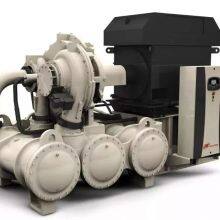
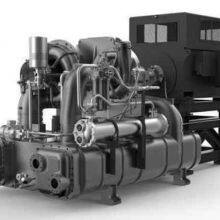
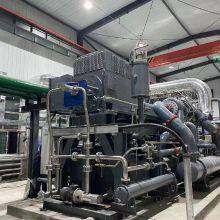
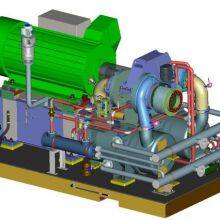
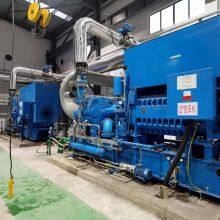
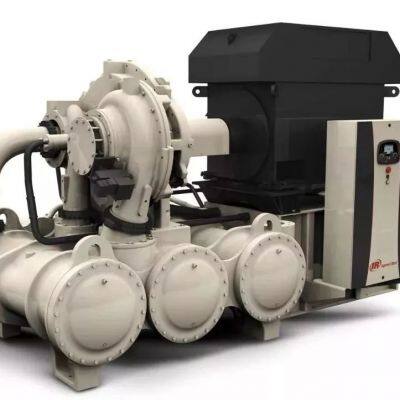
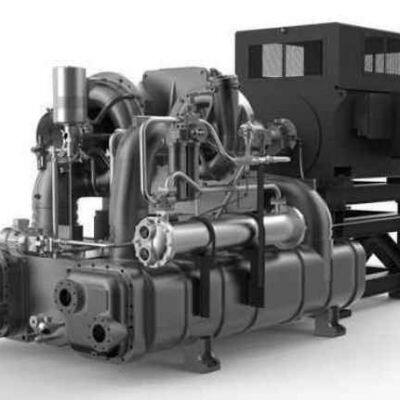
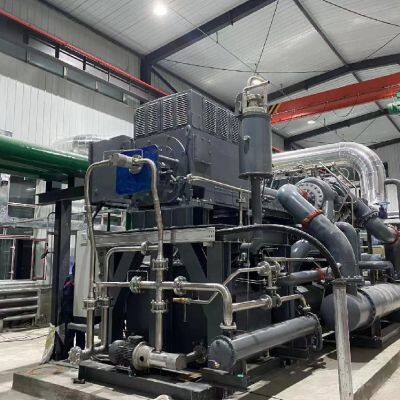
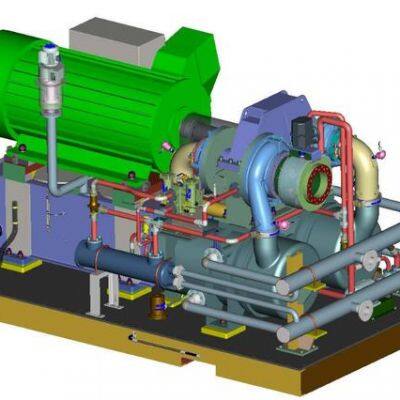
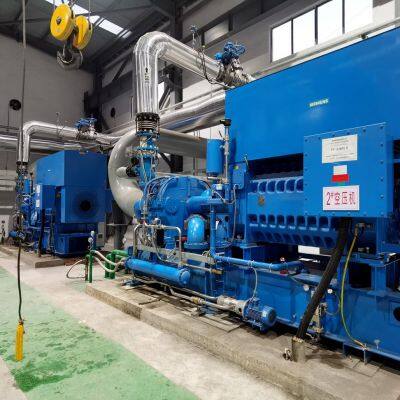
Centrifugal Compressor Turbine Compressor Circulating Supercharger Nitrogen Compression and Expansion Machine


Related Products
Confirmation of Medium Characteristics (directly determines material and structure)
Medium types: Air, natural gas, syngas (H₂/CO), steam, corrosive gases (e.g., chlorine, ammonia), etc.;
Key properties:
Flow and Pressure Parameters (Core Performance Indicators)
Flow requirement: Clearly specify standard condition flow rate (Nm³/h, 0℃/101.3kPa) or operating condition flow rate (m³/h, actual inlet temperature/pressure), with deviation ≤ ±5% (to avoid overload or capacity waste);
Pressure requirement:
Operating Condition Fluctuation Range
Flow adjustment range: Conventional units adapt to 30%~110% of rated flow rate (select frequency conversion or inlet guide vane adjustment for high variable condition demand);
Inlet condition fluctuation: Temperature (±10℃), pressure (±5%); confirm whether temperature-resistant/high-pressure-resistant design is required (e.g., inlet temperature ≤ 80℃, add cooler if exceeding the limit).
Efficiency Indicators
Isothermal efficiency: ≥75% for air compressors, ≥70% for process gas compressors (per API 617 standard, each 1% increase in efficiency reduces annual energy consumption by approximately 2%);
Specific power (shaft power/standard condition flow rate, kW·h/Nm³): The smaller the value, the more energy-efficient; ≤0.085kW·h/Nm³ for air compressors (at 0.7MPa pressure).
Adaptation of Adjustment Methods
Stable operating conditions: Select inlet guide vane adjustment (adjustment range 50%~100%, low energy consumption);
Significant variable operating conditions: Select frequency conversion adjustment (adjustment range 20%~100%, energy saving rate 20%~40%);
Emergency conditions: Anti-surge protection is required (surge line must be far from normal operating point, reserve 15%~20% safety margin).
Continuous Operation Capability
Design life: ≥20 years, service life of wearing parts (e.g., bearings, seals) ≥8000 hours;
Standby configuration: Critical processes (e.g., petrochemical cracked gas compression) require 1 active + 1 standby unit, or parallel dual units (to ensure uninterrupted gas supply).
Sealing Performance
Zero-leakage requirement (e.g., food, pharmaceutical, toxic gases): Select dry gas seal (leakage ≤1Nm³/h);
General operating conditions: Select labyrinth seal (low cost, suitable for non-toxic media such as air and steam).
Installation Conditions
Space dimensions: Reserve maintenance space (≥1.5m around the unit, ≥2.5m above the unit for impeller and bearing replacement);
Foundation load: Design based on total unit weight (including auxiliary equipment), dynamic load coefficient ≥1.2 (to avoid vibration transmission).
Cooling and Noise Reduction
Cooling method: Water cooling (inlet water temperature ≤32℃, water pressure 0.2~0.4MPa) or air cooling (ambient temperature ≤40℃, wind speed ≥2m/s);
Noise control: Unit operating noise ≤85dB(A) (at 1m distance); add sound insulation cover or silencer if exceeding the standard.
Industry standards: Must comply with API 617 (Centrifugal Compressors for Petroleum, Chemical, and Gas Industry Services), GB/T 13275 (Centrifugal Fans for General Purposes), ASME BPVC (Boiler and Pressure Vessel Code);
Environmental requirements: Lubricating oil must comply with ISO VG 46/68 standard, waste oil discharge ≤5mg/L (to avoid medium or environmental pollution).
Parameter Name |
Definition and Unit |
Conventional Range |
Selection Key Points |
Standard Condition Flow Rate (Qₙ) |
Gas volume flow rate under standard conditions |
100~100,000 Nm³/h |
Must match process gas consumption, reserve 10%~15% margin |
Rated Discharge Pressure (P) |
Outlet absolute pressure |
0.3~10 MPa (single-stage ≤4MPa) |
Include pipeline loss, avoid "over-capacity operation" |
Compression Ratio (ε) |
Discharge pressure/inlet pressure |
1.5~4 (single-stage), ≤10 (multi-stage) |
Ultra-high pressure (>10MPa) requires 2~3 series-connected units |
Isothermal Efficiency (ηₜ) |
Theoretical isothermal power/actual shaft power |
≥75% (air compressors), ≥70% (process compressors) |
Each 5% decrease in efficiency increases annual energy consumption by ~10% |
Shaft Power (Pₛ) |
Power required to drive the compressor |
50~10,000 kW |
Match motor power (motor power = shaft power/transmission efficiency) |
Surge Flow Rate (Qₛᵤᵣ) |
Minimum flow rate causing surge |
30%~50% of rated flow rate |
Normal operating flow rate ≥1.2×surge flow rate |
Parameter Name |
Common Specifications |
Selection Adaptation Suggestions |
Impeller Stages |
1~10 stages (single-cylinder ≤6 stages) |
Select single-stage for compression ratio ≤4, multi-stage for 4~10 (evenly distribute compression ratio per stage) |
Impeller Material |
Carbon steel (Q345R), stainless steel (304/316), Hastelloy |
Carbon steel for air/steam, Hastelloy for corrosive gases |
Shaft Seal Type |
Labyrinth seal, dry gas seal, mechanical seal |
Labyrinth seal for non-toxic media, dry gas seal for toxic/high-pressure media |
Cooling Method |
Water cooling (shell-and-tube), air cooling (finned) |
Water cooling for large units (power ≥500kW), air cooling for small units |
Drive Method |
Motor drive, steam turbine drive |
Motor drive for stable power grid, steam turbine drive for steam source (energy-saving) |
Adjustment Mechanism |
Inlet guide vane, frequency conversion, return valve |
Frequency conversion for variable conditions ≤50%, inlet guide vane for 50%~100% |
Parameter Name |
Normal Range |
Alarm Threshold |
Abnormal Cause Analysis |
Discharge Temperature |
≤120℃ (air compressors), ≤150℃ (process compressors) |
>130℃ (air compressors) |
Cooling system failure, excessive compression ratio |
Bearing Temperature |
Rolling bearing ≤80℃, sliding bearing ≤70℃ |
Rolling bearing >90℃, sliding bearing >80℃ |
Insufficient lubrication, bearing wear |
Shaft Vibration Value |
≤4.5 mm/s (RMS) |
>6.3 mm/s |
Impeller imbalance, coupling misalignment |
Seal Gas Pressure |
0.1~0.2MPa higher than discharge pressure |
Deviation >±0.05MPa |
Seal gas system leakage, pressure reducing valve failure |
Lubricating Oil Pressure |
0.2~0.4MPa |
Oil pump failure, oil circuit blockage |
Application Industry |
Medium Type |
Standard Condition Flow Rate (Nm³/h) |
Rated Discharge Pressure (MPa) |
Compression Ratio |
Key Configuration Requirements |
Petrochemical Industry (Catalytic Cracking) |
Cracked Gas (C₂/C₃) |
5000~20,000 |
2.5~4.0 |
6~8 |
Multi-stage compression + dry gas seal + anti-surge system, material: 316L |
Natural Gas Transmission |
Natural Gas (CH₄) |
10,000~50,000 |
4.0~8.0 |
8~10 |
High-pressure resistant impeller + frequency conversion adjustment, adapt to pressure fluctuations |
Power Industry (Gas Turbine) |
Compressed Air |
20,000~80,000 |
0.6~1.0 |
1.8~3 |
Single-stage/multi-stage + water cooling, isothermal efficiency ≥78% |
Chemical Industry (Ammonia Synthesis) |
Syngas (H₂/N₂) |
3000~15,000 |
3.0~5.0 |
7~9 |
Optimized impeller for low-molecular-weight gas + explosion-proof motor |
Metallurgical Industry (Blast Furnace Blowing) |
Air |
50,000~100,000 |
0.3~0.5 |
1.5~2 |
Dual-cylinder parallel connection + inlet guide vane adjustment, dust-resistant design |
Avoid "Flow/Pressure Overload": Actual operating flow rate shall not exceed 110% of rated flow rate, and pressure shall not exceed 105% of rated pressure; otherwise, impeller fatigue damage may easily occur;
Do Not Ignore Medium Composition: For example, natural gas containing H₂S requires sulfur-resistant materials (e.g., SS 316L); hydrogen content ≥50% requires adjusting impeller speed (to avoid supersonic flow);
Anti-Surge Protection Must Be In Place: Set surge alarm and automatic return valve in the control system to prevent the unit from entering the surge region due to sudden flow drop;
Prioritize Energy Efficiency Over Initial Cost: High-efficiency units (isothermal efficiency ≥75%) have 10%~15% higher initial investment but can reduce annual energy consumption by 15%~20%, with cost recovery in 3~5 years;
Synchronize Selection of Supporting Systems: Confirm parameter matching of cooling system (water volume/water temperature), lubricating oil system (oil brand/replacement cycle), and filtration system (precision/pressure difference) simultaneously.

Send Inquiry to This Supplier


You May Also Like
-
 Medium and High Pressure Oil-free Gas Booster Nitrogen CompressorUS$ 2000 - 3000MOQ: 1 Combo
 -
Screw CompressUS$ 5000MOQ: 1 Unit
-
Cooler Oil CoolerNegotiableMOQ: 1 Set
-
WOODWARD 8200-1301 505 Digital Speed Regulator: Real-World Stability for Turbine & Compressor ControlNegotiableMOQ: 1 Bag
-
Compressor Wheel 2T-113000 Turbine Compressor WheelUS$ 1 - 500MOQ: 50 Sets
-
Centrifugal Compressor Turbine Compressor Circulating Supercharger Nitrogen Compression and Expansion MachineNegotiableMOQ: 1 Unit
-
External Motor Die Casting Turbine Compressor HousingNegotiableMOQ: 1
-
GT2260V 753392 742417 Casting Turbine Compressor HousingUS$ 28.00 - 35.00MOQ: 1 Piece
-
Low Price BC-10 Turbocharger Balancing Machine for Turbines,CompressorsUS$ 12,000 - 15,000MOQ: 1 Set
-
New York Slide Valve Displacement Sensor 534D1251H01, Maintenance of Lubrication System Malfunction for Turbine CompressorUS$ 6500 - 6500MOQ: 1 Kilogram


