Home > Electrical & Electronics > Electrical Control System > Schneider 140NOE77101 Ethernet TCP/IP Module

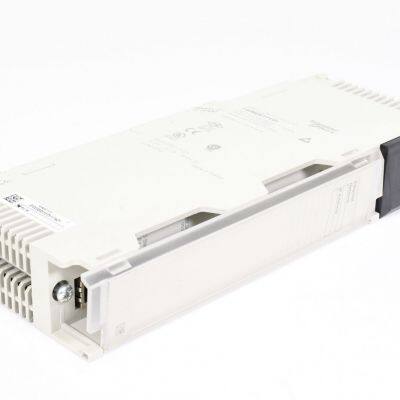
Schneider 140NOE77101 Ethernet TCP/IP Module
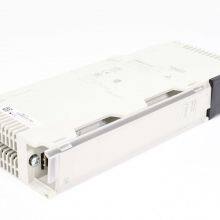
Schneider 140NOE77101 Ethernet TCP/IP Module photo-1
Negotiable MOQ: 1 Piece (Price negotiable depending on order volume and customization)
Key Specifications
Get Latest Price
Material:
Other, Global universal model
Condition:
Other, Global universal model
Task:
Other, Global universal model
Payment & Shipping
Payment Methods:
Port of Shipment:
guizhou
Delivery Detail:
Delivery time depends on order quantity.
Material Other, Global universal model
Condition Other, Global universal model
Task Other, Global universal model
Mathematical Model Other, Global universal model
Signal Other, Global universal model
Customized Non-Customized
Structure Other, Global universal model
Operating Temperature 0℃-60℃
Relative Humidity 5%-95% (non-condensing)
Dimensions 100mm×140mm×210mm

I. Overview


Schneider 140NOE77101 is an Ethernet communication module. As the core access component connecting the system to the industrial Ethernet, its core value lies in breaking down the data interaction barriers between the PLC, upper-level monitoring systems, other controllers, and cloud platforms, thereby enabling the networked management and control of the Quantum system.

Adopting an industrial-grade Ethernet communication architecture, this module integrates a variety of mainstream industrial protocols and flexible configuration methods, making it suitable for medium-to-large industrial automation scenarios such as electric power, metallurgy, chemical engineering, and intelligent manufacturing.


In the Quantum system, the 140NOE77101 undertakes three core roles:
  1. It serves as a communication interface between the CPU and upper-level computers (e.g., SCADA, HMI), enabling the issuance of control commands and the upload of operational data.

  2. It acts as a "data hub" for multi-PLC collaboration, supporting cross-system communication between Quantum and controllers of the Modicon M340/M580 series.

  3. It functions as an edge communication node with data preprocessing and protocol conversion capabilities, providing standardized data access for industrial Internet platforms (e.g., EcoStruxure).

Its industrial-grade reliability design and rich communication functions make it a key supporting component for the Quantum system to achieve digital and networked upgrades.


II. Technical Parameters


Parameter Category Specific Specifications Technical Details & Industrial Adaptability Analysis
Basic Communication Parameters Port Type: 2x 10/100Mbps auto-negotiation RJ45 ports; Communication Standard: IEEE 802.3u; Supports dual-port redundancy/bridging modes; Maximum Concurrent Connections: 128 The dual-port design adapts to redundant network architectures (e.g., ring networks). The 100Mbps speed meets industrial-grade real-time data transmission requirements. 128 concurrent connections support simultaneous monitoring by multiple upper-level computers, catering to the data access needs of multiple departments in large factories.
Protocol Support Capability


Core Protocols: Modbus TCP/IP (Master/Slave modes); Extended Protocols: EtherNet/IP, SNMPv3, DHCP, DNS; Custom Protocols: Supports open user protocols (configured via SoMachine)


Modbus TCP is compatible with mainstream industrial monitoring systems. EtherNet/IP works with devices from brands like Rockwell. SNMPv3 ensures network management security. DHCP simplifies on-site deployment by eliminating the need for manual IP configuration.

System Compatibility & Performance


Adaptable CPUs: Quantum 140CPU65xx/67xx series; Bus Interface: Quantum backplane bus (10Mbps); Data Transmission Delay: ≤5ms (Modbus TCP Master mode); Supports online firmware upgrade


It is seamlessly compatible with high-performance CPUs. The 10Mbps backplane bus matches the internal data interaction speed of the system. The 5ms low delay meets real-time scenarios such as motor control and process regulation. Online upgrades avoid system downtime.

Industrial Reliability Parameters


Operating Temperature: 0℃~60℃; Protection Class: IP20; EMC Compliance: Conforms to IEC 61000-4-2/3/4/6; Isolation Design: 2500Vrms isolation between Ethernet ports and backplane bus; MTBF: ≥180,000 hours


The wide-temperature and high-isolation design adapts to high/low temperature and strong electromagnetic environments in workshops (e.g., areas with concentrated frequency converters). IP20 protection meets the installation requirements inside control cabinets. An MTBF of 180,000 hours ensures 24/7 continuous production.

Additional Function Parameters


Supports Network Diagnostics: Ping, Traceroute, Port Mirroring; Equipped with Data Logging: Stores up to 1000 communication events; Supports VLAN Segmentation and QoS Priority Configuration


Network diagnostic functions simplify on-site fault troubleshooting. Data logging helps trace the source of communication anomalies. VLAN and QoS adapt to complex factory networks, ensuring priority transmission of control data.

140NOE77101


III. Functional Features


  • Dual-Port Redundancy and Flexible Networking: The module is equipped with 2 auto-negotiation Ethernet ports, supporting three operating modes: "redundant ring network", "link backup", and "bridging". In critical scenarios such as metallurgical workshops, a ring network topology can be built using the dual ports. If one link fails, it automatically switches to the backup link within 100ms, avoiding production downtime caused by communication interruption. In distributed control scenarios, the dual ports can be configured in bridging mode to realize network segment interconnection between local devices and remote PLCs, simplifying the network architecture.

  • Multi-Protocol Integration and Cross-System Communication: As a "protocol conversion hub", the module supports two mainstream industrial protocols (Modbus TCP and EtherNet/IP) simultaneously, solving the interconnection problem of devices from different brands. For example, in an automobile welding production line, the Quantum PLC communicates with the upper-level SCADA via Modbus TCP through this module, and interacts with the Rockwell robot controller via EtherNet/IP at the same time, realizing collaborative control of welding process parameters. In addition, the supported SNMPv3 protocol can be connected to the factory network management system to achieve remote monitoring of the module's operating status.

  • Real-Time Data Transmission and Bandwidth Optimization: To meet the real-time requirements of industrial control, the module adopts dual optimization technologies: "priority queuing" and "data compression". Through QoS configuration, key data such as control commands and fault alarms can be set to high priority, ensuring priority transmission during network congestion. Non-real-time data such as production statistics and historical data is compressed to reduce bandwidth usage. In chemical reactor control scenarios, it can ensure that the transmission delay of key parameters such as temperature and pressure is stably within 5ms, meeting process regulation requirements.

  • Industrial-Grade Security and Anti-Interference Design: A comprehensive security protection system is built from hardware to software. At the hardware level, 2500Vrms photoelectric isolation is adopted between Ethernet ports and the backplane bus, effectively resisting common-mode interference and surge impacts in industrial sites. At the software level, VLAN segmentation is supported to isolate the control network from the office network, preventing external attacks from affecting production. It also supports password authentication and access rights management, allowing only authorized devices to access the communication. These designs enable it to operate stably in high-interference environments such as steel plants and power plants.

  • Convenient Diagnostics and O&M Management: It integrates rich network diagnostic tools. Engineers can execute commands such as Ping and Traceroute through Unity Pro software or a web interface to quickly locate link fault points. The module's built-in communication event log can record up to 1000 events, including connection establishment/disconnection and data transmission errors, and supports timestamp query, providing a basis for fault tracing. In addition, it supports online firmware upgrade, enabling version updates without disassembling the module, which greatly reduces O&M costs.

IV. Working Principle


As a "translator" and "transmitter" between the Quantum system and Ethernet, the 140NOE77101 mainly realizes a closed-loop process of "internal data interaction - protocol conversion - Ethernet transmission". The specific principle, combined with industrial scenarios, is explained as follows:
  1. Module Initialization and Network Configuration: After the module is installed in the functional slot of the Quantum backplane, it obtains DC 5V power through the backplane bus and establishes communication with the CPU. Engineers complete the configuration through Unity Pro software or the module's web management interface:

  • Network parameter configuration: Set IP address, subnet mask, and gateway, supporting DHCP automatic acquisition.

  • Communication mode configuration: Select master/slave role, protocol type (e.g., Modbus TCP slave), and port number (default 502).

  • Redundancy or bridging mode configuration (for dual-port scenarios).


After configuration, the module stores the parameters and enters the working state. The "LINK" indicator on the panel stays on, indicating normal network connection.

  1. Internal Data Interaction and Cache Management: The CPU writes data to be uploaded (e.g., I/O status, process parameters) into the module's send buffer through the backplane bus, and at the same time reads control commands (e.g., parameter modification, device start/stop commands) sent via Ethernet from the receive buffer. The module adopts a "dual-buffer" design: the send buffer temporarily stores data to be transmitted, and the receive buffer temporarily stores data to be parsed, avoiding transmission errors caused by data overwriting. For example, in a beer filling production line, the CPU writes data such as filling volume and liquid level into the buffer every 100ms, and the module uploads the data to the SCADA system according to the configured cycle.
  2. Protocol Conversion and Ethernet Transmission: When the module acts as a Modbus TCP slave, it receives Modbus TCP request frames sent by the upper-level computer (e.g., Intouch SCADA). It extracts the request content (e.g., reading a certain register address) through the protocol parsing module, converts it into a Quantum backplane bus command, obtains the corresponding data from the CPU, and then encapsulates it into a Modbus TCP response frame and sends it back to the upper-level computer. When acting as a master, the module sends request frames to slave devices (e.g., intelligent meters) according to the preset cycle, collects data, and uploads it to the CPU through the backplane bus. During transmission, the module performs CRC verification on the data to ensure data integrity.

  3. Redundancy Switching and Fault Handling: In the dual-port ring network configuration, the module real-time monitors the connection status of the two links (through link pulse signal detection). If the main link is disconnected, the "LINK" indicator flashes, and the module immediately switches to the backup link. At the same time, it reports link fault information to the CPU through the backplane bus. After the main link is restored, it automatically switches back to the main link. The entire switching process takes ≤100ms and does not affect production operations. If a data transmission error occurs (e.g., verification failure), the module automatically retransmits 3 times. If retransmission fails, it records the log and reports the fault.


V. Application Scenarios


5.1 Power Industry: Substation Monitoring System Access


In a 110kV substation, the Quantum PLC is responsible for the control and protection of transformers, circuit breakers, and other equipment. The 140NOE77101 undertakes the communication task between the PLC and the substation SCADA system.
The module is configured as a Modbus TCP slave and builds a ring network redundancy topology through dual ports to avoid monitoring interruption caused by a single link failure. The PLC sends real-time data (uploaded every 500ms) such as transformer temperature, bus voltage, and circuit breaker status to the SCADA system through the module, and at the same time receives remote operation commands (e.g., circuit breaker opening/closing) issued by the SCADA. The module's high-isolation design can resist strong electromagnetic interference in the substation, ensuring stable data transmission.


5.2 Chemical Industry: Collaborative Control of Reactor Clusters


Multiple reactors in a chemical park are controlled in a distributed manner using Quantum PLCs, and the 140NOE77101 realizes the interconnection between each PLC and the central monitoring room.
The module is configured as an EtherNet/IP master. On one hand, it collects data such as temperature, pressure, and stirring speed of each reactor and uploads it to the central SCADA via Ethernet. On the other hand, it receives process recipe parameters issued by the central system and synchronizes them to each PLC to achieve collaborative control of the cluster. Through VLAN configuration, the control network is isolated from the park's office network to prevent external network attacks from affecting production safety. The data logging function can trace the communication history of each reactor, facilitating process optimization.
Product Tags: 140NOE77101

Send Inquiry to This Supplier

Message
0/5000

Want the best price? Post an RFQ now!
Gold Verified Supplier
1Yr
Verified Business License
Business Type
Trading Company
Year Established
2014
Factory Size
1,000-3,000 square meters
Product Certifications
SA8000