








 Contact Platform Support
 Help Center
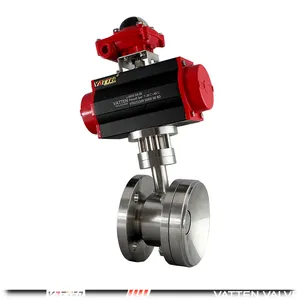
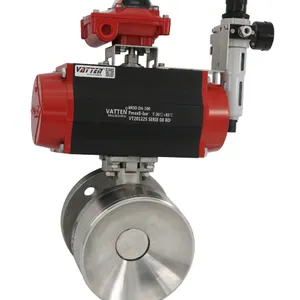
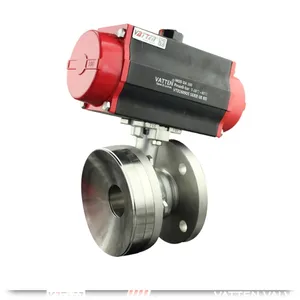
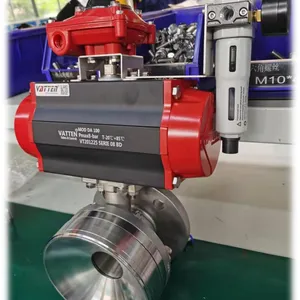
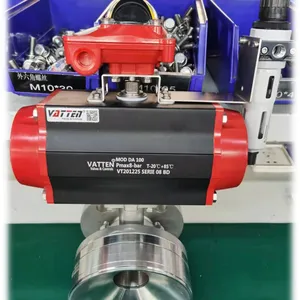
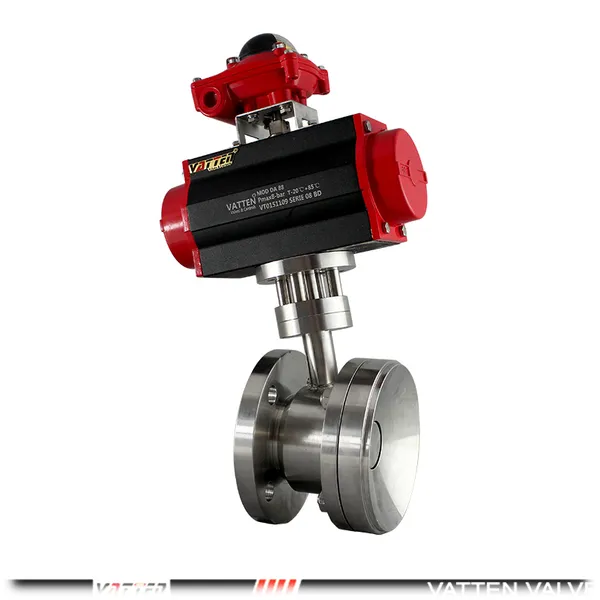
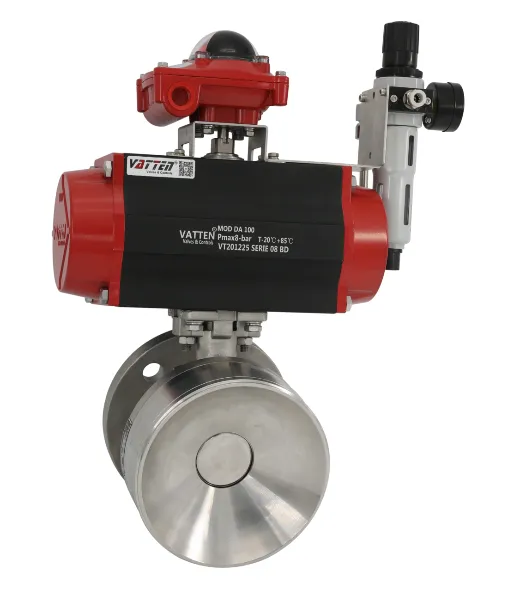
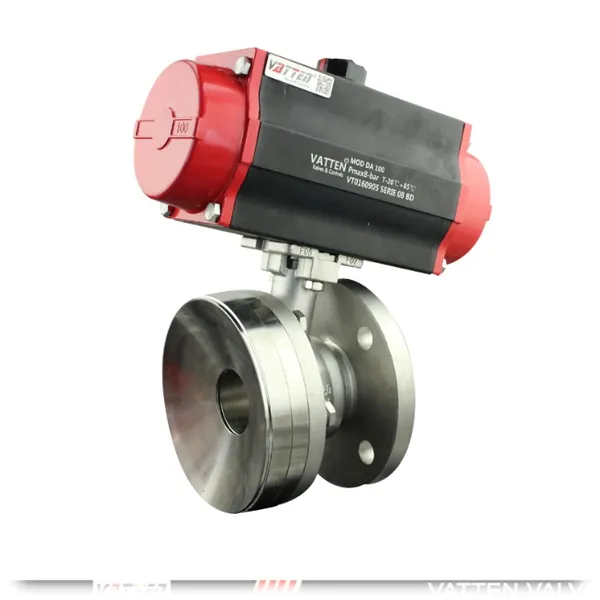
Industrial Pneumatic Tank Bottom Valve for Food, Petroleum, Chemical, Paper, and Water Treatment Applications



Related Products
-
 Pneumatic Tank Bottom Valve Featuring Adjustable Upper Seal for Easy Maintenance and Leak Prevention in Process SystemsNegotiableMOQ: 1 Set
 -
Fire-Safe and Anti-Static Pneumatic Tank Bottom Valve for Hazard Prevention in High-Risk Industrial EnvironmentsNegotiableMOQ: 1 Set
-
Industrial-Grade Pneumatic Tank Bottom Valve With Maintenance-Friendly Upper SealNegotiableMOQ: 1 Piece
-
Pneumatic Tank Bottom Valve With 105° Angled Valve Stem for Reduced Material BuildupNegotiableMOQ: 1 Piece
-
Stainless Steel Pneumatic Tank Bottom Valve With Adjustable Upper SealNegotiableMOQ: 1 Piece
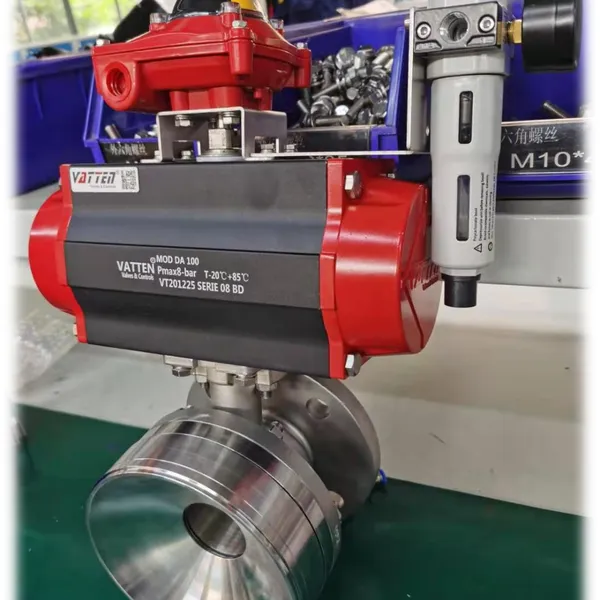
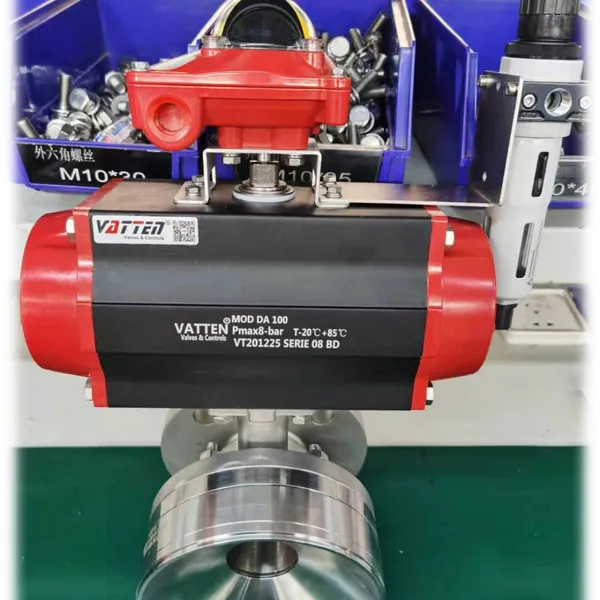
The Industrial Pneumatic Tank Bottom Valve is a specialized fluid control component tailored for tank bottom discharge scenarios in food, petroleum, chemical, papermaking, and water treatment industries. Its core design focuses on solving industry pain points such as material residue, difficult maintenance, and safety hazards—featuring an inclined valve stem, arc-shaped anti-dead-corner structure, and integrated fire-safe and anti-static functions. Unlike ordinary tank bottom valves that require frequent disassembly for maintenance or leave material residues causing cross-contamination, this valve ensures efficient, clean, and safe tank bottom discharge, making it ideal for applications requiring strict hygiene standards (e.g., food processing) or high safety requirements (e.g., chemical/petroleum storage).
What distinguishes this valve is its balance of practicality and economy. For example, the three-piece installation structure avoids valve damage from high welding temperatures, while the ISO5211 high-platform design eliminates the need for expensive additional brackets—reducing both installation costs and post-maintenance workload. Whether handling viscous food materials, corrosive chemical liquids, or solid-containing papermaking wastewater, this valve maintains stable performance and minimizes operational risks.
Core Design Advantages & Customer Value
105° Inclined Valve Stem: Optimizes Space & Reduces Residue
The valve stem is fixed at a 105° angle (adjustable between 95°-120°) to the pipeline. An angle less than 95° would cause material accumulation and insufficient safety space for the actuator, while an angle over 120° would increase valve size, installation space, and production costs. The 105° design strikes a perfect balance—ensuring safe actuator placement, smooth material flow, and no unnecessary cost escalation.Adjustable Upper Seal: Saves Maintenance Time & Costs
Unlike similar products on the market that require full disassembly (halting production) when upper seal leakage occurs, this valve’s upper seal has an on-site adjustment function. Leakage can be stopped directly by adjusting the seal, avoiding production downtime and reducing maintenance labor and time costs—critical for continuous-process industries like chemical and papermaking.ISO5211 High Platform: Simplifies Installation & Lowers Costs
Compliant with the ISO5211 standard, the valve’s high-platform design allows direct installation of pneumatic actuators. Valves without this standard require additional brackets for actuator mounting, which increases material and labor costs. This design not only shortens installation time but also ensures stable actuator-valve alignment, reducing long-term operational failures.Arc-Shaped Anti-Residue Structure: Ensures Clean Discharge
The connection end matches the tank bottom’s arc, and the ball features a corresponding arc design. When discharging, materials flow along the arc-shaped flow channel, leaving no residues in the tank bottom or valve flow path. This is particularly valuable for the food industry (preventing cross-contamination) and the chemical industry (avoiding material mixing that could cause reactions).Three-Piece Installation: Protects Valve Quality
Traditional two-piece valves risk damage from high temperatures when the arc flange is welded to the tank bottom. The three-piece structure allows welding the arc flange to the tank first (cooling after welding), then installing the valve body—protecting internal components (e.g., seals, ball) from welding heat and ensuring long-term sealing performance.Fire-Safe & Anti-Static: Enhances Operational Safety
In case of pipeline fire, if the valve seat is completely burned, the ball moves downward to form a metal seal, blocking flame spread and minimizing disaster impact. Additionally, an anti-static device (spring + steel ball embedded in the valve stem) discharges static generated by material friction—preventing static sparks that could ignite flammable media (e.g., petroleum, chemical solvents).
Key Technical Specifications
| Specification Category | Detailed Parameters | Industry Relevance |
| Valve Stem Inclination | Standard 105°, adjustable range 95°-120° | Adapts to different tank bottom heights and actuator installation spaces in chemical/petroleum tanks |
| Applicable Pressure | Maximum pressure (Pmax) 8 bar (sample marking reference) | Suitable for low-to-medium pressure tank systems (e.g., food storage tanks, water treatment tanks) |
| Applicable Temperature | -20℃ ~ +85℃ (sample marking reference) | Covers most ambient temperature scenarios in food, papermaking, and water treatment industries |
| Installation Structure | Three-piece structure (arc flange + valve body + actuator mounting platform) | Protects valves from welding damage; simplifies on-site maintenance and replacement |
| Safety Features | Fire-safe design (metal emergency seal); anti-static device (spring-steel ball assembly) | Meets safety requirements for flammable media in petroleum/chemical industries |
| Actuator Compatibility | ISO5211 high platform (direct installation of pneumatic actuators) | Compatible with most standard pneumatic actuators; no custom brackets needed |
| Anti-Residue Design | Arc-shaped connection end + arc-shaped ball + smooth flow channel | Prevents material residue, meeting hygiene standards for food industry and purity requirements for chemical industry |
Whether you need a tank bottom valve for food-grade material discharge (requiring zero residue and easy cleaning), petroleum storage (needing anti-static and fire-safe protection), or chemical processing (demanding corrosion resistance and low maintenance), this Pneumatic Tank Bottom Valve can be adjusted to your specific needs. Its ISO5211 standard ensures compatibility with global actuator models, while the three-piece installation simplifies on-site deployment. For customizations—such as special material valves (e.g., stainless steel for food industry), adjusted valve stem angles, or extended temperature ranges—please contact our team. We provide tailored solutions to match your tank system specifications, ensuring efficient, safe, and cost-effective operation.
FAQ (Frequently Asked Questions)
Q: Can this valve be used for food-grade applications (e.g., discharging syrup or dairy products)?
A: Yes. The valve’s arc-shaped anti-residue structure (no dead corners) and smooth flow channel prevent material accumulation, which aligns with food hygiene requirements. For food-grade use, we recommend selecting stainless steel (e.g., 304/316) as the valve body material and food-safe seals (e.g., EPDM/PTFE) to avoid material contamination. Please specify food-grade requirements when ordering.Q: What should I do if the upper seal leaks during operation? Do I need to stop production?
A: No. The valve’s upper seal has an adjustment function—you can directly adjust the seal component on-site to stop leakage without disassembling the entire valve or halting production. This design is especially beneficial for continuous-process industries like papermaking and chemical, where production downtime leads to significant losses.Q: Is the valve stem angle fixed, or can it be adjusted to fit my tank’s specific space?
A: The standard valve stem angle is 105°, but it can be adjusted within the 95°-120° range. When placing an order, please provide your tank bottom height, actuator dimensions, and required installation space—our team will customize the valve stem angle to ensure a perfect fit, avoiding issues like material accumulation or insufficient actuator space.Q: Does the valve require a special actuator, or is it compatible with ordinary pneumatic actuators?
A: It is compatible with most ordinary pneumatic actuators, thanks to the ISO5211 high-platform design. The valve has a standard ISO5211 mounting interface, allowing direct installation of actuators that meet this standard—no additional brackets or adapters are needed. If your actuator has non-standard dimensions, please share its specifications, and we can verify compatibility or provide custom mounting solutions.Q: Can the valve handle media containing small solid particles (e.g., papermaking wastewater with fiber residues)?
A: Yes. The arc-shaped flow channel and large-diameter design minimize the risk of solid particle clogging. The smooth inner surface of the flow channel allows particles to be discharged with the media, and the arc-shaped ball prevents particles from getting stuck between the ball and seal. However, for media with large or sharp particles, we recommend adding a filter upstream to protect the valve’s sealing surface.Q: What is the service life of the valve’s anti-static device, and does it need regular replacement?
A: The anti-static device consists of a spring and steel ball—both made of corrosion-resistant materials (e.g., stainless steel). Under normal use, it has a service life of 3-5 years. We recommend inspecting the device annually: check if the spring is loose or rusted, and ensure the steel ball maintains good contact with the valve stem. If parts are damaged, replacement components are available at low cost, and we can provide a maintenance guide.Q: How do I install the three-piece valve correctly? Is professional installation required?
A: The installation process is straightforward and does not necessarily require professional personnel, but following the steps is critical: 1) Confirm the arc flange dimensions match the tank bottom, then weld the flange to the tank (cool completely after welding); 2) Place the connecting bolts on the arc flange; 3) Embed the seal in the valve cover’s groove; 4) Align the valve body’s flange holes with the bolts and insert them; 5) Tighten the nuts until the arc flange and valve cover are flush. We provide a detailed installation manual with diagrams, and our team can offer remote guidance if needed.Q: Is the valve suitable for outdoor installation, and will it resist rain or humidity?
A: The standard valve body (e.g., carbon steel or stainless steel) has basic corrosion resistance, but outdoor installation requires additional protection. We recommend selecting an anti-rust coating for the valve body and a waterproof pneumatic actuator (e.g., IP65 rating) to prevent rain, humidity, or dust from damaging internal components. Please inform us of outdoor use when ordering, and we will upgrade the valve’s weather resistance accordingly.Q: What happens if the valve is used beyond the recommended pressure (8 bar) or temperature (-20℃~+85℃)?
A: Using the valve outside the recommended range may damage the seal (e.g., high temperature softens the seal, high pressure deforms the ball) or reduce safety performance (e.g., anti-static device failure at extreme temperatures). If your application requires higher pressure or a wider temperature range, please consult our team—we can customize the valve with high-pressure materials (e.g., forged steel) or high-temperature seals (e.g., PPL) to meet your needs.

Send Inquiry to This Supplier


You May Also Like
-
Diamond-Shaped Valve Stem Pneumatic Tank Bottom Valve for Easy Actuator InstallationNegotiableMOQ: 1 Piece
-
Compact Pneumatic Tank Bottom Valve With 105° Angled Valve Stem for Tight SpacesNegotiableMOQ: 1 Piece
-
Electric Concentrated Water Regulating Valve in Waste Leachate and Water Treatment ApplicationsNegotiableMOQ: 1 Set
-
Electric Concentrated Water Regulating Valve With Compact Design, Embedded Positioner, and 200°C Temperature ResistanceNegotiableMOQ: 1 Set
-
Durable Concentrated Water Regulating Valve for Metallurgy, Petrochemical, and Power Plants With Long Service LifeNegotiableMOQ: 1 Set
-
VPV-A01 Series Concentrated Water Regulating Valve DN15-32 for High-Pressure Chemical Fluids, PrecisionNegotiableMOQ: 1 Set
-
Flange or Thread Connection Concentrated Water Regulating Valve for Oxygen, Gas, and Corrosive Media in Industrial SystemsNegotiableMOQ: 1 Set
-
Pneumatic Control Valve With Valve Positioner for Frequent Adjustment Working Conditions Chinese FactoryNegotiableMOQ: 1 Piece
-
High Quality Pneumatic Control Valve for Chemical Pharmaceutical Industry Chinese Strong Factory With Spot StockNegotiableMOQ: 1 Piece
-
Self Acting Control Valve for Hot Water Heating Air Conditioning Chilled Water Systems Spot Stock FactoryNegotiableMOQ: 1 Piece


