Home > Electrical & Electronics > Electrical Control System > ABB SD823 3BSC610039R1 Power Supply Device
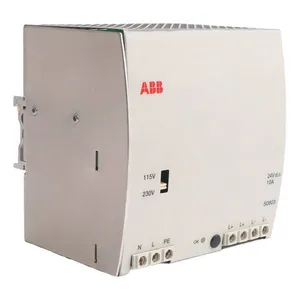
ABB SD823 3BSC610039R1 Power Supply Device
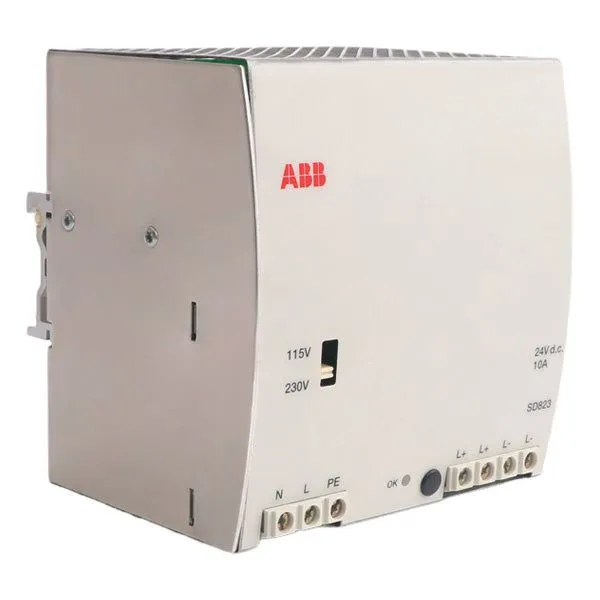
ABB SD823 3BSC610039R1 Power Supply Device photo-1

Negotiable MOQ: 1 Piece (Price negotiable depending on order volume and customization)
Key Specifications
Get Latest Price
Material:
Other, Global universal model
Condition:
Other, Global universal model
Task:
Other, Global universal model
Payment & Shipping
Payment Methods:
Port of Shipment:
guizhou
Delivery Detail:
Delivery time depends on order quantity.
Material Other, Global universal model
Condition Other, Global universal model
Task Other, Global universal model
Mathematical Model Other, Global universal model
Signal Other, Global universal model
Customized Non-Customized
Structure Other, Global universal model
Operating Temperature -30℃ to 75℃
Relative Humidity 5%-95% (non-condensing)
Dimensions 150×100×240mm

I. Overview


The ABB SD823 3BSC610039R1 is a high-performance digital signal processing and control module that belongs to the core component system of ABB Advant OCS (Open Control System), an open control system. It is custom-developed for scenarios such as industrial process control, large-scale electromechanical equipment drive, and complex production process regulation. Its applications cover critical fields with strict requirements for control accuracy, system stability, and anti-interference capability, including power generation (thermal power, hydropower, new energy supporting facilities), petrochemical industry (refining and chemical plants, oil and gas transmission), metallurgical steel (blast furnace control, rolling mill drive), rail transit (traction system control), and intelligent manufacturing. It serves as a core control unit to ensure efficient collaboration and safe controllability throughout the entire industrial production process.


The core functions of this module focus on high-precision signal processing, multi-modal logical operation, and rapid execution of control commands:
  • Through integrated multi-type standardized I/O interfaces, it collects real-time sensor signals (e.g., temperature, pressure, flow rate, rotational speed, displacement) from the field.

  • After receiving instructions from upper-level control systems (such as ABB AC800M and S400), it performs signal filtering, closed-loop regulation, logical interlocking, and fault prediction via the built-in high-performance Digital Signal Processor (DSP) and ABB proprietary control algorithms.


  • Finally, it outputs precise control commands to achieve refined management and control of the entire process, including equipment start-stop, load adjustment, process monitoring, and emergency protection.

Meanwhile, the module is equipped with comprehensive self-diagnosis, data storage, and multi-protocol communication capabilities, enabling seamless connection and collaborative operation with upstream and downstream systems.


In terms of hardware architecture and environmental adaptability:
  • The module adopts a standardized modular design of the ABB Advant series, allowing direct and seamless integration into mainstream control systems of the ABB Advant OCS, AC800M, and S400 series. No additional adapter modules or custom drivers are required for high-speed data exchange with power modules, communication expansion modules, and I/O sub-modules within the system.


  • Compliant with strict industrial environmental design specifications, it undergoes multiple Electromagnetic Compatibility (EMC) optimizations, wide temperature range adaptability enhancements, redundant design for critical circuits, and structural reinforcement. This enables stable operation in harsh industrial on-site environments characterized by high temperature, high humidity, dust, strong vibration, and intense electromagnetic radiation.

  • Relying on a high-performance DSP and a real-time operating system kernel, it achieves millisecond-level response and high-precision execution of control commands, providing solid technical support for complex industrial control needs.


II. Technical Specifications


Parameter Category Parameter Name Specific Parameters Unit
Basic Parameters Model ABB SD823 3BSC610039R1 -

Product Type High-performance digital signal processing and control module -

System Compatibility ABB Advant OCS, AC800M, S400 series control systems -

Compatible Chassis ABB Advant standard control chassis (e.g., PM860, PM861 series chassis), occupying 1 standard control slot -

Dimension (L×W×H) 150×100×240 mm

Installation Method Chassis-embedded installation, equipped with anti-loosening buckles and plug-in guide structures -
I/O Parameters


Analog Input Channels


12 independent channels; supports dual-mode input of 4~20mA DC/0~5V DC; input accuracy ±0.03%FS; input impedance ≥10kΩ; supports independent channel calibration

Channel

Analog Output Channels 8 independent channels; configurable output of 4~20mA DC/0~5V DC; load capacity ≤500Ω; output accuracy ±0.05%FS; with output short-circuit protection Channel

Digital Input Channels 20 independent channels; supports adaptive switching between dry contacts/wet contacts; input voltage DC 24V±10%; response time ≤0.3ms; with optocoupler isolation (isolation voltage 2000VAC) Channel

Digital Output Channels 12 independent channels; relay output (configurable normally open/normally closed); contact rating AC 250V/8A, DC 30V/8A; with real-time output status feedback function Channel

Pulse Input Channels 4 independent channels; supports 0~20kHz pulse signal input (for rotational speed and frequency detection); input impedance ≥1kΩ; with signal shaping function Channel

Output Command Delay Analog output ≤0.8ms; digital output ≤0.5ms; pulse response ≤0.2ms ms


Core Control Params

Core Processor


High-performance 32-bit Digital Signal Processor (DSP); clock speed 800MHz; dual-core parallel processing architecture (signal processing core/operation control core)

-

Supported Control Algorithms Supports PID regulation, fuzzy control, adaptive control; operation cycle ≤0.3ms ms

Program Storage Capacity 64MB Flash memory; supports program solidification, online modification, and automatic fault recovery MB

Data Storage Capacity 32MB RAM; can store 300,000 pieces of historical operation data, fault records, and operation event logs; supports cyclic storage MB

Redundancy Support Supports 1:1 hot redundancy configuration; real-time synchronization between master and backup modules (synchronization delay ≤800ns); fault switching time ≤2ms; switching without disturbance ms


Electrical & Comm Params


Power Supply Voltage


Provided by the system chassis bus: DC 24V±10%; supports dual redundant power input; with overvoltage, overcurrent, and reverse connection protection


V


Maximum Power Consumption ≤18W (full configuration operation, including sensor excitation power output) W

Isolation Performance Input-output: 3000VAC/1min; Input-power: 2500VAC/1min; Inter-channel: 2000VAC/1min VAC/min

Communication Interfaces 2 RS485 (supports Modbus RTU protocol); 1 Gigabit Ethernet (TCP/IP, supports ABB proprietary and Modbus TCP protocols); 1 PROFIBUS-DP interface -


Environmental Params


Operating Temperature Range


-30~75℃ (standard operating range); -35~80℃ (extended operating range, continuous operation ≤72 hours)


Storage Temperature Range -40~85℃, no condensation

Relative Humidity 5%~95% (no condensation, compliant with IEC 60068-2-3 standard) %

EMC Immunity Compliant with IEC 61000-4 series standards; ESD ±12kV (air discharge)/±6kV (contact discharge); RF interference suppression ≥65dB; pulse burst immunity ±1kV -

3BSC610039R1


III. Functional Features


1. Deep Adaptation to Advant Systems for Efficient Improvement of Integration Efficiency

The module adopts unified hardware interface specifications and communication protocol stacks of the ABB Advant series. It can be directly inserted into standard chassis of systems such as Advant OCS and AC800M. After power-on, it automatically completes communication handshaking, parameter synchronization, and identity authentication with the system's main controller, power modules, and I/O expansion modules via the chassis backplane high-speed bus (rate ≥1Gbps), enabling "plug-and-play" rapid integration.


It supports full graphical programming with mainstream configuration software such as ABB Control Builder M and Control Builder F. Users can intuitively complete control logic editing, I/O channel mapping, PID parameter tuning, alarm threshold configuration, and redundancy strategy setting without developing additional dedicated drivers.

The data interaction delay with other components in the system is ≤0.3ms, ensuring real-time synchronization of control commands and monitoring data. This shortens the integration and commissioning cycle by more than 35% compared with traditional modules, significantly reducing engineering implementation costs.


2. Integrated Multi-Type High-Precision I/O for Comprehensive and Accurate Control Coverage

The module integrates 12 analog input channels, 8 analog output channels, 20 digital input channels, 12 digital output channels, and 4 pulse input channels. It can fully access multi-type on-site signals, including sensor signals (temperature, pressure, vibration, rotational speed, flow rate) and actuator control signals (solenoid valves, control valves, contactors), enabling comprehensive collection of industrial equipment operation parameters and multi-dimensional precise control.


  • Analog channels: Input accuracy up to ±0.03%FS and output accuracy ±0.05%, capable of capturing subtle parameter fluctuations (minimum detectable signal change of 0.02%FS).

  • Digital channels: Support adaptive switching between dry contacts and wet contacts without hardware jumper adjustment, adapting to different on-site wiring scenarios.

  • Pulse channels: Support 0~20kHz wide-frequency signal input, enabling direct connection to rotational speed sensors for high-precision speed measurement (±0.1rpm).

All channels have independent calibration functions and support online single-point calibration without overall shutdown, greatly improving system maintenance convenience.


3. Dual-Core Parallel Control Operation for Efficient and Accurate Response

Equipped with a high-performance 32-bit dual-core DSP (800MHz clock speed), it adopts a dual-core parallel architecture ("signal processing - operation control"). Each core operates independently and shares data in real time via a high-speed internal bus, with an operation cycle ≤0.3ms. This enables rapid processing of multi-channel concurrent signals and execution of complex control logic.


  • The response time of analog input is ≤0.5ms, the response time of digital input is ≤0.3ms, and the output command delay is ≤0.8ms. It can promptly capture minor changes in equipment operation status and output precise control commands, making it perfectly suitable for scenarios with extremely high real-time requirements, such as industrial process pressure closed-loop control (accuracy ±0.01MPa), motor speed regulation (control accuracy ±0.1rpm), and precise flow control.

It supports multiple complex algorithms such as PID regulation, fuzzy control, and adaptive control. It can automatically optimize control parameters according to the operating conditions of equipment, adapting to high-precision control needs under different loads and working conditions. Especially in variable working condition scenarios, the control accuracy is improved by more than 15%.


4. 1:1 Hot Redundancy Configuration for Safe and Reliable Operation

The module supports 1:1 dual-module hot redundancy. The master and backup modules achieve real-time synchronization of input signals, operation logic, output status, alarm information, and configuration parameters via a dedicated high-speed synchronization bus (synchronization rate ≤800ns). During operation, they continuously perform mutual health status checks, data verification, and clock synchronization.


When the master module encounters faults such as processor failure, I/O channel abnormality, communication interruption, or power fluctuation, the backup module can automatically take over control tasks without disturbance within ≤2ms. During the switching process, there is no interruption of control commands, no fluctuation of output parameters, and no impact on equipment operation, ensuring continuous and stable industrial production (annual fault downtime ≤0.8 hours).

The module has built-in comprehensive fault diagnosis and fault-tolerance mechanisms, which perform real-time monitoring of key components such as the core processor, memory, I/O channels, and communication interfaces. Upon detecting a fault, it immediately triggers a local LED indicator alarm, uploads detailed fault codes, and automatically initiates redundancy switching. The Mean Time Between Failures (MTBF) of the system is ≥100,000 hours.


5. Four-Level Interlock Protection for Layered Safety Shielding

It is equipped with four-level alarm (Informational, Warning, Severe, Critical) and interlock protection functions. According to industrial production operation regulations, it can preset multiple fault alarm thresholds and interlock logic for over-temperature, over-pressure, over-speed, abnormal flow rate, abnormal liquid level, etc.
  • Informational threshold: Only uploads informational data (including parameter value and timestamp) to the upper-level system.


  • Warning threshold: Illuminates the local yellow warning indicator and triggers audible-visual alarms in the upper-level system.

  • Severe threshold: Outputs load reduction control commands and enhances alarms (dual on-site + remote alarms).

  • Critical threshold: Immediately outputs interlock commands such as emergency shutdown, feed cutoff, and main valve closure, while locking the fault state, recording fault data, and uploading detailed alarm information to prevent fault escalation from the source.


It supports storage and traceability of 300,000 pieces of historical alarm data, recording alarm time, parameter values, fault types, and operation logs, providing a reliable basis for fault troubleshooting and root cause analysis. The alarm logic supports 0~50s delay anti-jitter configuration, which can effectively filter false alarms caused by transient interference, with a false alarm rate of less than 0.2%.


6. Multi-Protocol & Multi-Interface Communication for Flexible and Convenient Data Interaction

Equipped with 2 RS485, 1 Gigabit Ethernet, and 1 PROFIBUS-DP communication interfaces, it supports mainstream industrial communication protocols such as Modbus RTU, ABB proprietary, Modbus TCP, and PROFIBUS-DP. It can achieve seamless data interaction with upper-level monitoring systems, HMI (Human-Machine Interface), SCADA (Supervisory Control and Data Acquisition) systems, PLCs (Programmable Logic Controllers), and data servers.


  • Remote monitoring and maintenance can be realized via the Gigabit Ethernet interface. Maintenance personnel can complete module program downloading, parameter modification, fault diagnosis, and data backup in the central control room without on-site operations, improving maintenance efficiency by more than 45%.


It supports multi-module networking communication and can build a Distributed Control System (DCS) to achieve collaborative control and centralized management of multiple devices in large industrial sites, adapting to the control needs of complex production processes. The communication process adopts CRC32 data verification, timeout retransmission, and fault-tolerance mechanisms to ensure the reliability of data transmission (transmission error rate ≤10⁻⁹).


7. Triple Anti-Interference Isolation Design for Stable Operation in Harsh Environments

It adopts a triple electrical isolation design ("input-output", "input-power", "inter-channel") with a maximum isolation voltage of 3000VAC/1min. This effectively blocks the impact of on-site ground loops, power fluctuations, equipment electromagnetic radiation, and communication interference on the module.


Built-in high-performance EMC filter circuits, surge suppression components, and ESD protection circuits enable it to withstand ±12kV ESD shocks, ±2kV surge interference, and ±1kV pulse burst interference. It passes the IEC 61000-4 series EMC immunity tests and can still operate stably in high-interference environments such as high-voltage frequency converters and high-power motors, with RF interference suppression ≥65dB.


The sensor input and output interfaces adopt dedicated shielding designs. When used with dedicated shielded cables, the anti-interference performance can be further improved, ensuring the stability and accuracy of signal transmission.


8. Industrial-Grade Reinforced Structure for Excellent Environmental Adaptability

It adopts industrial-grade high-reliability components (industrial capacitors, high-temperature resistant chips, long-life relays) and an integrated die-cast aluminum alloy housing. The housing surface undergoes anodization and anti-corrosion coating treatment, providing excellent heat dissipation, dust resistance, oil resistance, and corrosion resistance.

The internal optimized heat dissipation structure is equipped with high thermal conductivity heat sinks and intelligent temperature-controlled fans (auto on/off within the temperature range of 50~75℃), which can quickly dissipate heat generated by core components and ensure continuous and stable operation of the module within the standard temperature range of -30~75℃.


It passes the IEC 60068-2-6 vibration test (5~150Hz, 6g acceleration) and IEC 60068-2-27 shock test (25g acceleration, 10ms duration), adapting to strong vibrations during equipment operation and severe impacts during transportation and installation. With an IP20 protection rating, it is equipped with dust-proof panels and waterproof aviation connectors, which can effectively block dust, oil, and moisture in industrial sites, adapting to harsh operating environments with high dust, high temperature, high humidity, and high vibration.


9. Full-Dimensional Self-Diagnosis & Intelligent Maintenance for Significantly Reduced Maintenance Costs

It supports full-dimensional self-diagnosis functions, enabling real-time monitoring and fault diagnosis of power voltage, processor status, memory integrity, I/O channel signals, communication link connectivity, redundancy synchronization status, and heat dissipation systems.


Upon detecting a fault:
  • Local LED indicators (power, operation, alarm, redundancy status) intuitively display the fault type.

  • Detailed fault codes (e.g., E02 for rotational speed sensor open circuit, E09 for analog output short circuit, E16 for communication fault) and fault descriptions are uploaded via the communication interface. Maintenance personnel can quickly locate the fault point through the fault codes, reducing fault troubleshooting time by more than 60%.

It supports online programming, online debugging, and online calibration. Through configuration software, users can real-time monitor the module's operation status, real-time data of I/O channels, and the operation process of control algorithms. Program modification, parameter calibration, and fault repair can be completed without shutdown.
It has built-in program and data backup functions, supporting local storage and remote backup. After a fault, one-click program recovery can be realized to avoid program loss, reducing annual maintenance costs by more than 35%.
Product Tags: SD823 , 3BSC610039R1

Send Inquiry to This Supplier

* Message
0/5000

Want the best price? Post an RFQ now!
Verified Business License
Business Type
Trading Company
Year Established
2014
Factory Size
1,000-3,000 square meters
Product Certifications
SA8000