Home > Electrical & Electronics > Electrical Control System > ABB TU731F 3BDH000380R0001 I/O Terminal Unit, 230 VAC
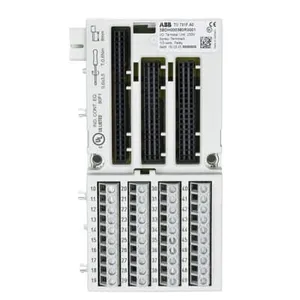
ABB TU731F 3BDH000380R0001 I/O Terminal Unit, 230 VAC
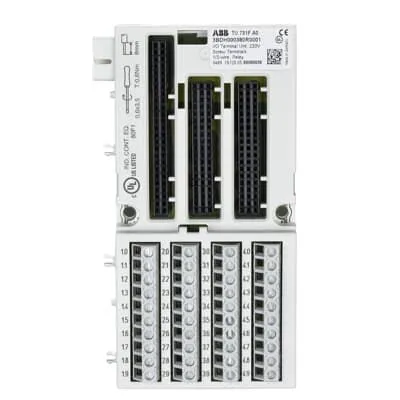
ABB TU731F 3BDH000380R0001 I/O Terminal Unit, 230 VAC photo-1

Negotiable MOQ: 1 Piece (Price negotiable depending on order volume and customization)
Key Specifications
Get Latest Price
Material:
Other, Global universal model
Condition:
Other, Global universal model
Task:
Other, Global universal model
Payment & Shipping
Payment Methods:
Port of Shipment:
guizhou
Delivery Detail:
Delivery time depends on order quantity.
Material Other, Global universal model
Condition Other, Global universal model
Task Other, Global universal model
Mathematical Model Other, Global universal model
Signal Other, Global universal model
Customized Non-Customized
Structure Other, Global universal model
Operating Temperature -30℃ to 65℃
Relative Humidity 5%-95% (non-condensing)
Dimensions 150×100×45mm

I. Overview


ABB TU731F 3BDH000380R0001 is a high-performance IO module interface base, a key hardware support component of the AC 800M series distributed control system. It is specifically designed to meet the requirements of IO module integration, multi-type on-site signal conversion, and high-reliability power distribution in medium and large-scale industrial process control scenarios. Adopting a compact modular architecture and precision contact connection technology, this base integrates core functions such as multi-type signal adaptation, dual redundant power supply, accurate mechanical positioning, and enhanced electromagnetic compatibility protection. It provides stable mechanical support, efficient signal transmission links, and comprehensive safety protection for full-specification IO modules of the AC 800M series (e.g., AI890 analog input module, DI810 digital input module, AO890 analog output module, etc.).


As a core connection hub between IO modules, controller units, and on-site equipment in the AC 800M control system, ABB TU731F 3BDH000380R0001 features excellent system compatibility and expansion flexibility. It can seamlessly adapt to full-specification IO modules and communication expansion modules of the AC 800M series (such as CI854 communication module), and supports in-depth collaboration with ABB Process Studio configuration software, HMI human-machine interaction systems, distributed IO networks, and upper-level monitoring platforms (SCADA/MES/ERP). It is widely used in industrial fields with strict requirements for signal acquisition accuracy and system stability, including petrochemical, fine chemical, power generation, metallurgical smelting, and water treatment industries. It provides a solid hardware foundation for on-site signal acquisition, control command execution, and full-lifecycle operation and maintenance of key equipment such as large reactors, generator sets, metallurgical furnaces, and intelligent production lines. With advantages such as high mechanical strength, low signal loss, wide environmental adaptability, and long service life design, this base can adapt to harsh working conditions including high temperature, high humidity, heavy dust, strong vibration, and strong electromagnetic interference, ensuring continuous and stable data interaction between IO modules and the core units of the system.


II. Functional Features


ABB TU731F 3BDH000380R0001 is highly compatible with the high reliability and high expandability design requirements of the AC 800M series control system. Integrating ABB's core technologies in the field of industrial connection and signal processing, it has the following core functional features:


  • Compact Modular Installation and Accurate Positioning: It adopts the standard 19-inch rack-mounted installation size of the AC 800M series, compatible with IEC 60297 standard cabinets and ABB dedicated control cabinets. Through the precise cooperation between the bottom quick-release clips and cabinet guide rails, second-level positioning and installation are achieved, with the installation coaxiality error controlled within ±0.2mm to ensure perfect fit between the IO module and the base. The top of the base integrates 2 sets of guide posts and bidirectional positioning slots, supporting blind-mate installation of IO modules. During insertion, position deviations within ±1.0mm are automatically corrected, effectively avoiding pin damage caused by misalignment. After the module is installed, it is reinforced with anti-loosening locking screws on both sides, capable of withstanding vibration shocks of 5-1500Hz and 2g acceleration as well as impact loads of 30g, making it suitable for high-vibration environments such as metallurgical workshops and near large pump sets.

  • Multi-Type Signal Conversion and High-Speed Transmission: Equipped with 2 built-in high-speed backplane bus interfaces, it is compatible with ABB proprietary bus and mainstream industrial Ethernet protocols such as PROFINET. It supports multi-directional high-speed data transmission between IO modules, controller units, and remote IO nodes. The maximum bus transmission rate can reach 100Mbps, and the transmission delay of key signals is ≤300μs, meeting the real-time requirements of millisecond-level signal acquisition and control scenarios. The base integrates a 120-pin high-density gold-plated pin socket with a pin pitch of 2.5mm, adopting a pressure welding process, with a contact impedance of ≤20mΩ and a 40% reduction in signal transmission loss. The pin area is equipped with an automatically retractable dust-proof cover, which is fully closed when no module is installed, increasing the protection level to IP40 and effectively isolating dust, oil, and moisture intrusion. The surface of the cover is marked with clear pin definitions and signal classification labels, facilitating on-site debugging and fault troubleshooting.

  • Dual Redundant Power Supply and Intelligent Protection: It has two independent power input interfaces (DC 24V±10%), supporting main-standby dual power supply configuration. The input voltage range covers 21.6-26.4V DC, which can adapt to complex power supply environments in industrial sites. An intelligent Power Distribution Unit (PDU) is integrated inside, which accurately distributes the input power to the IO module's core power supply terminal, signal conditioning circuit power supply terminal, and standby power supply terminal through a digital voltage regulator. The output voltage ripple is ≤15mV, providing ultra-stable power supply for core components of the IO module such as signal acquisition, amplification, and conversion. The power supply circuit has a built-in triple protection mechanism: a 2A self-recovering fuse for overload protection, a 28V transient voltage suppressor diode for overvoltage protection, and an isolation transformer for strong-weak electricity isolation (isolation voltage ≥1.5kV AC). It responds quickly within 300μs when a fault occurs and automatically restores power supply within 80ms after the fault is eliminated, providing comprehensive protection for the safety of core devices.

  • Enhanced Electromagnetic Compatibility and Wide Environmental Adaptability: It adopts a double-layer metal shielded housing design, with the outer layer made of high-strength aluminum alloy and the inner layer made of galvanized cold-rolled steel plate. The surface is passivated, reaching an IP20 protection level, which can effectively shield external electromagnetic interference (EMI) and radio frequency interference (RFI), with internal signal leakage attenuation ≥50dB. The internal signal lines adopt a double-layer protection structure of twisted pair + shielding, achieving 4mm physical isolation and electromagnetic isolation from the power supply lines. It can withstand ±4kV electrostatic discharge, ±1.5kV surge impact, and 30MHz-2GHz radiated interference, fully complying with the IEC 61000-4-2/3/5 series of electromagnetic compatibility standards. Industrial-grade components with a wide temperature range are selected, with an operating temperature range of -30℃~65℃, a storage temperature range of -40℃~85℃, and a relative humidity adaptation range of 5%-95% (no condensation, when temperature ≤50℃). It can adapt to extreme environments such as outdoor control cabinets in cold regions and high-temperature chemical reaction areas.

  • Full Status Monitoring and Convenient Operation & Maintenance: The front of the base is equipped with 4 high-brightness LED status indicators, corresponding to "Main Power Supply" (steady green for normal), "Standby Power Supply" (steady yellow for normal), "Bus Communication" (flashing green for data transmission/steady green for standby), and "Module Status" (steady green for normal/flashing red for fault) respectively. The operating status of the device can be quickly determined through the combination of indicators. A diagnostic interface is integrated on the side; connecting an ABB dedicated diagnostic instrument allows real-time reading of 12 key parameters such as power supply voltage, current, bus load rate, and module temperature, supporting remote online monitoring and fault early warning. An identification label position is reserved, where operation and maintenance information such as module number, installation location, and calibration records can be written, enabling full-lifecycle traceability management.

  • Global Compatibility and Flexible Expansion: It supports seamless adaptation to full-specification IO modules of the AC 800M series (AI810-AI890, DI810-DI890, AO810-AO890, etc.). By replacing the IO module, acquisition and output of different types of signals (analog, digital, pulse) can be realized without replacing the base or rewiring, reducing the expansion cost by 30%. It is compatible with the full range of ABB communication expansion modules; through the backplane bus, cascade expansion of up to 32 IO modules can be realized, supporting unified access and centralized processing of multi-type signals. It can perfectly collaborate with software such as ABB Process Studio and Control Builder M, supporting online parameter configuration and firmware upgrading of IO modules. During the upgrading process, power supply and communication remain uninterrupted, realizing non-disturbing system upgrading.


3BDH000380R0001


III. Technical Parameters


Parameter Category Parameter Name Specific Parameters Unit
Basic Parameters Model ABB TU731F 3BDH000380R0001 -

Overall Dimensions (L×W×H) 150×100×45 mm

Weight Approximately 0.8 kg

Installation Method 19-inch rack-mounted installation (compatible with IEC 60297 standard cabinets), double fixation with clips + screws -


Power Supply Parameters


Power Supply Voltage


DC 24V±10%, two-channel redundant input (Main-Standby)

V

Input Voltage Range 21.6-26.4 V DC

Rated Power Supply Current 2A (single channel), supporting two-channel parallel power supply A

Power Supply Protection 2A self-recovering fuse (overload), 28V transient voltage suppressor diode (overvoltage), 1.5kV AC isolation (strong-weak electricity) -

Redundancy Switching Time ≤300μs μs

Output Voltage Ripple ≤15mV mV


Signal & Communication Parameters


Supported Bus Types


ABB proprietary backplane bus, PROFINET

-

Bus Transmission Rate Maximum 100Mbps bps

Number of Pins 120 pins, gold-plated process (gold plating thickness ≥5μm) Pin

Contact Impedance ≤20mΩ

Data Transmission Delay ≤300μs (key signals), ≤800μs (ordinary signals) μs

Maximum Number of Expansion Modules 32 (cascade mode) Unit


Environmental & Reliability Parameters


Operating Temperature Range


-30~65


Storage Temperature Range -40~85

Relative Humidity 5%~95% (no condensation, when temperature ≤50℃) %

Protection Level IP20 (overall), IP40 (pin area, when cover is closed) -

Vibration Resistance 5-1500Hz, 2g acceleration (complying with IEC 60068-2-6) -

Mean Time Between Failures (MTBF) ≥600,000 Hour


Electromagnetic Compatibility Parameters


Electrostatic Discharge Immunity


±4kV (contact discharge), ±8kV (air discharge), complying with IEC 61000-4-2

-

Surge Immunity ±1.5kV (line-to-ground), ±1kV (line-to-line), complying with IEC 61000-4-5 -

Radiated Immunity 30MHz-2GHz, 15V/m, complying with IEC 61000-4-3 -


IV. Working Principle


As a core interface unit of the AC 800M series IO modules, the working principle of ABB TU731F 3BDH000380R0001 revolves around four core links: "intelligent power distribution - multi-type signal conversion - full status monitoring - dual redundancy protection", realizing efficient collaboration and safe operation between IO modules and various units of the system. The specific working principle is as follows:


  1. Dual Redundant Power Distribution Link:Two-way DC 24V redundant power supplies in the industrial site are connected to the base's "POWER IN 1 (Main)" and "POWER IN 2 (Standby)" interfaces through shielded cables. The input power first passes through a reverse connection protection circuit to prevent device damage caused by reverse connection of positive and negative poles. Then it enters the intelligent voltage monitoring unit, which collects the voltage, current, and temperature parameters of the two input channels in real-time through high-precision voltage sensors, and transmits the data to the built-in microcontroller (MCU) for analysis and judgment. When the voltages of both channels are within the normal range, the MCU controls the power supply switching unit to select the channel with the most stable voltage as the main power supply, while the other channel is in hot standby mode. Electrical isolation is achieved through isolation diodes to avoid loop interference; when the main power supply voltage exceeds the threshold or a fault occurs, the switching unit quickly switches to the standby power supply within 300μs to ensure the continuity of power supply.

  2. The stabilized power supply enters the intelligent Power Distribution Unit (PDU), which outputs multiple precise voltages such as 3.3V (logic core), 5V (interface circuit), and 12V (drive circuit) through a digital voltage regulator. After multi-stage capacitor filtering, the output ripple is controlled within 15mV. The self-recovering fuse in the power supply circuit monitors the current of each branch in real-time; when the current exceeds 2A, it fuses and limits the current within 300μs. The transient voltage suppressor diode turns on quickly when the voltage exceeds 28V to absorb surge energy. The isolation transformer realizes strong-weak electricity isolation to prevent external high voltage from entering the core circuit of the IO module, providing comprehensive protection for power supply safety.

  3. Multi-Type Signal Conversion Link:After the IO module is accurately docked with the positioning slots through the guide posts, the 120-pin interface at the bottom is fully in contact with the gold-plated pin socket of the base, forming a low-impedance mechanical and electrical connection. Analog, digital, and other signals collected by on-site sensors are processed by the IO module and then transmitted to the internal signal processing unit of the base through the pin socket. This unit integrates a multi-protocol conversion chip, which can convert the proprietary signals output by the IO module into general industrial Ethernet signals such as PROFINET, and at the same time convert the control commands issued by the controller into internal signals recognizable by the IO module. The signal transmission adopts a differential signal design, combined with twisted pair + shielded cables, effectively suppressing common-mode interference and differential-mode interference.

  4. The processed signals are transmitted bidirectionally through the backplane bus interface or Ethernet interface: on one hand, the control commands of the controller are sent to the IO module to drive the action of the actuator; on the other hand, the temperature, pressure, flow rate, and other data collected on-site as well as the operating status of the equipment are fed back to the controller for logical operation and status judgment. A signal amplification and shaping circuit is integrated at the bus interface to extend the transmission distance (Ethernet transmission distance up to 100m, backplane bus up to 3m). At the same time, it supports real-time monitoring of the bus load rate and automatically issues an early warning when the load rate exceeds 80%.

  5. Full Status Monitoring Link:The built-in status monitoring system of the base consists of a sensor unit, an MCU processing unit, and an indicator light drive unit. The sensor unit includes voltage sensors, current sensors, temperature sensors, and bus signal detectors, which collect the voltage and current of the two-way power supply, the internal temperature of the base, the amplitude of the bus signal, and the bit error rate in real-time. The MCU processing unit analyzes and calculates the collected data, compares it with the preset threshold to judge the operating status. The indicator light drive unit controls the on/off and flashing modes of the 4 LED indicators on the front according to the judgment results, providing an intuitive feedback of the operating status.

  6. The diagnostic interface on the side supports connection with an ABB dedicated diagnostic instrument or upper-level monitoring system, and uploads 12 key operating parameters through the Modbus-RTU protocol to realize remote monitoring. It also supports fault code output; when problems such as power supply abnormality, communication failure, and poor module contact are detected, a unique fault code is automatically generated to facilitate quick location of the fault point. The reserved identification label can be used to enter equipment information through a dedicated card writer, and cooperate with ABB AssetVision asset management software to realize full-lifecycle traceability of equipment.

  7. Dual Redundancy Protection and Fault Isolation Link:In scenarios with multi-base redundant configuration, multiple TU731F bases are connected through dedicated synchronization cables, and the MCU unit synchronizes the power supply status, communication status, and module operation data of each base in real-time. When the main base fails, the standby base takes over the control authority within 300μs through the synchronization signal, realizing seamless switching of signal transmission and ensuring uninterrupted system operation. At the same time, the internal fault isolation circuit of the base realizes electrical isolation between the IO module and external equipment through an optocoupler. When external equipment has faults such as short circuit and overvoltage, the isolation circuit quickly cuts off the fault link to prevent the fault from spreading to the IO module and the core unit of the controller.

  8. After a fault occurs, the base automatically records information such as fault time, fault type, and operating parameters at the time of the fault, and stores it in a non-volatile memory, which can be read through a diagnostic instrument to provide data support for fault analysis and prevention. For recoverable faults (such as transient overvoltage),
Product Tags: TU731F , 3BDH000380R0001

Send Inquiry to This Supplier

Message
0/5000

Want the best price? Post an RFQ now!
Gold Verified Supplier
1Yr
Verified Business License
Business Type
Trading Company
Year Established
2014
Factory Size
1,000-3,000 square meters
Product Certifications
SA8000