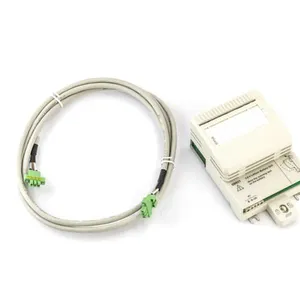
Home > Electrical & Electronics > Electrical Control System > ABB SB821 3BSE018109R1 Battery Unit

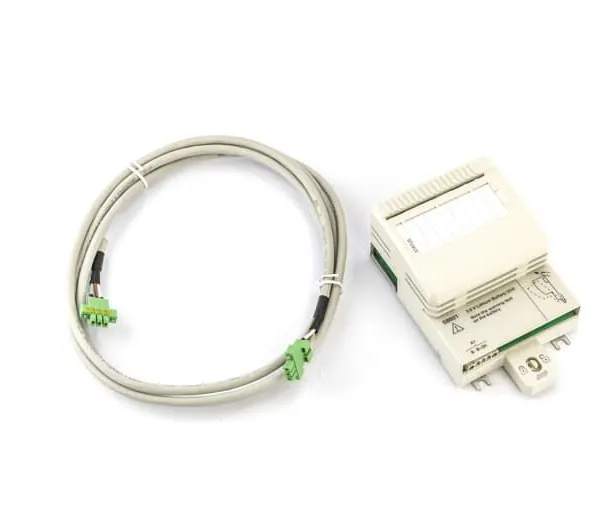
ABB SB821 3BSE018109R1 Battery Unit

ABB SB821 3BSE018109R1 Battery Unit photo-1
Negotiable MOQ: 1 Piece (Price negotiable depending on order volume and customization)
Key Specifications
Get Latest Price
Material:
Other, Global universal model
Condition:
Other, Global universal model
Task:
Other, Global universal model
Payment & Shipping
Payment Methods:
Port of Shipment:
guizhou
Delivery Detail:
Delivery time depends on order quantity.
Material Other, Global universal model
Condition Other, Global universal model
Task Other, Global universal model
Mathematical Model Other, Global universal model
Signal Other, Global universal model
Customized Non-Customized
Structure Other, Global universal model
Operating Temperature -20℃ to 60℃
Relative Humidity 5%-95% (non-condensing)
Dimensions 120×80×100mm

I. Product Overview


ABB SB821 3BSE018109R1 is a key remote I/O interface module in the AC 800M series distributed control system. Specifically designed for remote expansion and centralized management of I/O signals in decentralized industrial on-site control scenarios, it is widely used in large-scale distributed control projects across industries such as electric power, petrochemicals, metallurgy, rail transit, and intelligent manufacturing. As a core communication bridge between the system's main controller and remote I/O units, this module undertakes core functions including real-time transmission of remote I/O signals, protocol conversion, data processing, and fault diagnosis. It can connect various I/O modules such as digital input/output modules, analog input/output modules, and special function modules, enabling the collection of process parameters and control of actuators distributed in different areas of the industrial site. This significantly reduces on-site wiring costs and enhances the flexibility of system layout.


Based on the unified modular and networked architecture design of the AC 800M system, this module is compatible with main controllers of the PM864, PM865, PM866, and other series. It supports dual-medium communication (fiber optic and Ethernet) and redundant configuration, enabling long-distance and highly reliable data transmission in harsh industrial environments. It features industrial-grade anti-interference capability and wide environmental adaptability, having passed the IEC 61000 series electromagnetic compatibility certification and EN 61010-1 safety certification. It can operate stably in industrial on-site environments with high temperature, high humidity, strong electromagnetic interference, and long-distance transmission (up to 10km via fiber optic), making it a core component for building remote I/O networks in large-scale distributed control systems.


II. Functional Features


  • Dual-Medium Redundant Communication and Long-Distance Transmission: The module integrates dual communication interfaces (Ethernet and fiber optic), supporting mainstream industrial Ethernet protocols such as PROFINET, EtherNet/IP, and MODBUS TCP/IP, while also being compatible with ABB's proprietary S800 I/O bus protocol. The Ethernet interface supports 10/100/1000Mbps auto-negotiation speed. The fiber optic interface offers optional single-mode/multi-mode options: single-mode fiber supports a maximum transmission distance of 10km, and multi-mode fiber up to 500m, meeting different on-site distance requirements. It supports redundant configuration of communication links, enabling the construction of a dual-network redundant architecture. When the primary communication link fails, the backup link switches automatically with a switching time of ≤10ms, ensuring uninterrupted remote I/O data transmission.


  • Multi-Module Expansion and Centralized Management: Adopting a modular expansion architecture, it can connect up to 32 remote I/O modules (including DI810, DO810, AI810, AO810, and other series modules) via the S800 I/O bus. It supports mixed access of multiple signal types such as digital, analog, and pulse signals, enabling remote collection and control of up to 2048 I/O points. The module has a built-in I/O data buffer with a capacity of 16MB, which enables local buffering and batch transmission of I/O data, reducing the communication load on the main controller. Through the ABB Control Builder M configuration software, centralized parameter configuration, status monitoring, and fault diagnosis can be performed for all expanded remote I/O modules, eliminating the need for on-site individual debugging.


  • Industrial-Grade Anti-Interference and Reliability Design: It adopts a three-level anti-interference architecture ("Link Layer - Data Layer - Physical Layer"). The communication interface is equipped with a built-in EMC filter circuit and photoelectric isolation chip. The Ethernet interface has an isolation voltage of 250V DC, and the fiber optic interface achieves complete electrical isolation, effectively suppressing common-mode interference, differential-mode interference, and electromagnetic radiation interference. The power input terminal of the module is equipped with a surge protection circuit that can withstand ±2kV surge impacts, complying with the IEC 61000-4-2/3/4/5 electromagnetic compatibility standards. With a wide-temperature design and industrial-grade components, it supports a wide operating temperature range of -20℃~60℃ and has a Mean Time Between Failures (MTBF) of ≥300,000 hours, adapting to harsh industrial on-site environments.


  • Comprehensive Fault Diagnosis and Fault-Tolerance Mechanism: It is equipped with a built-in high-precision fault detection circuit that monitors fault types in real time, including communication link failures (network disconnection, excessive bit error rate), power failures, I/O module connection failures, and signal transmission errors. When a fault is detected, the module immediately feeds back the fault status in grades via LED indicators (power light, communication light, I/O status light) and uploads fault codes, fault locations, and fault timestamp information to the main controller and upper monitoring system via the communication link. It supports a fault-tolerance function: when a single remote I/O module fails, the module automatically isolates the faulty module without affecting the normal operation of other I/O modules; when the communication link is temporarily interrupted, the module uses locally buffered data to maintain output, ensuring short-term stability of the control loop.


  • Flexible Installation and Hot-Swap Capability: Adopting a standardized 35mm DIN rail mounting structure, it is suitable for common control cabinet installation scenarios in industrial sites. With a compact size (120mm×80mm×100mm), it saves installation space. It supports hot-swap functionality, allowing live replacement of the module without shutting down the system. The built-in contact protection circuit during plugging and unplugging prevents arc generation, avoiding damage to the module and associated I/O equipment. The hot-swap replacement time is ≤60 seconds, significantly reducing maintenance downtime.


  • Efficient System Integration and Remote Operation & Maintenance: It is perfectly compatible with the ABB AC 800M control system and can achieve high-speed data interaction with the main controller via Ethernet or fiber optic links, with a communication delay of ≤5ms, meeting real-time control requirements. It supports the OPC UA industrial IoT protocol, enabling seamless integration with third-party SCADA systems (such as ABB OPC Server, WinCC, iFIX, Intouch) for remote monitoring and data tracing of remote I/O data. Through the ABB AssetVision operation and maintenance software, remote firmware upgrades of the module, remote download of configuration parameters, and remote query and export of fault logs can be realized, eliminating the need to carry on-site debugging equipment and improving operation and maintenance efficiency.


3BSE018109R1


III. Technical Parameters


Parameter Category Parameter Name Specific Parameters Unit
Basic Parameters Model ABB SB821 3BSE018109R1 -

Product Type Remote I/O Interface Module -

Overall Dimensions (L×W×H) 120×80×100 mm

Weight Approximately 0.75 kg


Communication Performance Parameters

Communication Interface Type


2 Ethernet RJ45 interfaces, 2 fiber optic interfaces (SC/LC optional)

-

Supported Communication Protocols PROFINET, EtherNet/IP, MODBUS TCP/IP, S800 I/O Bus Protocol -

Ethernet Communication Rate 10/100/1000Mbps auto-negotiation Mbps

Fiber Optic Transmission Distance Single-mode: ≤10km; Multi-mode: ≤500m km/m

Communication Delay ≤5ms (between main controller and remote I/O module) ms

Redundancy Switching Time ≤10ms ms
I/O Expansion Parameters


Maximum Number of Expandable Modules

32 S800 series I/O modules Unit

Supported I/O Signal Types Digital input/output, Analog input/output, Pulse input/output -

Maximum Number of I/O Points 2048 points (input/output configurable) Point

Local Data Buffer Capacity 16MB MB


Power and Electrical Parameters


Power Supply Voltage


DC 24V±10%, supporting redundant power supply


V DC


Operating Current ≤100mA (without expandable modules); ≤300mA (full expansion) mA

Isolation Voltage Ethernet interface: 250V DC; Power and I/O circuit: 250V DC V DC

Surge Protection ±2kV (power terminal), ±1kV (communication terminal) kV


Environmental and Reliability Parameters

Operating Temperature Range -20~60

Storage Temperature Range -40~85

Relative Humidity 5%~95% (no condensation) %

Protection Level IP20 (panel) -

Mean Time Between Failures (MTBF) ≥300,000 Hour


IV. Working Principle


The working principle of the ABB SB821 3BSE018109R1 remote I/O interface module revolves around the core link of "Communication Establishment - Data Acquisition - Protocol Conversion - Data Transmission - Fault Monitoring", combined with redundancy assurance and fault-tolerance mechanisms to achieve highly reliable data interaction between the main controller and remote I/O modules. The specific process is as follows:


  1. Redundant Power Supply and System Initialization:The module is connected to a DC 24V redundant power supply. After rectification, filtering, and voltage stabilization by the built-in power management circuit, a stable DC voltage is output to power the module's internal CPU, communication chip, buffer circuit, isolation circuit, and other units. The power management circuit monitors the status of the two input power supplies in real time. When one power supply fails (voltage lower than 21.6V or higher than 26.4V), it immediately switches to the other power supply with a switching time of ≤1ms, ensuring continuous operation of the module. After power-on, the module automatically executes the initialization program to self-check the status of the CPU, communication interface, buffer circuit, and I/O expansion interface. Upon completion of initialization, it establishes a connection with the main controller via the communication link, uploads its own status information (ready/fault) and supported communication protocol types to the main controller, and feeds back the operating status via the front-end LED indicators.

  2. Communication Link Establishment and Parameter Synchronization:The main controller automatically identifies the SB821 module based on configuration parameters and establishes a communication link with the module via a preset communication protocol (e.g., PROFINET). If redundant communication is configured, the module automatically detects the status of the primary and backup communication links and prioritizes the primary link for data transmission. After the communication link is established, the main controller downloads the configuration parameters of the remote I/O system (such as expandable module type, I/O point address, signal type, and sampling period) to the SB821 module. The module stores these parameters in a built-in non-volatile memory, which are not lost when power is off. Upon completion of parameter synchronization, the module sends a "ready" signal to the main controller, preparing for I/O data interaction.

  3. Remote I/O Data Acquisition and Processing:The SB821 module establishes a connection with expanded remote I/O modules (such as DI810 digital input modules and AI810 analog input modules) via the S800 I/O bus, and collects input signals from the I/O modules according to a preset sampling period (adjustable from 1ms to 100ms). Digital input signals are directly converted to digital signals after photoelectric isolation; analog input signals are converted to digital signals after signal conditioning and A/D conversion, and then undergo data preprocessing (such as filtering, scaling conversion, and range verification) by the module's built-in CPU. The processed I/O data is stored in the local buffer in the order of I/O point addresses. The buffer uses a circular overlay mechanism to ensure priority transmission of the latest data.

  4. Protocol Conversion and Data Upload:The module's CPU reads the preprocessed I/O data from the local buffer, encapsulates it according to the communication protocol supported by the main controller (e.g., PROFINET), and converts the I/O data into data packets that comply with protocol specifications. After encapsulation, the data packets are uploaded to the main controller via the primary communication link, while the status of the communication link is monitored in real time. If the primary link fails (e.g., network disconnection, bit error rate exceeding 1%), the module immediately switches to the backup communication link with a switching time of ≤10ms, ensuring uninterrupted data upload. After data upload is completed, the module receives the control command data packets sent by the main controller, preparing to execute output operations.

  5. Control Command Issuance and Execution:After receiving the control command data packets from the main controller, the SB821 module parses the protocol and extracts the control commands for the corresponding remote I/O output modules (such as DO810 digital output modules and AO810 analog output modules). The module performs validity verification on the control commands (e.g., checking if they exceed the output range). Upon passing verification, the control commands are sent to the corresponding output modules via the S800 I/O bus. The output modules execute the control commands to drive on-site actuators (such as solenoid valves and control valves) to act, and feed back the execution results to the SB821 module. The module then uploads the feedback information to the main controller, forming a closed-loop control.

  6. Fault Monitoring and Fault-Tolerance Handling:The module is equipped with a built-in comprehensive fault detection circuit that monitors the following fault types in real time: communication link failures (both primary and backup links interrupted, excessive bit error rate), power failures (abnormal voltage), I/O module failures (connection interruption, abnormal signals), and data transmission errors (mismatched check codes). The fault detection circuit feeds back the detection results to the CPU in real time, and the CPU classifies and processes the fault information: ① For communication link failures: immediately switch to the backup link and send a communication fault alarm to the main controller; ② For I/O module failures: automatically isolate the faulty module, mark the faulty I/O points, and send a module fault alarm to the main controller without affecting the operation of other modules; ③ For data transmission errors: automatically retransmit data, and send a transmission error alarm if retransmission fails after 3 attempts. When the communication link is temporarily interrupted, the module uses locally buffered data to maintain output. The validity period of the buffered data is configurable (adjustable from 1s to 60s), ensuring short-term stability of the control loop.


V. Common Fault Handling


Fault Phenomenon Possible Causes Handling Measures
Power indicator not on, module unresponsive 1. Both redundant power supplies are interrupted; 2. Loose or reversed power connection; 3. Fault in the module's internal power management circuit
  1. Check the power supply switch and restore normal power supply; 2. Re-tighten the power connection and verify the polarity of the positive and negative electrodes; 3. Replace the module and send the faulty module for repair


Communication interruption, module unable to interact with the controller 1. Loose or damaged communication cable, or contaminated fiber optic connector; 2. Incorrect configuration of communication protocol or parameters (address, rate); 3. Faulty communication interface; 4. Faulty communication interface of the main controller; 5. Severe electromagnetic interference
  1. Re-tighten the communication cable, replace the damaged cable, and clean the fiber optic connector with a lint-free cloth; 2. Verify the communication parameter configuration to ensure consistency with the controller; 3. Replace the communication interface or module; 4. Check the communication interface of the main controller and restart the controller if necessary; 5. Check if the module is reliably grounded and add shielding measures (e.g., metal shield)


No data collection or output response from a certain I/O module 1. Loose or damaged I/O module bus connection; 2. Power failure of the I/O module; 3. Faulty I/O module; 4. Incorrect module configuration parameters (mismatched address or signal type); 5. I/O module address conflict
  1. Re-tighten the bus connection and replace the damaged cable; 2. Check the power supply of the I/O module and restore normal power supply; 3. Replace the I/O module and test; 4. Verify the configuration parameters, reconfigure and download; 5. Modify the I/O module address to avoid address conflict


Excessive I/O data transmission delay (>10ms) 1. Excessively high communication link load; 2. Too small sampling period setting; 3. Data retransmission caused by electromagnetic interference; 4. Local buffer overflow; 5. Outdated firmware version
  1. Reduce the number of I/O modules on the same link to lower the communication load; 2. Increase the sampling period (e.g., adjust from 1ms to 10ms); 3. Check the module's grounding and shielding, and add filtering measures; 4. Clear the local buffer and delete redundant data; 5. Upgrade the module firmware to the latest version


Redundancy switching failure 1. Loose or damaged redundant communication cable; 2. Inconsistent configuration of primary and backup communication parameters; 3. Inconsistent firmware versions; 4. Faulty backup communication link 1. Re-tighten the redundant communication cable and replace the damaged cable; 2. Verify the primary and backup communication parameters to ensure consistency; 3. Upgrade the firmware of the primary and backup modules to the same version; 4. Detect the backup communication link and repair faults (e.g., replace fiber optic cables or Ethernet interfaces)
Product Tags: SB821 , 3BSE018109R1

Send Inquiry to This Supplier

Message
0/5000

Want the best price? Post an RFQ now!
Gold Verified Supplier
1Yr
Verified Business License
Business Type
Trading Company
Year Established
2014
Factory Size
1,000-3,000 square meters
Product Certifications
SA8000