Home > Electrical & Electronics > Electrical Control System > ABB AI810 3BSE008516R1 Analog Input 8 ch
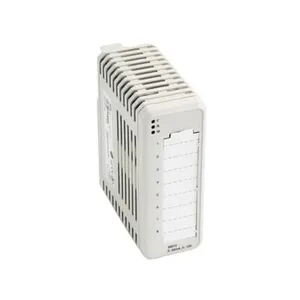
ABB AI810 3BSE008516R1 Analog Input 8 ch
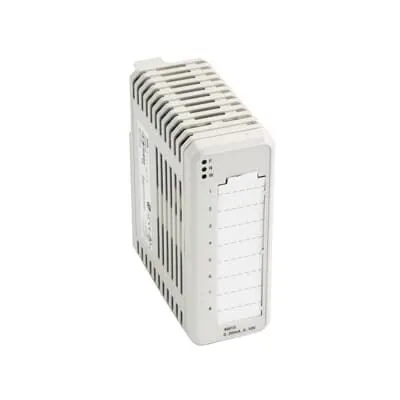
ABB AI810 3BSE008516R1 Analog Input 8 ch photo-1

Negotiable MOQ: 1 Piece (Price negotiable depending on order volume and customization)
Key Specifications
Get Latest Price
Material:
Other, Global universal model
Condition:
Other, Global universal model
Task:
Other, Global universal model
Payment & Shipping
Payment Methods:
Port of Shipment:
guizhou
Delivery Detail:
Delivery time depends on order quantity.
Material Other, Global universal model
Condition Other, Global universal model
Task Other, Global universal model
Mathematical Model Other, Global universal model
Signal Other, Global universal model
Customized Non-Customized
Structure Other, Global universal model
Operating Temperature -40℃ to 70℃
Relative Humidity 5%-95% (non-condensing)
Dimensions 140×100×40mm

I. Overview


ABB AI810 3BSE008516R1 is a high-precision analog input module, serving as a core signal acquisition component of the AC 800M series distributed control system. It is specifically designed to meet the requirements of accurate acquisition, processing, and transmission of multi-channel analog signals in medium and large-scale industrial process control scenarios. Adopting a high-performance signal conditioning chip and digital processing architecture, this module integrates core functions such as multi-range signal adaptation, high-precision data conversion, enhanced anti-interference processing, and online diagnosis. It can directly connect to various analog sensor signals in industrial fields, including temperature, pressure, flow rate, and liquid level, providing stable and reliable front-end signal acquisition support for AC 800M series controllers (e.g., PM865, PM866).


As a key unit for analog signal acquisition in the AC 800M control system, ABB AI810 3BSE008516R1 features excellent system compatibility and application flexibility. It can seamlessly adapt to various interface bases of the AC 800M series (e.g., TU731F, TU845) and support in-depth collaboration with ABB Process Studio configuration software, HMI human-machine interaction systems, and upper-level monitoring platforms (SCADA/MES/ERP). It is widely used in industrial fields with strict requirements for signal acquisition accuracy and stability, such as petrochemical, fine chemical, power generation, metallurgical smelting, and water treatment industries. It provides accurate signal acquisition services for key process links like temperature monitoring of large reactors, pressure detection of generator sets, and liquid level measurement of metallurgical furnaces. With advantages including wide-range adaptation, low drift characteristics, strong anti-interference capability, and long-service-life design, this module can adapt to harsh working conditions such as high temperature, high humidity, heavy dust, and strong electromagnetic interference, ensuring the control system's accurate perception and real-time regulation of on-site process parameters.


II. Functional Features


ABB AI810 3BSE008516R1 is highly compatible with the high reliability and high-precision control requirements of the AC 800M series control system. Integrating ABB's core technologies in the field of signal acquisition and processing, it has the following core functional features:


  • Multi-channel High-precision Acquisition: The module integrates 8 independent analog input channels, each of which can be independently configured with signal type and range. It supports direct connection of 4-20mA current signals, 0-10V voltage signals, thermocouple signals (types J/K/T/E/R/S/B/N, etc.), and thermal resistance signals (Pt100, Cu50, etc.) without the need for additional signal conversion equipment. Equipped with a 16-bit high-precision A/D conversion chip, it achieves an acquisition accuracy of ±0.1% FS for current/voltage signals, ±0.2℃ for thermocouple temperature measurement, and ±0.1℃ for thermal resistance temperature measurement. The sampling rate can be flexibly configured within the range of 10Hz-100Hz to meet the real-time requirements of different process scenarios.
  • Intelligent Signal Conditioning and Calibration: Each channel has a built-in independent signal conditioning circuit, integrating a Programmable Gain Amplifier (PGA) and a filtering unit. The gain can be automatically adjusted according to the amplitude of the input signal; low-pass filtering with a cutoff frequency of 10Hz is used for low-frequency interference, and digital filtering algorithms are applied for high-frequency interference, effectively suppressing on-site electromagnetic interference and signal noise. The module supports two calibration modes: online automatic calibration and manual calibration. The automatic calibration process can be initiated through Process Studio software without disconnecting the signal wiring; manual calibration can be completed by connecting a standard signal source via a dedicated calibration interface. Calibration data is stored in non-volatile memory and will not be lost after power-off.

  • Enhanced Anti-interference and Wide Environmental Adaptability: It adopts an all-metal shielded housing made of high-strength aluminum alloy with a passivated surface, which can effectively shield external Electromagnetic Interference (EMI) and Radio Frequency Interference (RFI), with an internal signal leakage attenuation of ≥60dB. The signal input circuit adopts photoelectric isolation technology with an isolation voltage of ≥2.5kV AC, achieving double isolation from the power supply circuit. It can withstand ±4kV electrostatic discharge, ±2kV surge impact, and 30MHz-3GHz radiated interference, fully complying with the IEC 61000-4-2/3/5 series of electromagnetic compatibility standards. Industrial-grade components with a wide temperature range are selected, with an operating temperature range of -40℃~70℃, a storage temperature range of -55℃~85℃, and a relative humidity adaptation range of 5%-95% (no condensation when temperature ≤50℃), making it suitable for extreme environments such as outdoor control cabinets in cold regions and high-temperature chemical reaction areas.

  • Full-status Diagnosis and Fault Early Warning: The module has a built-in comprehensive diagnostic system that supports dual diagnostic functions at the channel level and module level. Channel-level diagnosis can real-time monitor faults such as signal open circuit, short circuit, and over-range, and can also monitor cold-end temperature anomalies for thermocouple signals; module-level diagnosis can monitor power voltage anomalies, A/D conversion faults, communication faults, etc. The front of the module is equipped with 8 channel status LED indicators (steady green for normal, flashing red for fault) and 1 module status LED indicator (steady green for normal, flashing yellow for early warning, steady red for fault). Fault locations can be quickly identified through the combination of indicators. Diagnostic information can be real-time uploaded to the controller and upper-level system via the backplane bus, supporting fault code output and historical fault record query for quick troubleshooting and maintenance.

  • Flexible Compatibility and Convenient Configuration: It supports seamless connection with full-specification interface bases of the AC 800M series (e.g., TU731F, TU845), realizing high-speed communication and power supply with the controller through the base. It can perfectly collaborate with ABB Process Studio configuration software, through which visual configuration of parameters such as channel signal type, range, sampling rate, filtering parameters, and alarm threshold can be completed. It supports online modification and download of parameters without affecting the normal operation of other channels during modification. It supports hot-swap function, enabling plugging and unplugging of the module while the system is powered on. During the plugging and unplugging process, the controller can automatically identify the module status and maintain uninterrupted data acquisition of other channels, realizing non-disturbing system maintenance.

  • Redundant Design and High Reliability: The module supports dual redundant power supply configuration, accessing two independent DC 24V power supplies through the interface base. When the main power supply fails, it can automatically switch to the standby power supply within 100μs to ensure continuous operation of the module. Key components adopt a redundant backup design; the A/D conversion unit is equipped with a standby conversion chip, which can be automatically switched to when the main chip fails, ensuring uninterrupted core acquisition functions. The Mean Time Between Failures (MTBF) of the module is ≥800,000 hours, meeting the reliability requirements of long-term continuous operation of industrial control systems.


3BSE008516R1


III. Technical Parameters


Parameter Category Parameter Name Specific Parameters Unit
Basic Parameters Model ABB AI810 3BSE008516R1 -

Number of Channels 8 independent input channels Channel

Overall Dimensions (L×W×H) 140×100×40 mm

Weight Approximately 0.6 kg


Power Supply Parameters


Power Supply Voltage


DC 24V±15%, supporting dual redundant input

V

Input Voltage Range 20.4-27.6 V DC

Rated Power Supply Current ≤300mA (single-channel power supply) A

Redundancy Switching Time ≤100μs μs


Signal Acquisition Parameters


Supported Signal Types


4-20mA current, 0-10V voltage, thermocouple (J/K/T/E/R/S/B/N), thermal resistance (Pt100, Cu50)

-

A/D Conversion Accuracy 16-bit Bit

Acquisition Accuracy (Current/Voltage) ±0.1% FS -

Acquisition Accuracy (Thermocouple) ±0.2℃ (within 0-500℃)

Acquisition Accuracy (Thermal Resistance) ±0.1℃ (within 0-200℃)

Sampling Rate 10Hz-100Hz, independently adjustable per channel Hz

Cold-end Compensation Accuracy (Thermocouple) ±0.3℃


Communication Parameters


Communication Interface


Access to ABB proprietary backplane bus via base

-

Communication Rate Maximum 100Mbps bps

Data Transmission Delay ≤200μs (single channel) μs

Configuration Software Compatible with ABB Process Studio, Control Builder M -


Environmental & Reliability Parameters


Operating Temperature Range


-40~70


Storage Temperature Range -55~85

Relative Humidity 5%~95% (no condensation when temperature ≤50℃) %

Protection Level IP20 (module itself), IP40 (base pin area when shield is closed) -

Vibration Resistance 5-2000Hz, 2g acceleration (complying with IEC 60068-2-6) -

Mean Time Between Failures (MTBF) ≥800,000 Hour


Electromagnetic Compatibility Parameters


Electrostatic Discharge Immunity


±4kV (contact discharge), ±8kV (air discharge), complying with IEC 61000-4-2

-

Surge Immunity ±2kV (line-to-ground), ±1kV (line-to-line), complying with IEC 61000-4-5 -

Radiated Immunity 30MHz-3GHz, 20V/m, complying with IEC 61000-4-3 -


IV. Working Principle


As a high-precision analog input module of the AC 800M series, the working principle of ABB AI810 3BSE008516R1 revolves around five core links: "signal access - conditioning and conversion - data processing - communication transmission - diagnosis and protection", realizing accurate acquisition and reliable transmission of on-site analog signals. The specific working principle is as follows:


  1. Signal Access Link:Analog signals output by on-site sensors (such as 4-20mA current, 0-10V voltage, thermocouple electromotive force, and thermal resistance resistance value) are connected to the 8 independent input terminals of the module via shielded cables. The module is equipped with dedicated terminal blocks for each channel, supporting differential input to effectively suppress common-mode interference. For thermocouple signals, the module has a built-in cold-end temperature compensation circuit, which real-time collects the cold-end temperature inside the module through a high-precision temperature sensor, providing compensation data for the temperature conversion of the electromotive force signal; for thermal resistance signals, the module adopts a constant current source excitation method, outputting a constant current to the thermal resistance through a precise constant current source, converting the change in resistance value into a voltage signal.

  2. Signal Conditioning and Conversion Link:The accessed original signal first enters the independent signal conditioning circuit of the channel, and the gain is automatically adjusted by the Programmable Gain Amplifier (PGA) according to the signal amplitude, amplifying small signals to a range suitable for A/D conversion while filtering out high-frequency noise. The conditioned analog signal enters the 16-bit high-precision A/D conversion chip, which converts the analog signal into a digital signal. The conversion process is precisely controlled by the microcontroller (MCU) built in the module to ensure conversion accuracy and stability. For different types of signals, the MCU adopts corresponding conversion algorithms: current/voltage signals are directly converted into digital quantities; thermocouple signals are converted into temperature values combined with cold-end compensation data; thermal resistance signals are calculated for resistance values by measuring the ratio of excitation current to voltage, and then converted into temperature values.

  3. Data Processing and Calibration Link:The digital signal after A/D conversion is further processed by the MCU. The MCU filters out residual noise interference through digital filtering algorithms (such as moving average filtering and Kalman filtering) to improve data stability. At the same time, the MCU calls the calibration parameters stored in the non-volatile memory to perform calibration processing such as linearity correction and temperature drift compensation on the collected data, ensuring the accuracy of the collected data. Calibration parameters can be updated through Process Studio software, supporting two modes: online automatic calibration and offline manual calibration. During automatic calibration, the module generates standard signals through the internal calibration circuit to calibrate each channel; during manual calibration, a standard signal source needs to be connected, and the calibration process is initiated through the software.

  4. Data Communication and Transmission Link:The processed precise data is transmitted by the MCU to the communication interface unit of the module via the internal bus. The communication interface unit accesses the backplane bus (ABB proprietary bus) of the AC 800M series through the interface base, establishing a high-speed communication connection with the controller. The module supports two transmission modes: periodic data transmission and event-triggered transmission. In periodic transmission, data of each channel is uploaded to the controller according to the preset sampling rate; in event-triggered transmission, when the data of a certain channel exceeds the preset alarm threshold, the channel data and alarm information are immediately uploaded to the controller to ensure the controller's quick response to abnormal working conditions.

  5. Diagnosis and Protection Link:The built-in diagnostic system of the module monitors the operating status of each link in real-time through the MCU, including channel signal status (open circuit, short circuit, over-range), A/D conversion status, power status, communication status, etc. When a fault is detected, the MCU immediately generates a corresponding fault code and uploads it to the controller and upper-level system via the backplane bus, while controlling the corresponding channel status LED indicator and module status LED indicator to issue fault prompts. The power circuit of the module is equipped with over-current protection and over-voltage protection circuits. When the power supply voltage is abnormal or the current is too large, the protection circuits act quickly to cut off the power supply circuit to avoid module damage; the signal input circuit adopts photoelectric isolation technology with an isolation voltage of ≥2.5kV AC to prevent external high voltage from entering the module and protect the safety of the core circuit.

  6. Redundant Power Supply and Hot-swap Link:The module accesses two independent DC 24V redundant power supplies through the interface base. The MCU monitors the voltage status of the two power supplies in real-time. When the main power supply voltage is lower than the threshold or a fault occurs, the MCU controls the power supply switching circuit to automatically switch to the standby power supply within 100μs to ensure continuous operation of the module. The module supports the hot-swap function. When the module is plugged or unplugged while the system is powered on, the pin design of the interface base enables the orderly connection and disconnection of power supply and communication. At the same time, the MCU sends status change information to the controller, which automatically identifies the plugging and unplugging status of the module and maintains uninterrupted data acquisition of other channels, realizing non-disturbing maintenance.
Product Tags: AI810 , 3BSE008516R1

Send Inquiry to This Supplier

* Message
0/5000

Want the best price? Post an RFQ now!
Verified Business License
Business Type
Trading Company
Year Established
2014
Factory Size
1,000-3,000 square meters
Product Certifications
SA8000