








 Contact Platform Support
 Help Center
Home > Electrical & Electronics > Electrical Control System > FOXBORO/ENTERASYS A2H254-16-RH Ethernet Switch
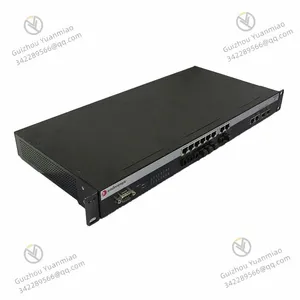
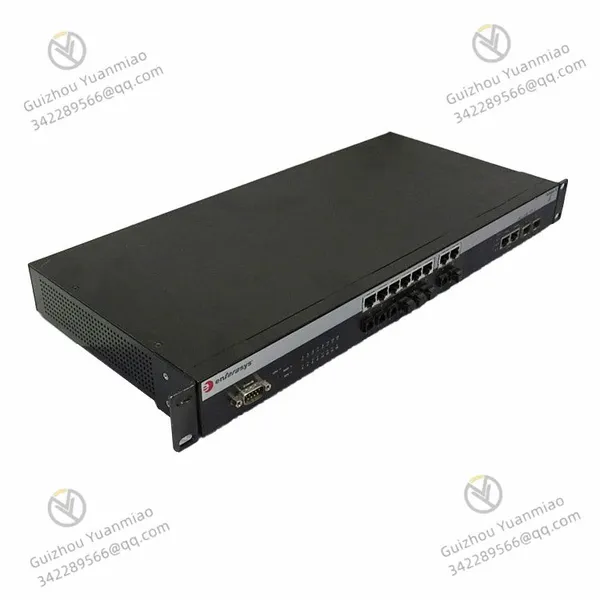
FOXBORO/ENTERASYS A2H254-16-RH Ethernet Switch
Negotiable
MOQ: 1 Piece (Price negotiable depending on order volume and customization)
Key Specifications
Get Latest Price
Material:
Other, Global universal model
Certification:
CE
Function:
Other, Global universal model

Payment & Shipping
Payment Methods:

Port of Shipment:
guizhou
Delivery Detail:
Delivery time depends on order quantity.
Related Products
-
 ENTERASYS A4H124-4FX P0973JN Ethernet SwitchNegotiableMOQ: 1 Piece
 -
FOXBORO A4H124-24FX P0973JN 24-Port Fiber Managed SwitchNegotiableMOQ: 1 Piece
-
Enterasys A4H124-24TX P0973JM 24-Port Copper Managed SwitchNegotiableMOQ: 1 Piece
-
Enterasys A4H254-8F8T P0973JP 24-Port Managed SwitchNegotiableMOQ: 1 Piece
-
Foxboro P0922YU FPS400-24 Power SupplyNegotiableMOQ: 1 Piece
Material
Other, Global universal model
Certification
CE
Function
Other, Global universal model
Condition
New
Task
Other, Global universal model
Mathematical Model
Other, Global universal model
Signal
Other, Global universal model
Customized
Non-Customized
Structure
Other, Global universal model
The FOXBORO/ENTERASYS A2H254-16-RH Ethernet Switch is a well-engineered high-performance network device that delivers exceptional performance in enterprise and industrial network environments, effectively meeting diverse network deployment requirements.
I. Port Configuration1. RJ45 PortsThe switch is equipped with 16 10/100/1000 Mbps auto-sensing RJ45 ports, which can flexibly connect to various devices with Ethernet interfaces—including office computers, data-intensive servers, and modern IP phones. Its auto-sensing function enables automatic rate switching between 10Mbps, 100Mbps, and 1000Mbps based on the capabilities of the connected devices, facilitating device connectivity in different network environments and ensuring efficient, stable communication between devices.
2. SFP PortsIt features 2 shared 1000Mbps fiber SFP uplink ports (Combo ports). SFP ports support Small Form-factor Pluggable modules, making the switch ideal for long-distance, high-speed backbone network connections. For example, in enterprise campuses (connecting different buildings) or industrial parks (linking distant production workshops), fiber optic connections enabled by SFP ports significantly extend network transmission distance while ensuring gigabit-speed data transfer. Additionally, the shared port design helps reduce network construction costs and allows users to flexibly choose fiber modules or other compatible modules to connect with SFP-enabled devices, further enhancing network scalability and flexibility.
With a switching capacity of 32 Gbps, the switch boasts exceptional internal data processing and exchange capabilities. During network operation, sufficient switching capacity ensures fast, non-blocking data exchange between ports. In scenarios involving massive concurrent data transmission—such as data centers (where frequent data interactions occur between servers, storage devices, and network equipment) or enterprises (during large-scale file sharing or video conferences)—the 32 Gbps switching capacity guarantees smooth data transmission, preventing issues like data congestion, latency, or packet loss caused by insufficient bandwidth, and laying a solid foundation for stable, efficient network operation.
2. Packet Forwarding RateThe packet forwarding rate reaches 23.8 Mpps (million packets per second), directly reflecting the switch’s speed and capability in processing network packets. In high-load network environments—such as e-commerce platforms during promotional events (with massive user access requests generating a surge of network packets) or industrial automation production lines (with dense data flows from frequent interactions between sensors and controllers)—the A2H254-16-RH switch efficiently processes and forwards packets at 23.8 Mpps. This ensures the network remains highly efficient, sustains normal business operations, and avoids performance degradation due to delayed packet processing.
3. MAC Address CapacityIt supports 8,000 MAC address entries. Switches identify and distinguish devices in the network via MAC addresses, and each network-connected device has a unique MAC address. The large MAC address capacity allows the switch to accommodate the access of numerous devices in large-scale networks—whether office equipment (computers, printers, projectors) in enterprise offices or smart devices (sensors, actuators) in industrial sites. This enables accurate identification and management of MAC addresses, ensuring precise data forwarding to target devices and maintaining orderly network operation. Moreover, it eliminates the need for frequent switch replacements during network expansion, reducing network upgrade and maintenance costs.
III. Management FunctionsThe A2H254-16-RH offers diverse management methods to meet the usage habits and scenario requirements of different network administrators:
1. CLI (Command Line Interface)For professional network engineers familiar with command operations, the CLI provides precise, flexible configuration capabilities. By entering specific commands, administrators can fine-tune switch functions—such as port parameter configuration, VLAN division, and ACL (Access Control List) setup. This enables advanced customized management but requires administrators to have professional knowledge and operational experience.
2. TelnetAs a remote login protocol, Telnet allows administrators to connect to the switch’s Telnet service port via a remote terminal over the network for configuration and management. This eliminates the need for physical proximity to the switch; as long as a network connection is established, operations can be performed conveniently. It improves management efficiency, especially for centralized management of switches distributed across different locations.
3. SNMP (Simple Network Management Protocol)Using SNMP, administrators can centrally manage and monitor the switch via network management software. The software real-time collects switch status information (e.g., port traffic, device temperature, error statistics) and supports remote configuration adjustments and fault diagnosis. This is ideal for managing switches in large-scale networks, significantly improving efficiency and enabling timely detection and resolution of potential network issues.
4. HTTP/HTTPSBy accessing the switch’s web management interface via a browser (supporting both HTTP and the more secure HTTPS protocol), administrators can intuitively configure and manage the switch. The web interface uses a graphical design, presenting switch functions and parameter settings through menus, buttons, and forms. This simplifies operations, lowers management thresholds, and allows personnel with limited network expertise to quickly master basic configuration tasks.
5. SSH (Secure Shell Protocol)SSH provides a secure encrypted channel for remote management, preventing data theft or tampering during operations. Similar to Telnet, administrators can remotely log in to the switch via an SSH client for management, but SSH’s encryption feature ensures more secure and reliable operations—making it suitable for environments with high network security requirements.
IV. Network Features1. VLAN SupportThe switch fully supports the IEEE 802.1Q standard and allows network administrators to create up to 255 VLANs (Virtual Local Area Networks). VLAN technology plays a crucial role in modern network management by dividing a physical network into multiple logically isolated virtual networks:
It supports the IEEE 802.1p standard and features 4-queue priority scheduling. In complex networks, different types of traffic have varying QoS requirements:
It supports redundancy technologies including RSTP (Rapid Spanning Tree Protocol), LACP (Link Aggregation Control Protocol), and ring network redundancy. In complex network topologies, link failures or interruptions can severely disrupt network operation:
It supports the IEEE 802.1X network access control mechanism, which authenticates users or devices connecting to the network via an authentication server. Only authorized users/devices can access network resources, effectively preventing unauthorized device access. For example, in enterprise networks, employees’ computers must enter a username and password for authentication before accessing internal resources (e.g., shared files, databases), safeguarding corporate networks from external intrusions and sensitive data theft.
2. RADIUSIntegration with a RADIUS (Remote Authentication Dial-In User Service) server further enhances security and manageability of network access. The RADIUS server centrally manages user authentication information and authorization permissions. When a user/device requests network access, the switch forwards the authentication request to the RADIUS server for verification and authorization. Administrators can easily manage users centrally, set access permissions (e.g., restricting access to specific resources), and implement granular security controls for different departments.
3. ACLIt supports ACL (Access Control List) functionality. Administrators can define rules to allow or deny specific network traffic based on criteria such as source IP address, destination IP address, port number, and protocol type. For example, enterprises can use ACLs to block internal employees from accessing non-work-related websites or prevent unauthorized external IPs from accessing critical internal servers. ACLs provide a flexible security barrier, defending against network attacks and unauthorized access.
4. Port SecurityPort security features allow administrators to configure security settings for individual switch ports:
With a standard 1U form factor (approximately 44×21×4.4 cm), the switch is ideal for installation in standard 19-inch racks. In environments requiring centralized deployment of multiple network devices (e.g., data centers, network rooms), 1U switches can be neatly arranged with other equipment, saving space and facilitating unified management and maintenance. It also fits in space-constrained environments (e.g., industrial control cabinets, small office network racks), enabling flexible deployment across different scenarios.
2. Heat DissipationIt adopts a fanless design (passive heat dissipation), which offers multiple advantages:
It supports AC 100–240V, 50/60Hz AC power input. This wide input range ensures strong global compatibility: the switch operates stably in regions with 110V voltage standards (e.g., North America) and 220V standards (e.g., most of Europe and Asia). This design simplifies global network deployment for enterprises, eliminating concerns about voltage incompatibility. It also adapts to voltage fluctuations in regions with unstable power supplies, ensuring continuous, stable operation of network devices.
VII. Operating Environment1. Operating Temperature RangeThe operating temperature range is 0°C to +50°C, allowing stable operation in common environments such as normal-temperature industrial workshops and offices. In industrial production settings—where most workshops maintain temperatures within this range—the switch provides reliable network connectivity for industrial automation systems. Even in high-temperature environments (e.g., partial workshops in steel or glass factories), it operates normally as long as temperatures do not exceed +50°C, ensuring uninterrupted data transmission and network communication during production.
2. Humidity AdaptabilityIt adapts to a humidity range of 5% to 95% (non-condensing). In humid environments (e.g., industrial workshops, coastal factories), the switch operates normally without performance issues caused by moisture or fog. For example, in chemical plants—where production processes generate high humidity—the A2H254-16-RH switch maintains stable operation, reducing equipment failures and downtime caused by environmental humidity and ensuring continuous industrial production.

Send Inquiry to This Supplier


Business Type
Trading Company
Year Established
2014
Factory Size
1,000-3,000 square meters
Product Certifications
SA8000
You May Also Like
-
Foxboro P0904AK GCIO Tabletop ModuleNegotiableMOQ: 1 Piece
-
Foxboro IPM2-P0904HA Series Industrial Power ModuleNegotiableMOQ: 1 Piece
-
Foxboro P0926JM 8 Position Modular BaseplateNegotiableMOQ: 1 Piece
-
Foxboro P0973CN Expansion BackplaneNegotiableMOQ: 1 Piece
-
Foxboro RH924YF DIN-Rail Mounted Modular BaseplateNegotiableMOQ: 1 Piece
-
Foxboro P0916AA Field Terminal AssemblyNegotiableMOQ: 1 Piece
-
Foxboro P0916AE Compression Terminal BaseNegotiableMOQ: 1 Piece
-
FOXBORO P0916AJ | I/O Interface ModuleNegotiableMOQ: 1 Piece
-
Foxboro P0916BX Termination AssemblyNegotiableMOQ: 1 Piece
-
Foxboro P0916CC I/A Series ModuleNegotiableMOQ: 1 Piece


