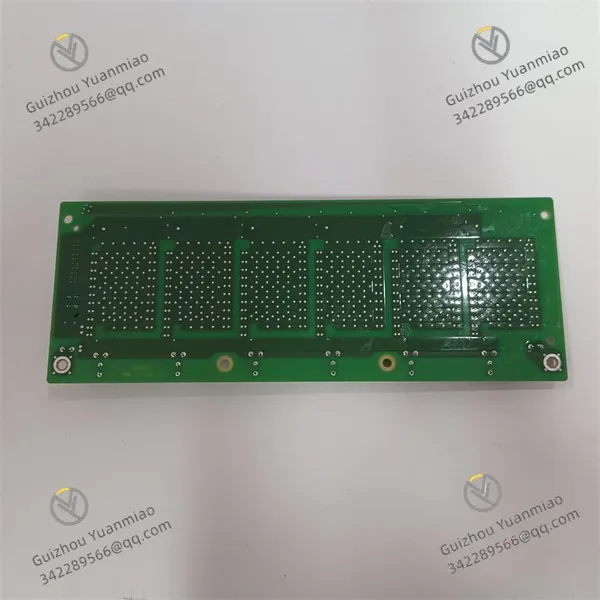
Material
Other, Global universal model
Condition
Other, Global universal model
Task
Other, Global universal model
Mathematical Model
Other, Global universal model
Signal
Other, Global universal model
Customized
Non-Customized
Structure
Other, Global universal model
Operating Temperature
-20℃ to 65℃
Storage Temperature
-40°C to 85°C
Relative Humidity
5% - 95% (non-condensing)
Size
140mm×100mm×60mm
I. Overview
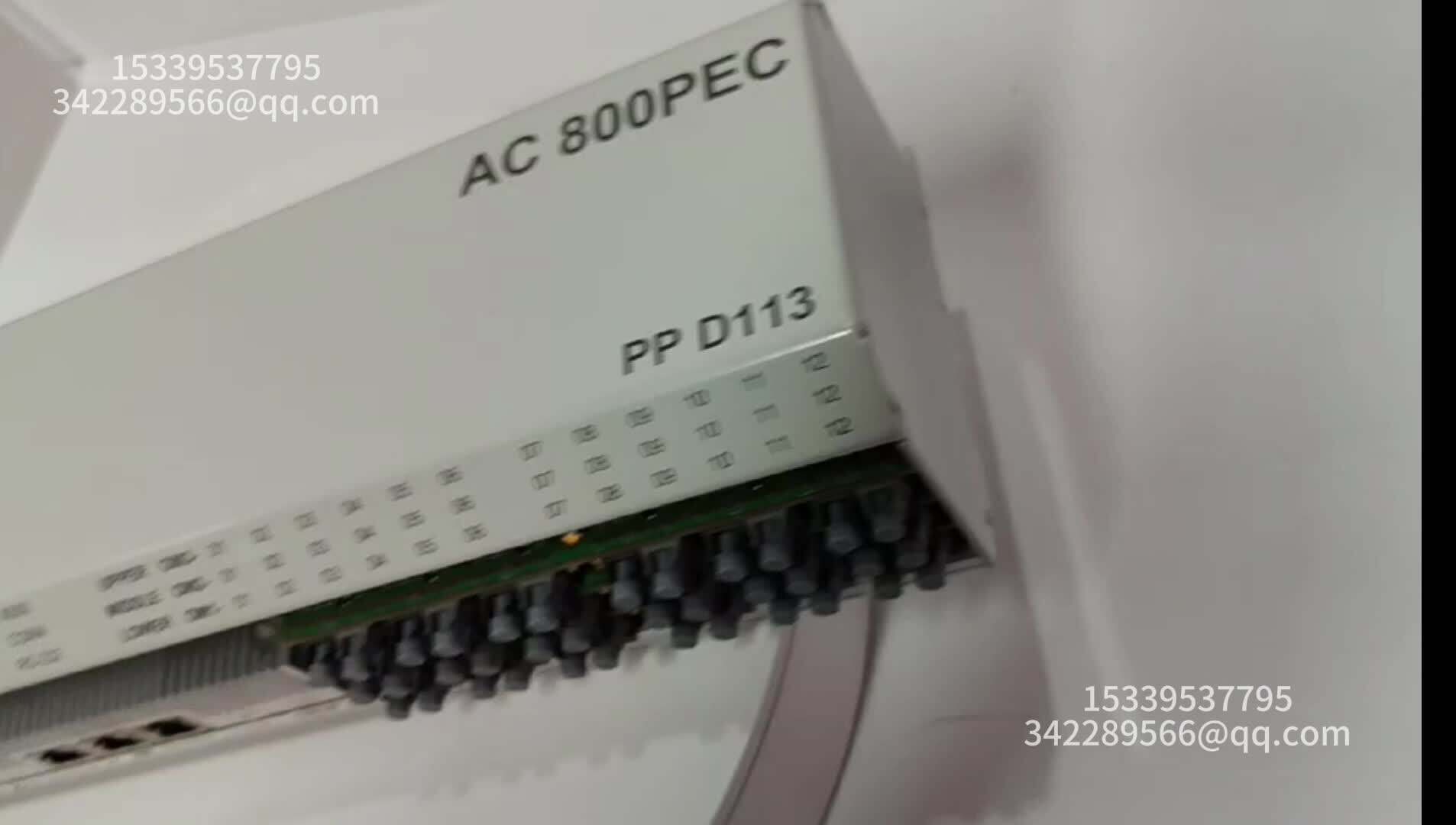
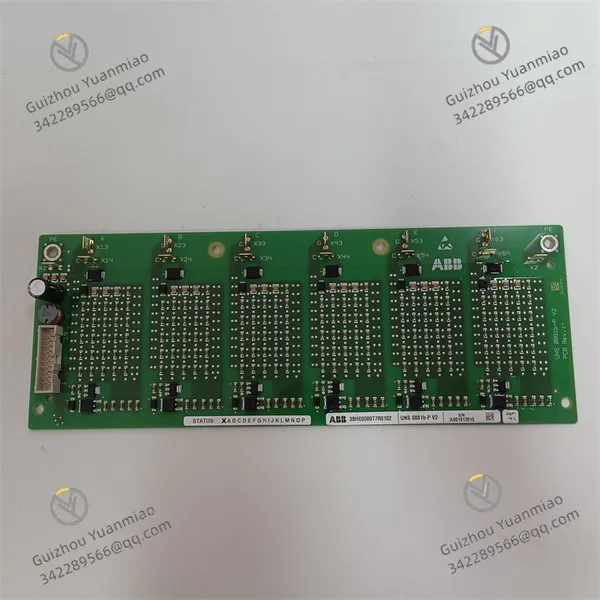
ABB 3BHE050077R0102 is an integrated multi-functional control and communication module specifically designed for high-end control scenarios in industrial automation. It belongs to the ABB AC 800M control system family, with its core positioning to solve key challenges in industrial production, such as "multi-parameter coordinated control, cross-device data interaction, and stable operation under complex working conditions". It provides a "control-communication-monitoring" trinity automation solution for continuous production processes in industries including chemical engineering, electric power, metallurgy, and intelligent manufacturing.
This module can simultaneously collect parameters such as temperature, pressure, and stirring speed of 16 reactors. Through the built-in multi-loop PID control algorithm, it precisely adjusts the feed rate and cooling water volume of each reactor to ensure the consistency of the multi-reactor production process. In the auxiliary equipment control system of thermal power plants, it can connect sensors and actuators of equipment such as boiler feed water pumps, induced draft fans, and forced draft fans, transmit equipment operation data in real time, and issue control commands to ensure the coordinated and stable operation of the auxiliary system and the main unit. In the flexible production line of intelligent manufacturing factories, it can adapt to the communication needs of robots, conveyors, and testing equipment, realize dynamic adjustment of the production process and linkage control of equipment, and improve the flexibility of the production line.
The UNS0881b-PV2 adopts a compact industrial-grade package with dimensions of 140mm×100mm×60mm. It is compatible with ABB standard control cabinet slots and supports modular stacking installation, saving cabinet space. The housing is made of UL94 V-0 grade flame-retardant reinforced resin material, with an IP20 protection level, which can resist dust and slight moisture erosion in industrial environments. It operates within a temperature range of -20℃ to 65℃ and a relative humidity of 5% to 95% (non-condensing), enabling stable operation in complex environments such as high-temperature and high-humidity chemical workshops and metallurgical plants. Internally, it adopts a three-module independent partition design of "control core - communication interface - signal processing", combined with multi-layer shielding technology, which effectively reduces electromagnetic interference and ensures that control accuracy and communication stability are not affected by the external environment. The Mean Time Between Failures (MTBF) is ≥160,000 hours (per Telcordia standard, at 25℃), meeting the "long-cycle, low-maintenance" operation requirements of industrial systems. At the same time, it is highly compatible with the ABB AC 800M DCS system and third-party PLCs (such as Siemens S7-1500, Rockwell ControlLogix), supporting plug-and-play and online configuration, which reduces the difficulty of system integration.

II. Core Technical Parameters
1. Electrical Parameters
2. Control Performance Parameters
3. Communication Parameters
4. Environmental and Reliability Parameters

III. Functional Characteristics
1. High-Precision Multi-Loop Control
With "precision and coordination" at its core, the 3BHE050077R0102 achieves refined control of multiple parameters and multiple loops through advanced control algorithms and hardware design:
Multi-Algorithm Adaptation for Complex Processes: It has built-in multiple algorithms such as standard PID, cascade PID, and ratio control, which can be flexibly switched according to different process requirements. In the control of distillation columns in the chemical industry, the cascade PID algorithm is adopted, with the top product purity as the main variable and the reflux rate as the secondary variable. When the feed composition fluctuates, the secondary loop quickly adjusts the reflux rate to avoid large fluctuations in the main variable (purity), and the control accuracy is improved by 40% compared with single PID. In the batching system of the metallurgical industry, the ratio control algorithm is used to precisely control the feed ratio of limestone and iron ore, ensuring that the composition deviation of the mixed material is ≤0.3%.
Auto-Tune Simplifies Debugging Process: It supports the Auto-tune function, which eliminates the need for users to manually debug PID parameters repeatedly. Users only need to start the Auto-tune program, and the module automatically identifies the characteristics of the controlled object (dead time, time constant, gain) through step testing, and calculates the optimal PID parameters within 10 minutes. For example, in the sterilization temperature control of food processing, the steady-state error can be controlled within ±0.1℃ after Auto-tune, meeting high-precision production requirements, and the debugging time is reduced from the traditional 4 hours to 10 minutes.
Multi-Loop Coordinated Control: It supports a maximum of 8 independent control loops, and data interaction and coordination logic can be realized between loops. In the cluster control of reactors in the chemical industry, one UNS0881b-PV2 module can control 4 reactors at the same time. When the feed rate of one reactor is adjusted, the module automatically adjusts the cooling water volume of other reactors synchronously to ensure the consistency of the reaction temperature of multiple reactors, with the temperature difference controlled within ±0.5℃.
2. High-Stability Cross-Device Communication
Targeting the heterogeneous characteristics of "multiple devices and multiple protocols" in industrial systems, the module realizes efficient cross-brand and cross-regional data interaction through rich communication interfaces and protocol support:
High-Speed Industrial Ethernet Communication: The Profinet IRT interface supports 100Mbps real-time transmission, with periodic data update as fast as 1ms, meeting the real-time control needs of high-speed production lines. In the automotive welding production line, the module communicates with 8 welding robots and 4 conveyors via Profinet IRT, uploads the "ready/fault" status of equipment in real time, and issues welding parameter adjustment and conveyor speed control commands. The data transmission delay is ≤300μs, ensuring the coordinated actions of the production line.
Long-Distance Serial Communication: The RS485 interface supports the Modbus RTU protocol, with a communication distance of up to 1200 meters, adapting to the signal collection of distributed equipment. In the belt conveyor system of the mining industry, the module can collect signals from belt tension sensors, deviation switches, and speed sensors 1000 meters away, upload them to the central PLC via Modbus RTU, and receive start-stop commands from the PLC at the same time, realizing remote monitoring and control and avoiding safety risks of on-site operation by personnel.
Precise Time Synchronization: It supports the IEEE 1588 PTPv2 protocol, with a time synchronization accuracy of ±1μs with other nodes in the system (such as PLCs, sensors, and actuators), ensuring the timestamp consistency of distributed data. In the generator monitoring of power systems, it can realize the synchronous collection of voltage, current, and power signals in different regions, providing an accurate time reference for power factor calculation and fault recording, with a fault location error of ≤1ms.