Material
Other, Global universal model
Condition
Other, Global universal model
Task
Other, Global universal model
Mathematical Model
Other, Global universal model
Signal
Other, Global universal model
Customized
Non-Customized
Structure
Other, Global universal model
Operating Temperature
-10℃ ~ 60℃
Storage Temperature
-40°C to 85°C
Relative Humidity
5% - 95% (non-condensing)
I. Overview
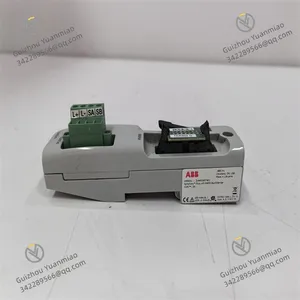
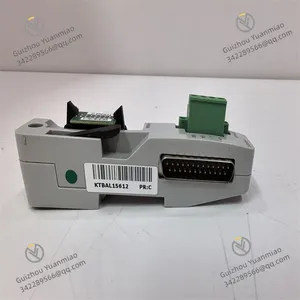
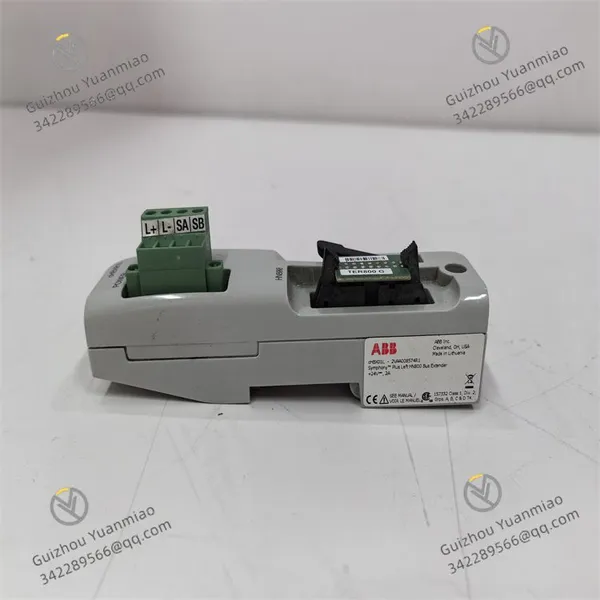
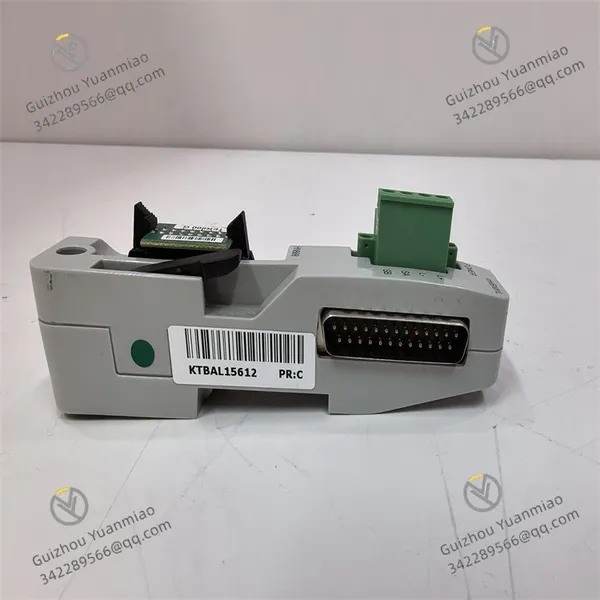
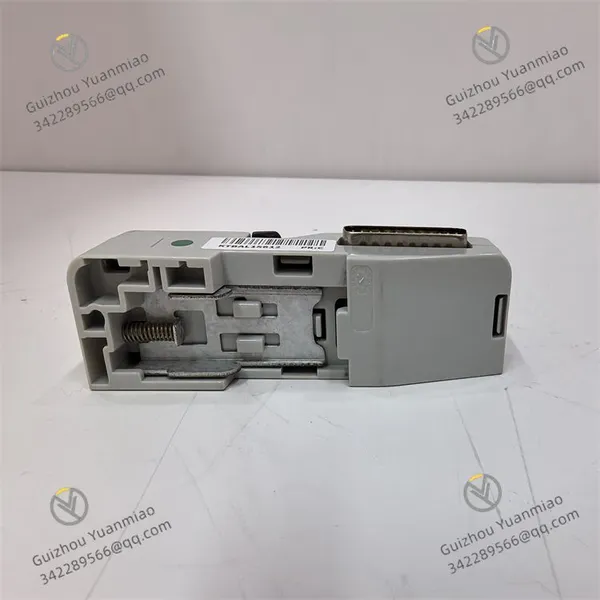
ABB CHBX01L 2VAA008574R1 is a system integration interface module. Its core positioning is to solve the key challenges in industrial control systems, including "heterogeneous communication among multiple devices, signal format conversion, and distributed node collaboration". It serves as a "standardized signal bridge" between DCS (Distributed Control Systems), PLC (Programmable Logic Controllers), and on-site intelligent devices (such as sensors, actuators, and frequency converters).
Widely used in large-scale automation projects in industries like electric power, chemical engineering, metallurgy, and intelligent manufacturing, it adapts to the signal interaction requirements of the three-level architecture of "central control system - regional control unit - on-site equipment". It effectively addresses pain points in industrial scenarios, such as incompatible device protocols, limited signal transmission distance, and synchronization delays of distributed nodes, making it a key component for realizing "centralized monitoring and decentralized control" in industrial systems.
This module adopts a standard 19-inch rack-mounted design (with dimensions approximately 482.6mm×177.8mm×44.5mm), which is suitable for installation in industrial standard cabinets and supports independent deployment of a single module or stacked expansion of multiple modules. The enclosure is made of UL94 V-0 grade flame-retardant cold-rolled steel plate, with an anti-static spray coating on the surface, and reaches an IP20 protection level, capable of resisting dust and slight moisture erosion in industrial workshops. It operates within a temperature range of -10℃ to 60℃ and a relative humidity of 5% to 95% (non-condensing), making it compatible with complex environments such as high-humidity chemical workshops and high-temperature metallurgical plants.
Internally, it adopts a three-module independent partition design of "power supply - communication - signal processing" to reduce mutual electromagnetic interference. The Mean Time Between Failures (MTBF) is ≥180,000 hours (per Telcordia standard, at 25℃), meeting the "long-cycle, low-maintenance" operation requirements of industrial systems. Additionally, it is compatible with mainstream control systems such as ABB AC 800M and Symphony Plus, and supports protocol access of third-party devices (e.g., Siemens S7-1500, Rockwell ControlLogix), reducing the difficulty of cross-brand system integration.

II. Technical Parameters
1. Electrical Parameters
2. Communication Parameters
3. Environmental and Reliability Parameters
III. Functional Characteristics
1. Multi-Type Signal Compatibility and Flexible Configuration
Centered on the "universal interface + software configuration", ABB CHBX01L 2VAA008574R1 enables a single module to adapt to multiple types of on-site signals, reducing system hardware complexity:
Universal Signal Interface Design: The 8 interfaces support software configuration of four signal types (DI/DO/AI/AO), allowing adaptation to different scenarios without replacing hardware modules. For example, in chemical reactor control, 4 channels can be configured as AI (to collect temperature, pressure, flow, and liquid level signals), 2 channels as AO (to control steam control valves and feed pump frequency converters), and 2 channels as DI (to monitor safety valve status and agitator motor faults), enabling a single module to complete signal interaction for small-scale control loops.
High-Precision Signal Processing: AI channels adopt 24-bit high-precision A/D converters, combined with three-stage RC filter circuits, which can maintain a measurement accuracy of ±0.02% FS even in the strong electromagnetic environment of metallurgical plants. For instance, when collecting the temperature of a blast furnace hot blast stove, it can accurately capture temperature fluctuations of ±0.1℃. AO channels support 16-bit D/A output and current/voltage mode switching, with a control accuracy of ±0.1% when driving control valves, ensuring stable regulation of the reflux rate in chemical distillation towers.
Integrated Auxiliary Power Supply: Built-in 2-channel 24V DC auxiliary power supply can provide power for on-site devices such as 4-20mA transmitters and proximity switches, reducing the number of external power modules. For example, in intelligent warehousing projects, the module can provide centralized power supply for photoelectric sensors of 8 shelves, simplifying cabinet wiring and lowering system costs.
2. Multi-Protocol Communication and Distributed Collaboration
Targeting the heterogeneous characteristics of "multiple devices and multiple protocols" in industrial systems, the module achieves efficient cross-device and cross-regional data interaction through rich communication interfaces and protocol support:
High-Speed Industrial Ethernet Communication: The Profinet IRT interface supports 100Mbps real-time transmission, with periodic data update as fast as 1ms, meeting the real-time control requirements of high-speed production lines. For example, in an automobile welding production line, the module communicates with 16 welding robots via Profinet IRT, uploading the robots' "ready/fault" status in real time and issuing welding parameter adjustment commands, with a data transmission delay of ≤500μs.
Long-Distance Serial Communication: The RS485 interface supports the Modbus RTU protocol, with a communication distance of up to 1200 meters, suitable for signal collection of distributed devices. In a mine belt conveyor system, for example, the module can collect signals from belt tension sensors and deviation switches 1000 meters away, and upload them to the central PLC via Modbus RTU for remote monitoring and control.
Precise Time Synchronization: Supporting the IEEE 1588 PTPv2 protocol, it achieves time synchronization accuracy of ±1μs with other nodes in the system, ensuring the timestamp consistency of distributed data. In generator monitoring in power systems, it enables synchronized collection of voltage and current signals in different regions, providing an accurate time reference for power calculation and fault recording.
3. High Reliability and Fault Tolerance
To meet the "uninterruptible" operation requirements of industrial scenarios, the module maximizes system availability through multiple redundancy and fault diagnosis designs:
Full-Link Redundancy Design: Dual power supply redundancy ensures uninterrupted power supply when a single power channel fails; communication redundancy (Profinet dual network + RS485 backup link) enables switching to the backup link within 50ms when the main communication link fails, avoiding data transmission interruptions. For example, in nuclear power plant auxiliary systems, the redundancy design can reduce the system fault shutdown rate to below 0.001%.
Intelligent Fault Diagnosis: Equipped with a hardware-level fault diagnosis unit, it can real-time monitor the status of power supply voltage, communication links, and signal channels, with a diagnosis coverage rate of 99%. Fault information is intuitively fed back through LED indicators (PWR/RUN/ERR/COMM) and uploaded as fault codes (e.g., "E03: AI2 channel open circuit", "E12: Profinet link interruption") via communication interfaces. Maintenance personnel can quickly locate problems using the fault codes, reducing troubleshooting time by 70%.
Fault-Tolerant Control Function: When a signal channel fails, the module automatically activates a backup control strategy. For example, if the temperature sensor of a chemical reactor (AI1 channel) fails, the module can automatically switch to the backup temperature sensor (AI2 channel) and adjust PID parameters to adapt to the characteristics of the new sensor, ensuring uninterrupted reactor temperature control and preventing production accidents.
4. Flexible Configuration and System Integration
Through software configuration and compatibility design, the module reduces system integration difficulty and adapts to diverse application scenarios:
Flexibility in Software Configuration: It supports parameter configuration (signal type, range, communication cycle), logic programming (ladder diagram/FBD/ST), and online debugging via ABB Control Builder M software, allowing configuration modifications without shutdown. For example, in batch production in food processing plants, the set value of sterilization temperature and heat preservation time can be adjusted online without interrupting the current production batch.
Cross-Brand System Compatibility: In addition to adapting to ABB's own control systems, it supports protocol connection with third-party PLCs such as Siemens and Rockwell. In intelligent manufacturing plants, for instance, the module can communicate with Rockwell ControlLogix PLC via EtherNet/IP and interact with ABB frequency converters via Profinet, realizing collaborative control of cross-brand devices.
Modular Expansion Capability: It supports connecting signal expansion modules (e.g., 8-channel AI expansion card, 16-channel DI expansion card) via ABB's dedicated expansion bus, with a maximum expandable capacity of 64 signal interfaces to meet the signal interaction needs of large-scale projects. In the converter control system of a steel plant, for example, by expanding 3 AI cards and 2 DO cards, 32-channel process parameter collection and 24-channel actuator control can be achieved without adding a main control module.









 Contact Platform Support
 Help Center