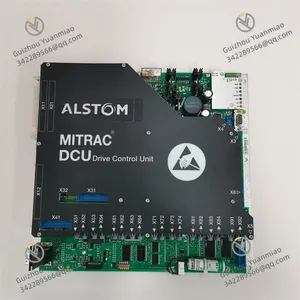
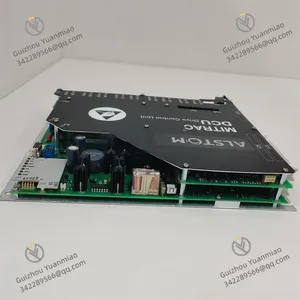
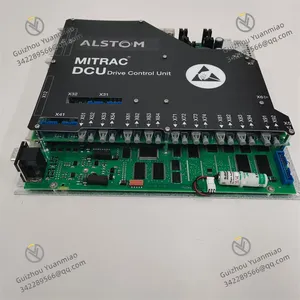
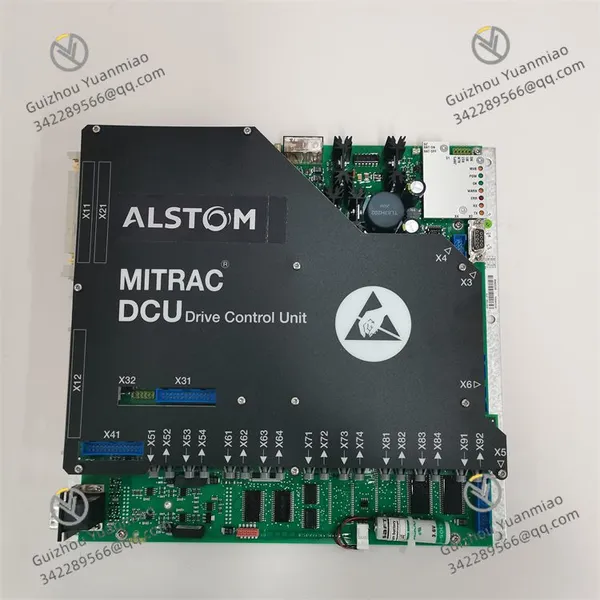
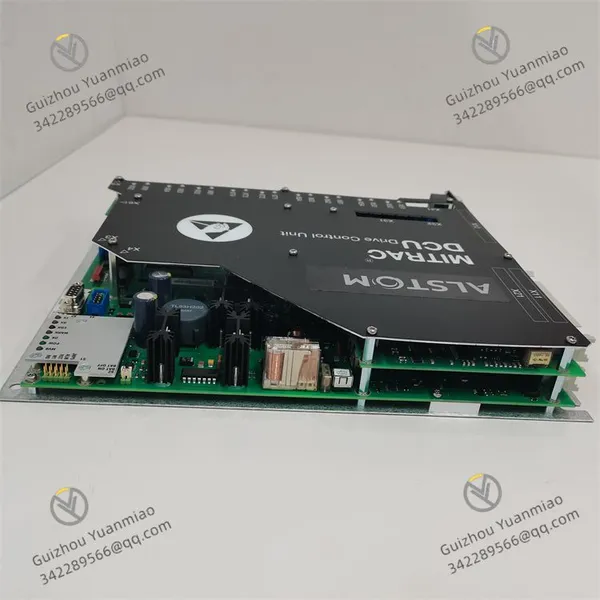
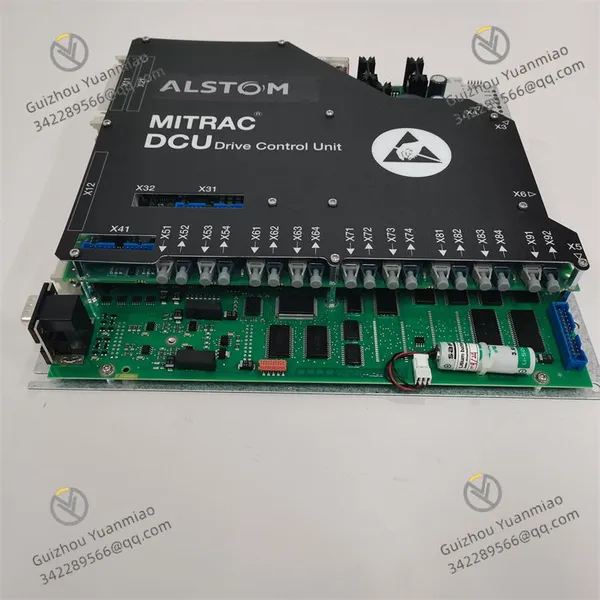
Material
Other, Global universal model
Condition
Other, Global universal model
Task
Other, Global universal model
Mathematical Model
Other, Global universal model
Signal
Other, Global universal model
Customized
Non-Customized
Structure
Other, Global universal model
Operating Temperature
-15℃~65℃
Storage Temperature
-40℃~85℃
Dimensions
230mm×170mm×42mm
I. ABB EST125-975
(I) Overview
ABB EST125-975 occupies a crucial position in the industrial electrical system and is a device meticulously designed for motor protection and control scenarios. It has a wide range of applications:
In the manufacturing industry, it is used in various production lines (e.g., motor drive systems in automobile manufacturing workshops) to ensure the stable operation of motors and prevent production line shutdowns caused by faults such as overload and short circuit.
In the energy industry, it plays an indispensable role in the control and protection of motor equipment like pumps and fans in power plants, ensuring the continuous and stable operation of energy production processes.

(II) Core Functions
1. Precise Motor Protection Function
It incorporates multiple built-in protection mechanisms:
Overload Protection: The protection threshold can be flexibly adjusted based on the motor's rated current, typically ranging from 1.1 to 1.5 times the rated current. When the current exceeds the set value, it acts rapidly within an extremely short time (≤10ms) to cut off the circuit, preventing the motor windings from burning out due to overheating.
Short-Circuit Protection: It features high-sensitivity detection capability. Protection is triggered instantly (with a response time reaching the microsecond level) when a short circuit occurs, effectively preventing the expansion of the fault scope.
Phase Loss Protection: It real-time monitors the balance of three-phase currents. Once an abnormal current in any phase is detected, it immediately activates protection measures to ensure motor safety.
2. Flexible Control Function
It supports multiple control modes, including common methods such as direct start and star-delta start:
Direct Start: Suitable for small motors or scenarios with light starting loads. It is easy to operate and enables the motor to quickly reach the rated speed.
Star-Delta Start: Commonly used for high-power motors. It reduces the starting current to minimize the impact on the power grid and ensures the smooth start of the motor.
Meanwhile, it can be integrated with various automated control systems (e.g., PLC control systems) to receive remote control signals, realizing remote operations such as motor start/stop and speed regulation, which meets the needs of industrial automated production.

(III) Technical Parameters
1. Electrical Parameters
Rated Operating Voltage: It has a wide coverage range, commonly 380V-690V AC, which can adapt to the grid voltages of different industrial sites.
Rated Operating Current: The range is 125A-975A, which can match motors of various power levels. For example, for a three-phase asynchronous motor with a rated power of 400kW (and a rated current of approximately 750A), ABB EST125-975 can be perfectly adapted.
Short-Circuit Breaking Capacity: It has a strong short-circuit breaking capacity. At a voltage of 400V AC, the rated short-circuit breaking capacity can reach more than 50kA, which can effectively withstand the high-current impact during short-circuit faults and ensure the safety of equipment and personnel.
2. Environmental Parameters
Operating Temperature Range: -20℃ to 60℃, allowing it to work normally in cold industrial environments in northern regions and hot industrial workshops in southern regions.
Protection Class: IP20, which can effectively prevent solid foreign objects larger than 12mm from entering the equipment interior, providing basic protection for internal circuits. It is suitable for installation in relatively safe environments such as control cabinets.
II. ABB DCC2382A
(I) Product Characteristics and Functions
ABB DCC2382A is a control module with rich functions and plays a key role in the industrial automation control process.
1. Powerful Signal Processing Capability
It can simultaneously receive and process multiple types of signals, including analog signals (4-20mA, 0-10V DC, etc.) and digital signals (24V DC dry contact, wet contact signals). In a complex industrial control system:
It can accurately convert analog signals from sensors (e.g., 4-20mA signals output by temperature and pressure sensors) into digital signals for analysis and processing by the control system.
It performs logical judgment on digital signals and controls the actions of actuators according to preset logical relationships.
2. Advanced Communication Function
It supports multiple industrial communication protocols, such as Modbus RTU and Profinet:
Via Modbus RTU Protocol: It can conduct serial communication with other devices (e.g., frequency converters, smart electric meters) to achieve rapid data exchange. It can real-time read parameters such as the operating frequency and current of frequency converters, and send control commands to adjust their operating status.
In Profinet-Based Industrial Ethernet Environment: It can communicate at high speed with devices such as PLCs and upper computers, with a transmission rate of up to 100Mbps, ensuring the real-time performance and stability of the control system.

(II) Technical Specifications
1. I/O Specifications
Analog Input Channels: Generally 4-8 channels, which can collect multiple analog signals simultaneously. The input signal accuracy is high, reaching 16-bit resolution, enabling accurate measurement of tiny signal changes.
Analog Output Channels: Usually 2-4 channels, which can output stable analog signals for controlling actuators. The output signals have good linearity, with errors controlled within a very small range.
Digital I/O Channels: There are a large number of digital I/O channels. Commonly, there are 16-32 digital input channels and 8-16 digital output channels, which can meet the large demand for digital signals in complex control systems.
2. Communication Performance
Modbus RTU Communication Mode: The communication rate can be flexibly set within the range of 9600-115200bps. Users can select an appropriate communication rate according to the needs of actual application scenarios to balance communication stability and data transmission efficiency.
Profinet Communication Mode: It supports IRT (Isochronous Real-Time) transmission, with extremely low data transmission delay (less than 1ms), ensuring that the system can respond quickly and achieve precise control in industrial control scenarios with high real-time requirements.
(III) Application Scenarios
1. Industrial Automated Production Lines
In auto parts production lines, DCC2382A connects various sensors (e.g., position sensors, proximity sensors) and actuators (e.g., air cylinders, motor drives) to precisely control the operation of the production line according to production process requirements. For example, when a position sensor detects that a part has reached the specified position, DCC2382A receives the signal and immediately controls the motor drive to drive the motor to accurately transfer the part to the next process, ensuring the efficient and precise operation of the production line.
2. Smart Factory Control Systems
As one of the core components of smart factory control systems, DCC2382A is responsible for collecting the operating data of on-site equipment and uploading it to the factory management system. At the same time, it receives control commands from the management system to remotely control on-site equipment. In smart warehousing systems, it can control the operation of equipment such as stackers and conveyors according to instructions from the inventory management system, realizing automatic goods storage and retrieval and improving the intelligence level of warehouse management.