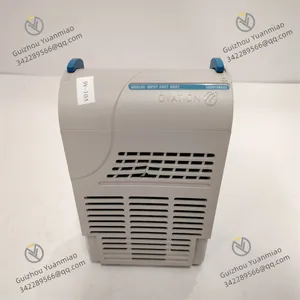
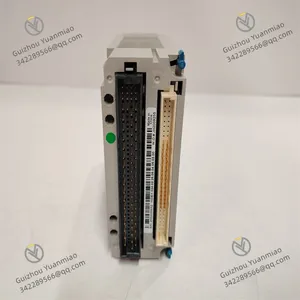
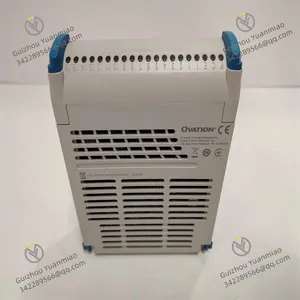
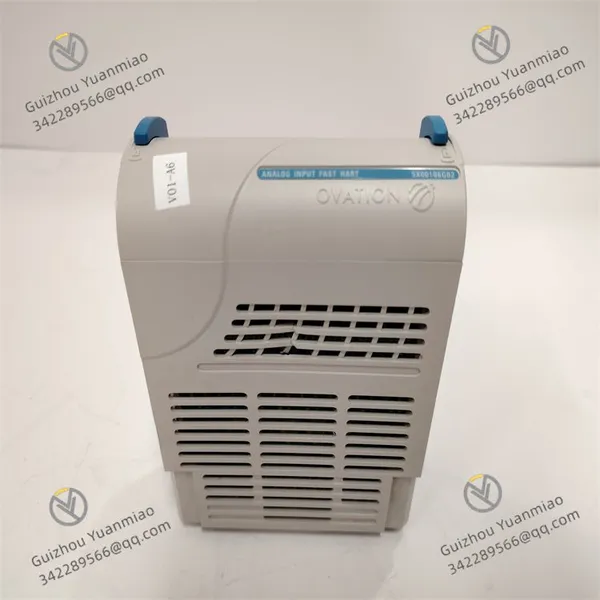
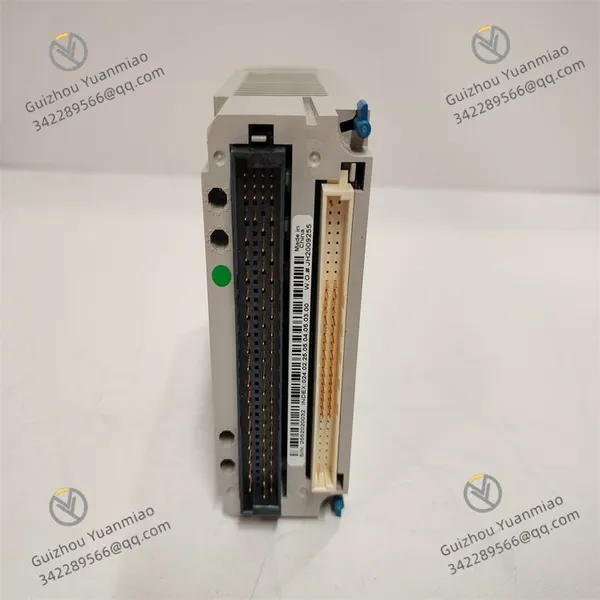
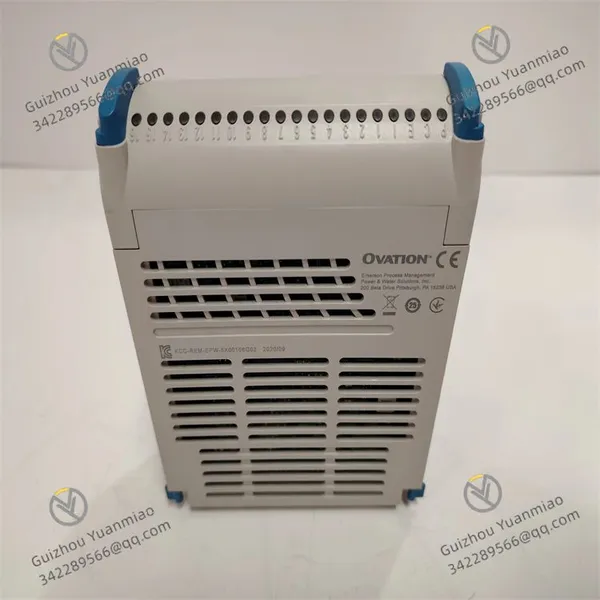
Accuracy and Resolution: The measurement accuracy can reach ±0.1% of full scale. In industrial control, high-precision analog acquisition plays a decisive role in ensuring the precise control of the production process and the stability of product quality. For example, in chemical production, the high-precision measurement of analog parameters such as temperature and pressure in the reaction kettle can accurately regulate the reaction process, avoiding product quality fluctuations or even production accidents caused by parameter deviations. The resolution reaches 16 bits, which means the module can perform more detailed quantization processing on the input signal, capture extremely subtle changes in the signal, and provide richer and more accurate data for the control system, thereby realizing more refined control strategies.
Other Performance Indicators: It has low noise characteristics, with a noise level of

III. Functional Features
High-Precision Analog Acquisition: Relying on advanced hardware circuit design and signal processing algorithms, 5X00106G02 can perform extremely accurate acquisition and digital conversion of analog signals. In practical industrial applications, such as the monitoring of analog quantities such as voltage and current in power systems, high-precision acquisition can ensure accurate mastery of the operation status of the power grid, timely detect potential fault hazards, and ensure the stable and reliable power supply.
HART Protocol Communication Expansion: HART protocol compatibility endows the module with additional communication and equipment management capabilities. Through this protocol, the module can communicate bidirectionally with intelligent on-site equipment, not only obtaining the measured values of the equipment but also reading the configuration information, operating status diagnostic data, etc. of the equipment. In petrochemical production, for intelligent pressure transmitters, temperature sensors and other equipment, remote parameter adjustment, equipment fault early warning and other functions can be realized with the help of HART communication, improving equipment maintenance efficiency and reducing maintenance costs.
High-Reliability Design: As a well-known brand in the industry, Emerson uses industrial-grade high-quality components in the design and manufacturing process of 5X00106G02, and has undergone strict quality inspection and reliability verification. When facing harsh conditions such as complex electromagnetic interference, mechanical vibration, and temperature shock in industrial sites, the module can operate stably, effectively avoiding data acquisition errors or system shutdown caused by hardware failures, and providing a solid guarantee for the reliable operation of industrial automation systems.
Convenient System Integration: The module adopts a standard rack-mounted installation method, and its size specifications comply with the general standards of industrial control cabinets, facilitating integration into industrial automation systems. At the same time, its communication interfaces and protocols follow industry general specifications, and can seamlessly interface with other components of the Emerson Ovation control system and third-party control systems, which greatly improves the convenience and flexibility of system construction and reduces the difficulty and cost of system integration.

IV. Common Faults and Solutions
Abnormal Signal Acquisition
Fault Phenomenon: The analog signal collected by the module has a large deviation from the actual value, or the signal is unstable such as fluctuation and jump.
Possible Causes: Sensor failure, resulting in inaccurate output analog signals; damage or poor contact of the cable connecting the sensor and the module, causing attenuation and interference during signal transmission; hardware failure of the module, such as damage to the analog input channel, failure of the signal conditioning circuit, etc.
Solutions: First, check the working status of the sensor. A standard signal source can be used to calibrate and test the sensor. If the sensor is faulty, replace it with a new one in time. Carefully inspect the connecting cable for damage, bending, loose joints, etc., and repair or replace the problematic cable. If the cable is normal, try connecting the sensor to other spare channels of the module for testing. If the signal collected in the spare channel is normal, it may be a hardware failure of the original channel, and it is necessary to contact professional maintenance personnel to repair the module or replace the faulty channel.
Communication Fault
Fault Phenomenon: The module cannot communicate normally with the control system, data transmission is interrupted, or packet loss and errors occur during communication.
Possible Causes: Communication cable failure, such as damage or poor contact of network cables, serial cables; incorrect configuration of communication protocols, inconsistent communication parameter settings between the module and the control system; hardware failure of the module's communication interface.
Solutions: Check the connection of the communication cable, re-plug the cable to ensure a firm connection. Use cable testing tools to detect the connectivity and signal transmission quality of the cable, and replace the cable in time if there is a problem. Carefully check the communication protocol parameters of the module and the control system, including baud rate, data bits, stop bits, parity bits, etc., to ensure that the parameters of both parties are consistent. If the parameter settings are correct, the replacement method can be adopted. Use a normal communication interface device to replace the communication interface of the module for testing. If the communication is normal after replacement, it indicates that the original communication interface has a hardware failure, and the communication interface module needs to be repaired or replaced.
Module Overheating Fault
Fault Phenomenon: The module has an excessively high temperature during operation, and even an overheating alarm occurs, affecting the normal performance and stability of the module.
Possible Causes: The temperature of the working environment where the module is located is too high, exceeding its normal working temperature range; the heat dissipation conditions of the module are poor, such as failure of the cooling fan, severe dust accumulation on the heat sink, etc., resulting in ineffective heat dissipation; the module is in a high-load working state for a long time, with excessive internal power consumption and excessive heat generation.
Solutions: Check the working environment of the module, improve ventilation and heat dissipation conditions, and install air conditioners, exhaust fans and other equipment to reduce the ambient temperature. Clean the dust on the module's heat sink, check whether the cooling fan is operating normally, and repair or replace the cooling fan in time if there is a failure. Evaluate the working load of the module. If the load is too high due to too many connected devices, consider increasing the number of modules for load sharing, or optimize the system configuration to reduce unnecessary data acquisition tasks and reduce the working load of the module.