Material
Other, Global universal model
Condition
Other, Global universal model
Task
Other, Global universal model
Mathematical Model
Other, Global universal model
Signal
Other, Global universal model
Customized
Non-Customized
Structure
Other, Global universal model
Operating temperature
-20℃ to 70℃
Humidity
10% - 95% (non - condensing)
Power Input
24V DC
I. Product Overview
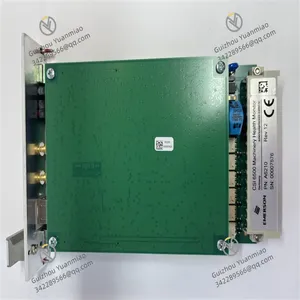
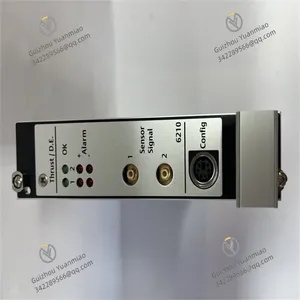
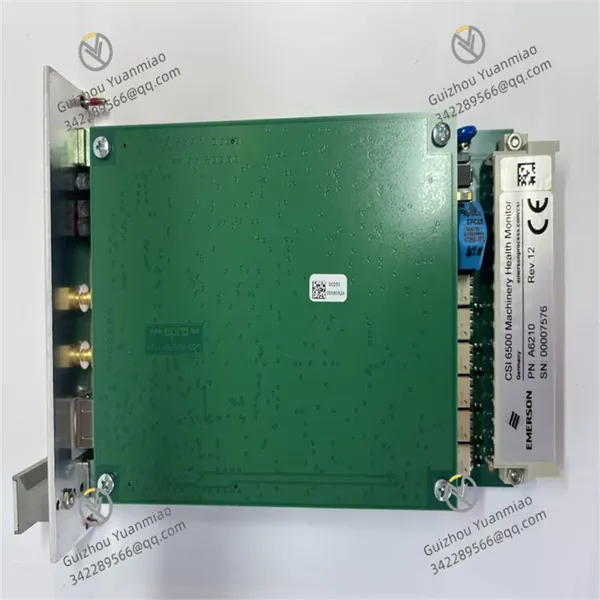
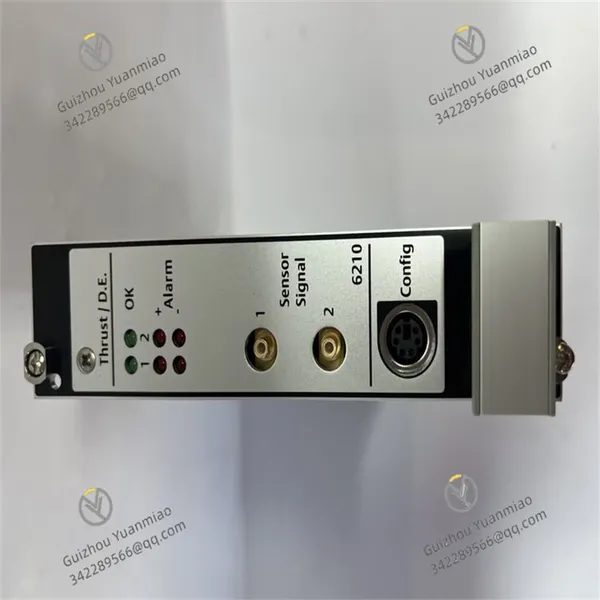
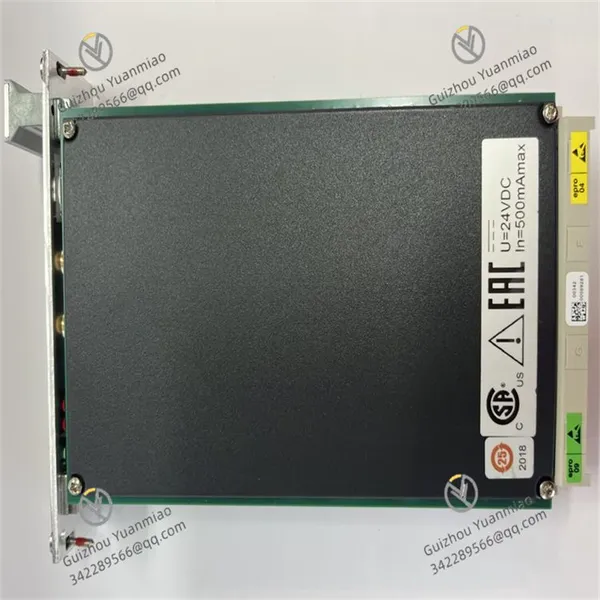
A6140 9199-00058 is an excellent advanced interface module in the field of industrial automation control, belonging to the A6140 series of industrial control products. From the model perspective, A6140 specifies its core series, which is famous for high compatibility and strong interface expansion capability, adhering to unified design specifications and strict quality standards; 9199-00058 is the specific model identifier of the module, containing details such as its unique functional configuration and version information, ensuring accurate matching of system requirements in diverse industrial application scenarios.
This module mainly undertakes the important tasks of data interaction and protocol conversion between different devices and subsystems in industrial automation systems, and is a key component for realizing system integration and collaborative control. In complex industrial production environments, various devices and control systems often adopt different communication protocols and interface standards. A6140 9199-00058 can break these barriers to achieve seamless data transmission and sharing, ensuring that the upper-level control system can obtain real-time operation status information of various devices and issue precise control commands to executive agencies, thus ensuring the efficient and collaborative operation of the entire industrial production process. It is widely used in large-scale industrial automation projects that require multi-system integration.

II. Technical Parameters
(1) Interface Parameters
Communication Interface Types: Equipped with rich communication interfaces, including 2 Ethernet interfaces (supporting 10/100Mbps auto-negotiation), 4 RS485 interfaces, and 2 USB interfaces. The Ethernet interfaces can realize high-speed data communication with upper computers, PLCs and other devices, meeting the needs of large-volume data transmission; the RS485 interfaces are suitable for connecting various sensors, instruments and other devices to form a distributed data acquisition network; the USB interfaces facilitate local data storage, program debugging and configuration, improving the flexibility of the module in use.
Interface Electrical Characteristics: The RS485 interfaces have differential transmission capability, with a communication distance of up to 1200 meters, supporting simultaneous access of 32 nodes, and strong anti-interference capability, enabling stable data transmission in the complex electromagnetic environment of industrial sites; the Ethernet interfaces support Auto-MDIX automatic crossover function, eliminating the need to distinguish between straight-through and crossover network cables, simplifying on-site wiring and connection operations.
(2) Protocol Support Parameters
It supports a variety of mainstream industrial communication protocols, such as Modbus RTU, Modbus TCP/IP, Profinet, EtherNet/IP, etc. Through these protocols, the module can communicate with industrial devices of different brands and types to achieve two-way data transmission. For example, it can interact with sensors using the Modbus protocol to obtain device status information; it can also communicate with PLCs supporting the Profinet protocol to receive control commands and feed back execution results, greatly enhancing the module's compatibility and system integration capability.
(3) Performance Parameters
Data Processing Capability: Adopting a high-performance processor, the data processing rate can reach 100Mbps, enabling rapid completion of protocol conversion, data parsing and forwarding operations, ensuring the real-time performance of data transmission. It has excellent capability in processing a large amount of concurrent data, and can handle data streams from multiple interfaces simultaneously without data blockage or delay, meeting the strict real-time requirements of large-scale industrial systems.
Storage Capacity: Built-in 8GB industrial-grade storage chip, which can be used to store device configuration information, historical data records and log files, etc. The historical data recording function supports storing key operating parameters by time stamp, and the storage cycle can be set according to requirements, providing strong data support for system fault analysis and production process tracing.
(4) Environmental Parameters
Operating Temperature: The operating temperature range is -20℃ to 70℃, which can adapt to extreme industrial environments such as severe cold and high temperature. Whether in unheated workshops in northern winter or high-temperature production plants in southern summer, it can maintain stable working performance, and the reliability of interface communication and data processing will not be affected by temperature changes.
Humidity Adaptation: It can operate normally in an environment with a relative humidity of 10% to 95% (non-condensing), and can cope with humid and foggy industrial scenarios such as food processing workshops and textile mills. The effective moisture-proof design avoids faults such as interface oxidation and circuit short circuits caused by humidity issues, ensuring long-term stable operation of the module.
Protection Level: The protection level reaches IP30, which can effectively prevent dust intrusion and water splashing from damaging the internal components of the module, making it suitable for installation in control cabinets or industrial site environments with basic protection.

III. Functional Features
(1) Powerful Protocol Conversion Function
The A6140 9199-00058 module has a built-in advanced protocol conversion engine, which can realize seamless conversion between different industrial communication protocols. For example, it can convert Modbus RTU signals output by sensors into Profinet signals for transmission to PLCs, and also convert EtherNet/IP control commands from PLCs into Modbus TCP/IP signals for sending to actuators. This protocol conversion function does not require users to write complex conversion programs, and the module will automatically complete the adaptation of data formats and protocols, greatly reducing the difficulty and cost of system integration and improving the efficiency of multi-system collaborative work.
(2) Flexible Network Configuration Function
The module supports a variety of network topologies, such as star, bus, ring, etc. Users can flexibly build communication networks according to the equipment distribution and wiring requirements of industrial sites. Through dedicated configuration software, the communication parameters of each interface (such as baud rate, data bits, stop bits, IP address, etc.) can be conveniently set, supporting batch configuration and parameter import/export functions, simplifying the deployment and debugging process of large-scale systems. In addition, the module also supports DHCP for automatic IP address acquisition, which is very practical for temporarily built test environments or scenarios requiring rapid network access.
(3) Comprehensive Diagnosis and Monitoring Functions
It has comprehensive self-diagnosis and remote monitoring capabilities, which can real-time monitor the module's own operating status, including parameters such as communication quality of each interface, power supply voltage, internal temperature, etc. When faults such as interface communication interruption, protocol parsing errors, and power supply abnormalities are detected, the module will immediately trigger an alarm mechanism, issue local alarm signals through indicator light flashing, relay output, etc., and upload fault information to the upper monitoring system through the communication interface, recording details such as fault type and occurrence time, facilitating maintenance personnel to quickly locate and troubleshoot problems, shortening fault handling time and improving system availability.
(4) High Security and Stability
Multiple security mechanisms are adopted to ensure the security of data transmission and module operation. It supports data encryption transmission function, encrypting data transmitted through the Ethernet interface using the SSL/TLS protocol to prevent data from being stolen or tampered with during transmission; it has access control function, which can set operation permissions for different users, restricting unauthorized personnel from modifying module configuration parameters to ensure the security of system settings. In terms of hardware design, industrial-grade components are selected, which have undergone strict reliability tests such as high and low temperature, vibration, and impact tests, ensuring that the module can operate stably for a long time in harsh industrial environments, with a mean time between failures (MTBF) of up to 150,000 hours or more.

IV. Application Scenarios
(1) Smart Factory Integration System
In smart factories, there are many different types of equipment and subsystems such as PLCs, robots, CNC machine tools, and warehouse management systems, which often use different communication protocols. The A6140 9199-00058 module can serve as the core hub of system integration to realize interconnection and intercommunication between various devices and subsystems. For example, the operating data of CNC machine tools (such as processing progress, equipment status) is collected through the Modbus protocol, converted into the Profinet protocol and transmitted to the factory MES system. At the same time, the production scheduling instructions of the MES system are converted into corresponding protocols and sent to the robot and conveyor belt systems, realizing intelligent scheduling and collaborative control of the production process, and improving production efficiency and resource utilization.
(2) Municipal Public Utilities Monitoring System
In municipal public utilities such as municipal water supply, sewage treatment, and urban heating, centralized monitoring of widely distributed pumping stations, valves, instruments and other equipment is required. The A6140 9199-00058 module can be installed at each monitoring station, connected to on-site pressure sensors, flow meters, level gauges and other devices through RS485 interfaces to collect data such as pressure, flow, and level, which are uploaded to the urban public utilities monitoring center through Ethernet interfaces after protocol conversion. At the same time, it receives remote control commands from the monitoring center, converts them into corresponding protocols to control the start-stop and adjustment of pumping station motors, valves and other equipment, realizing remote monitoring and automatic management of municipal public utilities, ensuring the stable operation of public facilities and reducing operation and maintenance costs.
(3) Comprehensive Control System in Metallurgical Industry
The metallurgical production process involves large-scale equipment such as blast furnaces, converters, and rolling mills, and the control systems of each equipment come from different manufacturers with different communication protocols. The A6140 9199-00058 module can access the control systems of various equipment to realize centralized data collection and command issuance. For example, parameters such as temperature and pressure of the blast furnace are collected through specific protocols, converted into a unified protocol and transmitted to the central control system. The control commands generated by the central control system based on these data are converted by the module and sent to the rolling mill control system, realizing collaborative control of the smelting and rolling processes and ensuring the stability of product quality. At the same time, the module's high reliability and anti-interference capability can adapt to the harsh environment of metallurgical workshops with high temperature, much dust and strong electromagnetic interference, ensuring the continuous and stable operation of the system.