Contact Platform Support
 Help Center
Application of Biological Buffer PIPES 5625-37-6 in Biochemical Research



Related Products
-
 How to Determine and Choose a BES Buffer 10191-18-1 Manufacturer for ProcurementUS$ 42.8 - 50.8MOQ: 500 Kilograms
 -
Biological Buffer DIPSO (68399-80-4) Detailed Description for Quick UnderstandingUS$ 42.8 - 50.8MOQ: 500 Kilograms
-
Multiple Applications of CHES Buffer in Biological ResearchUS$ 30.8 - 40.8MOQ: 500 Kilograms
-
What Factors Determine the Performance of Biological Buffer TRIS 77-86-1US$ 8.6 - 13.8MOQ: 100 Kilograms
-
Storage Conditions for Tris HCl Buffer 1185-53-1US$ 13.6 - 16.8MOQ: 100 Kilograms
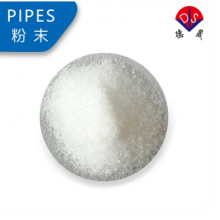
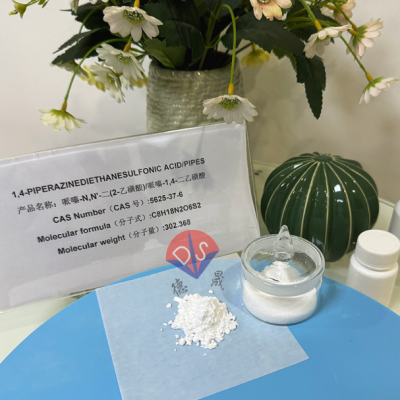
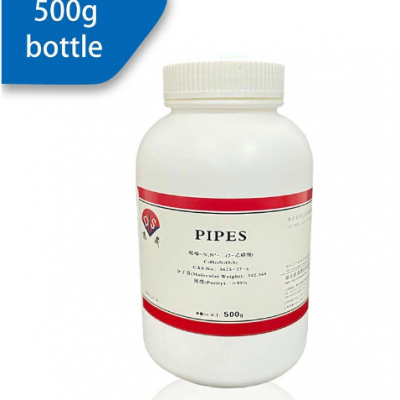
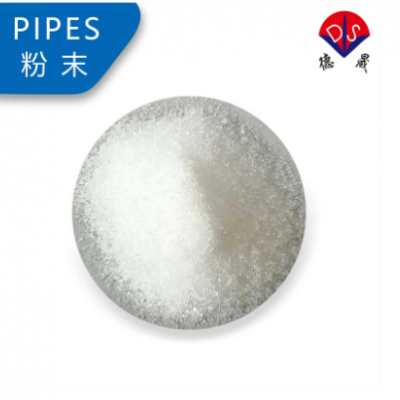
The selection of buffering agents is crucial for the accuracy and reliability of experimental results in biochemistry and molecular biology experiments. The biological buffer PIPES (piperazine-N, N '- bis (2-ethylsulfonic acid)) has been widely used in numerous experiments due to its unique properties. Especially its characteristic of not forming stable complexes with most metal ions gives PIPES significant advantages in handling solution systems containing metal ions. This article will provide a detailed introduction to the application of PIPES in purifying microtubule proteins, purifying recombinant GTP binding proteins ARF1 and ARF2, and crystallizing transaminase from Escherichia coli.
1、 Basic characteristics of PIPES
PIPES is a commonly used biological buffer with excellent buffering capacity and stability. It can maintain the acid-base balance of the solution within a wide pH range, thereby ensuring the stability of experimental conditions. In addition, the characteristic that PIPES cannot form stable complexes with most metal ions makes it particularly useful when dealing with solution systems containing metal ions. This characteristic helps to avoid unnecessary interactions between metal ions and proteins or other biomolecules, thereby ensuring the accuracy and reliability of experimental results.
2、 Application of PIPES in Purification of Microtubule Proteins
Microtubulin is the main protein that constitutes microtubules in cells and plays an important role in maintaining the cytoskeleton and cell division processes. Phosphocellulose chromatography is a commonly used method in the purification of microtubule proteins. PIPES, as a buffer, helps maintain the pH stability of the solution in the chromatographic column and avoid unnecessary interactions between metal ions and microtubule proteins. This effect helps ensure the stability and activity of microtubule proteins during the purification process, resulting in high-purity microtubule protein products.
3、 Application of PIPES in Purification of Recombinant GTP Binding Proteins ARF1 and ARF2
ARF1 and ARF2 are members of the ADP ribosylation factor (ARF) family, involved in vesicle transport and intracellular membrane motility. In the process of purifying recombinant GTP binding proteins ARF1 and ARF2, gel filtration is a common method. As a buffer, PIPES plays an important role in gel filtration. It helps to maintain the stability of the pH value of the solution in the gel column and avoid unnecessary interaction of metal ions with ARF1 and ARF2. This effect helps ensure the stability and activity of ARF1 and ARF2 during the purification process, resulting in high-purity recombinant protein products.
4、 Application of PIPES in Crystallizing Ketonase from Escherichia coli
Ketonase is an enzyme involved in sugar metabolism, which is of great significance for energy production and substance metabolism in organisms. PIPES plays an important role as a buffer in the crystallization of transaminase from Escherichia coli. It helps maintain a stable pH environment during the crystallization process, avoiding unnecessary interactions between metal ions and transaminase. This effect helps ensure the stability and activity of transaminase during the crystallization process, resulting in high-quality transaminase crystals.
5、 Conclusion
In summary, the biological buffer PIPES has broad application prospects in biochemical research. Its characteristic of not forming stable complexes with most metal ions gives it significant advantages in handling solution systems containing metal ions. In experiments such as purifying microtubule proteins, purifying recombinant GTP binding proteins ARF1 and ARF2, and crystallizing transaminase from Escherichia coli, PIPES acts as a buffer to maintain the stability of experimental conditions, avoid unnecessary interactions between metal ions and proteins or other biomolecules, and ensure the accuracy and reliability of experimental results. In the future, with the continuous deepening of biochemical and molecular biology research, the application of PIPES in more experiments will be further expanded and deepened.
Since the establishment of Desheng, we have always adhered to the core values of "service first". For product after-sales, we have an elite after-sales team that not only tracks and follows up on customer feedback information, but also provides professional product technical guidance. In addition, we highly value every suggestion and opinion from our customers and actively adopt them to continuously optimize our services. Therefore, if you are looking for high-quality biological buffering agents, Desheng is undoubtedly your trusted choice, and we will do our best to meet your expectations.

Send Inquiry to This Supplier


You May Also Like
-
99% of Customers Choose Bicine Buffer ManufacturerUS$ 18.8 - 26.8MOQ: 100 Kilograms
-
Application of Biological Buffer CAPS 1135-40-6 in Diagnostic KitUS$ 22.8 - 26.8MOQ: 100 Kilograms
-
Why Choose MOPS Buffer Produced and Developed by Desheng?US$ 26.6 - 32.8MOQ: 500 Kilograms
-
High Quality Supply Channel for Biological Buffer TAPS 29915-38-6US$ 66.8 - 76.8MOQ: 500 Kilograms
-
The Buffering Range of GOOD'S Buffer EPPS 16052-06-5US$ 56.8 - 68.8MOQ: 500 Kilograms
-
Introduction to the Use of Biological Buffer MOPSO Buffer (CAS Number 68399-77-9)US$ 28.8 - 39.8MOQ: 500 Kilograms
-
HEPES Buffer for Cell Culture 7365-45-9US$ 26.6 - 32.8MOQ: 500 Kilograms
-
Precautions for Using PIPES Buffer SolutionUS$ 26.6 - 32.8MOQ: 500 Kilograms
-
Introduction to the Use of Biological Buffer BES CAS Number 10191-18-1US$ 42.8 - 50.8MOQ: 500 Kilograms
-
The Use of 3- [N, N-di (hydroxyethyl) Amino] -2-hydroxypropanesulfonic Acid DIPSO 68399-80-4US$ 42.8 - 50.8MOQ: 500 Kilograms