Contact Platform Support
 Help Center
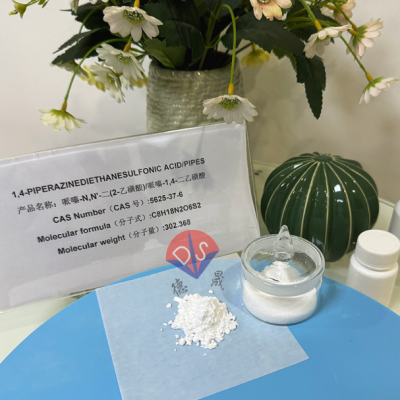



Related Products
-
 Introduction to the Use of Biological Buffer MOPSO Buffer (CAS Number 68399-77-9)US$ 28.8 - 39.8MOQ: 500 Kilograms
 -
HEPES Buffer for Cell Culture 7365-45-9US$ 26.6 - 32.8MOQ: 500 Kilograms
-
Precautions for Using PIPES Buffer SolutionUS$ 26.6 - 32.8MOQ: 500 Kilograms
-
Introduction to the Use of Biological Buffer BES CAS Number 10191-18-1US$ 42.8 - 50.8MOQ: 500 Kilograms
-
The Use of 3- [N, N-di (hydroxyethyl) Amino] -2-hydroxypropanesulfonic Acid DIPSO 68399-80-4US$ 42.8 - 50.8MOQ: 500 Kilograms
In the fields of biochemistry and molecular biology, the use of appropriate buffering agents is of great significance for maintaining the stability of reaction systems. Among them, EPPS is a commonly used GOOD'S buffer, which is a buffer containing a piperazine ring structure that endows EPPS with superior buffering performance. Its molecular formula is C9H20N2O4S, with a relative molecular weight of 252.33 g/mol. It is soluble in water, making it suitable for buffering requirements under many experimental conditions. What is its buffering range and what is its function? Let's take a look below.
1、 EPPS buffer range
The pH range of buffering agents is usually defined as the range within which they can stably maintain the pH of the solution and prevent drastic changes in pH. As a buffer, EPPS has good buffer performance in a specific pH range of 7.3-8.7, and Pka value is 8.0 at 25 ℃. This range is suitable for many biochemical and molecular biological experiments, such as ultra-thin isofocal gel as a separator and as a buffer component of RNA samples.
2、 EPPS buffer range performance advantage
1. Stability: EPPS exhibits excellent stability within its buffering range, and during the experimental process, it can effectively maintain the required acid-base balance when the pH value of the solution needs to be kept constant.
2. Electrophoresis application: EPPS buffer is also commonly used in DNA/RNA electrophoresis experiments, especially in the process of preparing nucleic acid samples. It can provide stable electrophoresis conditions to ensure that nucleic acids move at an appropriate rate in gel.
3. Protein stability: Within the pH range of 7.3-8.7, EPPS buffer can provide an appropriate environment, such as protecting oxygenated hemoglobin from oxidation to methemoglobin during freeze-drying.
The buffering range of EPPS buffer covers many acid-base conditions required for experiments, ensuring the accuracy of experimental results. Regardless of the field, it exhibits excellent performance advantages and provides effective experimental conditions for experimenters. As an experienced manufacturer of buffering agents, Desheng can provide raw material powders with a purity of up to 99%, good water solubility, and a complete range of product types, with personalized customized services according to customer requirements. For ton level purchasing customers, price adjustments are flexible. If you have any relevant intentions, please feel free to contact us for purchase at any time!

Send Inquiry to This Supplier


You May Also Like
-
Exploring the Synthesis Method of the Biological Buffering Agent Sodium 2-cyclohexylamineethanesulfonate (CHES Na)US$ 66.6MOQ: 500 Kilograms
-
Low Interference, High Buffering Efficiency: the Key Role of CHES 103-47-9 in Molecular BiologyUS$ 30.8 - 40.8MOQ: 500 Kilograms
-
Introduction to Biological Buffer CAPSO 73463-39-5US$ 58.8 - 66.8MOQ: 500 Kilograms
-
Introduction to Piperazine Buffer POPSO (CAS No. 68189-43-5)US$ 53.8 - 58.8MOQ: 500 Kilograms
-
Preparation and Advantages of Tris Acetate TAE as a Biological BufferUS$ 30.6 - 36.6MOQ: 500 Kilograms
-
Application of TAPSO 68399-81-5 Biological Buffer in DNA/RNA ExtractionUS$ 76.6 - 86.6MOQ: 500 Kilograms
-
Basic Information of Biological Buffer N - (2-acetamido) -2-aminoethanesulfonic Acid (ACES)US$ 30.6 - 66.6MOQ: 500 Kilograms
-
The pH Range of N - (2-acetamido) -2-iminodiacetic Acid (ADA) BufferUS$ 30.6 - 36.6MOQ: 500 Kilograms
-
HEPBS Biological Buffer is a Powerful Assistant in Cell Culture and Cosmetics ManufacturingUS$ 53.8 - 58.8MOQ: 500 Kilograms
-
You Can't Help but Know About the Applications of CHAPS BufferUS$ 53.8 - 900MOQ: 500 Kilograms