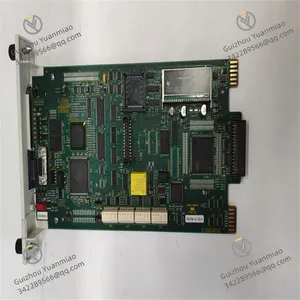
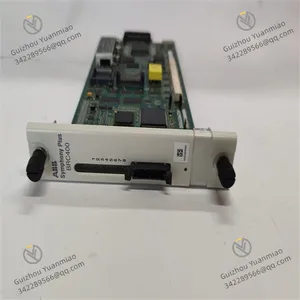
Home > Electrical & Electronics > Electrical Control System > ABB Bailey SPBRC400 Bridge Controller
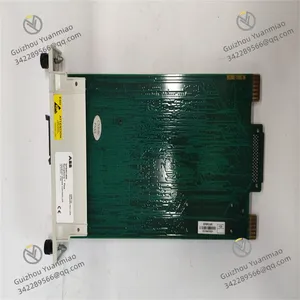
ABB Bailey SPBRC400 Bridge Controller
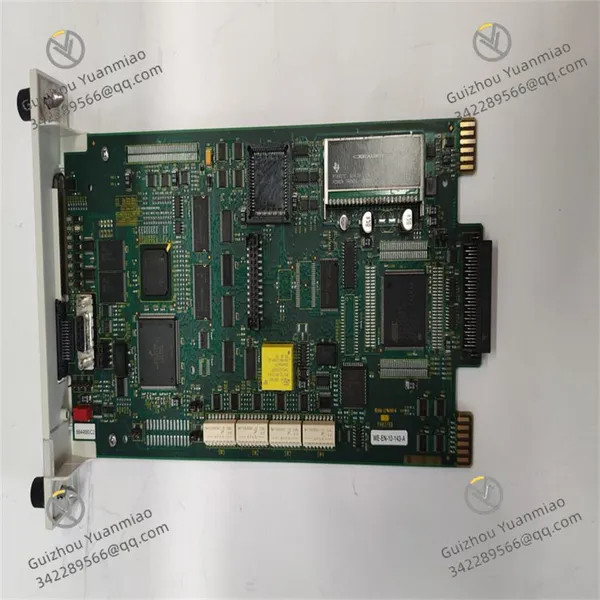
ABB Bailey SPBRC400 Bridge Controller photo-1
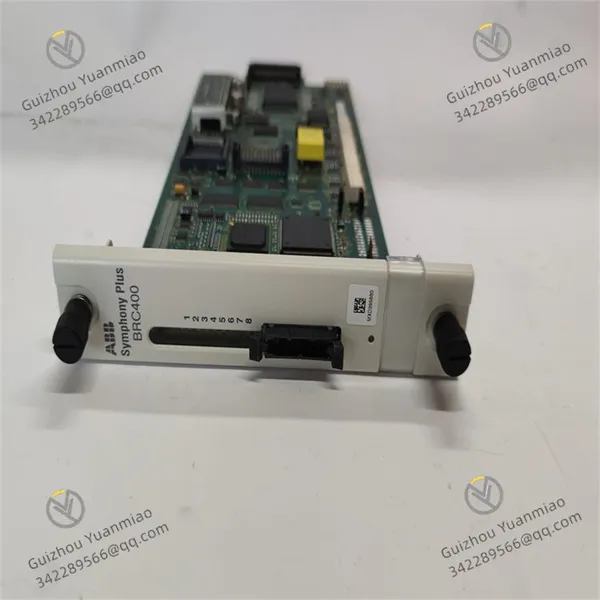
ABB Bailey SPBRC400 Bridge Controller photo-2
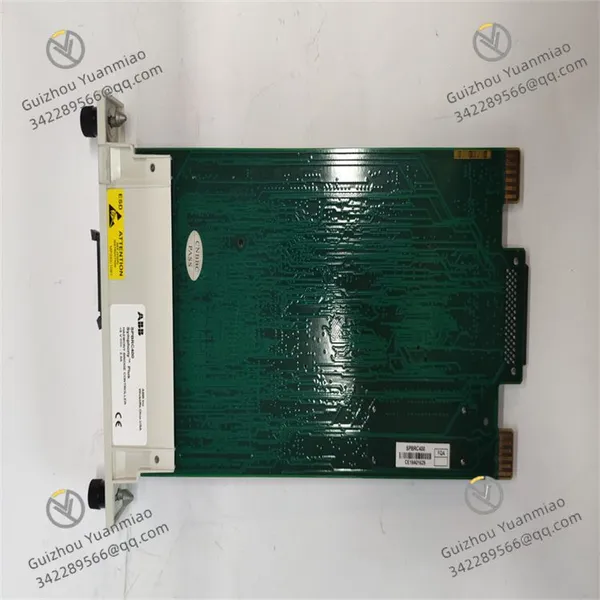
ABB Bailey SPBRC400 Bridge Controller photo-3
Negotiable MOQ: 1 Unit (Price negotiable depending on order volume and customization)
Key Specifications
Get Latest Price
Material:
Other, Global universal model
Condition:
Other, Global universal model
Task:
Other, Global universal model

Payment & Shipping
Payment Methods:
Port of Shipment:
China
Delivery Detail:
Delivery time depends on order quantity.
Material Other, Global universal model
Condition Other, Global universal model
Task Other, Global universal model
Mathematical Model Other, Global universal model
Signal Other, Global universal model
Customized Non-Customized
Structure Other, Global universal model
power supply 24V DC
Operating Temperature -0℃ to +60℃
Dimensions 220mm×160mm×80mm
Overview


ABB Bailey SPBRC400 is a high-performance redundant controller module in the Bailey series, mainly applied in industrial automation fields with extremely high requirements for system reliability, such as key control systems in power, chemical, metallurgical and other industries. As the core control unit of the Distributed Control System (DCS), it realizes uninterrupted operation through redundant design. It can process various signals from the field in real time, execute complex control algorithms, and issue precise control commands to actuators, ensuring the continuous and stable industrial production process and minimizing downtime losses caused by equipment failures.


SPBRC400 (3)


Core Parameters Analysis
  • Power Adaptation: Adopts dual redundant power supply design, each power input is 24V DC, with an allowable voltage fluctuation range of 19.2V - 28.8V DC. When one power supply fails, the other can switch seamlessly to ensure continuous power supply for the module; the power consumption of a single power supply is about 15W, and the total power consumption under redundant design is about 30W, which meets the requirements of high-performance computing while keeping energy consumption at a reasonable level.
  • Processor and Memory: Equipped with a 32-bit high-performance processor with an operating speed of up to 100MIPS (million instructions per second), which can quickly process complex control logic and a large amount of real-time data; it is equipped with 8MB program memory and 16MB data memory, which can store huge control programs and historical data, meeting the needs of large-scale control systems.
  • Redundancy Mechanism: Supports hot-swappable redundant configuration. The main and standby controllers synchronize data in real time through a high-speed redundant bus (with a transmission rate of 100Mbps), and the switching time is less than 50ms. This ensures that when the main controller fails, the standby controller can immediately take over the control tasks, achieving undisturbed switching and avoiding interruption of the production process.
  • Communication Interfaces: Has rich communication interfaces, including 2 Ethernet interfaces (10/100Mbps) for communication with upper computers or other systems, and 4 RS485 interfaces for connecting fieldbus devices. It supports multiple communication protocols such as Modbus and PROFIBUS, enabling interconnection and intercommunication with devices of different brands.
  • Environmental Adaptability: The operating temperature range is 0℃ - 60℃, which can adapt to the temperature environment of most industrial workshops; the relative humidity is 5% - 95% (non-condensing), allowing stable operation in humid environments; the anti-vibration performance complies with IEC 60068-2-6 standard, and can withstand vibration shocks of 10Hz - 150Hz, adapting to industrial scenarios with certain vibrations.
  • Physical Specifications: Approximately 220mm×160mm×80mm in size and about 1.8kg in weight, it adopts a rail mounting method. With a compact structure, it is convenient to be installed in combination with other modules in the control cabinet, saving space.


SPBRC400 (2)


Highlights of Functional Features

  • High-Reliability Redundant Design: In addition to dual redundant power supplies and main-standby controller redundancy, key components inside the module (such as processors, memory, and communication interfaces) all adopt redundant configurations, further improving the fault resistance of the system. By real-time monitoring the operating status of each component, once an abnormality is found, the redundant switching mechanism is activated immediately to ensure that the control function is not affected. For example, in the reactor control system of a nuclear power plant, it can ensure the continuous execution of control tasks.
  • Powerful Support for Control Algorithms: Built-in rich control algorithm libraries, including PID control, cascade control, feedforward control, ratio control, etc., which can meet the control needs of different industrial scenarios. For example, in the chemical batch reaction process, the cascade PID control algorithm can be used to precisely control the temperature and pressure of the reaction kettle; in the boiler control of thermal power plants, the feedforward control algorithm is used to adjust the water supply in advance to compensate for fluctuations in fuel quantity and improve control accuracy.
  • High-Speed Data Processing and Response: The processor has strong data processing capabilities, which can process signals from up to 1000 input and output points at the same time, with a data refresh cycle as short as 10ms, ensuring real-time response to on-site working conditions. In high-speed assembly line production, it can promptly process signals from various sensors and quickly adjust the operating status of equipment to ensure the stability of the production rhythm.
  • Comprehensive Self-Diagnosis and Fault-Tolerance Capability: It has a comprehensive self-diagnosis function, which can real-time monitor the module's power supply status, processor operation, memory reading and writing, communication links, etc. Once a fault is detected, it immediately sends alarm information through indicators and communication interfaces and automatically starts redundant switching. At the same time, it has a certain fault-tolerance capability, and can self-recover from minor transient faults through software error correction mechanisms, reducing unnecessary redundant switching.
  • Flexible Programming and Configuration: Supports programming languages compliant with IEC 61131-3 standards, including Ladder Diagram (LD), Function Block Diagram (FBD), Structured Text (ST), etc., facilitating engineers to develop programs according to control requirements. Through dedicated configuration software, online programming, parameter modification and program downloading of the controller can be realized without interrupting system operation, greatly improving the efficiency of system maintenance and upgrading.


SPBRC400 (1)


Typical Application Scenarios

  • Power Industry Generator Set Control: In the steam turbine generator set control system of thermal power plants, SPBRC400, as the core controller, collects key parameters such as steam turbine speed, steam pressure, and generator voltage in real time, and uses complex control algorithms to adjust the steam intake of the steam turbine and the excitation current of the generator to maintain the stable operation of the unit. The redundant design ensures that the unit can still generate electricity normally when the controller fails, avoiding power outages.
  • Control of Large-Scale Chemical Plants: In large-scale ethylene production plants, this module is responsible for controlling the operation of key equipment such as cracking furnaces, compressors, and distillation towers. By processing signals such as temperature, pressure, and flow from the field, it precisely controls the operating parameters of each equipment to ensure that the process indicators of ethylene production meet the standards. The redundant design ensures the continuous operation of the plant, reducing production stoppage losses caused by faults, and an hour of production stoppage may result in economic losses of hundreds of thousands of yuan.
  • Steel Rolling Control System in Metallurgical Industry: In the control system of hot rolling mills in steel plants, SPBRC400 receives signals such as rolling force, roll gap, and steel strip temperature from the rolling mill in real time, and adjusts the rotational speed and rolling reduction of the rolls through control algorithms to ensure that the thickness and shape of the steel strip meet the requirements. The high-speed data processing capability and response speed can meet the strict requirements of the steel rolling process for control accuracy and real-time performance.
  • Control of Municipal Sewage Treatment Plants: In the control system of large-scale sewage treatment plants, this module is used to coordinate and control multiple process units such as grid machines, sedimentation tanks, biochemical tanks, and sludge treatment. By collecting signals such as liquid level, water quality, and flow from each unit, it controls the operation of various pumps, valves, fans and other equipment to realize the automation of the sewage treatment process. The redundant design ensures the continuous operation of the sewage treatment plant, avoiding excessive sewage discharge caused by equipment failures.
Product Tags: SPBRC400

Send Inquiry to This Supplier

* Message
0/5000

Want the best price? Post an RFQ now!
Verified Business License
Business Type
Trading Company
Year Established
2014
Factory Size
1,000-3,000 square meters
Product Certifications
SA8000