Home > Electrical & Electronics > Electrical Control System > ABB Bailey IMMFP12 Multifunction Processor Module
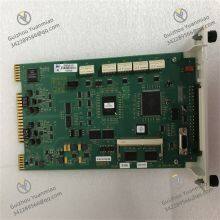
ABB Bailey IMMFP12 Multifunction Processor Module
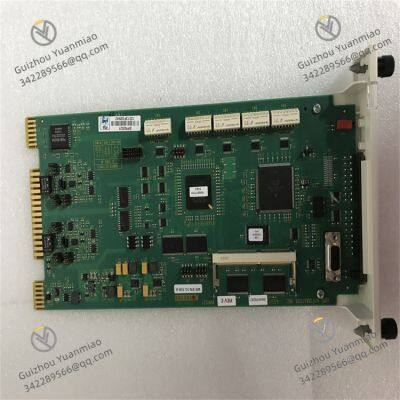
ABB Bailey IMMFP12 Multifunction Processor Module photo-1
Negotiable MOQ: 1 Unit (Price negotiable depending on order volume and customization)
Key Specifications
Get Latest Price
Material:
Other, Global universal model
Condition:
Other, Global universal model
Task:
Other, Global universal model
Payment & Shipping
Payment Methods:
Port of Shipment:
China
Delivery Detail:
Delivery time depends on order quantity.
Material Other, Global universal model
Condition Other, Global universal model
Task Other, Global universal model
Mathematical Model Other, Global universal model
Signal Other, Global universal model
Customized Non-Customized
Structure Other, Global universal model
Power Supply 24V DC
Operating Temperature -40°C to +70°C
Dimensions 120mm×80mm×60mm
Overview


ABB Bailey IMMFP12 is a high-performance multi-functional control module belonging to the Bailey series of automation control products. It undertakes key control and coordination tasks in industrial automation control systems. Integrating functions such as data acquisition, logical operation, and control output, it can conduct real-time monitoring of various parameters in industrial production processes and issue precise control commands according to preset control strategies, realizing automatic regulation of production processes. Widely used in industrial fields requiring complex control logic such as electric power, chemical industry, metallurgy, and water treatment, it serves as an important link connecting on-site equipment and upper-level control systems, providing a solid guarantee for the efficient, stable, and safe operation of industrial production.


Analysis of Core Parameters

  • Processor Performance: Equipped with a high-performance 32-bit microprocessor, it has a fast operation speed, capable of quickly processing complex control algorithms and large amounts of real-time data, ensuring the timely generation and execution of control commands. In scenarios requiring multi-parameter coordinated control, such as the combined control of temperature, pressure, and liquid level in chemical reactors, it can quickly complete data calculation and output control signals.
  • I/O Interface Configuration: It has rich I/O interfaces, including 8 analog inputs (4mA-20mA or 0V-10V), 4 analog outputs (4mA-20mA), 16 digital inputs (dry contacts or wet contacts), and 8 digital outputs (relay output, maximum load 2A), which can meet the diverse signal acquisition and control needs of small and medium-sized industrial control systems.
  • Memory Configuration: Equipped with 1MB program memory and 2MB data memory, it provides sufficient space for the storage of complex control programs and the caching of large amounts of real-time data, supporting multi-task concurrent processing and ensuring smooth system operation.
  • Communication Capability: Supports multiple industrial communication protocols such as Modbus RTU/ASCII and Profibus DP, enabling efficient data interaction with DCS, PLC, HMI and other devices, and facilitating integration into various industrial automation networks. It also has an Ethernet interface, supports TCP/IP protocol, allowing remote monitoring and configuration, and improving the flexibility and scalability of the system.
  • Control Cycle: The minimum control cycle can reach 10ms, which can quickly respond to changes in on-site parameters and adjust control outputs in a timely manner, suitable for occasions with high requirements for control accuracy and response speed, such as heat treatment furnaces with high-precision temperature control.
  • Power Requirements: The working power supply is 24V DC, with an allowable voltage fluctuation range of 19.2V-28.8V DC, adapting to standard DC power supplies in industrial sites; the normal working current is about 300mA, with low power consumption, reducing energy consumption.
  • Environmental Adaptability: The operating temperature range is -40℃-70℃, enabling stable operation in extreme high and low temperature environments; the relative humidity is 0-95% RH (non-condensing), adapting to humid industrial environments; the anti-vibration performance complies with IEC 60068-2-6 standard, capable of withstanding vibration shocks of 10Hz-500Hz, suitable for installation near equipment with certain vibrations, such as pump sets and fans.
  • Physical Specifications: The size is approximately 150mm×100mm×80mm, and the weight is about 0.5kg. It adopts DIN rail mounting, with a compact structure, saving space in the control cabinet and facilitating combined installation with other modules.


SPNPM22 (3)


Highlights of Functional Features

  • Powerful Control Functions: Supports multiple control algorithms, including PID control, logic control, sequential control, etc., which can be flexibly configured according to different industrial scenarios. For example, in the liquid level control of sedimentation tanks in water treatment plants, PID algorithm is used to achieve precise adjustment of liquid level; in the start-stop control of production lines, sequential control logic is used to ensure that each device acts in a preset order.
  • Flexible Programming Capability: Supports programming languages compliant with IEC 61131-3 standards, such as Ladder Diagram (LD), Function Block Diagram (FBD), Structured Text (ST), etc., facilitating engineers to write and modify control programs according to actual control needs, and shortening the system development cycle. It also supports online programming and debugging, enabling optimization of control logic without interrupting production.
  • Data Processing and Storage: It has strong data processing capability, which can filter, calibrate, and convert the collected real-time data to improve data accuracy and reliability. The built-in data recording function can store historical data of key process parameters (such as temperature and pressure change trends), and the storage capacity can be expanded according to needs, facilitating subsequent production analysis and fault tracing.
  • Redundancy Design Option: Supports module-level redundancy configuration. When the main module fails, the standby module can automatically switch without disturbance, ensuring the continuous operation of the control system and reducing production interruptions caused by module failures. In occasions with extremely high requirements for system availability, such as boiler control in thermal power plants, the redundancy design can significantly improve system reliability.
  • Self-Diagnosis and Alarm Functions: It has a complete self-diagnosis mechanism, which can real-time monitor the module's hardware status, communication links, I/O interfaces, etc. When a fault is detected (such as power supply abnormality, communication interruption, I/O channel failure), it can immediately send alarm information through indicator lights and communication interfaces, and record fault codes, facilitating maintenance personnel to quickly locate and troubleshoot faults.
  • Safety Certification: It has passed SIL 2 safety integrity level certification, complies with industrial safety standards, and can be used in safety-related control systems, such as emergency shutdown systems in chemical production, ensuring reliable execution of safety control actions in abnormal situations and reducing accident risks.

Typical Application Scenarios

  • Boiler Control in Power Industry: In the boiler control system of thermal power plants, IMMFP12 is responsible for collecting analog signals such as boiler steam pressure, temperature, and water level, as well as digital signals such as the operating status of fans and feed pumps. Through the built-in PID control algorithm, it adjusts parameters such as fuel supply, air supply volume, and water supply volume, controlling various indicators of the boiler within the set range to ensure efficient and stable operation of the boiler and improve power generation efficiency.
  • Chemical Reactor Control: In the control of chemical reactors in chemical production, this module collects signals such as temperature, pressure, and stirring speed in the reactor, and adjusts the power of heating devices, the opening of feed valves, and the rotation speed of stirring motors through logical operations and control outputs in combination with preset reaction curves, realizing automatic control of chemical reaction processes, ensuring stable product quality, and avoiding safety accidents caused by excessive parameters.
  • Metallurgical Rolling Mill Control: In the rolling mill control system of steel plants, IMMFP12 collects signals such as rolling roll pressure, rotation speed, and steel plate thickness and temperature. According to rolling process requirements, it adjusts the rolling roll reduction and rotation speed through complex control logic, realizing precise control of the steel plate rolling process and improving the accuracy and quality of rolled products.
  • Water Treatment Plant Process Control: In urban sewage treatment plants, this module is used to control various links of sewage treatment, such as collecting signals such as the operating status of grille machines, the liquid level of sedimentation tanks, and the dissolved oxygen concentration in aeration tanks, controlling the start-stop of grille machines, the operation of sludge pumps, and the air volume of aeration equipment, so that the sewage treatment process is carried out according to preset process parameters, ensuring that the effluent quality meets the standards.
Product Tags: IMMFP12

Send Inquiry to This Supplier

Message
0/5000

Want the best price? Post an RFQ now!
Gold Verified Supplier
1Yr
Verified Business License
Business Type
Trading Company
Year Established
2014
Factory Size
1,000-3,000 square meters
Product Certifications
SA8000