Home > Electrical & Electronics > Electrical Control System > ABB Bailey IMSED01 Event Digital Input Module

ABB Bailey IMSED01 Event Digital Input Module
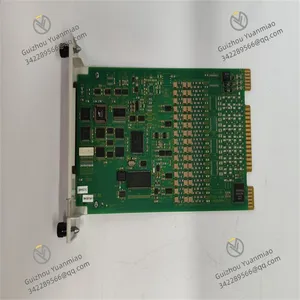
ABB Bailey IMSED01 Event Digital Input Module photo-1
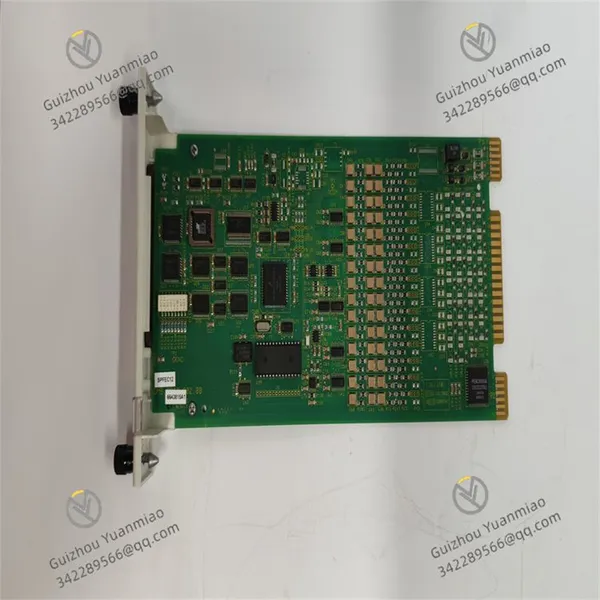
Negotiable MOQ: 1 Unit (Price negotiable depending on order volume and customization)
Key Specifications
Get Latest Price
Material:
Other, Global universal model
Condition:
Other, Global universal model
Task:
Other, Global universal model

Payment & Shipping
Payment Methods:
Port of Shipment:
China
Delivery Detail:
Delivery time depends on order quantity.
Material Other, Global universal model
Condition Other, Global universal model
Task Other, Global universal model
Mathematical Model Other, Global universal model
Signal Other, Global universal model
Customized Non-Customized
Structure Other, Global universal model
power supply 24V DC
Operating Temperature -40℃ to +70℃
Overview


ABB Bailey IMSED01 is a sequence-of-events digital input module specially designed for industrial automation applications. It belongs to the Symphony Plus I/O HR series and is compatible with Symphony Plus Process Control System (PLS) controllers. In industrial automation control systems, it is mainly responsible for accurately collecting on-site digital signals and, combined with time synchronization functionality, precisely recording the sequence of events and their timestamps. It provides crucial raw data support for subsequent system analysis, decision-making, and fault diagnosis, serving as an important foundational component to ensure efficient, stable, and reliable operation of industrial production processes.


Analysis of Core Parameters

  • Number of Input Channels: Equipped with 16 digital input channels, it can simultaneously access multiple on-site digital signals, meeting diverse signal acquisition needs in industrial scenarios. For example, in monitoring production lines of large factories, it can collect start-stop status signals of multiple devices simultaneously.

  • Input Signal Type: Each channel can accept 24V DC or 48V DC voltage signals, compatible with digital signals output by common industrial on-site sensors, switches, and other devices, offering strong compatibility.

  • Input Characteristic Configuration: Each channel can be flexibly configured as "high-level active" or "low-level active" and supports filtering options. Users can set parameters according to actual on-site environments and signal characteristics to effectively eliminate signal noise and interference, ensuring stable and accurate signal acquisition.

  • Physical Dimensions: With a depth of 72mm, height of 360mm, and width of 270mm, it features a compact structure, occupying little space in control cabinets and facilitating combined installation with other modules to optimize cabinet layout.

  • Installation Method: Adopts DIN rail mounting, which is simple, quick, secure, and reliable, making it easy to deploy and maintain in on-site control cabinets.

  • Operating Temperature Range: Can operate within a temperature range of -40℃ to +85℃, adapting to various extreme harsh industrial environment temperatures. It can run stably whether in cold outdoor working environments or high-temperature production workshops, ensuring uninterrupted data acquisition.

  • Power Requirements: Operates on 24V DC power supply, conforming to standard DC power specifications in industrial sites, with stable and reliable power supply and reasonable power consumption to reduce energy usage.


SPFEC12 (3)


Highlights of Functional Features

  • High-Precision Time Synchronization: Can achieve precise timestamp synchronization with different PLCs or devices in the Symphony Plus system. By cooperating with multiple time reference sources such as GPS, wireless clocks, or internal network time, it ensures high consistency of event times recorded by various devices, with an error accurate to the millisecond level. This feature is of vital significance in application scenarios with high requirements for event sequence and time precision, such as power system fault analysis and traceability of abnormal events in chemical production processes. It helps engineers quickly and accurately restore the actual occurrence process of events, providing a strong basis for fault troubleshooting and production process optimization.

  • Channel Status Visualization: Each channel is equipped with an LED indicator, which can intuitively display the channel status (active/inactive). During on-site inspections or maintenance, operators can quickly determine whether a channel is working normally by observing the on/off status of the indicators, promptly identifying faulty channels, greatly improving fault troubleshooting efficiency, and reducing production interruption time caused by delayed fault detection.

  • Flexible Input Configuration: Supports flexible configuration of channel input characteristics. Channels can be set to high-level active or low-level active according to different on-site equipment and signal requirements. Meanwhile, filtering options can effectively filter out interference signals generated in complex electromagnetic environments of industrial sites, avoiding misjudgment caused by signal fluctuations, and improving the reliability and stability of signal acquisition. This flexibility enables IMSED01 to adapt to various types of industrial automation projects, whether new projects or renovation and upgrading of existing systems, with easy adaptation.

  • Reliable Communication Connection: Connects to the Symphony Plus PLS controller via the HR bus, ensuring stable and efficient communication. The HR bus has high-speed data transmission capability, ensuring that collected digital signals and timestamp information are transmitted to the controller timely and accurately, providing data support for real-time decision-making of the control system. Additionally, this standardized communication interface facilitates integration with other related equipment, expanding system functions and building more complex and complete industrial automation control systems.


Typical Application Scenarios

  • Power System Fault Monitoring: In the automated monitoring system of power substations, IMSED01 is used to collect status signals of various protection devices, circuit breakers, disconnectors, and other equipment. When a fault occurs in the power system, such as a short circuit or overload, it can quickly capture changes in the status of related equipment and accurately record the time sequence and timestamps of events. This information is of great value for power operation and maintenance personnel to analyze fault causes, formulate repair plans, and evaluate system stability. It helps them quickly locate fault points, shorten power outage time, and ensure reliable power supply of the power system.

  • Chemical Production Process Monitoring: In chemical production workshops, IMSED01 can collect start-stop signals, alarm signals, and various safety interlock signals of equipment such as reactors, pumps, and valves. Combined with time synchronization functionality, it can accurately record the sequence of various events in the production process, such as the time relationship between the alarm of abnormal temperature rise in the reactor and the action of related valves. This is of great significance for chemical enterprises to optimize production processes and ensure safe production. In case of abnormal situations, enterprises can conduct analysis based on these accurate event records, take timely measures to prevent the expansion of accidents, and ensure the safe and stable operation of chemical production processes.

  • Industrial Production Line Automation Control: In industrial production lines such as automobile manufacturing and electronic equipment manufacturing, IMSED01 is used to collect operating status signals of equipment at each workstation of the production line, such as product arrival signals detected by sensors and equipment fault alarm signals. By accurately recording the time sequence of these signals, the control system can grasp the operation status of the production line in real-time, realizing automatic control and optimal scheduling of the production process. For example, when a device fault occurs at a certain workstation, the control system can timely adjust the operation rhythm of the production line according to the event information recorded by IMSED01, automatically assign subsequent process tasks to standby equipment, ensuring the overall operation efficiency of the production line and reducing production stagnation time caused by equipment faults.


Installation and Maintenance Points

  • Installation Specifications: During installation, a position in the control cabinet with good ventilation, no severe vibration, and away from strong electromagnetic interference sources (such as high-power transformers and frequency converters) should be selected. The module is firmly installed in the control cabinet via DIN rails to ensure secure installation, preventing poor contact due to vibration or loosening. During wiring, strictly distinguish the wiring of different channels according to the wiring diagram to ensure correct cable connection. Meanwhile, the shielding layer should be reliably grounded at one end (control cabinet grounding bar) to reduce the impact of electromagnetic interference on signal transmission.

  • Daily Maintenance: Regularly check the status of the module's LED indicators to ensure normal display of each channel. If any indicator is abnormal, promptly troubleshoot the corresponding channel. Clean dust on the module surface to maintain good heat dissipation conditions, avoiding performance degradation caused by dust accumulation affecting heat dissipation. Through the upper computer or related monitoring software, regularly check the data collected by the module and timestamp information to detect abnormal situations such as data loss and excessive time deviation. Meanwhile, conduct regular functional tests on the module, simulate on-site signal input, verify whether the acquisition and time synchronization functions of the module are normal, and ensure that it always maintains a reliable operating state in the industrial production process. When the module fails, replace it with a module of the same model in a timely manner, and re-perform necessary parameter settings and calibration to ensure that the replaced module can work normally without affecting the operation of the entire industrial automation system.

Product Tags: IMSED01

Send Inquiry to This Supplier

* Message
0/5000

Want the best price? Post an RFQ now!
Verified Business License
Business Type
Trading Company
Year Established
2014
Factory Size
1,000-3,000 square meters
Product Certifications
SA8000