Material
Other, Global universal model
Condition
Other, Global universal model
Task
Other, Global universal model
Mathematical Model
Other, Global universal model
Signal
Other, Global universal model
Customized
Non-Customized
Structure
Other, Global universal model
Operating Temperature
-20°C to +60°C
Storage Temperature
-40°C to +85°C
Overview
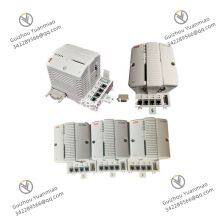
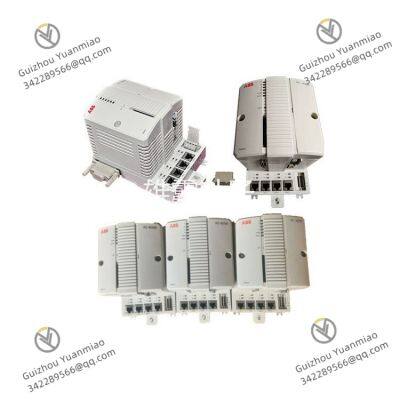
The ABB PM851K01 3BSE018168R1, as a processor unit kit, holds a pivotal position in ABB's industrial automation product portfolio. Leveraging ABB's deep technical expertise accumulated over years in the field of electrical and automation, this kit is designed to provide efficient and stable core processing capabilities for various industrial automation systems. Integrating key components such as the PM851 CPU and TP830 baseplate, it precisely executes various automation control programs through powerful computing performance, reliable data processing, and flexible communication connections, driving industrial processes to operate smoothly. Meanwhile, it can collaborate with peripheral input/output modules and field devices, being widely applied in industrial scenarios with strict requirements for automation, control precision, and system stability to assist enterprises in optimizing production processes and enhancing production efficiency and product quality.
Technical Parameters
| Parameter Category | Details |
|---|
| Product Model | PM851K01 3BSE018168R1 |
| Product Type | Processor Unit Kit |
| Brand | ABB |
| Processor | Adopts a high-performance processor with a clock frequency of 24MHz, adapted to real-time control scenarios to ensure efficient computing (specific model undisclosed) |
| Memory | Equipped with 12MB of RAM to ensure data storage and fast reading, meeting the operation requirements of complex programs |
| Power Supply Requirements | Supports a voltage range of 20-30VDC, with certain voltage adaptability, enabling stable operation in various industrial power supply environments |
| Communication Interfaces | Integrates 2 Ethernet interfaces for connecting to control networks to achieve high-speed data interaction; Has 2 RS232C interfaces, where COM3 has modem control signals, and COM4 is used for connecting configuration tools with electrical isolation function; Supports ModulBus electrical and optical fiber expansion interfaces, enabling convenient access to different types of communication links to meet diversified communication needs |
| Expansion Capability | Supports expansion of up to 12 field bus modules, flexibly adapting to automation system architectures of different scales to expand system functions |
| Task Processing | Supports parallel processing of up to 16 tasks, with a minimum task cycle of 1ms to achieve efficient multi-task scheduling; SOE (Sequence of Events) event resolution <1ms, precisely recording the occurrence sequence of key equipment events, facilitating fault troubleshooting and system analysis |
| Kit Composition | PM851 CPU: Core computing component; TP830 baseplate (width 115mm): Provides a physical installation and electrical connection foundation for each component; TB850 CEX-bus terminator: Used for bus signal termination processing; TB807 module bus terminator: Ensures stable module bus signals; Battery for memory backup (Part No.: 4943013-6): Prevents data loss; 4-pin power plug (Part No.: 3BSC840088R4): Enables convenient power supply connection |
| Dimensions | Affected by each component of the kit, the overall dimensions refer to the layout of each component, such as the dimensions of key components like the baseplate, which play an important role in actual installation layout |
| Weight | Approximately 2kg (total weight including each component) |
| Installation Method | Based on the TP830 baseplate, adopts a simple DIN rail installation method, using a unique sliding and locking mechanism for easy installation and disassembly |
| Operating Temperature Range | -20°C to +60°C, adaptable to temperature changes in various industrial environments |
| Storage Temperature Range | -40°C to +85°C, ensuring the storage reliability of the equipment in a non-operating state |

Functional FeaturesPowerful Computing and Real-Time Response
With a clock frequency of 24MHz and a high-performance processor, it can quickly process large amounts of complex data and precisely and timely execute various automation control programs. Whether it is the instant processing of equipment operation logic on production lines or the real-time regulation of rapidly changing process parameters, it can efficiently respond to ensure the stable and orderly progress of production processes, meeting the strict real-time control requirements of industrial sites.
Flexible Communication and Wide Adaptability
With diverse communication interfaces including Ethernet, RS232C, and ModulBus-related interfaces, it supports multiple industrial communication protocols. This allows it to easily communicate and connect with I/O modules, sensors, actuators, and other control systems from different manufacturers and types. Whether in traditional industrial networks or emerging smart factory architectures, this kit can seamlessly adapt to achieve efficient data transmission and collaborative operation between systems, greatly enhancing the overall compatibility and expandability of automation systems.
Reliable Data Storage and Protection
The equipped 12MB RAM can meet the data storage needs during the operation of complex automation programs, and the memory backup battery can prevent key data loss in case of abnormal situations such as equipment power failure, ensuring the integrity and continuity of data and providing a solid data guarantee for stable system operation.
Convenient Expansion and Modular Design
Supporting the expansion of 12 field bus modules, it allows users to flexibly expand system functions according to actual project needs and adapt to automation application scenarios of different scales. The modular design concept makes each component have clear functions and be easy to maintain and replace. For example, through the simple DIN rail installation method, faulty components can be quickly disassembled or installed, reducing maintenance costs and time.
Precise Event Recording and Analysis
The SOE event resolution is less than 1ms, which can precisely record the occurrence sequence of key events in the equipment operation process. This function plays an important role in the fault troubleshooting, operation status analysis, and process optimization of industrial automation systems, helping engineers quickly locate the root cause of problems and providing strong data support for continuous system improvement.
Application FieldsManufacturing Industry
In automated production lines such as automobile manufacturing and electronic assembly, it is used to control key links such as the motion trajectory of robotic arms, the start/stop and speed regulation of conveyor belts, and the operation of automated detection equipment. Through the precise execution of control commands and the monitoring of equipment status, it coordinates the efficient and automated operation of each production link, improves production efficiency and product quality consistency, and achieves efficient and precise production.
Energy and Power
In the control systems of energy facilities such as power plants and substations, it monitors and regulates key parameters such as generator operation status, grid voltage/current, and transformer oil temperature. Combined with protection devices, it realizes fault early warning and automatic handling, ensures stable power production and reliable supply, improves the safety and stability of power system operation, and ensures the continuity and reliability of energy supply.
Chemical Industry
In chemical production processes, it precisely controls process parameters such as reactor temperature, pressure, and flow, and adjusts equipment operation status in real time according to complex chemical reaction logic. It ensures that chemical reactions proceed under optimal conditions, improves product yield and quality, and at the same time ensures the safety of the production process, effectively avoiding the occurrence of dangerous working conditions and reducing the risks of chemical production.
Metallurgical Industry
In the smelting processes of iron and steel, non-ferrous metals, etc., it precisely controls key process points such as furnace temperature, material addition amount and speed, and the operation of steel rolling equipment. Through optimizing the smelting process, it improves the quality of metal products, reduces energy consumption and production costs, realizes the automation and intelligent upgrading of the metallurgical production process, and enhances the competitiveness of enterprises in the industry.
Process Control
Suitable for industries such as petroleum and natural gas extraction and transportation, pharmaceuticals, etc., it conducts real-time monitoring and precise control of various pipeline pressures, liquid levels, material ratios, etc. It provides reliable data for DCS (Distributed Control System), ensures the stable and efficient operation of complex process flows, meets the strict requirements of the industry for product quality and production safety, and helps enterprises achieve refined production management.