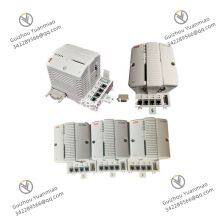
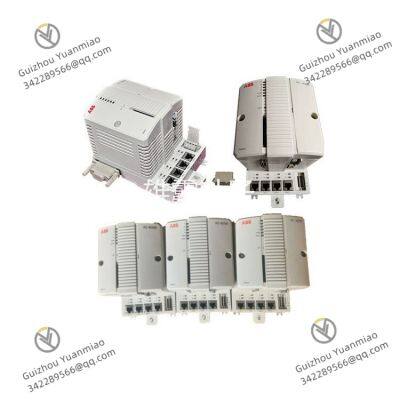
Descripción general
El ABB PM851K01 3BSE018168R1, como un kit de unidad de procesador, ocupa una posición fundamental en la cartera de productos de automatización industrial de ABB. Aprovechando la profunda experiencia técnica acumulada por ABB a lo largo de años en el campo de la electricidad y la automatización, este kit está diseñado para proporcionar capacidades de procesamiento central eficientes y estables para diversos sistemas de automatización industrial. Al integrar componentes clave como la CPU PM851 y la placa base TP830, ejecuta con precisión varios programas de control de automatización a través de un rendimiento de cálculo potente, un procesamiento de datos confiable y conexiones de comunicación flexibles, impulsando el funcionamiento fluido de los procesos industriales. Mientras tanto, puede colaborar con módulos de entrada/salida periféricos y dispositivos de campo, y se aplica ampliamente en escenarios industriales con requisitos estrictos en cuanto a automatización, precisión de control y estabilidad del sistema para ayudar a las empresas a optimizar los procesos de producción y mejorar la eficiencia productiva y la calidad de los productos.
Parámetros técnicos
| Categoría de parámetros | Detalles |
|---|
| Modelo del producto | PM851K01 3BSE018168R1 |
| Tipo de producto | Kit de unidad de procesador |
| Marca | ABB |
| Procesador | Adopta un procesador de alto rendimiento con una frecuencia de reloj de 24MHz, adaptado a escenarios de control en tiempo real para garantizar un cálculo eficiente (modelo específico no divulgado) |
| Memoria | Equipado con 12MB de RAM para garantizar el almacenamiento y la lectura rápida de datos, cumpliendo con los requisitos de funcionamiento de programas complejos |
| Requisitos de alimentación | Soporta un rango de voltaje de 20-30VDC, con cierta adaptabilidad de voltaje, lo que permite un funcionamiento estable en diversos entornos de alimentación industrial |
| Interfaces de comunicación | Integra 2 interfaces Ethernet para conectarse a redes de control y lograr una interacción de datos de alta velocidad; Tiene 2 interfaces RS232C, donde COM3 tiene señales de control de módem y COM4 se utiliza para conectar herramientas de configuración con función de aislamiento eléctrico; Soporta interfaces de expansión eléctrica y de fibra óptica ModulBus, lo que permite acceder convenientemente a diferentes tipos de enlaces de comunicación para satisfacer las necesidades de comunicación diversificadas |
| Capacidad de expansión | Soporta la expansión de hasta 12 módulos de bus de campo, adaptándose flexiblemente a las arquitecturas de sistemas de automatización de diferentes escalas para expandir las funciones del sistema |
| Procesamiento de tareas | Soporta el procesamiento paralelo de hasta 16 tareas, con un ciclo mínimo de tarea de 1ms para lograr una programación multitarea eficiente; Resolución de eventos SOE (Secuencia de eventos)<1ms, precisely recording the occurrence sequence of key equipment events, facilitating fault troubleshooting and system analysis |
| Kit Composition | PM851 CPU: Core computing component; TP830 baseplate (width 115mm): Provides a physical installation and electrical connection foundation for each component; TB850 CEX-bus terminator: Used for bus signal termination processing; TB807 module bus terminator: Ensures stable module bus signals; Battery for memory backup (Part No.: 4943013-6): Prevents data loss; 4-pin power plug (Part No.: 3BSC840088R4): Enables convenient power supply connection |
| Dimensions | Affected by each component of the kit, the overall dimensions refer to the layout of each component, such as the dimensions of key components like the baseplate, which play an important role in actual installation layout |
| Weight | Approximately 2kg (total weight including each component) |
| Installation Method | Based on the TP830 baseplate, adopts a simple DIN rail installation method, using a unique sliding and locking mechanism for easy installation and disassembly |
| Operating Temperature Range | -20°C to +60°C, adaptable to temperature changes in various industrial environments |
| Storage Temperature Range | -40°C to +85°C, ensuring the storage reliability of the equipment in a non-operating state |

Functional FeaturesPowerful Computing and Real-Time Response
With a clock frequency of 24MHz and a high-performance processor, it can quickly process large amounts of complex data and precisely and timely execute various automation control programs. Whether it is the instant processing of equipment operation logic on production lines or the real-time regulation of rapidly changing process parameters, it can efficiently respond to ensure the stable and orderly progress of production processes, meeting the strict real-time control requirements of industrial sites.
Flexible Communication and Wide Adaptability
With diverse communication interfaces including Ethernet, RS232C, and ModulBus-related interfaces, it supports multiple industrial communication protocols. This allows it to easily communicate and connect with I/O modules, sensors, actuators, and other control systems from different manufacturers and types. Whether in traditional industrial networks or emerging smart factory architectures, this kit can seamlessly adapt to achieve efficient data transmission and collaborative operation between systems, greatly enhancing the overall compatibility and expandability of automation systems.
Reliable Data Storage and Protection
The equipped 12MB RAM can meet the data storage needs during the operation of complex automation programs, and the memory backup battery can prevent key data loss in case of abnormal situations such as equipment power failure, ensuring the integrity and continuity of data and providing a solid data guarantee for stable system operation.
Convenient Expansion and Modular Design
Supporting the expansion of 12 field bus modules, it allows users to flexibly expand system functions according to actual project needs and adapt to automation application scenarios of different scales. The modular design concept makes each component have clear functions and be easy to maintain and replace. For example, through the simple DIN rail installation method, faulty components can be quickly disassembled or installed, reducing maintenance costs and time.
Precise Event Recording and Analysis
The SOE event resolution is less than 1ms, which can precisely record the occurrence sequence of key events in the equipment operation process. This function plays an important role in the fault troubleshooting, operation status analysis, and process optimization of industrial automation systems, helping engineers quickly locate the root cause of problems and providing strong data support for continuous system improvement.
Application FieldsManufacturing Industry
In automated production lines such as automobile manufacturing and electronic assembly, it is used to control key links such as the motion trajectory of robotic arms, the start/stop and speed regulation of conveyor belts, and the operation of automated detection equipment. Through the precise execution of control commands and the monitoring of equipment status, it coordinates the efficient and automated operation of each production link, improves production efficiency and product quality consistency, and achieves efficient and precise production.
Energy and Power
In the control systems of energy facilities such as power plants and substations, it monitors and regulates key parameters such as generator operation status, grid voltage/current, and transformer oil temperature. Combined with protection devices, it realizes fault early warning and automatic handling, ensures stable power production and reliable supply, improves the safety and stability of power system operation, and ensures the continuity and reliability of energy supply.
Chemical Industry
In chemical production processes, it precisely controls process parameters such as reactor temperature, pressure, and flow, and adjusts equipment operation status in real time according to complex chemical reaction logic. It ensures that chemical reactions proceed under optimal conditions, improves product yield and quality, and at the same time ensures the safety of the production process, effectively avoiding the occurrence of dangerous working conditions and reducing the risks of chemical production.
Metallurgical Industry
In the smelting processes of iron and steel, non-ferrous metals, etc., it precisely controls key process points such as furnace temperature, material addition amount and speed, and the operation of steel rolling equipment. Through optimizing the smelting process, it improves the quality of metal products, reduces energy consumption and production costs, realizes the automation and intelligent upgrading of the metallurgical production process, and enhances the competitiveness of enterprises in the industry.
Process Control
Suitable for industries such as petroleum and natural gas extraction and transportation, pharmaceuticals, etc., it conducts real-time monitoring and precise control of various pipeline pressures, liquid levels, material ratios, etc. It provides reliable data for DCS (Distributed Control System), ensures the stable and efficient operation of complex process flows, meets the strict requirements of the industry for product quality and production safety, and helps enterprises acLograr una gestión de producción refinada.