Material
Other, Global universal model
Condition
Other, Global universal model
Task
Other, Global universal model
Mathematical Model
Other, Global universal model
Signal
Other, Global universal model
Customized
Non-Customized
Structure
Other, Global universal model
Operating Temperature
-40°C to +70°C
Dimensions
100mm×80mm×20mm
Weight
1.2kg
ABB PFSK162 3BSE015088R1Overview
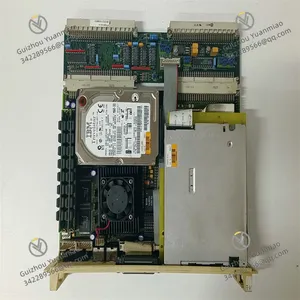
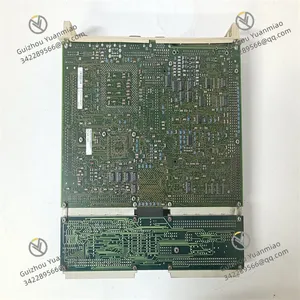
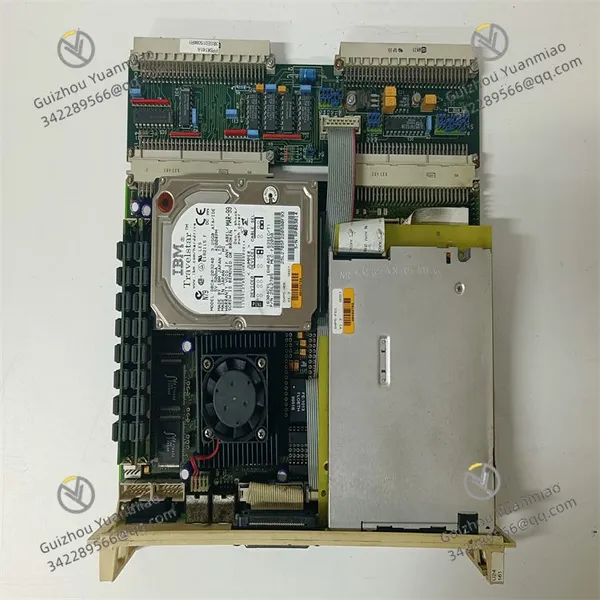
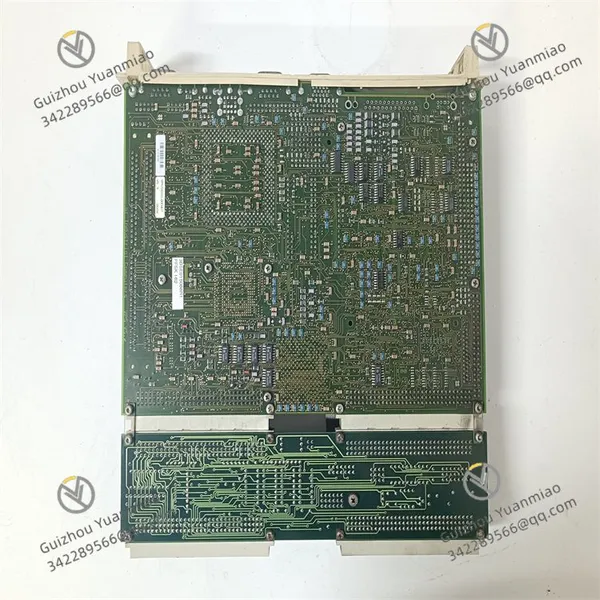
The ABB PFSK162 3BSE015088R1 is a critical signal conditioning and processing module in ABB's automation control system, serving as a "signal hub" in the entire automation framework. Its main responsibility is to accurately receive, finely adjust, and stably output various control signals—acting as a professional "signal signal manager" to ensure smooth signal transmission and efficient operation within the system. With its powerful functions, it perfectly adapts to multiple communication protocols, including common industrial protocols such as EtherCAT, PROFIBUS, and Modbus TCP. This enables it to function seamlessly in different automation system architectures, achieving seamless communication and collaborative work between devices. In the field of industrial automation, it is indispensable for controlling production equipment in factory workshops and monitoring complex process flows. In the energy industry, it is used for monitoring the stable operation of power systems and efficiently managing new energy generation facilities. In building automation scenarios, it helps achieve intelligent management of building equipment, enhancing the comfort and safety of living and working environments. It can be said to be a capable assistant in numerous scenarios with strict signal processing requirements.

Functional FeaturesMultifunctional Signal Processing Capability
Like an all-around player, it proficiently handles analog signals (e.g., standard analog quantities such as 0-20mA and 0-10V) for precise monitoring of industrial parameters like temperature, pressure, and flow. It also easily manages digital signals (e.g., switching quantities and pulse signals) to effectively control equipment start/stop and status switching. Additionally, it employs a range of powerful signal processing techniques:
Signal amplification enhances weak signals for easier system recognition.
Attenuation prevents excessive signals from damaging equipment.
Linearization processing ensures signal accuracy, making measurement data more reliable.
Filtering removes noise interference to purify signal quality.
Flexible Software Configuration
With the convenient function of software configuration, it gains the ability to "transform" like the Monkey King, flexibly adjusting its signal processing functions according to ever-changing application needs. Whether facing simple signal conversion tasks or complex multi-signal collaborative processing scenarios, users can quickly adapt the module to new work requirements through software settings—greatly improving equipment versatility and applicability while reducing time and cost consumption from hardware modifications.
Excellent Electrical Isolation Protection
It features outstanding electrical isolation performance, like a solid "firewall" between the control system and external interference. Through advanced technologies such as optocoupler or magnetic isolation, it effectively blocks external interference signals, protects the control system from voltage fluctuations, electromagnetic interference, and other adverse factors, ensures stable and reliable system operation, and significantly improves the anti-interference capability and safety of the entire automation system.
Convenient Modular Design
The modular design concept offers great convenience in installation and maintenance:
Installation is as simple as building blocks, allowing quick mounting on DIN rails.
For maintenance, modularity enables easy replacement or repair without large-scale system disassembly, reducing maintenance difficulty and time costs.
It supports hot-swapping, allowing safe module replacement during system operation to further enhance system availability.
Wide Communication Protocol Compatibility
Good compatibility with multiple industrial communication protocols makes it a "lubricant" for system integration. Whether in distributed control systems based on Profibus DP or industrial measurement and control networks using Modbus RTU, it smoothly interacts with other devices, achieves interconnection between different devices and systems, and lays a solid foundation for building complex and efficient automation control networks.
Technical Parameters
Input Signal Types: Supports analog signals (0-20mA, 0-10V, etc.) and digital signals.
Output Signal Types: Outputs standard analog signals (4-20mA, 0-10V, etc.) or digital signals.
Supported Communication Protocols: Compatible with Profibus DP, Modbus RTU, EtherCAT, Modbus TCP, and other industrial protocols.
Accuracy: Typical accuracy of ±0.1%, meeting most high-precision industrial control application requirements.
Isolation Feature: Uses electrical isolation (optocoupler or magnetic isolation) technology to effectively isolate interference.
Operating Temperature Range: -40°C to +70°C, with excellent environmental adaptability for stable operation in harsh industrial environments.
Installation Method: DIN rail mounting for convenience and efficiency.
Dimensions: 100mm×80mm×20mm, compact and space-saving.
Weight: Approximately 200g for easy installation and handling.
Protection Level: IP65, with good dustproof and waterproof performance for complex working environments.

Working Principle
In practical operation, the PFSK162 3BSE015088R1 first receives signals from various industrial field sensors or other devices through its input interface. For example, when a temperature sensor detects environmental temperature changes and outputs a corresponding 0-10V analog signal, this signal is quickly transmitted to the module's input port. The internal signal conditioning circuit immediately processes the signal:
Filtering: Uses filter circuits composed of capacitors, inductors, etc., to remove high-frequency noise and low-frequency interference, purifying the signal.
Amplification/Attenuation: Adjusts the signal according to preset gain values. For example, weak temperature signals are amplified by operational amplifiers to facilitate subsequent processing.
After conditioning, analog signals enter the analog-to-digital conversion unit to become digital signals, allowing the internal microprocessor to perform complex calculations and processing. The microprocessor performs linearization correction, data calibration, etc., based on pre-programmed logic and software configuration parameters. For instance, it uses specific algorithms to linearize non-linear signals from certain sensors, making them meet industrial control standards.
To transmit processed signals to other devices/systems, the module converts them into corresponding protocol formats. When communicating with a PLC using Profibus DP, it encapsulates signals into Profibus DP frame formats, adds address and parity information, and sends them via the communication interface. Throughout this process, the electrical isolation circuit separates internal and external circuits, preventing external interference from entering via power/signal lines and ensuring signal processing accuracy and system stability.