Material
Other, Global universal model
Condition
Other, Global universal model
Task
Other, Global universal model
Mathematical Model
Other, Global universal model
Signal
Other, Global universal model
Customized
Non-Customized
Structure
Other, Global universal model
Power Supply
24V DC ±20%
Output Frequency
50kHz
Dimensions
100mm×150mm×40mm
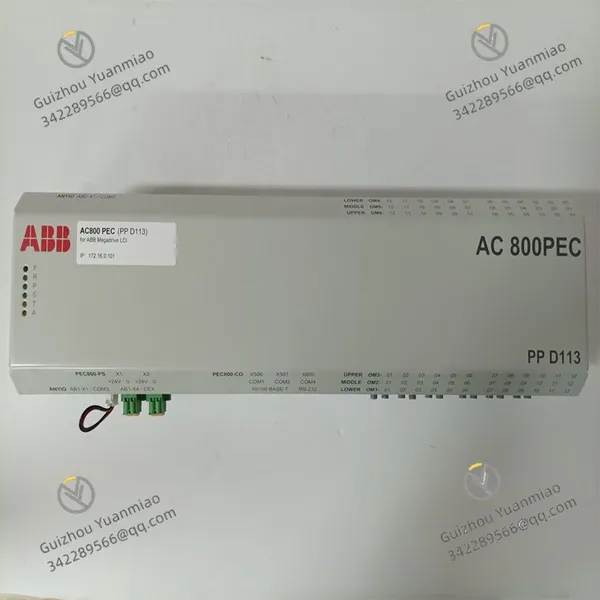
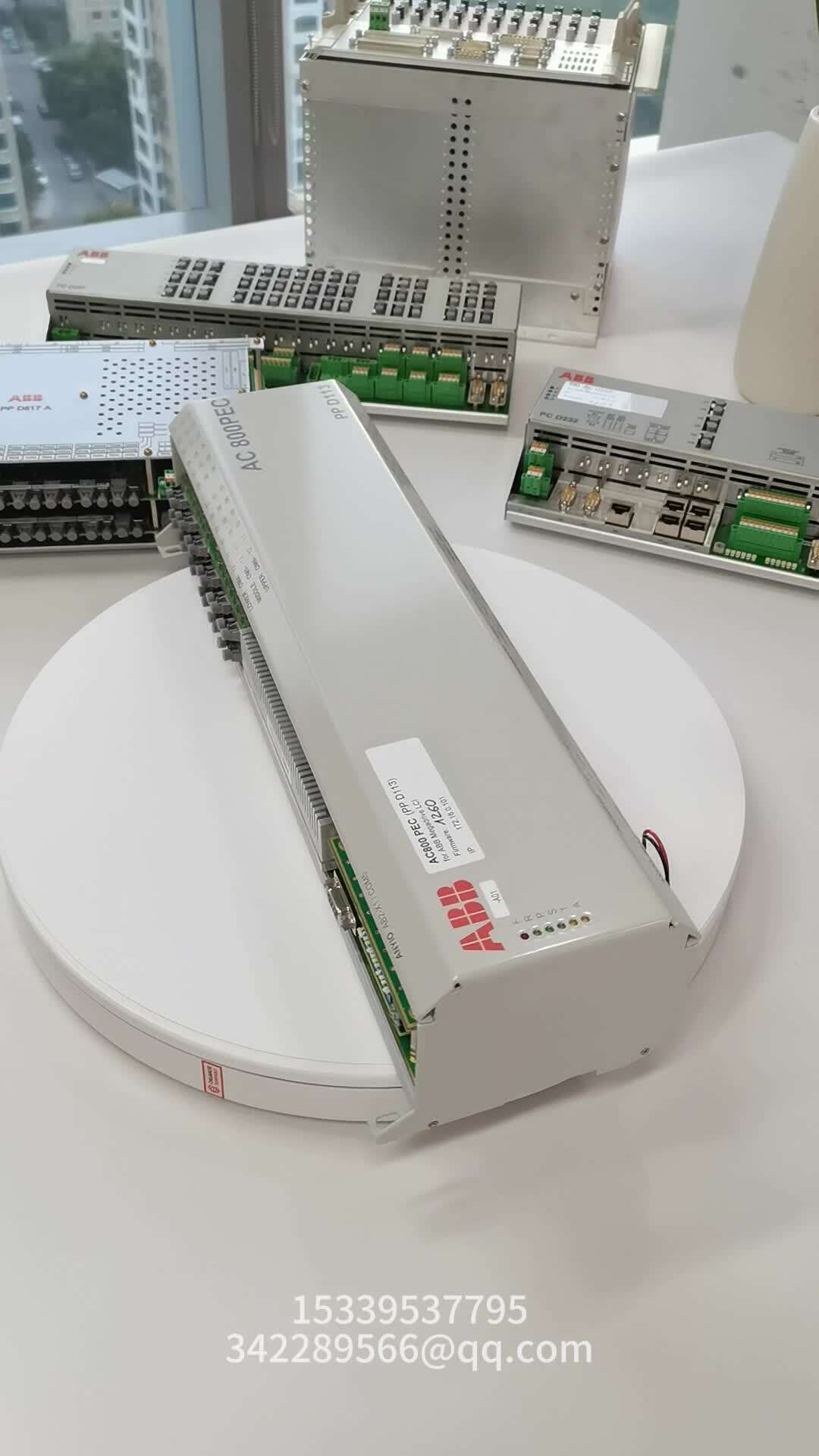
ABB 3BHE023584R2634 PPD113B03-26-100110Overview
The ABB 3BHE023584R2634 PPD113B03-26-100110 is an excellent-performance control and signal processing module in ABB's industrial automation product line, primarily applied to industrial automation control systems. With core advantages of high precision, high reliability, and flexible configuration capabilities, it effectively processes various analog and digital signals in complex industrial environments to achieve precise process control and equipment management. Whether in process industries such as energy power and petrochemicals, or in discrete manufacturing fields like machinery manufacturing and smart factories, this module ensures stable system operation and enhances industrial production efficiency and safety with its powerful performance.
Functional FeaturesHigh-Precision Signal Processing
It has excellent signal acquisition and processing capabilities, accurately capturing weak signals output by industrial field sensors. Through advanced internal processing technologies such as filtering, amplification, and linearization, it eliminates signal noise and improves signal quality. It supports input/output of multiple standard analog signals (e.g., 4-20mA, 0-10V) and digital signals (switching quantities, pulse signals), meeting signal interaction requirements of different types of industrial equipment.
Flexible Configurable Architecture
Adopting modular design and software programmable technology, users can flexibly set parameters such as input/output channels, signal processing algorithms, and communication protocols through dedicated configuration software according to actual application scenarios. It can quickly adapt to both simple single-point control and complex multi-device collaborative control tasks, greatly shortening the project development cycle and reducing system integration costs.
High Reliability and Stability
Following strict industrial-grade design standards and using high-quality components, it has excellent anti-electromagnetic interference, anti-vibration, and anti-shock capabilities. Built-in multiple protection mechanisms, including overvoltage protection, overcurrent protection, and short-circuit protection, effectively cope with the complex and changeable electrical environment of industrial sites. Meanwhile, it supports redundant design. Redundant modules deployed in critical systems can seamlessly switch when the main module fails, ensuring uninterrupted system operation.
Efficient Communication Capability
Integrating multiple industrial communication interfaces, it supports mainstream industrial communication protocols such as PROFIBUS, Modbus TCP, and EtherCAT, easily achieving interconnection with PLC, DCS systems, upper computer monitoring software, and other intelligent devices. With high-speed and stable data transmission capabilities, it can upload device operation status data in real time and receive remote control commands, facilitating centralized monitoring and remote management of industrial production.

Technical Parameters
Input Signal Types: Analog quantities (4-20mA, 0-10V, etc.), digital quantities (dry contacts, wet contacts)
Output Signal Types: Analog quantities (4-20mA, 0-10V, etc.), digital quantities (transistor output, relay output)
Communication Interfaces: PROFIBUS DP, Modbus TCP, EtherCAT, RS485
Sampling Precision: 16-bit resolution for analog input to ensure signal acquisition accuracy
Working Power Supply: 24V DC ±20%, supporting wide voltage input to adapt to voltage fluctuations in industrial fields
Operating Temperature Range: -40°C to +70°C, storage temperature range: -40°C to +85°C, stably working in extreme environments
Protection Level: IP20, suitable for installation in industrial control cabinets
Dimensions: Approximately 100mm×150mm×40mm (L×W×H), compact design saving installation space
Weight: Approximately 0.6kg
Working Principle
In the operation of an industrial automation system, the ABB 3BHE023584R2634 PPD113B03-26-100110 first receives analog signals from various sensors (temperature, pressure, flow, etc.) or digital signals from devices such as switches and relays through input interfaces. For analog signals, the internal front-end conditioning circuit filters out high-frequency noise and interference, then amplifies or attenuates the signals according to set gains to make their amplitudes meet the input requirements of the A/D converter. The A/D converter then converts analog signals into digital signals.
For digital signals, the input channels perform level conversion and isolation processing to ensure stable and reliable signals before transmitting them to the module's core processing unit. The core processing unit (usually a high-performance microprocessor or FPGA) analyzes, calculates, and judges digital signals according to control logic and algorithms preset by users through configuration software. For example, in a temperature control system, when the processing unit determines that the temperature value collected by the temperature sensor exceeds the preset upper limit, it sends control signals through the output channel.
Processed control signals, if analog, are converted into analog control signals by the D/A converter, amplified by the output drive circuit, and then transmitted to actuators such as regulating valves and frequency converters. If digital, they directly drive devices such as relays and contactors through digital output channels to achieve precise control of industrial equipment. Throughout the signal processing and control process, the module uploads device operation status data, fault information, etc., to the upper control system in real time through integrated communication interfaces according to selected industrial communication protocols, while receiving control commands and parameter configuration information from the upper computer, thus realizing closed-loop control and intelligent management of the industrial automation system.