Home > Electrical & Electronics > Electrical Control System > Schneider 140CRA21110 Ethernet Communication Module

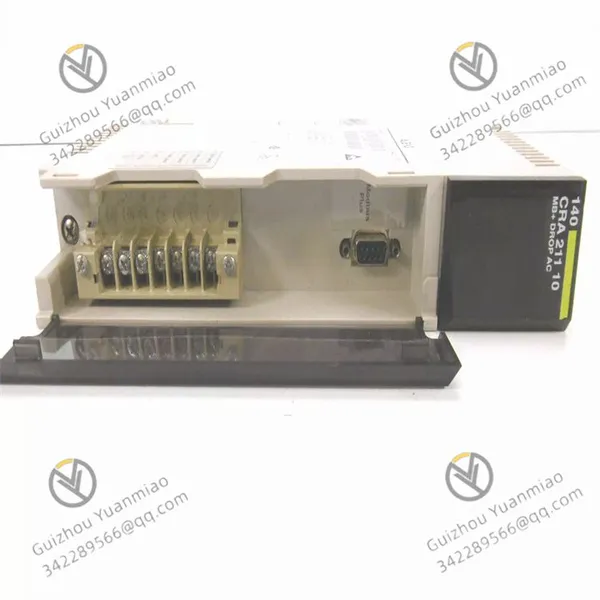
Schneider 140CRA21110 Ethernet Communication Module

Schneider 140CRA21110 Ethernet Communication Module photo-1
Schneider 140CRA21110 Ethernet Communication Module photo-2
Schneider 140CRA21110 Ethernet Communication Module photo-3
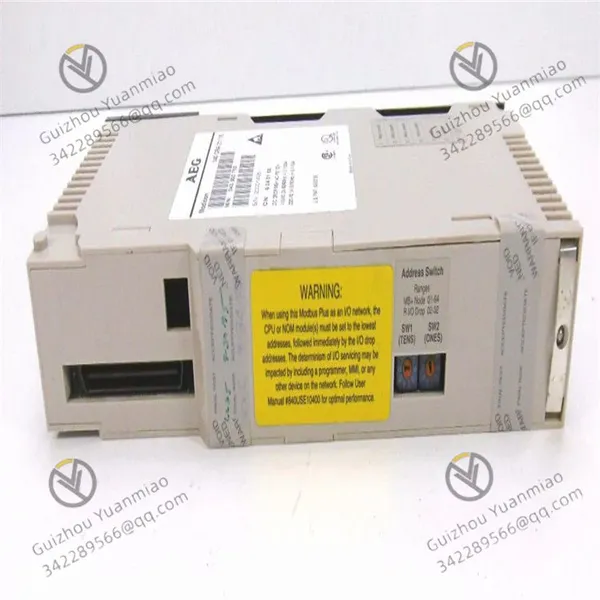
Schneider 140CRA21110 Ethernet Communication Module photo-4
Negotiable MOQ: 1 Piece (Price negotiable depending on order volume and customization)
Key Specifications
Get Latest Price
Material:
Other
Certification:
Other
Function:
Other
Payment & Shipping
Payment Methods:
Port of Shipment:
China
Delivery Detail:
Delivery time depends on order quantity.
Material Other
Certification Other
Function Other
Condition Other
Task Other
Mathematical Model Other
Signal Other
Customized Other
Structure Other

Schneider  140CRA21110  Ethernet communication module


Detailed Explanation of the Working Principle of Schneider 140CRA21110


I. Module Positioning and Core Functions

The 140CRA21110 is an Ethernet communication module of Schneider Electric's Modicon Quantum series. Its core function is to enable data interaction between PLC and Ethernet devices, supporting industrial communication protocols, network redundancy, and hot standby functions to ensure the efficient and stable operation of industrial automation systems.

140CRA21110—04

II. Hardware Architecture and Key ComponentsCommunication Processing Unit (CPU)

  • Responsible for parsing Ethernet protocols (such as Modbus TCP, EtherNet/IP, etc.), and handling data encapsulation and decapsulation.

  • Supports high-speed data exchange with the Quantum PLC main processor, connected via a backplane bus (such as PCI or a dedicated industrial bus).

Network Interface Module

  • Contains 1 or multiple Ethernet ports (possibly supporting redundant configurations), supporting RJ45 interfaces or optical fiber interfaces (depending on the model).

  • The redundant port design enables network link backup, automatically switching to the standby link when the main link fails.

Power Management Unit

  • The input voltage supports 115/230VAC (wide-range power supply design), converting to the 5.1V DC power required inside the module.

  • Equipped with power filtering and voltage stabilization functions to resist voltage fluctuations in industrial environments.

Diagnostic and Status Indication Unit

  • Displays the module's operating status (such as power supply, communication connection, fault alarm, etc.) through LED indicators.

  • Integrates a hardware diagnostic circuit to real-time monitor port communication quality, temperature, and internal component status.

  • 140CRA21110—03

III. Communication Working PrincipleProtocol Processing Flow

  • Data Transmission: The PLC main processor transmits data to the module via the backplane bus. The module encapsulates the data into Ethernet frames according to protocols like Modbus TCP and sends them to the network through physical ports.

  • Data Reception: The module receives Ethernet frames from the network, extracts valid data after protocol parsing, and transmits it to the PLC main processor or distributed I/O devices via the backplane bus.

Network Communication Modes

  • Client/Server Mode: As a server, the module responds to requests from clients (such as HMI, host computers); as a client, it actively accesses data from other devices.

  • Multi-Master Communication: Supports simultaneous communication with multiple Ethernet devices, distinguishing data interactions of different devices through an address mapping table.

Redundancy Mechanisms

  • Hot Standby Function: When the main module fails, the standby module quickly takes over communication through hardware logic, with a switching time typically in milliseconds to ensure uninterrupted system operation.

  • Network Redundancy: Redundant ports support ring topology or dual-link structures to avoid network interruptions caused by single-point failures (such as using Schneider's Unity redundancy protocol).


IV. Interaction Logic with PLC and External DevicesCollaboration with Quantum PLC

  • Configure module parameters (such as IP address, subnet mask, communication protocol) through Unity Pro programming software, and define data mapping tables (the correspondence between PLC registers and Ethernet data).

  • The module real-time reads data from PLC internal registers (such as %MW, %Q) and writes data received from the network into PLC registers to achieve bidirectional data synchronization.

Interfaces with External Devices

  • HMI Devices: Transmit real-time data (such as device status, process parameters) via the Modbus TCP protocol, supporting remote monitoring and control of the PLC by the HMI.

  • Frequency Inverters/Servo Controllers: Send control commands (such as start/stop, speed setting) via Ethernet and receive feedback on device operating status (such as current, rotation speed).

  • Third-Party Systems: Compatible with industrial communication standards such as OPC UA, and can be integrated with SCADA systems and MES systems to achieve upper-layer management of production data.

  • 140CRA21110—02

V. Diagnostic and Fault Handling MechanismsReal-Time Monitoring Logic

  • The module continuously monitors network signal strength, data transmission error rates (such as CRC check errors), and port connection status.

  • When communication anomalies (such as link disconnection, protocol parsing failure) are detected, it alarms via LEDs and sends fault codes to the PLC.

Fault Response Process

  • If the main module fails, the hot standby module automatically takes over communication and notifies the PLC to switch the data interaction path through hardware interrupts.

  • Diagnostic data can be read via Unity Pro software, supporting fault tracing (such as locating specific port or protocol layer errors).


VI. Industrial Environment Adaptability DesignElectrical Compatibility

  • Complies with safety standards such as UL 508 and CSA, resists electromagnetic interference (EMI) and radio-frequency interference (RFI), and is suitable for strong electromagnetic environments in industrial fields.

  • Wide-temperature design (operating temperature 0–60°C, storage temperature –40–85°C) adapts to high or low-temperature scenarios.

Mechanical and Protection Design

  • Standard rack installation (such as 19-inch rails), with dimensions following Modicon Quantum series specifications for easy system integration.

  • Protection class IP20 prevents dust intrusion, suitable for indoor industrial environments.


VII. Working Process in Typical Application Scenarios

Take the welding station of an automotive production line as an example:


  1. The module connects welding robots, current sensors, and HMI panels via Ethernet.

  2. The PLC main processor sends welding program parameters to the robot through the module while receiving real-time current data collected by the sensors.

  3. When the welding current is abnormal, the module transmits the data to the HMI for alarm and triggers the PLC interrupt logic to pause the welding process.

  4. If the main link of the module fails, the redundant port automatically switches to ensure that welding process data is not lost and production downtime is avoided.


VIII. Technical Differences from Similar Products

  • Hot Standby Mechanism: Compared with non-redundant modules, the hardware-level hot standby of the 140CRA21110 requires no software intervention and has a faster switching speed, suitable for high-reliability scenarios (such as continuous production lines).

  • Protocol Compatibility: In addition to Modbus TCP, it supports Schneider's exclusive protocols (such as the Unity communication protocol), enabling higher integration efficiency with Quantum series PLCs.


Product Tags: 140CRA21110

Send Inquiry to This Supplier

* Message
0/5000

Want the best price? Post an RFQ now!
Verified Business License
Business Type
Trading Company
Year Established
2014
Factory Size
1,000-3,000 square meters
Product Certifications
SA8000