Home > Electrical & Electronics > Electric Motor > AC Motor > Foxboro P0917MF Control Processor
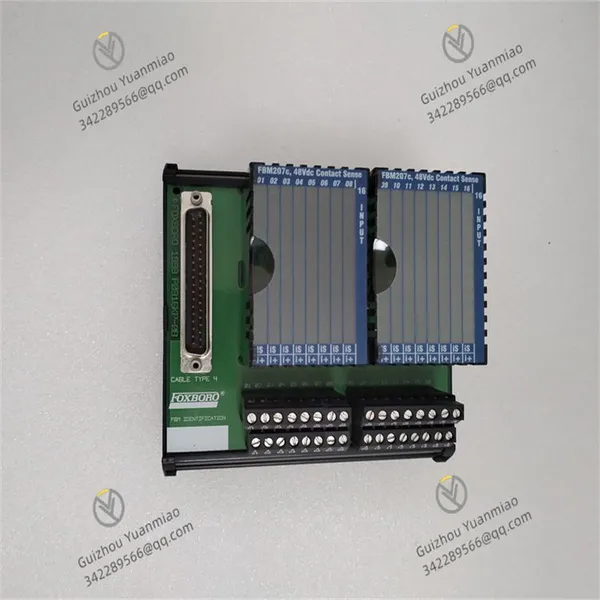
Foxboro P0917MF Control Processor
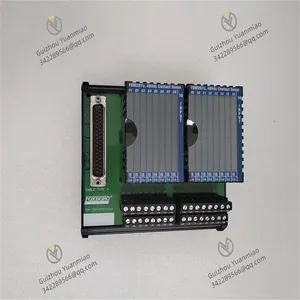
Foxboro P0917MF Control Processor photo-1
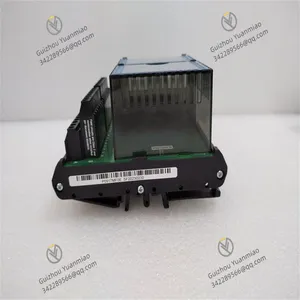
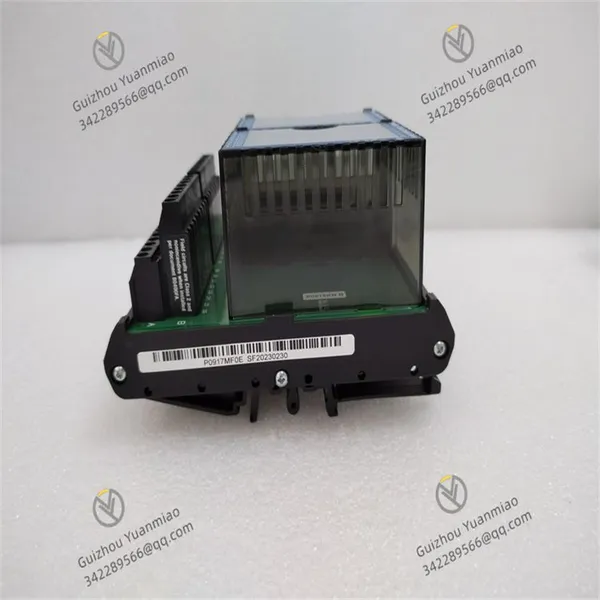
Foxboro P0917MF Control Processor photo-2
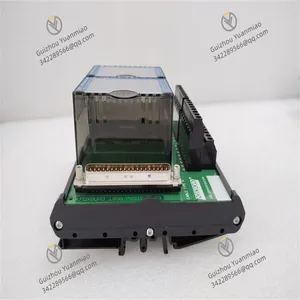
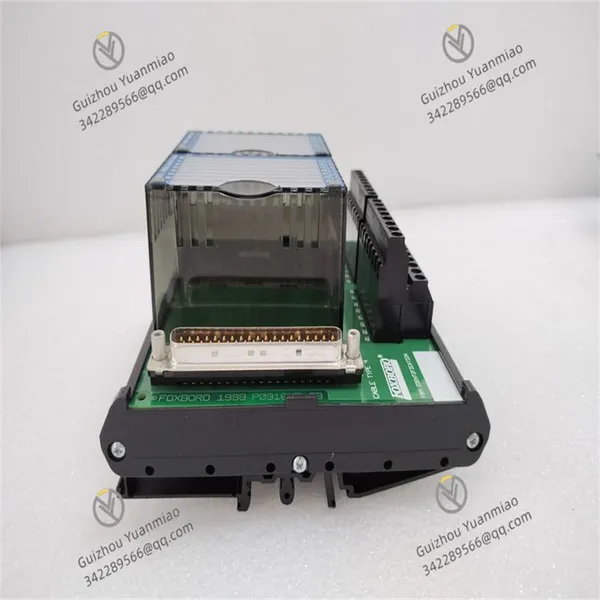
Foxboro P0917MF Control Processor photo-3
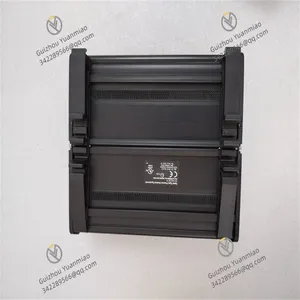
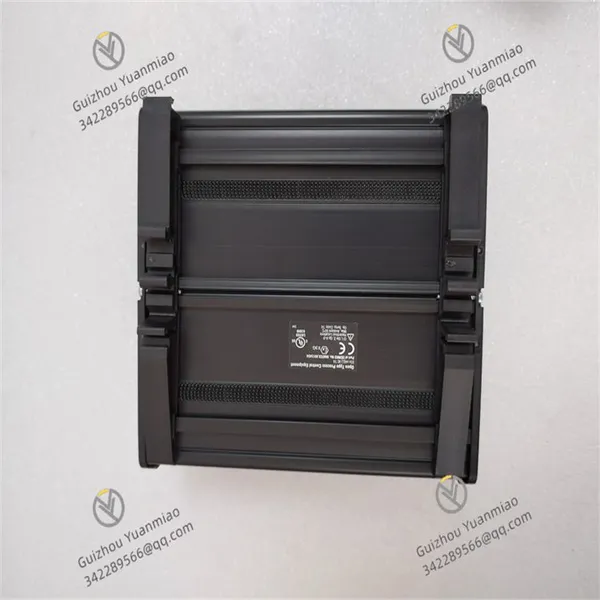
Foxboro P0917MF Control Processor photo-4
Negotiable MOQ: 1 Piece (Price negotiable depending on order volume and customization)
Key Specifications
Get Latest Price
Application:
Other, Global universal model
Brand:
Other, FOXBORO
Number of Stator:
Other, Global universal model

Payment & Shipping
Payment Methods:
Port of Shipment:
China
Delivery Detail:
Delivery time depends on order quantity.
Application Other, Global universal model
Brand Other, FOXBORO
Number of Stator Other, Global universal model
Number of Poles Other, Global universal model
Casing Protection Other, Global universal model
Starting Mode Other, Global universal model
Speed Other, Global universal model

Foxboro P0917MF


Typically used in Distributed Control Systems (DCS) or Programmable Logic Controllers (PLC). Its core functions are:
  • Signal Conversion and Processing: Receives analog or digital signals from sensors and transmitters, performs isolation, amplification, filtering, etc., and converts them into standard signals recognizable by the control system.

  • Data Transmission and Communication: Interacts with the host computer (such as DCS system) through specific communication protocols to achieve data upload and control command reception.

Functional Purpose
As a control processor module in DCS (Distributed Control System), it is used to realize the control and management of industrial production processes. It can receive signals from field devices, perform data processing and calculations, output control signals according to preset control strategies, and adjust various parameters in the production process (such as temperature, pressure, flow rate, etc.) to ensure the stable operation of the production process and the stability of product quality.
Application Fields
  • Power Industry: Applicable to automation control in power plants, such as control and monitoring of boilers, steam turbines, generators and other equipment.

  • Oil and Gas Industry: Controls and optimizes various technological processes in oil extraction, refining, and natural gas processing.

  • Chemical Industry: Used for reactor control, distillation column control, material conveying control, etc., in chemical production processes.

  • Other Industries: Widely applied in metallurgy, glass, textile, water treatment, and other industries to realize automated control of various industrial production processes.

Performance Characteristics
  • High reliability, adopting a fully enclosed structure design to adapt to harsh industrial environments such as power plants and chemical plants. It has dust-proof and waterproof characteristics, which can extend service life.

  • Supports redundant Node Bus (NODEBUS) and Fieldbus (FIELDBUS) to ensure the system operates stably during failures.

Input Range
  • Analog quantities: 0-10V, 4-20mA, PT100 (RTD), Type K thermocouple (TC), etc.

Accuracy
  • ±0.1% FS (Full Scale), temperature drift ≤50ppm/℃.

Communication Rate
  • Modbus RTU up to 115.2kbps.

Operating Temperature
  • -20℃~+60℃ (industrial grade).

Appearance and Specifications
  • Weight: Approximately 0.5kg.

Electrical Parameters
  • Operating voltage: Generally 220VDC, operating current: 60.

P0917MF (4)

P0917MF (2)

P0917MF (3)

Working Principle of Foxboro P0917MF1. Signal Input Stage: Multi-type Signal Access and Preprocessing
  • Input Signal Types:

    • Analog quantities: Voltage (e.g., 0-10V, 1-5V), current (e.g., 4-20mA), Resistance Temperature Detector (RTD), Thermocouple (TC), etc.

    • Digital quantities: Switch signals (ON/OFF), pulse signals, etc.

  • Preprocessing Mechanisms:

    • Signal Isolation: Achieves electrical isolation between inputs and internal circuits through optocouplers, transformers, etc., to prevent external interference or overvoltage damage to the module (e.g., isolation voltage ≥500V DC).

    • Filtering and Amplification: Uses RC filter circuits to eliminate high-frequency noise, and operational amplifiers (such as OP series chips) to amplify weak signals, ensuring signal stability.

2. Analog-to-Digital Conversion (A/D Conversion): Digitalization of Analog Signals

For analog inputs, the module converts continuous analog signals into discrete digital signals through an A/D converter (ADC).

  • Key Parameters:

    • Resolution: Such as 12-bit, 16-bit ADC, determining conversion accuracy (16-bit ADC accuracy up to 1/65536).

    • Sampling rate: Sampling times per second (e.g., 100Hz) to ensure real-time capture of dynamic signals.

3. Signal Processing and Logical Operations
  • Internal Processing Unit: Processes digital signals through a microprocessor (MCU) or application-specific integrated circuit (ASIC):

    • Linearization correction: Performs linearization calculations on the outputs of nonlinear sensors (such as thermocouples) to restore real physical quantities (such as temperature, pressure).

    • Range conversion: Maps digital values to engineering units (e.g., corresponding ADC output 0-4095 to 0-100℃).

    • Fault diagnosis: Real-time monitoring of signal anomalies (such as out-of-range, open circuit), triggering alarm mechanisms.

4. Communication and Data Output
  • Output Interfaces and Protocols:

    • Analog output: Converts digital signals into standard analog quantities (such as 4-20mA, 0-10V) through a digital-to-analog converter (DAC) to drive actuators.

    • Digital output: Switch signals (such as relay contacts, transistor outputs) to control valves, motors, and other equipment.

    • Communication interfaces: Supports protocols such as RS485, Modbus RTU, HART, etc., to interact with the host computer (e.g., send measured values, receive control commands).

  • Communication Process Example:

    1. The host computer sends a read command (such as a Modbus read register command).

    2. After receiving the command, the module packages the processed signal data (such as temperature values) and returns it.

    3. The host computer parses the data for display or closed-loop control.

5. Power Supply and Protection Mechanisms
  • Power Input: Usually powered by 24V DC, and internally generates voltages required by each unit (such as 5V, 3.3V) through a DC-DC converter.

  • Protection Functions:

    • Overvoltage protection: TVS diodes suppress surge voltages (such as 60V transient protection).

    • Overcurrent protection: PTC thermistors limit abnormal currents to prevent chip burnout.

    • Reverse connection protection: Schottky diodes prevent circuit damage caused by reverse power polarity.

Typical Application Scenarios and Working Modes1. Data Acquisition in Industrial Process Control
  • Scenario: Temperature monitoring of chemical reactors, pipeline pressure collection.

  • Working Process:
    Millivolt signal output by thermocouple → module input terminal → amplification and cold junction compensation → A/D conversion → temperature value calculation → upload to DCS via Modbus → DCS adjusts heating power based on temperature values.

2. Signal Conditioning in Closed-Loop Control Systems
  • Scenario: Frequency converter speed control (4-20mA signal closed loop).

  • Working Process:
    Host computer sends speed setting value (digital quantity) → module DAC converts to 4-20mA signal → drives frequency converter → frequency converter feedbacks actual speed (4-20mA) → module receives and compares with the setting value → outputs deviation signal to the host computer to adjust the control strategy.

Technical Differences from Similar Products (Compared with P0916XT)
Comparison DimensionP0916XTP0917MF
Core FunctionsAnalog signal digitization (focus on input conversion)Signal processing and communication (supports two-way data interaction)
Input TypesMainly current/voltage (e.g., 100-400A current)Compatible with more sensors (RTD, TC, switch quantities)
Communication CapabilitySupports RS485 (mainly unidirectional transmission)Multi-protocol support (Modbus, HART, two-way communication)
Application ScenariosLarge current signal monitoring (e.g., motor current collection)Complex process parameter collection and control (temperature, pressure)
Product Tags: P0917MF

Send Inquiry to This Supplier

Message
0/5000
Want the best price? Post an RFQ now!
1Yr
Business Type
Trading Company
Year Established
2014
Factory Size
1,000-3,000 square meters
Product Certifications
SA8000

Recommended Categories

Explore top categories and find suppliers for your specific needs