Contact Platform Support
 Help Center
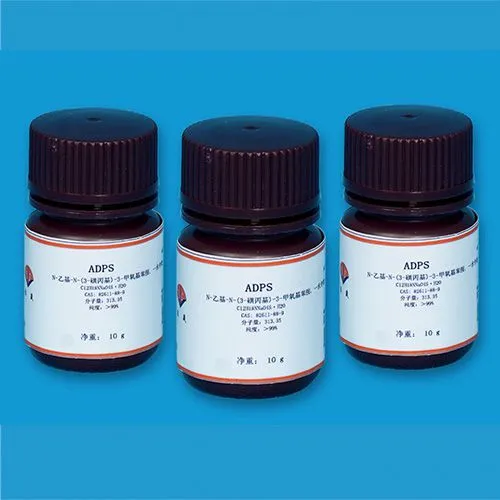
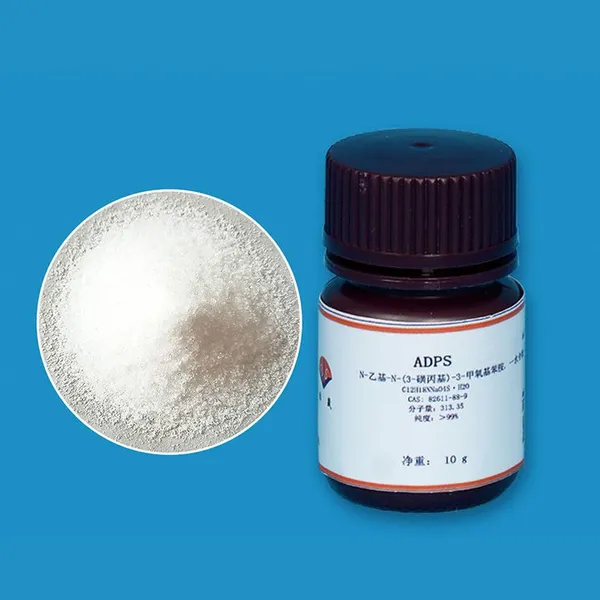
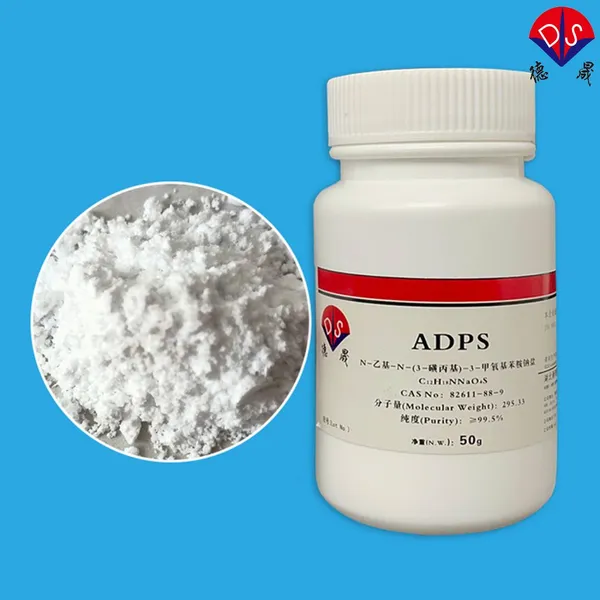
Introduction to Chromogenic Substrate ADPS 82611-88-9



Related Products
-
 Application of ALPS 82611-85-6 Chromogenic Substrate in Nucleic Acid DetectionUS$ 15 - 28MOQ: 100 Grams
 -
Preparation and Use of New Trinder's Reagent DAOS 83777-30-4 SolutionUS$ 30 - 50MOQ: 100 Grams
-
The Multifaceted Applications of HDAOS 82692-88-4 as a Chromogenic SubstrateUS$ 20 - 35MOQ: 100 Grams
-
Application of MADB 209518-16-1 in Serum Muscle Enzyme Detection KitUS$ 30 - 45MOQ: 100 Grams
-
Application of MAOS 82692-97-5 in In Vitro Diagnostic KitUS$ 35 - 50MOQ: 100 Grams
The Trinder reaction was proposed in the early years and quickly put into use. Its main mechanism of action is that the tested substance produces H2O2 through enzymatic action, which changes the chromogenic substrate in the presence of 4-AAP and peroxidase. Although phenol was initially used as a coloring agent, with the improvement of the reagent, it was found that the use of Trinder's new reagent could rapidly improve the reaction sensitivity, and it was vigorously promoted and popularized. There are various types of Trinder's reagents, and ADPS is one of them. As a highly water-soluble derivative of aniline, it is widely used in various biochemical kits and diagnostic tests. So below, we will introduce it in detail to everyone.
1、 Introduction to ADPS
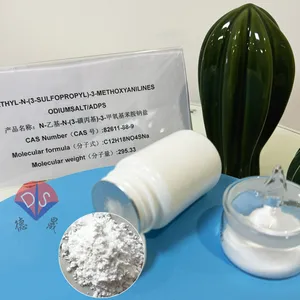
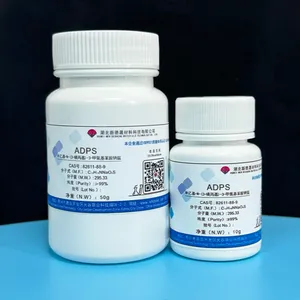
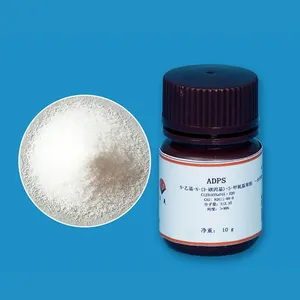
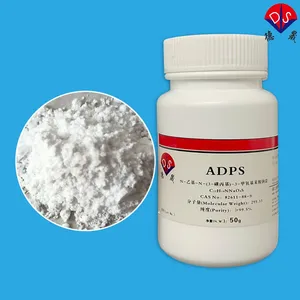
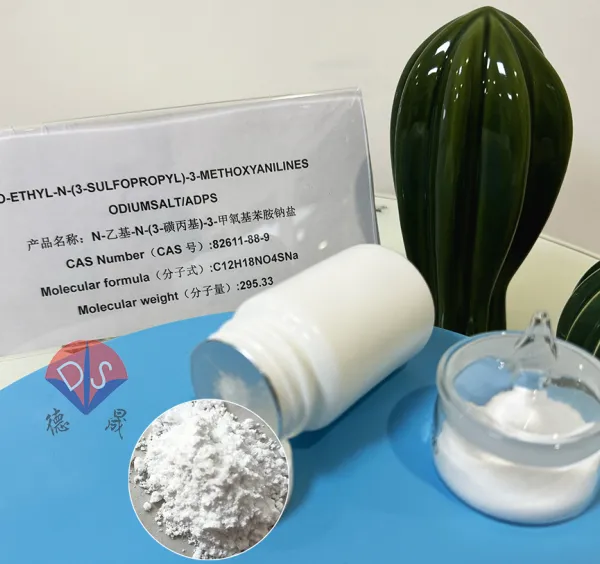
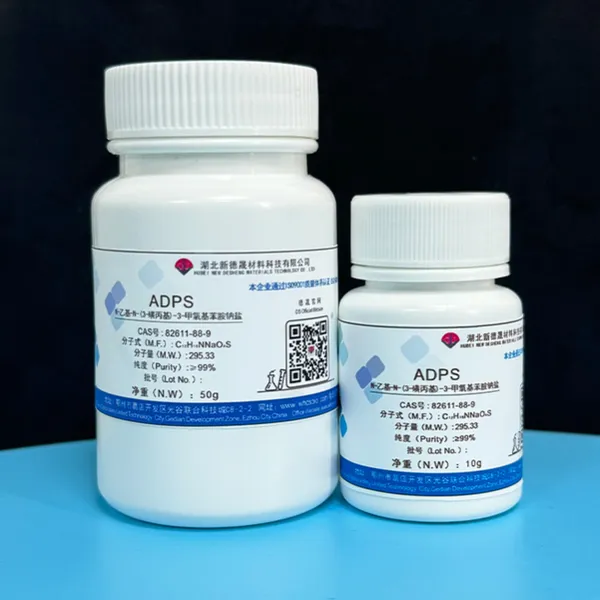
ADPS, also known as N-ethyl-N - (3-sulfopropyl) -3-methoxyaniline sodium dihydrate, is a commonly used chromogenic substrate for horseradish peroxidase HRP or peroxidase POD. Its appearance is pure white crystal powder with a purity of over 99%, and the pH range is between 5.5-9.5. The absorption wavelength can reach 540nm, and it has obvious advantages of high water solubility and high color sensitivity.
2、 ADPS color development principle
The main principle of its action is that under the catalytic action of POD, hydrogen peroxide couples with ADPS and 4AA to form quinone imine compounds, which leads to an increase in absorbance at 500nm. Just like blood glucose detection, when blood glucose, oxygen, and water are catalyzed by POD, gluconic acid and hydrogen peroxide are generated, and the generated hydrogen peroxide can be measured using the ADPS coupled oxidation system. At this point, the degree of increase in absorbance is directly proportional to blood glucose, and the increase in absorbance can be measured using the spectral breadth method to determine the level of blood glucose.
3、 ADPS application
Due to its high sensitivity, safety, and stability, ADPS is commonly used in biochemical test kits to detect indicators such as creatinine, glucose, uric acid, or cholesterol, further improving the accuracy of the test results. In addition, major biochemical reagent kit manufacturers or testing instrument companies using peroxidase methods are currently purchasing and using ADPS in large quantities, and its application fields are very extensive.
Desheng is a manufacturer of the new Trinder's reagents, currently producing a wide range of product types, including ADPS, which can be used in various fields and can also be customized according to the company's own usage. At the same time, the company is equipped with its own R&D team, which can provide a series of technical services for subsequent products. If you have any relevant needs, please click on the website or call to inquire about details!

Send Inquiry to This Supplier


You May Also Like
-
The Role of Chromogenic Substrate TODB 127544-88-1 in Triglyceride DetectionUS$ 30 - 50MOQ: 100 Grams
-
Advantages and Characteristics of the Chromogenic Substrate DA64 (115871-19-7)US$ 480 - 500MOQ: 100 Grams
-
Performance Characteristics and Usage Instructions of Color Developing Substrate DA67 115871-18-6US$ 480 - 500MOQ: 100 Grams
-
Advantages of High TOOS Molar AbsorbanceUS$ 1.5 - 2MOQ: 100 Grams
-
How to Obtain High-quality TOPS Powder as a Chromogenic SubstrateUS$ 1.6 - 2.8MOQ: 100 Grams
-
Stability and Storage Conditions of ADOS Products as Chromogenic SubstratesUS$ 15 - 22MOQ: 100 Grams
-
The Simplicity of ADPS Colorimetric Reagent in Experimental OperationUS$ 8 - 13MOQ: 100 Grams
-
Packaging Requirements for Exporting Color Developing Substrate ALPS Powder in Small BatchesUS$ 15 - 28MOQ: 100 Grams
-
What Items Can DAOS, a Chromogenic Substrate, be Used to Detect?US$ 30 - 50MOQ: 100 Grams
-
Basic Information of the New Trinder's Reagent HDAOS Powder ReagentUS$ 20 - 35MOQ: 100 Grams