Contact Platform Support
 Help Center
Tris and Glutamate Dehydrogenase Work Together on Homocysteine Assay Kit


Related Products
-
 The Relationship Between Purine Nucleoside Phosphorylase and Nucleic Acid Synthesis and DecompositionUS$ 10MOQ: 1 Milligram
 -
Introduction of Desheng on Alpha GlucosidaseUS$ 10MOQ: 1 Milligram
-
Glucose Dehydrogenase: a Key Enzyme in IVD in Vitro Diagnostic ReagentsUS$ 10MOQ: 1 Milligram
-
Detailed Explanation of Storage Methods for Adenosine Deaminase (ADA)US$ 10MOQ: 1 Milligram
-
Biological Functions and Applications of Malate DehydrogenaseUS$ 10MOQ: 1 Milligram
In the field of modern medical testing, homocysteine (HCY) is an important biomarker, and its concentration changes are closely related to various diseases, such as cardiovascular disease, neurological disease, and certain metabolic diseases. As the core tool of this detection process, the performance and accuracy of homocysteine assay kit are affected by various factors, among which Tris buffer and glutamate dehydrogenase (GLDH) play a particularly critical role.
Basic composition and principle of homocysteine assay kit
The homocysteine assay kit usually consists of reagent R1 and reagent R2, and some kits may also include pre reagent R3. These reagents convert HCY in the sample into quantifiable products through specific chemical reaction systems, thereby achieving accurate determination of HCY concentration.
1. Composition and Function of Reagent R1
Tris buffer: Tris (trihydroxymethylaminomethane) is a commonly used buffer that can maintain the pH stability of the reaction system. In the determination of homocysteine, a stable pH value is the key to ensuring the normal progress of enzymatic reactions.
2. Other components: Depending on the kit, reagent R1 may also contain auxiliary components such as S-adenosylmethionine (SAM), NADH (nicotinamide adenine dinucleotide reduction), tris (2-carboxyethyl) phosphine hydrogen chloride (TCEP), and α - ketoglutarate (α - KG), which collectively participate in the conversion process of HCY.
3. Composition and Function of Reagent R2
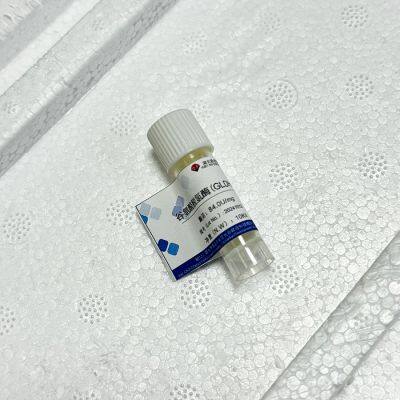
(1) Glutamate dehydrogenase (GLDH): GLDH is one of the key enzymes in homocysteine determination. It catalyzes the oxidative decarboxylation of ammonia, converting glutamate to alpha ketoglutarate and releasing ammonia. In this process, NADH is oxidized to NAD+, and its change is proportional to the concentration of HCY in the sample, thereby achieving quantitative detection of HCY.
(2) Other enzymes: Reagent R2 may also include SAH hydrolase (SAHase), adenosine deaminase (ADA), HCY methyltransferase (HMTase), etc., which work together to promote HCY conversion and product generation.
The mechanism of action of Tris buffer
1. Maintaining pH stability: Tris buffer has a wide pH buffering range and can resist pH fluctuations caused by external factors, ensuring that the reaction system proceeds under suitable pH conditions, which is beneficial for the rate of enzymatic reactions and the generation of products.
2. Promoting enzyme activity: Enzyme activity is significantly affected by pH value. Tris buffer helps maintain the catalytic activity of enzymes by maintaining a suitable pH environment, thereby improving the accuracy and sensitivity of detection.
3. Reduce interference factors: In complex biological samples, there may be multiple interference factors that affect HCY determination. Tris buffer can reduce the impact of these interfering factors on the measurement results and improve the reliability of the detection through its buffering effect.
The mechanism of action of glutamate dehydrogenase (GLDH)
Glutamate dehydrogenase plays a central role in homocysteine determination. The catalytic mechanism is as follows:
1. Catalytic oxidation decarboxylation of ammonia: GLDH can catalyze the oxidation decarboxylation of glutamic acid, producing α - ketoglutaric acid and ammonia. During this process, NADH acts as an electron acceptor and is oxidized to NAD+, with a change proportional to the amount of ammonia produced.
2. Quantitative detection of HCY: In HCY determination, HCY in the sample is first converted to free form, and then ammonia is generated through a series of enzymatic reactions. This step of GLDH catalysis is the key to connecting the concentration of HCY with the change in NADH. By measuring the change in NADH, the concentration of HCY in the sample can be indirectly calculated.
3. Improve the sensitivity and accuracy of detection: The catalytic activity of GLDH has high specificity and sensitivity, which can accurately reflect the changes in HCY content in the sample. Meanwhile, as the change in NADH is directly proportional to the concentration of HCY, the catalytic effect of GLDH also makes the detection highly sensitive.
Tris buffer and glutamate dehydrogenase play important roles in homocysteine assay kits. The two work together in the determination process of HCY, maintaining the stability of the reaction system and promoting HCY conversion, achieving accurate and rapid detection of HCY concentration. As a research and development manufacturer of Tris buffer and glutamate dehydrogenase raw materials, Hubei Xindesheng's products have been verified and controlled by technical personnel at all levels, with high quality and good stability. And customized services are available. If you have purchasing intentions, please feel free to click on the website to inquire about details at any time!

Send Inquiry to This Supplier


You May Also Like
-
Application and pH Stability of Acetyl CoA OxidaseUS$ 10MOQ: 1 Milligram
-
The Price of TRIS-HCL 1185-53-1 Produced by Desheng Has Been Lowered. Please Feel Free to Consult and PurchaseUS$ 13.6 - 16.8MOQ: 100 Kilograms
-
Why Should we Pay Attention to Solubility When Purchasing Biological Buffer TRIS 77-86-1?US$ 8.6 - 13.8MOQ: 100 Kilograms
-
The Effect of Purity of BICINE Powder 150-25-4 as a Biological Buffer on the Performance of Buffer SolutionsUS$ 18.8 - 26.8MOQ: 100 Kilograms
-
Introduction to the Transportation Packaging of CAPS Powder 1135-40-6, a Biological Buffering AgentUS$ 22.8 - 26.8MOQ: 100 Kilograms
-
Compatibility of Biological Buffer MOPS 1132-61-2 With Other ReagentsUS$ 26.6 - 32.8MOQ: 500 Kilograms
-
Application of Biological Buffer TAPS 29915-38-6 in Enzyme Activity ResearchUS$ 66.8 - 76.8MOQ: 500 Kilograms
-
The Advantage of High Purity of EPPS Powder 16052-06-5 Raw Materials for Biological Buffering AgentsUS$ 56.8 - 68.8MOQ: 500 Kilograms
-
Advantages of MOPSO Buffer 68399-77-9 in Low-temperature Biochemical WorkUS$ 28.8 - 39.8MOQ: 500 Kilograms
-
What Does HEPES Buffer 7365-45-9 do for Cell CultureUS$ 26.6 - 32.8MOQ: 500 Kilograms