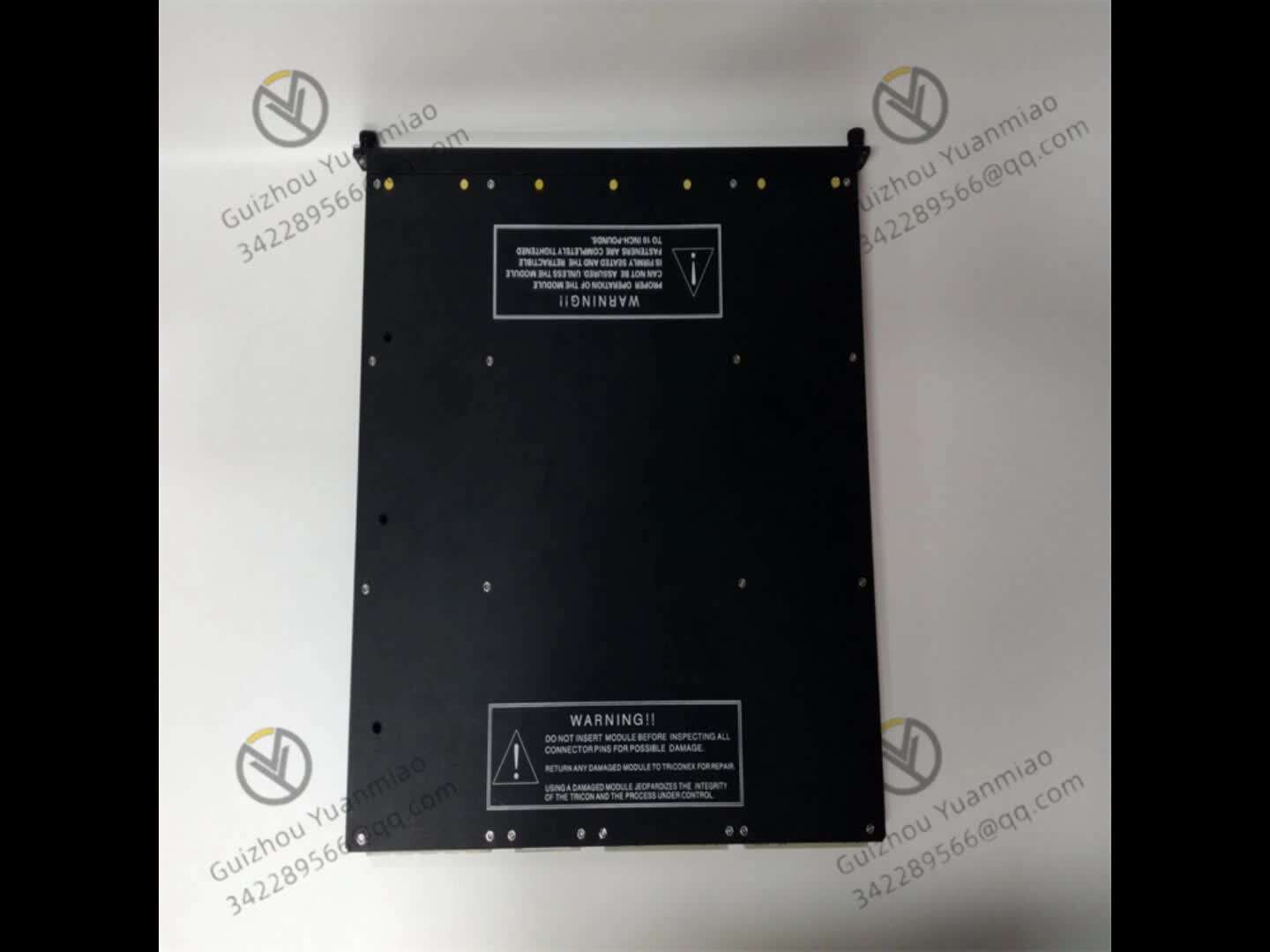
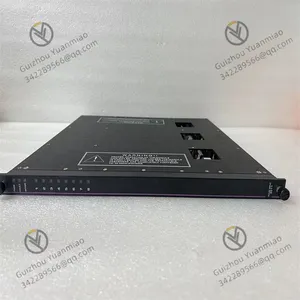
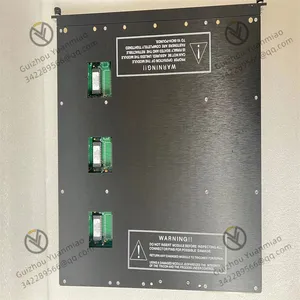
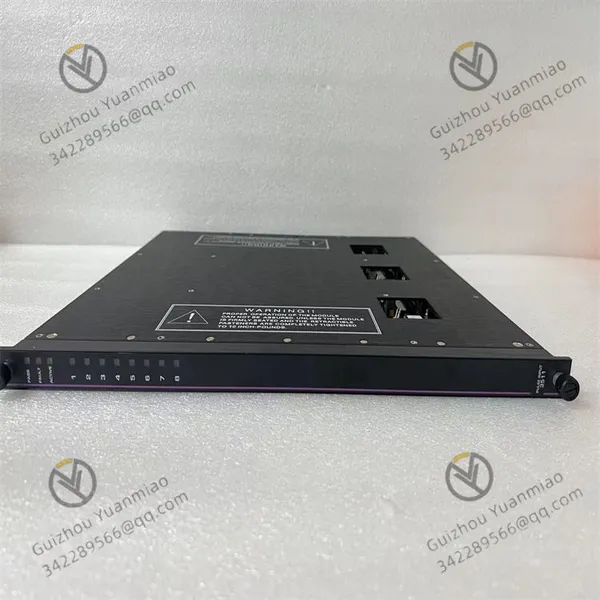
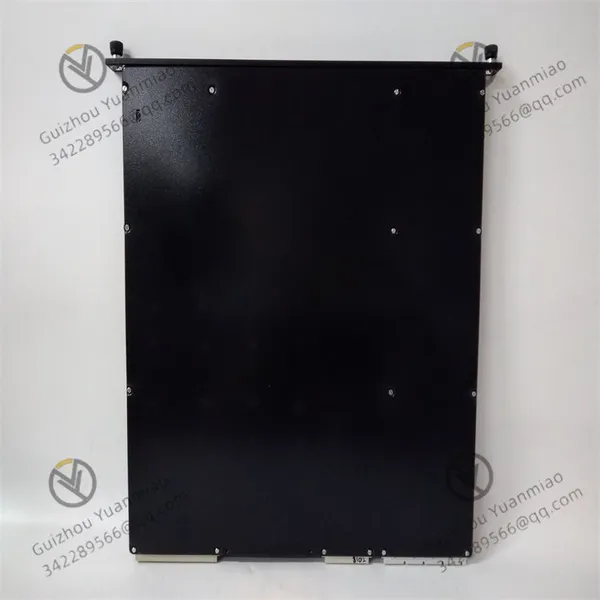
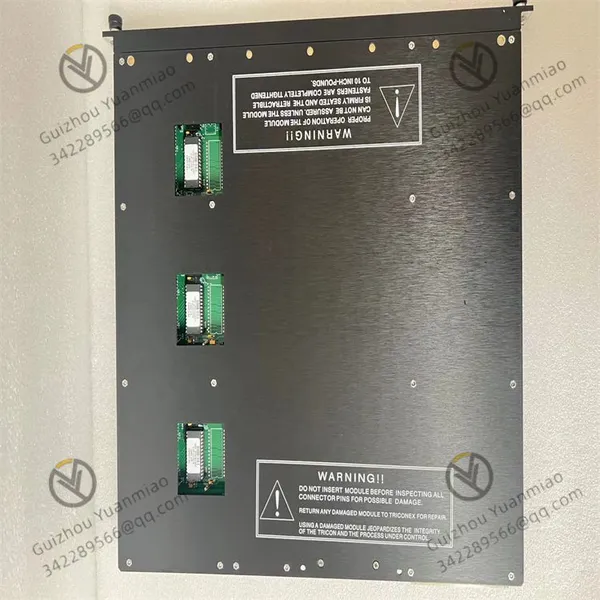
TRICONEX 4101 Digital input module
I. High Safety and Reliability DesignTriple Module Redundancy (TMR) Architecture
Adopts a unique three-channel redundancy design, where each input signal is processed by three independent channels simultaneously. The "two-out-of-three" voting mechanism ensures signal accuracy, allowing the system to operate normally even if one channel fails. This effectively prevents system failure caused by single-point faults and complies with SIL3 safety integrity level certification (IEC 61508).
Fail-Safe Mechanism
Equipped with built-in self-diagnosis functions, it real-time monitors channel status (such as short circuits, open circuits, overvoltage, etc.). When anomalies are detected, it automatically triggers alarms and switches to a safe state, avoiding safety accidents caused by signal errors.
II. Strong Environmental Adaptability and Protection CapabilityWide Temperature Operating Range
Stably operates in extreme temperature environments from -40°C to +85°C, suitable for high-temperature or low-temperature industrial scenarios such as metallurgy, chemical engineering, and petroleum.
High Protection Level
Some models have an IP67 protection rating, dustproof and waterproof, capable of withstanding dust, liquid splashing, and even short-term immersion, meeting the usage requirements in harsh working conditions.
Electrical Isolation and Anti-Interference
Optical isolation technology (isolation voltage ≥2500V) is used between channels and between channels and the system, effectively isolating external electromagnetic interference (EMI) and radio-frequency interference (RFI) to ensure stable signal transmission.

III. Flexible Signal Adaptation and ConfigurationMulti-Type Signal Compatibility
Supports various input signal types such as dry contacts (e.g., switches, relays), TTL, NPN, PNP, etc., and is compatible with 24VDC level (allowing ±10% fluctuation), adapting to various sensors, actuators, and field devices.
16-Channel High-Density Integration
A single module provides 16 independent input channels, reducing the number of hardware deployments, saving control cabinet space, and lowering system costs.
Configurable Response Time
The hardware delay is as low as 18μs, supporting custom signal filtering time (anti-jitter), and the signal acquisition frequency can be adjusted according to on-site needs to avoid false triggering.
IV. Convenient System Integration and MaintenanceMulti-Bus Protocol Support
Compatible with mainstream industrial communication protocols such as EtherCAT, Profinet, Ethernet/IP, Modbus TCP, etc., and can seamlessly access control systems such as PLC and DCS to achieve real-time data transmission.
Hot-Swap Function
Supports online plugging and replacing modules, enabling maintenance without shutdown, reducing industrial production downtime, and improving system availability.
Visual Status Indication
The module is equipped with LED indicators to real-time display channel status, power supply, communication, and fault information, facilitating rapid on-site diagnosis and maintenance.
V. Compliance and Industry Certifications
Certified by international standards such as CE, UL, and ATEX, complying with safety and electromagnetic compatibility (EMC) standards in the industrial automation field, and applicable to hazardous areas (such as chemical explosion-proof scenarios).

VI. Application Scenarios
With its high reliability, strong anti-interference capability, and multi-signal compatibility, the TRICONEX 4101 digital input module is widely used in industrial scenarios requiring precise digital signal acquisition and monitoring. The main application scenarios are as follows:
Petrochemical Industry
Monitors the on/off status of various valves, start/stop status of pumps, etc., in petrochemical production processes. For example, in ethylene cracking units, it can real-time collect the on/off signals of cracking furnace feed valves and discharge valves, providing accurate data for the Safety Instrumented System (SIS), and triggering emergency shutdown in case of anomalies to ensure production safety.
Monitors high/low liquid level alarm signals of storage tanks to prevent accidents such as overflow caused by excessive liquid level or pump cavitation caused by too low liquid level.
Power Industry
Monitors various status signals of generator sets in power plants, such as turbine trip signals, circuit breaker opening/closing signals of generators, etc., helping operators promptly grasp equipment operating status and ensuring stable power production.
Collects position signals of switching equipment, action signals of relay protection devices, etc., in substations to achieve real-time monitoring and fault diagnosis of the power system, improving the reliability of grid operation.

Metallurgical Industry
Monitors blast furnace level switches, converter oxygen lance lifting in-place signals, continuous casting machine straightener operation status, etc., in steel production processes. For example, by collecting blast furnace level switch signals, it can accurately grasp the material situation in the furnace and timely carry out feeding operations to ensure the normal operation of the blast furnace.
Monitors the cooling water system of metallurgical equipment, collects water flow switch signals, ensures normal cooling water flow, and prevents equipment damage due to overheating.
Pharmaceutical Industry
Monitors the operation status and fault signals of equipment such as filling machines and tablet presses in pharmaceutical production lines to ensure the stability and consistency of the drug production process. For example, it monitors whether the filling heads of filling machines are in place, whether the pressure of tablet presses is normal, etc., and can promptly stop the machine for processing in case of anomalies to avoid the production of unqualified products.
Also used for environmental monitoring in clean rooms, collecting door on/off status, air valve start/stop signals, etc., to ensure that the clean room environment meets drug production requirements.

Rail Transit Industry
Applied in rail transit systems such as subways and high-speed railways to monitor the status of signal lights, the position of turnouts, the on/off signals of platform screen doors, etc. For example, by real-time collecting turnout position signals, it ensures the correct train operation path and guarantees driving safety.
Monitors the status of various equipment in stations, such as the working status signals of automatic ticket vending machines and turnstiles, facilitating maintenance and management by operation personnel.
Intelligent Building Field
Collects the status signals of various equipment in buildings, such as the operation status of elevators, the on/off status of fire doors, the start/stop signals of air conditioning systems, etc. Through the monitoring of these signals, it realizes the intelligent management of buildings, improves building safety and comfort, and facilitates centralized monitoring and maintenance by property personnel, reducing management costs.