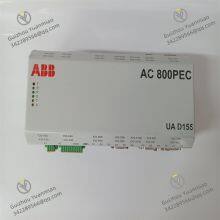
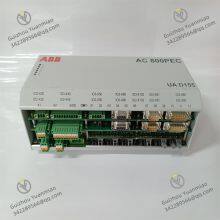
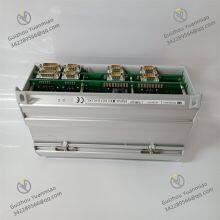
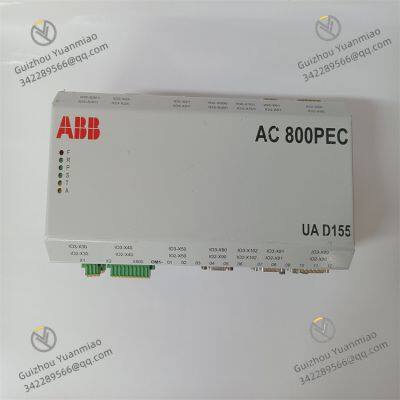
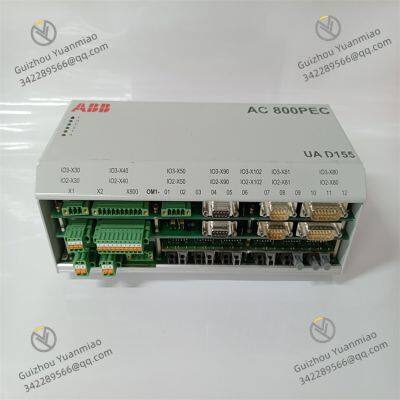
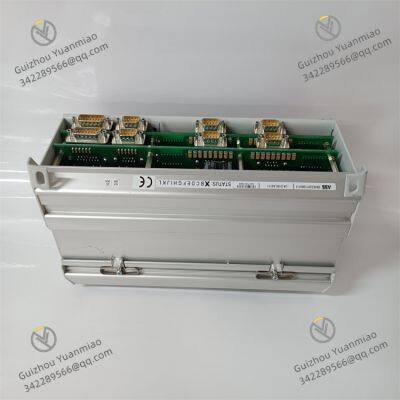
Material
Other, Global universal model
Condition
Other, Global universal model
Task
Other, Global universal model
Mathematical Model
Other, Global universal model
Signal
Other, Global universal model
Customized
Non-Customized
Structure
Other, Global universal model
Input voltage range
12-48VDC
Output voltage range
5VDC
Output current
Maximum 10A
Efficiency
More than 90%
Operating temperature
-20°C to + 50°C
Storage temperature
-40°C to + 70°C
Environmental humidity
5% to 95% (no condensation)
Basic Information:
Technical ParametersElectrical Parameters:Input Voltage Range: 12 - 48VDC
Output Voltage Range: 5VDC
Output Current: Maximum 10A
Efficiency: >90%
Operating Environment:Operating Temperature: -20°C to +50°C
Storage Temperature: -40°C to +70°C
Humidity: 5% to 95% relative humidity (non-condensing)

Functional Features:1. Ultra-High-Speed Data Transmission CapabilityAdvanced Interface Technology
Supports PCIe (Peripheral Component Interconnect Express) high-speed bus with a transmission rate of up to PCIe 3.0 x4 (approximately 8 GB/s), dozens of times faster than traditional parallel buses (e.g., PCI), meeting the need for real-time interaction of massive data.
Compatible with the NVMe (Non-Volatile Memory Express) protocol, designed for high-speed storage devices (e.g., SSDs), enabling direct connection to high-speed caches or real-time databases to reduce data transfer latency.
Parallel Channel Architecture
Built-in multi-channel parallel processing engine supporting simultaneous acquisition/output of multi-channel signals (e.g., handling 32 channels of high-speed digital signals or 16 channels of analog signals simultaneously). The refresh rate per channel can reach the microsecond level (μs), suitable for high-frequency signals (e.g., motor speed monitoring, vibration analysis).
DMA (Direct Memory Access)

2. High Precision and Low-Latency ControlNanosecond-Level Time Synchronization
Integrates a hardware clock synchronization module (e.g., supporting the IEEE 1588 PTP precision clock protocol), with channel-to-channel timestamp accuracy reaching the nanosecond level (ns). This meets the strict synchronization requirements of multi-module collaborative control in distributed control systems (DCS), such as power system relay protection and robot cluster collaboration.
Real-Time Operating System (RTOS) Optimization
High-Precision Analog-to-Digital Conversion (ADC)
Analog input channels are equipped with a 24-bit ADC, offering a resolution of 1/16,777,216 and noise suppression capability >110 dB. It can accurately capture subtle signal changes (e.g., mV-level fluctuations from sensors), suitable for precision measurements (e.g., chemical process parameter monitoring, laboratory automation).
3. High Reliability and Industrial-Grade ProtectionHardware Redundancy Design
Supports hot-swapping, allowing online replacement of modules without affecting system operation; some models feature dual-power input (e.g., automatic main-backup power switching) to reduce power failure risks.
Utilizes a full-metal casing and multi-layer circuit board anti-interference design, certified for EMC (e.g., FCC, CE), resistant to vibration (10-500Hz, 2g) and (15g, 11ms), suitable for strong electromagnetic interference environments (e.g., steel plants, high-frequency welding workshops).
Wide Temperature and Voltage Adaptability
Operating temperature range: -40°C ~ +70°C (wide-temperature model), storage temperature: -55°C ~ +85°C, supporting 12-48VDC wide voltage input, adapted to extreme industrial environments (e.g., outdoor substations, high-temperature furnace peripheries).
Intelligent Diagnosis and Fault Tolerance
Built-in self-diagnosis function for real-time monitoring of channel status (e.g., open circuit, short circuit, overload), supporting LED status indicators (power, communication, fault) and remote alarm output (e.g., sending diagnostic codes via MODBUS) to reduce maintenance time.

4. Flexible Configuration and ExpandabilityModular Function Adaptation
Supports programmable logic customization (e.g., configuring custom algorithms via ABB Control Builder), flexibly switching input/output types (e.g., digital/analog hybrid mode) to adapt to diverse industrial scenarios.
Provides software filtering options (e.g., low-pass, high-pass, band-pass filters) with customizable filter parameters (cutoff frequency, order) to suppress high-frequency noise or extract specific frequency band signals.
Multi-Protocol Compatibility
Standard with industrial Ethernet interfaces such as PROFINET, EtherCAT, and MODBUS TCP, supporting the OPC UA secure communication protocol for seamless integration with ABB 800xA systems or third-party SCADA platforms.
Optional synchronous trigger interfaces (e.g., LVDS differential signals) support hard synchronization with external devices (e.g., encoders, lidar) for multi-device collaborative sampling.
High-Density Integrated Design
Compact size (e.g., 100mm×100mm×50mm), supporting DIN rail or rack mounting. Multiple modules can be deployed in a single cabinet to save control cabinet space, suitable for distributed I/O systems (e.g., distributed control nodes in production lines).
Application Scenarios:Power Systems: High-speed signal acquisition and control for generator excitation control and relay protection devices.
Precision Manufacturing: Real-time motion control for semiconductor equipment and data interaction for high-speed vision inspection systems.
Energy and Chemicals: High-frequency vibration monitoring (e.g., compressor condition analysis) and fast-reaction process control (e.g., emergency shutdown valve ).
Robotics and Automation: Multi-axis synchronous control for collaborative robots and high-speed start-stop response for logistics sorting systems.