








 Contact Platform Support
 Help Center
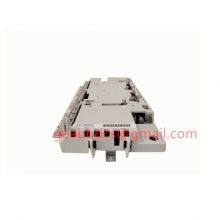
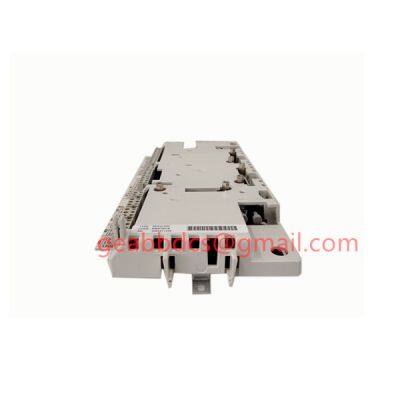
BRC400 Harmony Bridge Controller


Related Products
The article introduces methods for identifying motor noise and how to accurately determine the type of motor noise in order to analyze and solve problems more targeted.
For most motors, the noise is generally manifested as the combined effect of different types of noise, with some tending towards electromagnetic noise, some tending towards ventilation noise, and some motors exhibiting severe mechanical noise. There are still some simple methods for determining different types of noise.
Electromagnetic noise, which only occurs under the energized state of the motor, can be determined as electromagnetic noise. As long as it is powered off and on, it can be determined as electromagnetic noise. When there is obvious noise during the operation of the motor, if the noise disappears immediately after power off, it can be determined as electromagnetic noise; If the conditions for voltage regulation are met, voltage regulation can be carried out within the range below the rated voltage of the motor. The higher the voltage, the greater or more obvious the noise, which is also judged as electromagnetic noise from another level.
Ventilation noise refers to the method of blocking the air circuit used in the motor thermal test process, which is particularly effective in determining whether it is ventilation noise. By blocking the air inlet of the motor, if the noise of the motor is significantly reduced, it is basically determined that there is a strong tendency for ventilation noise.
For the mechanical noise of a motor, it is mainly caused by friction or resonance of its associated components. When the rotor part of the motor is stationary, regardless of whether it is powered on or not, mechanical noise will not be generated. The magnitude and sound effect of mechanical noise are directly related to the speed of the motor. When the speed is low, mechanical noise appears as periodic intermittent noise, while when the motor speed is high, The sound is converted into a continuous sound effect that is difficult to recognize by hearing, and the mechanical noise does not disappear when the motor is powered off, but the sound will change as the speed decreases.
For variable frequency motors, electromagnetic noise, mechanical noise, and ventilation noise will fluctuate with changes in power frequency, such as severe electromagnetic noise, mechanical resonance noise, etc. within a specific frequency band.
Contact information: 15359293870
WhatsApp:+86 15359293870
Contact person: KELLY
Email: geabbdcs@gmail.com 386353502@qq.com
Official website:

Signal input
Signal type: Transistor (PNP&NPN compatible)
NPN signal level (input): NPN: 0-5VDC
PNP signal level (input): PNP: 15-30VDC
Single channel consumption current: 5mA
Port protection (input): overvoltage impact protection
Input characteristics: NPN/PNP (compatible)
Electrical isolation: AC 500V
signal output
Signal type: relay
Rated level: relay 250VAC/30VDC
Single channel rated current: Relay: 5A
Port protection (output): overvoltage and overcurrent protection
Electrical isolation: AC 500V
General parameters
Protection level: IP20
Working temperature: 0-55 ℃
Storage temperature: -25~85 ℃

Send Inquiry to This Supplier


You May Also Like
-
UFC760 Control Board ModuleNegotiableMOQ: 1 Bag
-
CI854A Interface BoardNegotiableMOQ: 1 Bag
-
REX521GHHPSH06G Measuring and Control DeviceNegotiableMOQ: 1 Bag
-
DSSR122 48990001-NK Processing BoardNegotiableMOQ: 1 Bag
-
NRAI01 Processing BoardNegotiableMOQ: 1 Bag
-
UFC921A101 Tension Measurement SensorNegotiableMOQ: 1 Bag
-
UFC921A101 Tension Measurement SensorNegotiableMOQ: 1 Bag
-
PM856AK01 Central Control SystemNegotiableMOQ: 1 Bag
-
0002-11-2-00002-13 MotherboardNegotiableMOQ: 1 Bag
-
1TGE120021R0110 Robot Spare PartsNegotiableMOQ: 1 Bag


