








 Contact Platform Support
 Help Center
Phenolic Insulation Board---Wall Insulation System



Related Products
-
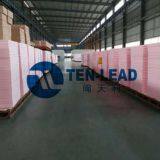
 Phenolic Foam Insulation Panel---Wall and Roof Insulation SystemNegotiableMOQ: 1000 Square Meters
 -
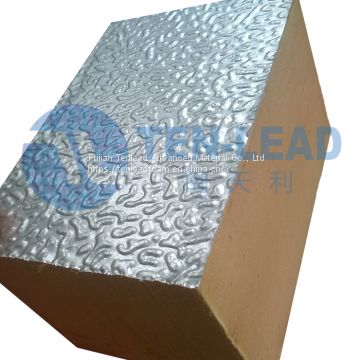
Low Thermal Conductivity Phenolic Insulation Board for BuildingsNegotiableMOQ: 1000 Square Meters
-
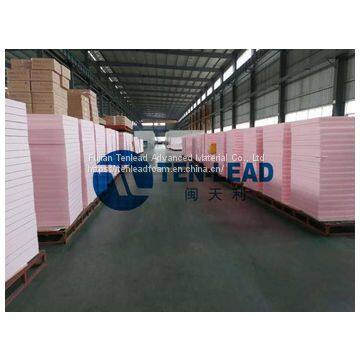
Phenolic Foam Insulation Board 90mm /100mm/110mm/130mmNegotiableMOQ: 1000 Square Meters
-
TENLEAD Rigid Foam--for HVAC System, Wall Insulation, Pipeline InsulationNegotiableMOQ: 1000 Square Meters
-
PHENOLIC PRE-INSULATED DUCT BOARDNegotiableMOQ: 1000 Square Meters
Phenolic insulation is manufactured by a process in which a plastic foam forms an insulating core between two flexible tissue faced layers. It has a high closed cell content and fine cell structure.
Rigid phenolic insulation is produced by mixing high solids and phenolic resin with a surface acting agent. The heat created by the reaction evaporates a volatile liquid blowing agent in the mixture which produces a network of small bubbles in the material. The foam can be cured to create one of two forms of the product. It can be manufactured by a continuous process to create thin sheet material which is laminated with various facings and cut into boards.
Wetherby use the TENLEAD Phenolic Insulation Board in the majority of their systems.
Phenolic Insulation – Thermal Performance
Rigid phenolic insulation products offer very good thermal insulating properties due to the very low thermal conductivity of phenolic foam, compared with rigid polyurethane or extruded polystyrene. It can actually be 50% more effective than other common insulation materials. Its low thermal conductivity allows specified thermal performance targets to be achieved with minimal thickness of insulation. This is particularly significant where space saving is important.
Physical Qualities of Phenolic Insulation Structure
Rigid Phenolic insulation has a high closed cell content and fine cell structure. It is lightweight, easy to transport , handle and install.
Compressive StrengthPhenolic foams are produced with densities in the range of 35 kg/m³ to 200 kg/m³. High density boards have a good compressive strength and are suitable for some floors.
Material ResistanceRigid phenolic insulation is resistant to fungus and mould growth and will not sustain vermin.
Heat ResistanceRigid phenolic insulation can withstand continuous temperatures of up to 120 degrees C.
Moisture ResistanceMoisture has a minimal effect on its thermal performance. Rigid phenolic insulation has a 95% (or greater) closed cell content which makes it highly resistant to moisture penetration. It also has a low water vapour permeance. Phenolic foam is also non-wicking. This means that if water enters the insulation system due to the vapour barrier becoming punctured, any moisture ingress is limited and confined to the punctured area. This ensures moisture does not build up and compromise the whole system.
StabilityRigid phenolic is dimensionally stable and can be cut accurately to achieve a snug fit in situations such as between rafters where airtightness will be improved.
High TemperaturesRigid phenolic insulation can withstand continuous temperatures of up to 120 degrees C.
Fire PerformanceThe fire performance of phenolic foam is exceptional. It combines zero or very low flame spread with negligible smoke emission and a very low level of toxic gas emission. Phenolic foams which have very low thermal conductivities are used as alternatives to PUR or PIR foams where a self extinguishing, low smoke emission, material is required. Insulating materials are rigorously tested to British Standards and fire performance data, to meet the requirements of building regulations, is generally available from manufacturers.

Send Inquiry to This Supplier
You May Also Like
-
Phenolic Foam Pipe InsulationNegotiableMOQ: 1500 Meters
-
Phenolic Sandwich Panels -light Steel Structure, Cold Room, Roof InsulationNegotiableMOQ: 500 Square Meters
-
Aluminum Foil Phenolic Foam Insulation Wall BoardNegotiableMOQ: 1
-
Phenolic Foam InsulationNegotiableMOQ: 1000 Pieces
-
Phenolic Foam Insulation PanelNegotiableMOQ: 1000 Square Meters
-
Phenolic Foam Insulation PipeUS$ 1 - 100MOQ: 10 Meters
-
Phenolic Foam Insulation BoardNegotiableMOQ: 200 Cubic Meters
-
Phenolic Foam Insulation MaterialNegotiableMOQ: 100 Cartons
-
Phenolic Foam Insulation BoardNegotiableMOQ: 1000 Pieces
-
Phenolic Foam Insulation BaordNegotiableMOQ: 1 Square Meter


