








 Contact Platform Support
 Help Center
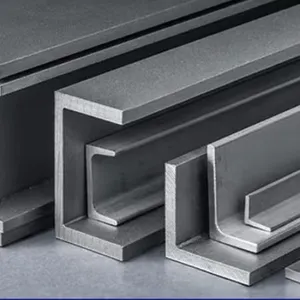
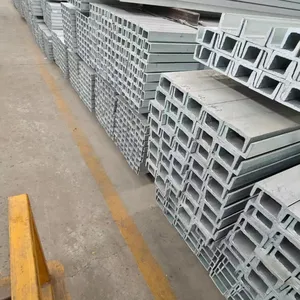
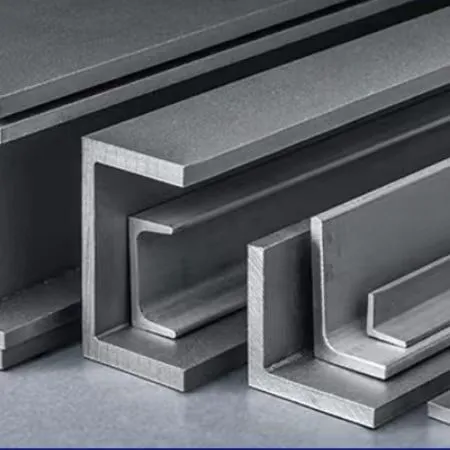
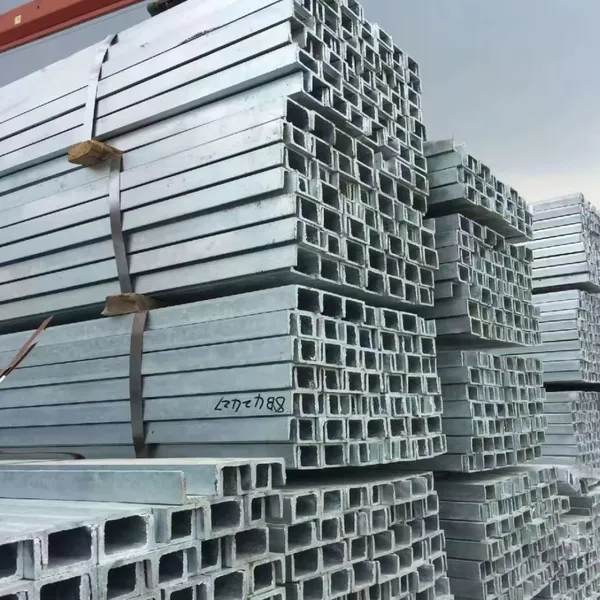
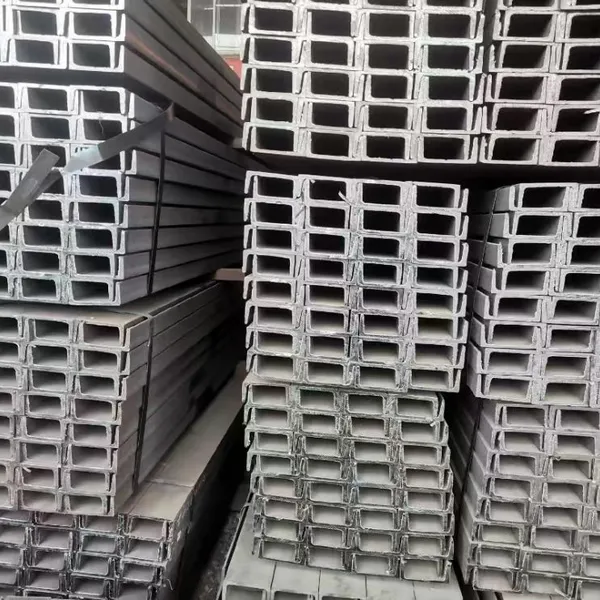
Steel Channel & Channel Steel,Q235B、Q355B、CCSA、AH36、Q355NH


Related Products
-
 Steel Wire Rope & Prestressed Steel Strand,1570MPa、1720MPa、1860MPa、1960MPa、2000MPa、2100MPaNegotiableMOQ: 5 Metric Tons
 -
Steel Round Bar & Solid Round Bar,Q195、Q215、Q235B、Q275B、10#、20#、35#、45#、Q355B、Q390、Q420、Q460、27SiMnNegotiableMOQ: 5 Metric Tons
-
Silicon Steel & Electrical Silicon Steel,50WW470、50WW600、50WW800、50WW1000、30Q120、30Q130、27Q110、27Q120NegotiableMOQ: 5 Metric Tons
-
Steel Billet & Forging Raw Material Steel Billet,Q195、Q215、Q235、Q275、Q355、Q390、Q420、Q460、10#、20#、35#、45#NegotiableMOQ: 5 Metric Tons
-
Square Steel & Square Steel Tube,Q195、Q215、Q235B、SS400、STK400、Q355B/C/D、S355JR、ST52、20#、45#NegotiableMOQ: 5 Metric Tons
1. Basic Product Definition
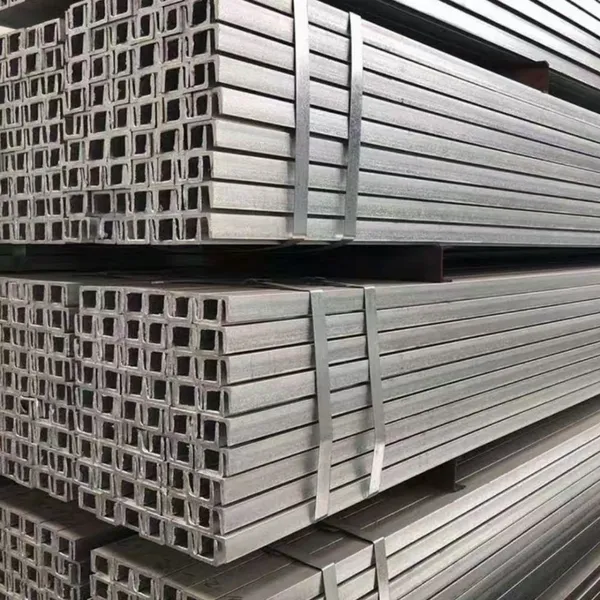
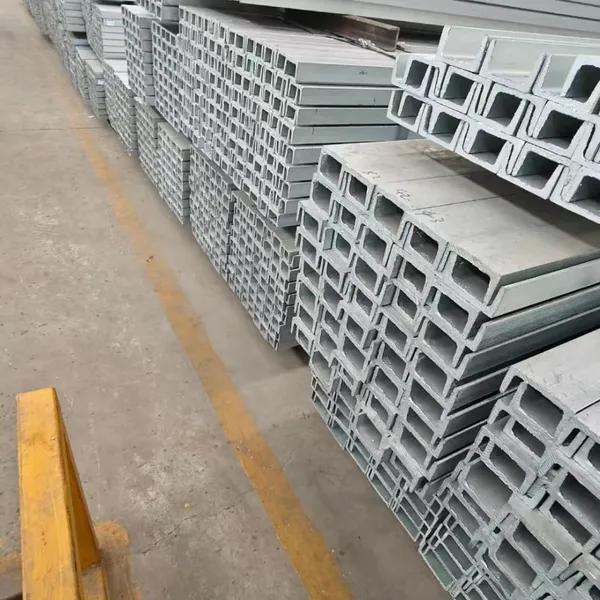
Channel steel (U-section steel) is a long steel product with a groove-shaped "[]" cross-section, integrally formed by a middle web and two side flanges. As a complex cross-section structural steel, it delivers balanced bending and shear resistance. It can bear loads independently or be used in combination with I-beams, serving as a core load-bearing profile for construction, machinery and municipal engineering.
Applicable National Standards
Hot-rolled standard channel steel: GB/T 707-2019 Hot-rolled Channel Steel (covers dimension, shape, weight and tolerance requirements)
Carbon structural steel substrate: GB/T 700
High-strength low-alloy steel substrate: GB/T 1591-2018
Cold-formed channel steel: GB/T 6728 Cold-formed Structural Steel
2. Classification of Channel Steel
2.1 By Production Process (two mainstream types in market)
2.1.1 Hot-rolled Standard Channel Steel (Main Material for Engineering)
Formed by rolling steel billets at high temperature of 1100~1200℃, with an inner slope of 1:10 on flanges. It features stable mechanical properties and high load capacity.
Size range: No.5 ~ No.40; Suffix a/b/c for the same section height indicates thicker web and wider flanges with increased unit weight.
Application: Main beams, columns, bridge components, equipment bases and heavy-load primary structural members for factory buildings.
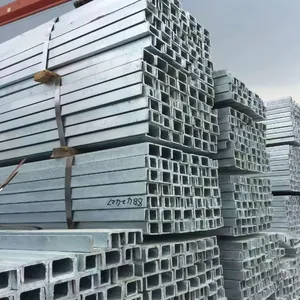
Standard fixed lengths: 6m, 9m, 12m; custom cutting available on demand.
2.1.2 Thin-wall Cold-formed Channel Steel (Lightweight & High Precision)
Cold-bent from steel strips at ambient temperature without high-temperature oxidation, featuring high dimensional accuracy and lightweight thin walls. Subdivided into 4 cross-section types:Equal-sided cold-formed channel steel, unequal-sided cold-formed channel steel, inward curled channel steel, outward curled channel steel.
Wall thickness: 1.0~6mm, light weight and cost-effective.
Application: Curtain wall keels, photovoltaic supports, cabinet frames, small guide rails and secondary members of prefabricated light steel structures.
Limitation: Lower overall strength than hot-rolled channel steel of the same height; not applicable for primary load-bearing structures.
2.2 By Surface Anti-corrosion Treatment
Bare hot-rolled channel steelCovered with mill scale after production, lowest cost. Only suitable for short-term indoor dry environments; on-site paint coating is required for rust prevention.
Hot-dip galvanized channel steel (Standard for Outdoor Use)Immersed in molten zinc at high temperature, zinc coating thickness ranges 60~120μm with strong adhesion. Anti-corrosion service life reaches 15~25 years, ideal for coastal, humid, acid rain-prone areas, municipal bridges and outdoor supports.Note: Electro-galvanized (cold galvanized) steel has thin coating with poor anti-corrosion performance, prohibited in formal engineering projects.
Painted / Shot-blasted anti-corrosion channel steelFor indoor steel structures and factory interiors, with cost between bare steel and galvanized steel.
2.3 By Material Grade (Common Carbon Steel Grades Only)
Q235B (Mild Carbon Steel, General Purpose)Yield strength ≥235MPa, the top choice for normal-temperature indoor projects including factory supports, enclosures and general steel structures with excellent cost performance.
Q355B/C/D/E (High-strength Low-alloy Steel)Yield strength ≥355MPa, around 40% higher load capacity than Q235. Q355D/E offers low-temperature toughness for wind power facilities, bridges, low-temperature factory buildings in northern regions and heavy-duty equipment bases.
Special Materials: Weathering steel, fire-resistant steel.
2.4 By Standard System
GB channel steel (GB/T707): Widely adopted for domestic construction projects.
European standard UPN/UPE channel steel, American standard C/MC channel steel, Japanese JIS channel steel: For imported equipment and foreign trade projects; cross-section dimensions cannot be interchanged with GB standard products.
3. Model Marking Rules & Core Parameters
3.1 Naming Rule
The number of model = overall web height h (mm) ÷ 10; suffix a/b/c represents increased flange width and web thickness for identical web height.Example:No.10 channel steel: web height 100mm; No.10a and No.10b feature thicker walls.Complete marking format: Web height(h) × Flange width(b) × Web thickness(d)Standard dimension of No.10: 100×48×5.3, theoretical weight 10.007kg/m.
3.2 Common Dimension & Weight Table for GB Hot-rolled Channel Steel
| Model | Web Height h(mm) | Flange Width b(mm) | Web Thickness d(mm) | Theoretical Weight (kg/m) |
|---|---|---|---|---|
| No.5 | 50 | 37 | 4.5 | 5.438 |
| No.8 | 80 | 43 | 5.0 | 8.045 |
| No.10 | 100 | 48 | 5.3 | 10.007 |
| No.12.6 | 126 | 53 | 5.5 | 12.318 |
| No.14a | 140 | 58 | 6.0 | 14.535 |
| No.14b | 140 | 60 | 8.0 | 16.733 |
| No.20a | 200 | 73 | 7.0 | 22.637 |
| No.20b | 200 | 75 | 9.0 | 25.777 |
3.3 Key Cross-section Terms
Web height h: Total vertical height of channel steel
Flange width b: Outward extension width of two side flanges
Web thickness d: Thickness of middle web plate
Average flange thickness t: Thickness at the root of flanges
Theoretical weight: Calculated based on steel density 7.85g/cm³; minor negative tolerance of actual weight complies with national standard.
4. Production Process
4.1 Hot-rolled Channel Steel Process
Steel billet heating (1100~1200℃) → Rough rolling breakdown → Multi-pass finish rolling forming → Cooling & straightening → Fixed-length saw cutting → Inspection → Bundling (bare steel) / Further hot-dip galvanizing.
4.2 Cold-formed Channel Steel Process
Hot-rolled coil slitting → Leveling → Continuous multi-roll cold forming → Punching / Cutting → Deburring → Galvanizing or painting.
5. Mechanical Performance & Quality Requirements
5.1 Mechanical Properties (Q235B)
Yield strength ≥235MPa, tensile strength 375~500MPa, elongation ≥21%. Support welding, riveting, drilling and bending processing.
5.2 Dimensional Tolerance (GB Standard)
Height deviation ±1.5mm, flange width deviation ±1.0mm, web thickness deviation ±0.3mm; straightness ≤1.5mm per meter, torsion ≤0.5mm per meter.
5.3 Surface Quality
No cracks, scabs, delamination, inclusions or severe rust. Slight mill scale is acceptable for hot-rolled products; galvanized surface shall be uniform without missing galvanization or peeling.
6. Main Application Fields
Building Steel Structure (Largest Consumption)Factory steel columns, roof purlins, secondary floor beams, curtain wall keels, stair supports, foundation pit bracings and steel platforms.
Municipal & Bridge EngineeringAuxiliary bridge supports, guardrail bases, pipe gallery brackets, underground comprehensive pipe racks and rail transit embedded parts (hot-dip galvanized version mandatory for outdoor scenarios).
Machinery & Equipment ManufacturingMachine tool bases, equipment frames, forklift & truck chassis, construction machinery supports, motor bases and main beams of storage racks.
Power & Photovoltaic IndustryPhotovoltaic supports, cable trays, substation frameworks and secondary tower components.
Other ScenariosEquipment cabinets, pipeline hangers, ship auxiliary materials, steel structure reinforcement and non-standard equipment frames.
7. Advantages & Disadvantages
Advantages
U-shaped cross-section provides balanced bending and torsion resistance; open side facilitates bolt installation and pipeline passing.
Excellent machinability: cutting, welding, drilling, bending and hot-dip galvanizing are all available.
Complete size series from lightweight No.5 to heavy-duty No.40 to meet all load demands.
Higher space utilization on the grooved side compared with square tubes and I-beams for convenient bracket installation.
Disadvantages
Asymmetric single cross-section prone to lateral torsion under long-span independent loading; heavy main beams are commonly used in back-to-back pairs.
Thin-wall cold-formed channel steel cannot bear concentrated heavy loads.
Bare steel is vulnerable to rust; hot-dip galvanizing anti-corrosion treatment is compulsory for outdoor usage.
8. Delivery Lead Time
Delivery schedule classified by stock status, surface treatment and customized processing:
8.1 In-stock bare channel steel (no deep processing, no galvanizing)
Local warehouse spot goods: Loading & delivery within 1~3 working days after payment confirmation; same-day delivery to construction sites in the same city, next-day delivery to surrounding counties.
Mass bulk spot goods (full truck / full container): Loading and direct logistics delivery to sites or ports within 3~7 working days.
8.2 Hot-dip galvanized channel steel (in-stock base material + galvanizing processing)
Extra cycle reserved for galvanizing procedure:
Small orders (≤50 tons): 7~10 working days
Large bulk orders (≥100 tons): 10~15 working days
8.3 Custom Non-standard Orders (Special fixed length, punching, bending, painting, foreign standard channel steel)
Custom cutting & punching for GB channel steel: 7~12 working days
European/American/Japanese standard channel steel (out of stock): 15~30 working days for steel mill production scheduling
Special materials including weathering steel and fire-resistant steel: 20~35 working days
8.4 Rush & Export Supplementary Instructions
Expedited service available for urgent projects with slight extra processing fee, shortening lead time by 3~5 days.
Export container orders: 5~7 days for bundling and packaging of bare spot goods; 10~18 days for galvanized export goods including fumigation and customs declaration procedures.
9. Product Packaging Standards (Compliant with GB/T2101 Steel Section Packaging Standard)
9.1 Domestic Truck Shipment Packaging
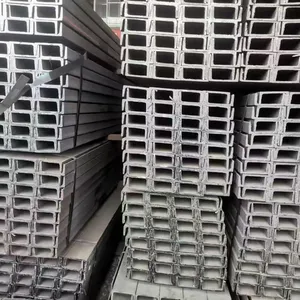
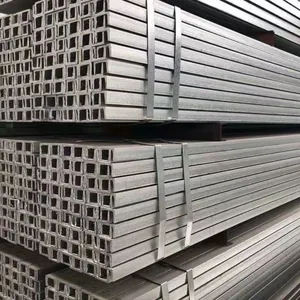
Bundling specification: Each bundle weighs 2~5 tons. Channel steel over 6m long shall be fastened with at least 3 high-strength steel strips; short-length products with at least 2 strips to avoid loose bundling and deformation during transit.
Separation protection: Wood blocks or hard cardboard placed between layers to prevent collision and scratch on flanges; isolation paper lined inside galvanized bundles to avoid zinc coating abrasion.
Marking requirement: Metal tag hung on each bundle indicating model, material grade, length, furnace batch number, net weight, executive standard and manufacturer name; paper material test certificate delivered together with full truck cargo.
Basic moisture-proof: Bare steel for long-distance overland transport can be fully wrapped with PE waterproof film to reduce rain-induced rust.
9.2 Export Sea Freight Packaging (Container / Bulk Carrier)
Primary bundling: Fastened into standard bundles with steel strips, fully covered with thick waterproof plastic film to isolate seawater moisture and sea rust.
Optional pallet reinforcement: Small-size channel steel fixed on fumigated solid wood pallets for forklift loading without extrusion deformation, meeting customs fumigation requirements.
Separation protection: Moisture-proof kraft paper laid between layers of galvanized steel; wood buffer blocks between bundles. 12m ultra-long channel steel fixed separately inside containers to prevent shifting.
Enhanced marking: Bilingual Chinese-English tags with shipping marks including contract No., destination port, gross/net weight and package quantity for overseas customs clearance.
9.3 Small Batch & Sample Packaging
Samples (≤1 piece): Plastic end caps on both ends, fully wrapped with bubble film and fixed on wooden frames. Small bundles under dozens of kilograms manually tied, single bundle weight limited to 80kg for easy manual handling.
10. Inspection & Acceptance Guidelines for Procurement
Standard Verification: Request material test certificate; distinguish national standard and non-standard products (non-standard items have insufficient wall thickness negative tolerance leading to inadequate load capacity).
Material Selection: Choose hot-dip galvanized steel for outdoor heavy anti-corrosion; Q355D/E for low-temperature projects, weathering/fire-resistant carbon steel for special environments.
Visual Inspection: Free of cracks and torsion, no missing galvanization; measure web height, flange width and wall thickness to match designated model.
Custom Deep Processing: One-stop service including fixed-length cutting, punching, bending, welding, galvanizing and shot blasting painting available.
Storage Protection: Stack on raised supports to avoid rain exposure for open-air storage; prevent long-term soaking of galvanized steel in acid rainwater.

Send Inquiry to This Supplier



You May Also Like
-
Channel Steel & Steel Channel,Q235B、Q235A、SPHC、Q235B、Q235A、SPHCNegotiableMOQ: 5 Metric Tons
-
Steel Strand & Steel Wire Rope,9.53mm、11.11mm、12.7mm、15.20mm、17.8mm、21.6mmNegotiableMOQ: 5 Metric Tons
-
Steel Round Bar & Solid Steel Round Bar,Q235B、Q355B、10#、20#、35#、45#、40Cr、42CrMo、35CrMo、20CrMoNegotiableMOQ: 5 Metric Tons
-
Silicon Steel & Electrical Silicon Steel,30WW230、30WW270、35WW250、35WW300、35WW360、35WW440、30Q120、30Q130、27Q120NegotiableMOQ: 5 Metric Tons
-
Steel Billet & Raw Billet for Section Steel,Q195、Q215、Q235B、Q355B、SS400、3SP、5SP、10#、20#、35#、45#NegotiableMOQ: 5 Metric Tons
-
Square Steel & Square Tube,Q195、Q215、Q235B、20#、45#NegotiableMOQ: 5 Metric Tons
-
Channel Steel & Light Channel Steel,5#、8#、10#、12#、14#、16#、18#、20#、22#、25#、28#、30#NegotiableMOQ: 5 Metric Tons
-
Steel Wire Rope & Steel Strand,1670MPa、1770MPa、1860MPa、1960MPaNegotiableMOQ: 5 Metric Tons
-
Steel Round Bar & Carbon Steel Round Bar,20#, 45#, Q235, Q355NegotiableMOQ: 5 Metric Tons
-
Silicon Steel & Electrical Steel,0.50mm、0.65mm、0.23mm、0.27mm、0.30mm、0.35mmNegotiableMOQ: 5 Metric Tons


