








 Contact Platform Support
 Help Center
Deformed Steel Rebar & Steel Rebar,HRB400、HRB400E、HRB500、HRB500E、HRBF400E、HRBF500E


Related Products
-
 Steel Wire & Galvanized Steel Wire,Q195、Q235、72A、82B、65Mn、40Cr、42CrMo、GCr15、20CrMnTiNegotiableMOQ: 5 Metric Tons
 -
Flat Steel & Flat Steel Bar,Q235、Q355、S235JR、S355JR、A36、SS400NegotiableMOQ: 5 Metric Tons
-
Steel Angle & Angle Steel Bar,Q235B、Q355B、CCSA、AH36、Q355NHNegotiableMOQ: 5 Metric Tons
-
H Section Steel & Steel H Beam,Q235B、Q355B、Q390、Q460、Q235NH、Q355NH、AH36、DH36NegotiableMOQ: 5 Metric Tons
-
Steel Pipe & Tube & Galvanized Steel Pipe,Q195、Q235B、SPHC、Q275B、Q355BNegotiableMOQ: 5 Metric Tons
1. Product Basic Definition
1.1 Official Name & Common Name
Official Name: Hot-rolled Ribbed Steel Bar for Reinforced ConcreteCommon Name: Deformed Steel Bar / Ribbed Steel Bar Implemented National Standard: GB 1499.2-2024 Steel for Reinforced Concrete – Part 2: Hot-rolled Ribbed Bars (Implemented on September 25, 2024), serving as the primary load-bearing steel material for domestic construction projects.
1.2 Appearance & Structural Characteristics
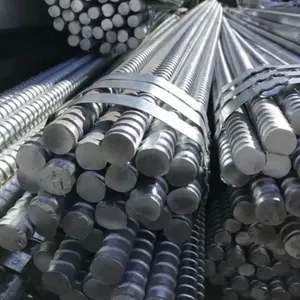
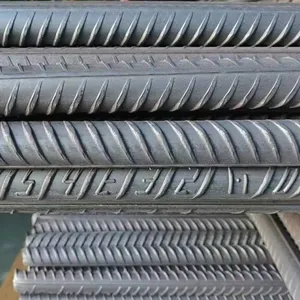
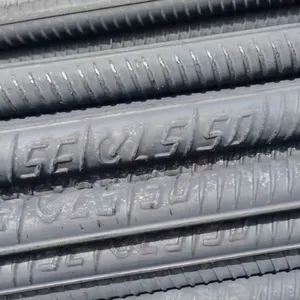
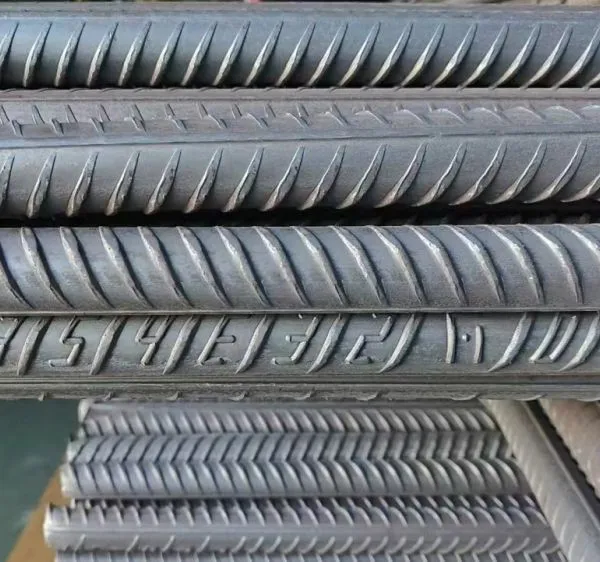
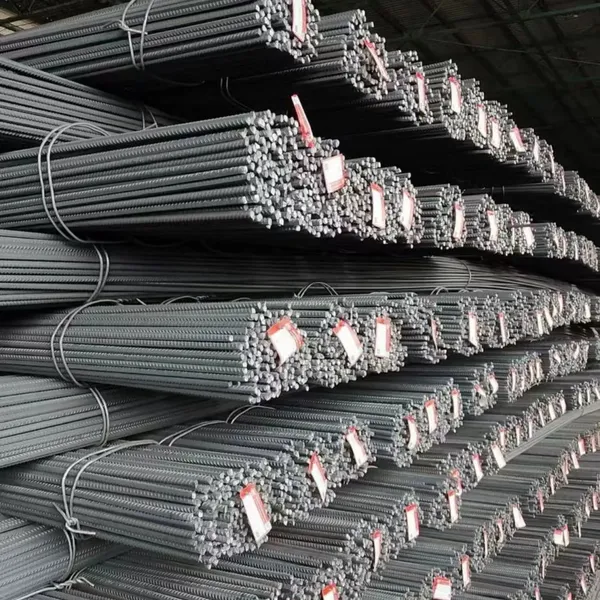
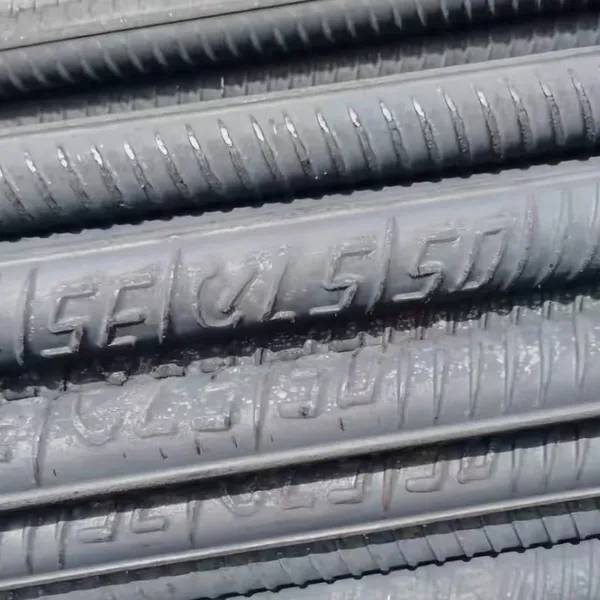
The steel bar features a circular cross-section with 2 continuous longitudinal ribs + uniformly distributed transverse ribs. Crescent-shaped ribs are the mainstream type in China, with spiral and herringbone ribs available for special products. The concave-convex rib structure greatly enhances the bonding force between the steel bar and concrete, preventing force-induced slippage and forming the core load-bearing framework of concrete structures.
1.3 Grade Naming Rules
- HRB: Hot-rolled Ribbed Bar - Number: Standard yield strength value (MPa) - Suffix E: Earthquake-resistant special steel bar, applicable to high-rise buildings and seismic fortification projects - Suffix F: Fine-grained thermo-mechanically rolled steel bar with better toughness and weldability and lower alloy consumption Examples: HRB400E = 400MPa grade seismic Grade 3 deformed steel bar; HRBF500 = Fine-grained 500MPa grade high-strength deformed steel bar
2. Product Classification System
2.1 Classification by Strength Grade (Mainstream Engineering Grades)
Grade |
Min. Yield Strength |
Min. Tensile Strength |
Alias |
Application Scenarios |
HRB400 / HRB400E |
400MPa |
540MPa |
Grade 3 Steel (Mainstream Seismic Type) |
Residential buildings, factories, ordinary bridges, main reinforcements of beams and columns |
HRBF400 / HRBF400E |
400MPa |
540MPa |
Fine-grained Grade 3 Steel |
Same as HRB400, with superior welding, cold bending and crack resistance |
HRB500 / HRB500E |
500MPa |
630MPa |
High-strength Grade 4 Steel |
Super high-rise buildings, long-span bridges, heavy-duty infrastructure, key municipal projects |
HRBF500 / HRBF500E |
500MPa |
630MPa |
Fine-grained Grade 4 Steel |
Heavy-duty and densely reinforced components, effectively reducing overall steel consumption |
HRB600 |
600MPa |
730MPa |
Ultra-high Strength Steel |
Large-scale water conservancy projects, special heavy-duty engineering, ultra-long-span load-bearing structures |
Note: The old standard HRB335 (Grade 2 Steel) has been eliminated in the 2024 new national standard and is prohibited for formal engineering use.
2.2 Classification by Delivery Form
2.2.1 Straight Deformed Steel Bar (Engineering Mainstream)
Nominal diameter: Φ12mm~Φ50mm; Standard fixed lengths: 9m, 12m; Customizable lengths: 6m, 15m multiple lengths; Mainly used for load-bearing structures such as building beams, columns, foundations and wall panels.
2.2.2 Coiled Deformed Steel Bar (Coil Rebar)
Nominal diameter: Φ6mm, Φ8mm, Φ10mm; Supplied in coils and straightenable on site; Mainly used for floor distribution reinforcements, beam and column stirrups, and small structural reinforcements.
2.3 Classification by Production Process
1. Conventional Hot-rolled HRB: Rolled directly from high-temperature billets, versatile and cost-effective, the mainstream product in the market. 2. Fine-grained HRBF: Adopts controlled rolling and controlled cooling process with refined grain structure, significantly improved plasticity, seismic performance and weldability. 3. Residual Heat Treated RRB: Rapid cooling by water penetration after hot rolling, gradually restricted in mainstream infrastructure projects.
3. Specifications, Theoretical Weight & Dimensional Parameters
Theoretical Weight Formula: W=0.00617×d² (kg/m, d=nominal diameter in mm)
Nominal Diameter d(mm) |
Theoretical Weight (kg/m) |
Typical Applications |
Φ6 |
0.222 |
Small stirrups, structural reinforcements |
Φ8 |
0.395 |
Floor distribution bars, conventional stirrups |
Φ10 |
0.617 |
Secondary beams, main reinforcements of small components |
Φ12 |
0.888 |
Floor slabs, secondary beam main reinforcements |
Φ14 |
1.21 |
Civil building beams, small frame columns |
Φ16 |
1.58 |
Universal main reinforcements for residential building beams and columns |
Φ18 |
2.00 |
Frame columns and main beams of mid-rise and high-rise buildings |
Φ20 |
2.47 |
Main beams of high-rise and long-span buildings |
Φ22 |
2.98 |
Heavy-duty frame columns, main bridge structures |
Φ25 |
3.85 |
Large building foundations, main load-bearing columns |
Φ28 |
4.83 |
Load-bearing structures of super high-rise buildings and large bridges |
Φ32 |
6.31 |
Pile foundations, extra-large load-bearing columns, water conservancy projects |
4. Core Chemical Composition & Mechanical Properties
4.1 Chemical Composition (Typical Standard for HRB400E)
Mainly low-alloy manganese-vanadium steel with trace vanadium, niobium and titanium added to refine grains, balancing strength and toughness: C: 0.20%~0.25%; Si: 0.40%~0.70%; Mn: 1.20%~1.60% Strict control of harmful impurities: P≤0.045%, S≤0.045% to prevent brittle fracture and welding cracking. Seismic steel bars adopt strict carbon equivalent control to ensure excellent weldability and seismic performance.
4.2 Core Mechanical Properties (Including Special Seismic Indexes)
Conventional tests: Tensile property, cold bending property, weight deviation, dimensional tolerance.Three Mandatory Core Indexes for Seismic Steel Bars (Grade E): 1. Tensile-Yield Ratio ≥1.25: Ensures deformation buffering under seismic load and avoids instantaneous fracture. 2. Measured-Standard Yield Ratio ≤1.3: Stable strength without brittle failure risk. 3. Total Elongation at Maximum Force (Agt) ≥9%: Excellent ductility and strong seismic energy dissipation capacity.
5. Production Process Flow
Raw material smelting → Secondary refining → Continuous casting for steel billets → High-temperature heating → Multi-pass hot rolling forming → Temperature-controlled cooling (conventional air cooling / fine-grained controlled cooling) → Fixed-length shearing → Finishing and packaging → Quality inspection sampling → Warehousing and delivery. Fully mechanized production ensures high dimensional accuracy and stable mechanical performance.
6. Product Packaging Standards
All products comply with national steel packaging specifications, meeting transportation protection, on-site acceptance and traceability requirements with standardized classified packaging for straight and coiled rebars:
6.1 Packaging for Straight Deformed Steel Bars
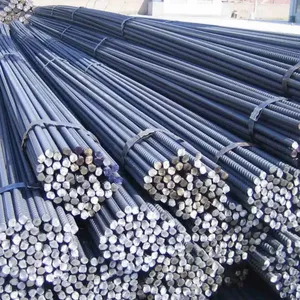
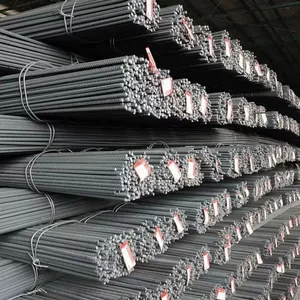
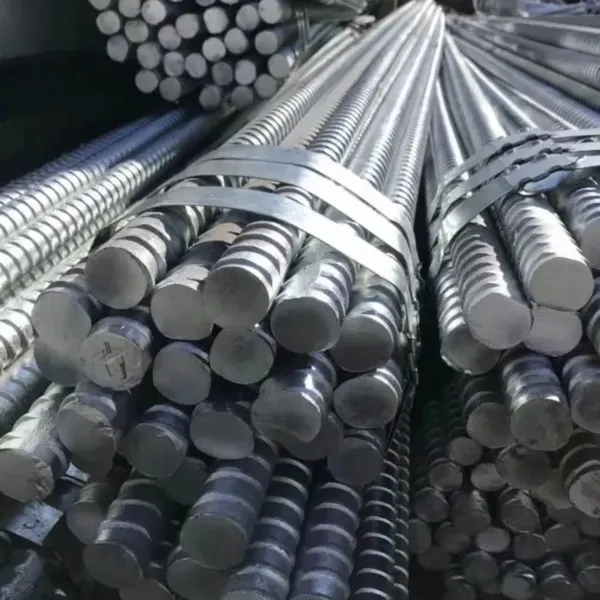
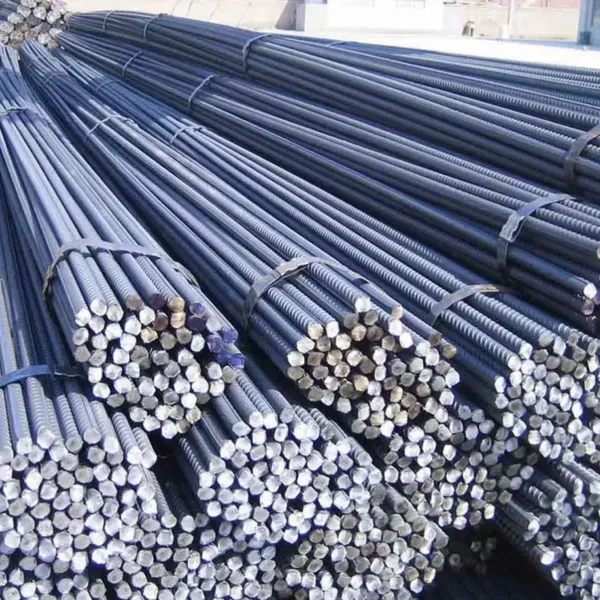
- Bundling Method: Reinforced with high-strength galvanized steel strips; large specifications (≥Φ20) adopt 6~8 bundling strips per bundle, and small specifications are evenly reinforced to prevent scattering and deformation during transportation. - Bundle Weight Standard: Conventional bundle weight: 2.0~2.5 tons; customized small bundles and fixed-weight bundles are available on request. - Identification Configuration: Each bundle is equipped with anti-counterfeit metal nameplate + paper quality certificate, clearly marking steel mill name, executive standard, grade, specification, fixed length, furnace batch number, weight, production date and quality inspection number for full traceability. - End Protection: Precision-specification steel bars are fitted with end protective covers to prevent collision deformation and end corrosion.
6.2 Packaging for Coiled Deformed Steel Bars
- Forming Packaging: Tightly wound coils, wrapped with waterproof woven cloth and fastened with galvanized steel strips for dustproof, waterproof and anti-scattering protection. - Identification Configuration: Each coil is attached with a dedicated nameplate marking specification, grade, furnace number, weight and origin. - Enhanced Protection: Customized full-wrapped anti-rust film packaging is available for humid environments and long-distance sea transportation to prevent transit rusting.
6.3 General Packaging Requirements
All products are packaged by specification, grade and furnace batch without mixed loading. The firm packaging adapts to road, railway and sea transportation, fully meeting site admission acceptance, sampling inspection and warehouse management standards.
7. Delivery Cycle & Delivery Standards
Classified delivery cycles for spot goods and customized orders to ensure project progress, with priority expedited production available for urgent orders:
7.1 Conventional Spot Specifications (HRB400E/HRB500E Mainstream Sizes)
Sufficient in stock for Φ12-Φ32 straight rebars and Φ6/8/10 coil rebars. Orders confirmed on the same day will be loaded and delivered within 24 hours; 1~2 days delivery for intra-provincial short-distance transportation, 2~3 days for adjacent cross-provincial transportation.
7.2 Customized Specification Orders (Fixed-length, Special Grade, Ultra-high Strength)
- Conventional customization (6m/15m multiple lengths, HRBF fine-grained series): Production and delivery within 3~5 working days. - Special customization (HRB600 ultra-high strength, extra-large diameter Φ36/Φ40/Φ50): Production and delivery within 5~7 working days. - Large-volume full-truck orders (≥500 tons): Phased production and delivery are negotiable to support continuous project material supply.
7.3 Expedited Order Service
Priority production and loading are available for time-sensitive construction orders. Spot urgent orders can be loaded within 4 hours, and the delivery period of customized urgent orders can be shortened by 2 days.
7.4 Attached Delivery Documents
Each batch is delivered with complete documents: Product quality certificate, mechanical property test report, chemical composition analysis report, furnace batch traceability list and factory re-inspection report, which can be directly used for project inspection and filing, and support third-party authoritative re-inspection.
8. Main Application Fields
1. Civil Construction: Beams, columns, floor slabs, shear walls and foundation load-bearing structures of residences, office buildings and shopping malls. 2. Infrastructure Engineering: Highway bridges, tunnels, subways, water conservancy dams and municipal pipe corridors. 3. Industrial Facilities: Heavy-duty factory buildings, equipment foundations, large concrete bearing platforms and logistics parks. 4. Special Engineering: Super high-rise buildings, large docks, nuclear power supporting projects and key seismic fortification projects.
9. Core Product Advantages
1. Strong Bonding Force: Rib occlusion structure achieves tight combination with concrete, anti-slip and anti-crack with high structural stability. 2. Balanced Performance: Optimized strength, plasticity and toughness adapt to various engineering scenarios with excellent seismic and impact resistance. 3. Convenient Construction: Supports on-site cutting, bending, welding and lapping, compatible with all conventional construction processes. 4. High Cost Performance: High-strength grades reduce steel consumption and lower overall project cost. 5. Stable Quality: Produced in accordance with national standards with consistent batch performance and 100% qualification rate for site re-inspection.
10. Site Acceptance & Quality Control
1. Appearance Acceptance: No harmful defects such as cracks, scabs and delamination; dimensional tolerance complies with national standards. 2. Document Acceptance: Verify nameplates, certificates and test reports to ensure consistent furnace batch number, grade and specification. 3. Sampling Re-inspection: Conduct weight deviation, tensile and cold bending tests as required; test three major E-indexes additionally for seismic steel bars. 4. Non-conforming Product Control: Unqualified products with excessive deviation or substandard performance are unconditionally returned and replaced to prevent inferior materials from entering the site.
11. Warehouse & Storage Specifications
1. Stacking ground shall be raised by more than 30cm with good ventilation and dryness, avoiding rain, moisture and water accumulation. 2. Stack separately by specification, grade and batch with marked labels to prevent mixing. 3. Slight surface rust does not affect mechanical performance; severely pitted and flaky rusted bars can only be used after passing re-inspection. 4. Fix coiled rebars to prevent rolling and fasten straight bar bundles to avoid toppling and deformation.

Send Inquiry to This Supplier



You May Also Like
-
Steel Pipe & Tube & Petroleum Steel Pipe,Gr.B、X42、X52、X60、X65、X70、X80、3Cr、9Cr、13CrNegotiableMOQ: 5 Metric Tons
-
Steel Pipe & Tube & Alloy Steel Pipe,15CrMo、15CrMoG、12Cr1MoVG、12Cr2Mo1G、1Cr5Mo、1Cr9Mo、P91、P92NegotiableMOQ: 5 Metric Tons
-
Steel Pipe & Tube & Precision Steel Tube,10#、20#、35#、45#、Q355B、27SiMn、40Cr、42CrMo、15CrMo、12Cr1MoVGNegotiableMOQ: 5 Metric Tons
-
Steel Pipe & Tube & High Pressure Boiler Tube,20G、20MnG、25MnG、15CrMoG、12Cr1MoVG、12Cr2Mo1G、12Cr1MoVR、P91、P92、16MnDG、09MnNiDGNegotiableMOQ: 5 Metric Tons
-
Steel Pipe & Tube & Cast Pipe,QT400-15、QT450-10、QT500-7、HT200、HT250、ZG230-450、ZG270-500、WCB、WCCNegotiableMOQ: 5 Metric Tons
-
Steel Coil & Strip & Hot Rolled Coil,SPHC、SPHD、SPHE、Q235B、Q355B、Q390、Q420、Q460、Q245R、Q345R、16MnDR、09MnNiDRNegotiableMOQ: 5 Metric Tons
-
Steel Coil & Strip & Cold Rolled Coil,DC01、DC03、DC04、DC05、DC06、SPCC、SPCD、SPCE、SPCENNegotiableMOQ: 5 Metric Tons
-
Steel Coil & Strip & Color Coated Coil,S250GD+Z、S300GD+Z、S350GD+Z、DX51D+AZ、S350GD+AZNegotiableMOQ: 5 Metric Tons
-
Steel Sheet & Plate & Steel Sheet Pile,Q295P、Q355P、Q390P、Q420P、Q460P、Q295WP、Q355WPNegotiableMOQ: 5 Metric Tons
-
Steel Sheet & Plate & Pressure Vessel Plate,Q245R、Q345R、Q370R、15CrMoR、14Cr1MoR、12Cr2Mo1R、12Cr1MoVRNegotiableMOQ: 5 Metric Tons


