








 Contact Platform Support
 Help Center
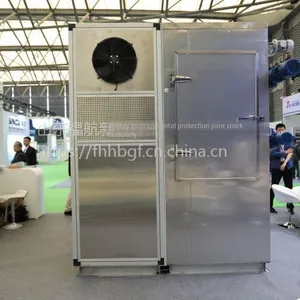
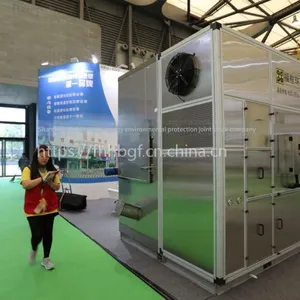
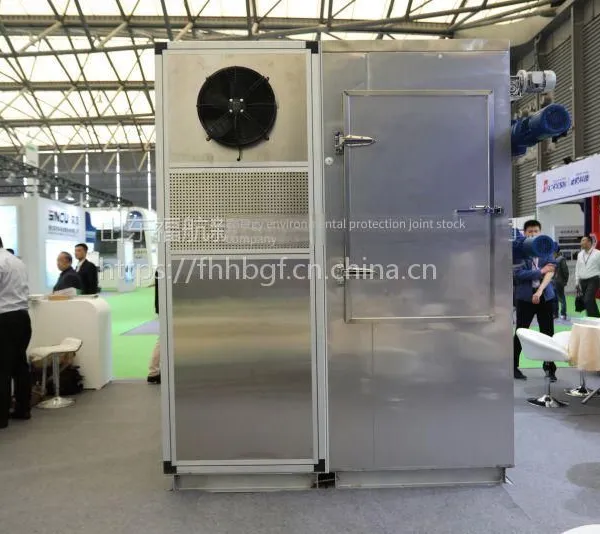
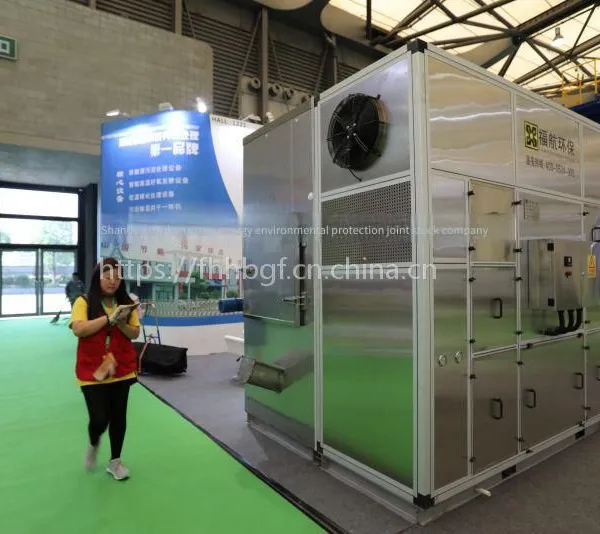
Sludge Low-temperature Drying Machine Equipment - Shandong Fuhang New Energy Environmental Protection Co., Ltd.


Related Products
-
 Sludge Drying Equipment - Pharmaceutical Sludge Treatment Equipment (fuhang Dryer)NegotiableMOQ: 0 Unit
 -
Sludge Fermentation Equipment - Organic Fertilizer EquipmentNegotiableMOQ: 0 Unit
-
Sludge Fermentation Organic Fertilizer Equipment - Sludge Fermentation for Fertilizer ProductionNegotiableMOQ: 0 Unit
-
Sludge Treatment Process - Sludge Drying Equipment - Sludge Fermentation and Fertilizer Production EquipmentNegotiableMOQ: 0 Unit
-
Sludge Drying and Dehumidifying All-in-one Equipment - Shandong Provincial Sludge Technology r & d CenterNegotiableMOQ: 0 Unit
Sludge drying equipment
Shandong Fuhang New Energy & Environmental Protection Co., Ltd. sludge low-temperature drying equipment, which applies a sludge low-temperature drying technology. The low-temperature sludge drying technology is a treatment technology that uses the dry hot air generated by the low-temperature drying system to circulate in the system to dry the sludge. It can dry the sludge with a solid content of 20% after being treated by plate and frame filter press, belt filter press and centrifugal dehydrator into dry sludge blocks with a solid content of 90%. This technology can reduce the volume of sludge by 1/4. It only consumes electricity and does not require other auxiliary energy, and the energy consumption is 1/3 of that of conventional drying equipment. There is no need for a special device to evenly distribute the sludge during feeding, and there are no requirements for humidity. As long as the external temperature is between 10-35 degrees Celsius, the whole system can maintain high-efficiency operation. The fully intelligent automatic control system integrated in this technology not only improves the operation efficiency but also has a good operating environment, and is used to dispose of various types of sludge produced especially by small and medium-sized sewage treatment plants.
Since 2009, ministries such as the Ministry of Environmental Protection, the Ministry of Housing and Urban-Rural Development, and the Ministry of Science and Technology of China have successively promulgated a number of relevant policies, specifications and standards for sludge treatment and disposal, such as the "Technical Policy for Sludge Treatment, Disposal and Pollution Prevention and Control", the "Feasible Technical Guidelines for Sludge Treatment, Disposal and Pollution Prevention and Control", and the "Technical Specifications for Sludge Treatment and Disposal in Urban Sewage Treatment Plants". These documents have clarified the positioning and application conditions of sludge drying and incineration technology in China. Among them, the "Technical Policy for Sludge Treatment, Disposal and Pollution Prevention and Control" (2009) clearly states that: in large and medium-sized cities with relatively developed economies, the sludge incineration process can be adopted. It is encouraged to co-construct sludge incineration plants with waste incineration plants; in areas with conditions, it is encouraged to mix and incinerate sludge as a low-quality fuel in the incinerators of thermal power plants, cement kilns or brick kilns. The promulgation of this technical policy has promoted the construction of sludge drying and incineration projects. According to incomplete statistics, nearly 40 projects have been completed at present, and there are 30 major projects under construction. The "Feasible Technical Guidelines for Sludge Treatment, Disposal and Pollution Prevention and Control in Urban Sewage Treatment Plants" (2010) issued by the Ministry of Environmental Protection has determined two feasible sludge treatment technologies: anaerobic digestion and sludge composting; and two feasible sludge disposal technologies: land use and sludge drying and incineration. The document details the emission limits for separate incineration, co-incineration and mixed incineration, as well as the pollution control strategies and technical and economic applicability of relevant links. The "Technical Guidelines for Sludge Treatment and Disposal in Urban Sewage Treatment Plants" (2011) issued later gives the priority order of different technology applications. For example, after anaerobic digestion, the sludge should be given priority for land use; when land use conditions are not available, incineration and building material utilization should be adopted. In summary, the drying and incineration technology is a feasible technology stipulated within the scope of policies and standards, and is one of the mainstream technologies for sludge treatment and disposal in China.
As the quickest and most thorough final disposal technology to achieve sludge reduction, stabilization, and harmlessness, sludge drying, incineration, and heat treatment technology has developed into one of the mainstream and mature technologies abroad. In China, however, the increasing haze problem has become a challenge for sludge drying, incineration, and heat treatment technology. Public opinion has also demonized domestic waste incineration, and the sludge drying, incineration, and heat treatment technology is facing a situation of "to stay or to go".
The structure of sludge drying equipment
Sludge dehumidification and drying = hot air circulation + condensation dehumidification and drying (dehumidification heat pump). There are two core processes. Firstly: The moisture in the sludge absorbs heat (hot air) and vaporizes = humid air + dry material (vaporization); Secondly: ★The humid air passes through the dehumidification heat pump = condensed water + dry hot air (condensation)
1) Adopt heat pump heat recovery technology, and the closed drying mode has no waste heat emission; 2) Low-temperature drying process below 80℃; 3) Static spreading, no mechanical electrostatic friction with the contact surface; 4) No "sticky phase" stage (about 60%) in the urban sludge drying process; 5) The dry material is granular, no dust hazard; 6) The discharge temperature is low (
Sludge drying and incineration are the mainstream technologies for sludge treatment and disposal in China. The drying part is a very important link. This article briefly introduces the sludge drying equipment, hoping to play a role in attracting more valuable opinions.
The principle of sludge drying equipment.
Shandong Fuhang New Energy & Environmental Protection Co., Ltd. sludge drying equipment uses dehumidification heat pump technology. A dehumidification heat pump is a device that uses a refrigeration system to cool and dehumidify humid air and at the same time recovers the latent heat of condensation of the water in the air through the heat pump principle to heat the air. A dehumidification heat pump = dehumidification (drying) + heat pump (energy recovery) combined. The sludge dehumidification and drying machine uses a dehumidification heat pump to dry the sludge through hot air circulation, condensation, and dehumidification; In the traditional sludge thermal drying system, 90% of the heat supply is converted into heat loss in the exhaust air (latent heat of water vapor and sensible heat of hot air); Dehumidification and drying recovers the latent heat of water vapor and the sensible heat of air in the exhaust air, and there is no waste heat emission during the dehumidification and drying process.The COP of heat generation by the heat pump is generally between 3 - 5. That is, for a traditional drying heating power of 4kw, only 1kw of electric power needs to be input in heat pump drying. Heat source = the latent heat of condensation released by the phase change of water vapor in the air. At -30℃ for atmospheric air, it is 2424KJ/kg; at 60℃, it is 2355KJ/kg; at 100℃, it is 2258KJ/kg (the calorific value of coal is 18000KJ/kg).
The sludge drying equipment is more intelligent, energy - saving and durable
1) It covers a small area and can be placed in an overlapping manner vertically. There is no complex civil - engineering structure or foundation construction, which saves the civil - engineering cost and is easy to install. The equipment installation is simple, and the installation and commissioning cycle is short. It can also be installed in the basement.
2) It runs fully automatically, saving a large amount of labor costs. It is intelligently controlled by PLC + touch screen and can realize remote centralized control. The moisture content of the discharged material can be adjusted arbitrarily (10% - 50%), and the drying temperature is adjustable.
3) It uses corrosion - resistant materials such as stainless steel and corrosion - resistant plastics. The heat exchanger is treated with electroplating anti - corrosion, with a long service life. There is no mechanical wear during operation, and the service life is more than 15 years. There are no vulnerable and consumable parts, which is convenient for use and management.
All in all, the sludge dehumidification dryer has strong adaptability. The daily processing capacity of a single drying line can reach 50 tons (sludge cake with 80% moisture content). It is suitable for the decentralized or centralized sludge treatment mode, saving the sludge transportation cost and reducing the environmental pollution during transportation. It is suitable for the technology of decentralized drying + centralized disposal of urban domestic sludge, which can better solve the difficult problem of urban sludge disposal.
The sludge drying equipment is more environmentally friendly and efficient
1). It adopts a closed - type drying mode, with no odor overflow, and there is no need to install a complex deodorization device. It uses a low - temperature drying process, and the precipitation of H2S and NH3 is greatly reduced.
2) It can be installed in urban sewage treatment plants. The treatment of condensed water (moisture in sludge) is simple (or it can be directly discharged), saving the cost of treating condensed water during the drying process.
3) It can directly dry sludge with 83% moisture content to 10% without segmented treatment (such as: plate - and - frame filter press + thermal drying, thin - layer drying + belt - type drying, etc.). There is no loss of organic components during the drying process, and the dried material has a high calorific value, which is suitable for later resource utilization. The volume reduction reaches 67%, and the weight reduction reaches 80%, which can save a large amount of later transportation costs.
4) It is suitable for drying sludge with a moisture content of 83% - 50%.
5) The drying temperature of the lower conveyor belt can reach above 70°C for 90 - 120 minutes, which can effectively kill more than 96% of bacteria.
Jinkai Technology, a professional supplier of sludge drying solutions. The unique plate-fin regenerative cycle, double-effect dehumidification heat pump, and triple-effect dehumidification heat pump technologies are innovative technologies both at home and abroad, breaking through the bottleneck of traditional refrigeration and dehumidification technologies and expanding the industrial application of refrigeration and dehumidification technologies.
Further reading:
Sludge is a colloidal solid particle with a complex structure and a strong affinity for water. When the heat pump dehumidification drying device is heating, it plays a certain regulating role on the sludge, which can reduce the affinity between the colloidal particles in the sludge and water. The normal drying temperature of the heat pump dehumidification drying device is about 75°C. This temperature can not only meet the adjustment and treatment of colloidal particles, but also will not damage the organic matter in the sludge, ensuring the nutrient content of the fertilizer. After testing, at this temperature, it only takes one and a half hours to dry the sludge with a moisture content of 80% to 25%. If the drying temperature is too high, the cell walls of the sludge will form a crust and the outer surface will be charred, making it more difficult to remove water. The sludge dried by the heat pump will not show the phenomenon of black charring.
The heat pump dehumidification drying device for sludge treatment generally uses a multi-layer belt transmission device and is equipped with a granule forming machine, which can continuously produce sludge granule fertilizer. Taking the heat pump dehumidification drying device that processes 10M3 of sludge per day as an example, the equipment only covers an area of 60M2. When the amount of sludge to be treated increases, multiple heat pump dehumidification drying devices can be assembled in a modular way to expand the production capacity.
Prospect:
As early as the 1980s, developed countries had successfully applied heat pump technology to sludge drying. However, due to the domestic heat pump technology level at that time, the shortage of power supply, and the high electricity price, it was difficult to promote. With the continuous development of the domestic power industry and heat pump technology, the promotion and application of high-performance heat pumps (the coefficient of performance Cop has increased from about 3 to 4.5 - 5, and the drying temperature has risen from 60°C to 85°C) have shown unique advantages.

Send Inquiry to This Supplier

You May Also Like
-
Sludge Drying and Dehumidifying All-in-one Machine EquipmentNegotiableMOQ: 0 Unit
-
Sludge Low-temperature Drying Equipment - Integrated Drying and Dehumidification MachineNegotiableMOQ: 0 Unit
-
Fecal Fermentation Organic Fertilizer Equipment, Model F120 Fecal Harmless Treatment Equipment - Shandong Fuhang Environmental ProtectionNegotiableMOQ: 0 Set
-
Sludge Fermentation Equipment - Model F90sa, Shandong Fuhang Environmental Protection Co., Ltd.NegotiableMOQ: 0 Unit
-
Chicken Manure Fermented Organic Fertilizer Equipment F-120sa From Shandong ManufacturerNegotiableMOQ: 0 Set
-
Cow Dung Fermentation Tank - Model 90, Shandong Fuhang Environmental ProtectionNegotiableMOQ: 0 Set
-
Solar Sludge Drying and Treatment Equipment - Shandong Fuhang Environmental ProtectionNegotiableMOQ: 0 Unit
-
Sludge Treatment Equipment - Fw100 New Energy Sludge Drying EquipmentNegotiableMOQ: 0 Unit
-
Solar Sludge Drying Treatment Equipment Fa100t - Shandong Fuhang Environmental ProtectionNegotiableMOQ: 0 Unit
-
Chicken Manure Fermentation Tank - Model 120, Shandong Fuhang Environmental ProtectionNegotiableMOQ: 0 Set


