








 Contact Platform Support
 Help Center
Double Deep Selective Pallet Rack High Density Storage 1500kg Adjustable Beam — Same Footprint 40% More Pallets
Product Spotlights



Related Products
-
 Custom Size Steel Pallet Racking 1000kg to 4000kg Multi Level Beam Rack — Tailored to Your Warehouse Not the CatalogUS$ 20 - 200MOQ: 5 Combos
 -
Narrow Aisle Pallet Racking Space Saving Warehouse Storage 2000kg Heavy Duty — Fits Tight Urban Warehouses Without Wasting Aisle SpaceUS$ 20 - 200MOQ: 5 Combos
-
Drive In Pallet Racking System Bulk Storage 4000kg Per Bay Cold Rolled Steel — Built for FMCG and Food Distribution CentersUS$ 20 - 200MOQ: 5 Combos
-
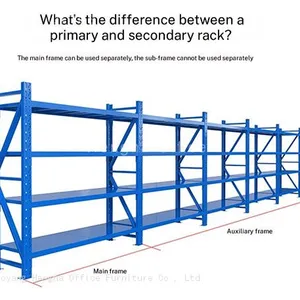
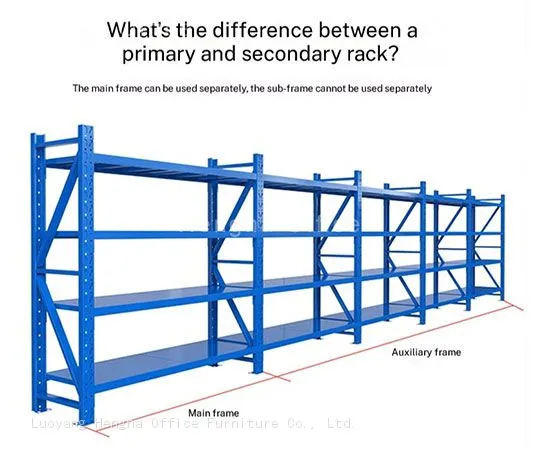
Main Frame Auxiliary Frame Steel Rack — Expand Rows, Save Column Cost, KD Pack for Bulk OrderUS$ 20 - 200MOQ: 5 Combos
-
Single-Sided Industrial Tool Organizer Trolley — Mobile Shadow Board Cart for 5S LayoutUS$ 20 - 200MOQ: 5 Combos
Why Your Warehouse Is Wasting 40% Storage Space (And How to Fix It)
Here's a harsh truth: Most warehouses think "we need more space," but what they really need is "better use of space they already have."
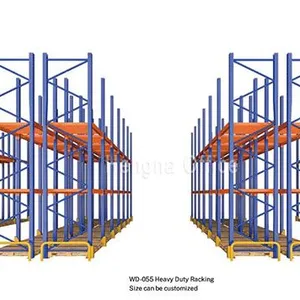
Let me give you numbers. A traditional selective pallet racking system in an 800m² warehouse typically stores around 2,000 pallets. But with the same floor space, a double deep system can store 2,800 pallets. That's 40% more inventory without expanding your warehouse.
Translation: If your warehouse rent is 80/m2/month,that′s80/m2/month,that′s64,000/month. 40% more pallets means you could potentially downsize to a 600m² warehouse (saving 19,200/month)ORkeepthesamespacebutadd19,200/month)ORkeepthesamespacebutadd25,600/month worth of additional inventory.
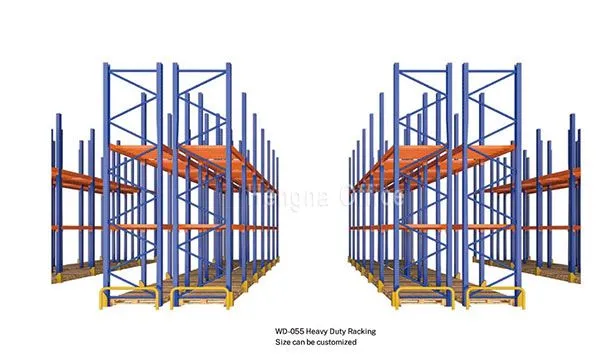
This isn't magic. It's simple math: Double deep racking puts two rows of pallets behind each other instead of one. Your aisles stay the same width, but you get double the storage depth.
But here's the catch: You need a reach truck (not a standard counterbalance forklift). If you don't have one, this won't work. No amount of "sales pitch" can change that basic requirement. We'll be honest about that upfront.
What Makes Double Deep Racking Different (Not Just Marketing Words)
A lot of suppliers call their racking "double deep" but what they really mean is "deeper beams." That's not double deep — that's just… deeper racking.
True double deep means three things:
Two rows per bay — Front row for easy access, back row for storage
Beam depth adjustment — Beams are designed to support pallets at 1100mm+ depth (standard selective is 800-1000mm)
Specialized access — Requires reach truck forks to access the back row
Our double deep specs:
Beam capacity: 1500kg per beam (two beams per level = 3000kg per level capacity)
Beam depth: 1100-1300mm (vs 800-1000mm for standard selective)
Bay width: 2400-2600mm (same as standard selective)
Aisle width: 3000-3200mm (same as standard selective)
Frame height: 2700mm, 3600mm, 4800mm (standard heights)
Compatibility: Works with all standard pallet sizes (1200×1000, 1200×800, 1000×1200mm)
Key difference: You don't change your warehouse layout. You don't need wider aisles. You just replace your existing beams with deeper ones and install frames for the second row. That's why the ROI is so good.
Double Deep vs Traditional vs Narrow Aisle (Real Comparison)
Double Deep vs Traditional Selective
Double Deep Advantages: ✅ 40% more storage — The core benefit, no warehouse expansion needed
✅ Lower risk — You can still access any pallet (unlike drive-in racking)
✅ Faster installation — Just add frames and deeper beams (no major construction)
✅ Flexible inventory — Multiple SKU types can be stored together
Double Deep Disadvantages: ❌ Slower access — Need 2 forklift movements per back pallet (reach in → get front, reach in → get back)
❌ FIFO challenges — Back pallets may be older than front ones (not ideal for perishables)
❌ Reach truck requirement — Standard forklifts can't access back row
❌ Higher upfront cost — 100% more expensive than traditional per pallet position
Double Deep vs Narrow Aisle (Drive-in)
Double Deep Advantages: ✅ Inventory flexibility — Can store multiple SKU types vs single SKU in drive-in
✅ Lower forklift cost — Reach truck 12−18kvsnarrowaisleforklift12−18kvsnarrowaisleforklift70-80k
✅ Lower risk — If one pallet is damaged, others remain accessible
✅ Better for mixed inventory — Electronics + furniture + tools all in same system
Narrow Aisle Advantages: ✅ Higher density — 15-20% more storage than double deep (no cross aisles)
✅ Faster access — Forklift drives directly into racking
✅ Better for high turnover — Daily pallet movements vs monthly
Which to choose?
Multiple SKUs, medium turnover → Double deep
Single SKU, high turnover → Narrow aisle
Very expensive real estate → Double deep (even with lower efficiency)
Who Should (And Shouldn't) Choose Double Deep
✅ Perfect for Double Deep
Scenario 1: High-Rent Urban Warehouses (Dubai, Singapore, London)
Real case: Dubai 3PL warehouse, $80/m²/month rent
Before: 800m², 2,000 pallets
After: 800m², 2,800 pallets
Annual savings: 768,000inrentORadd768,000inrentORadd256,000/month worth of inventory
ROI: 3.1 months (assuming 200k racking investment)
Scenario 2: Multiple SKU Inventory (>50 SKUs)
Real case: Mumbai electronics importer, 300 SKUs
Problem: Each SKU has low volume but high variety
Double deep solution: Store different SKUs together with flexible access
Drive-in limitation: Would need separate drive-in system for each SKU
Scenario 3: Medium Turnover (2-4 times per month)
Real case: Dubai furniture importer, 3x monthly turnover
Not suitable: Daily turnover (like e-commerce) → too slow
Perfect: Monthly/quarterly turnover → efficient access
Scenario 4: Already Have Reach Trucks
Real case: UAE third-party logistics, existing reach truck fleet
Conversion cost: Zero (already have the right equipment)
ROI: Immediate (just replace beams and add frames)
❌ Avoid Double Deep If
Scenario 1: Cold Storage (
Problem: Steel loses 20-30% strength at low temperatures
Our test: -15°C environment showed micro-cracks in beam welds
Solution: Use aluminum racking (3x cost) or skip double deep
Scenario 2: Hazardous Materials (Chemicals, Explosives)
Problem: Emergency access time exceeds safety regulations
Regulation: Most countries require 5-minute access to hazardous materials
Double deep: May exceed this time requirement
Scenario 3: High Turnover (>2x daily)
Real case: Dubai e-commerce warehouse, 500 pallets/day turnover
Problem: 2x forklift movements per pallet = 1000 movements vs 500 for traditional
Time cost: 1-2 hours extra per day
Scenario 4: Inconsistent Pallet Weights
Problem: Double deep designed for uniform load distribution
Risk: Heavy front pallets + light back pallets = frame deformation
Solution: Separate heavy/light storage or use heavy-duty double deep (50% more cost)
Installation: The Brutal Truth About "Installation Included"
Pre-Installation Prep (Learned From Mistakes)
Ground Treatment: More critical than standard racking
Real case: Riyadh client, uneven ground → 5mm frame tilt after installation
Result: Pallets sliding, goods damaged
Solution: Ground leveling required
Forklift Aisles: Safety margins matter
Standard: Aisle width = forklift width + 600mm (300mm safety each side)
Riyadh client mistake: Used narrow aisle forklift in double deep → collision
Cost: $30,000 in damaged beams
Key: Consider turning radius (double deep requires 50% more turning space)
Power Cabling: Plan for reach truck charging
Real case: Dubai warehouse, installed first, then realized charging points wrong
Rework cost: $5,000 + 2 days downtime
Recommendation: Map forklift charging routes before installation
Installation Process (2 People, 2 Days, But Watch These)
Day 1: Frame Installation
Frame verticality:
Anchor bolts: Must be grouted, not expansion bolts (earthquake risk)
Frame spacing: 2200mm + 50mm tolerance
Day 2: Beam Installation
Beam sequence: Install front row first, then back row
Safety locks: Must engage properly, torque to 80-100 N·m
Marking: Clearly mark front vs back rows (avoid picking confusion)
Maintenance Reality (What Suppliers Won't Tell You)
Monthly Checklist:
Frame plumb: Check with level, >3mm deviation = need reinforcement
Beam connections: Tighten safety locks with torque wrench
Anchor bolts: Check for loosening, grout integrity
Pallet stops: Inspect for deformation, replace if bent
Quarterly Checklist:
Weld inspection: Tap weld points, listen for hollow sounds (cracks)
Coating check: Look for rust, especially ground contact points
Forklift paths: Check for ground wear, need repair if deep
Annual Deep Check:
Load testing: Third-party lab test ($5k-8k)
Coating thickness: Measure with thickness gauge,
Forklift wear: Inspect guide wheels, replace if worn
Why We're Honest About Limitations (Building Trust)
⚠️ Double Deep Racking Has Real Limits
Not for FIFO Requirements: Food, pharmaceuticals, fast-moving consumer goods
Reason: Back pallets may expire
Real case: Dubai food client stored cereal in double deep, 5% expired after 6 months ($30k loss)
Correct solution: Use traditional or mobile racking
Not for Piece Picking: E-commerce, broken-case picking
Reason: Slow access, 2x forklift movements per pallet
Data: 100 pallets = 200 movements vs 100 for traditional
Time cost: 1-2 hours/day extra
Not for Variable Pallet Sizes: Mixed size pallets in same system
Reason: Front pallets may block back pallet access
Case: UAE client had 1.2m front pallets + 1.0m back pallets → access problems
Solution: Standardize pallet sizes or use heavy-duty double deep
We'd rather lose your business than sell you something that doesn't work. Double deep isn't magic — it's a tool for specific problems.
FAQ (The Real Questions)
Q: Double deep vs narrow aisle — which is better? ROI calculation? A: Different solutions for different problems. Double deep for flexible inventory, narrow aisle for high-volume single SKU.
ROI calculation: 800m² warehouse, 80/m2/monthrent,2,000→2,800pallets.Annualrentsavings:80/m2/monthrent,2,000→2,800pallets.Annualrentsavings:768,000. Racking investment: $200,000. Payback period: 3.1 months.
Q: Do I need special forklifts? Cost difference? A: Must use reach trucks, not standard counterbalance forklifts. Cost difference: Reach truck 12−18kvsstandard12−18kvsstandard8-12k. But double deep may reduce forklift quantity needed.
Q: Is double deep racking safe? Will it collapse? A: Safe if installed properly. Critical points:
Ground must be level (
Reach truck speed limit
Load must be uniform (not heavy front + light back)
We provide SGS/TUV certification reports.
Q: What pallet sizes can be stored? Any restrictions? A: Supports standard pallets: 1200×1000mm, 1200×800mm, 1000×1200mm. Weight limit: Single pallet ≤1500kg, optimal 800-1200kg for safety margin.
Q: Installation timeline? Will it disrupt operations? A: 800m² warehouse, 2 workers, 7 days. We install in zones, no full warehouse shutdown. You can continue operations during installation.
Q: Warranty period? Maintenance costs? A: 1-year warranty on structural issues (frame deformation, beam breaks, weld cracks). Not covered: forklift damage, ground unevenness damage, intentional damage. Repair costs: Beams 500−800/each,frames500−800/each,frames2000-3000/set, individual components replaceable (no whole system replacement).
Q: Can double deep racking be upgraded later? A: Yes. Frame design allows upgrades:
Convert to narrow aisle (add support beams)
Add more levels (4→6 levels)
Upgrade to heavy-duty modules (1500→2000kg/level)
Ready to Optimize Your Storage? Here's How
Step 1: Tell Us Your Specific Requirements
Current pallet count & pallet dimensions
Warehouse rent per m² per month
Current forklift type (can you use reach trucks?)
Special products (food, chemicals, hazardous goods?)
Step 2: We Do ROI Analysis We calculate:
Current pallets per m²
Post-installation capacity
Annual rent savings
Investment payback period
Honest assessment if double deep suits you
Step 3: Offer Sample Kit (Optional but Recommended)
1 double deep unit (2×2 levels, 2.7m high)
Value: $800, deductible from bulk order
Test load capacity, installation, access efficiency
Step 4: Custom Design & Order Based on your warehouse, we design:
Double deep layout plan
Load calculation report
Installation schedule
Delivery timeline
Request Your Free ROI Analysis → [email protected]
(Reply within 24 hours. English/Chinese/Spanish spoken. WhatsApp: +86 150 3699 8809)
P.S. We've done 100+ double deep projects from Dubai to Singapore, India to Europe. We won't tell you "any forklift works" — we give honest risk assessment. Want to save on rent? We can help. Want peace of mind? We won't sell you unsuitable solutions.

Send Inquiry to This Supplier


You May Also Like
-
Rolling Tool Rack With Color-Coded Bins — Mobile Pegboard Storage for Garage Repair ShopUS$ 20 - 200MOQ: 5 Combos
-
Modular Tool Board on Wheels — Heavy-Duty Mobile Cart With Hooks for Maintenance BaysUS$ 20 - 200MOQ: 5 Combos
-
Versatile Medium Duty Warehouse Shelving System With 300kg Adjustable Capacity| for Distribution Centers and Retail BackroomsUS$ 1 - 330MOQ: 5 Sets
-
Industrial-Grade Adjustable Shelving Unit With 300kg Load Capacity per Shelf|Hengna OEM FactoryUS$ 1 - 330MOQ: 5 Sets
-
Industrial Storage Rack 400kg Per Tier - Heavy Duty Expandable Shelving System for Warehouse & Manufacturing FacilitiesUS$ 1 - 330MOQ: 5 Sets
-
400kg Capacity Multi-Purpose Industrial Shelving Unit - Versatile Storage Solution for Supermarket, Library & Commercial SpacesUS$ 1 - 330MOQ: 5 Sets
-
Industrial Strength Shelving System 400kg Capacity Per Level - Heavy Duty Supermarket Storage Rack for Retail Space OptimizationUS$ 1 - 330MOQ: 5 Sets
-
400kg Load Capacity Industrial Racking System - Warehouse Heavy Duty Storage Unit With Butterfly Hole Plug-In DesignUS$ 1 - 330MOQ: 5 Sets
-
Multi-Layer Industrial Storage Unit 400kg Per Shelf - Space-Saving Library Shelving Solution With Freely Adjustable LayerUS$ 1 - 330MOQ: 5 Sets
-
Robust Industrial Storage Solution- Heavy Duty Medical Shelving Rack for Hospital Clinics and Healthcare FacilitiesUS$ 1 - 330MOQ: 5 Sets


