








 Contact Platform Support
 Help Center
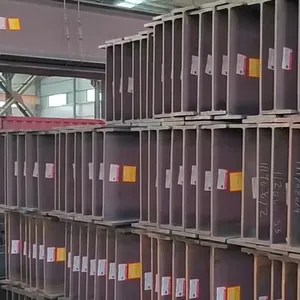
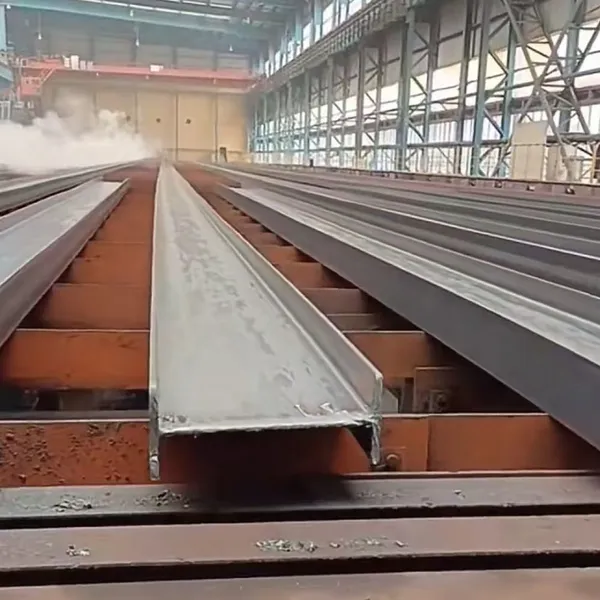
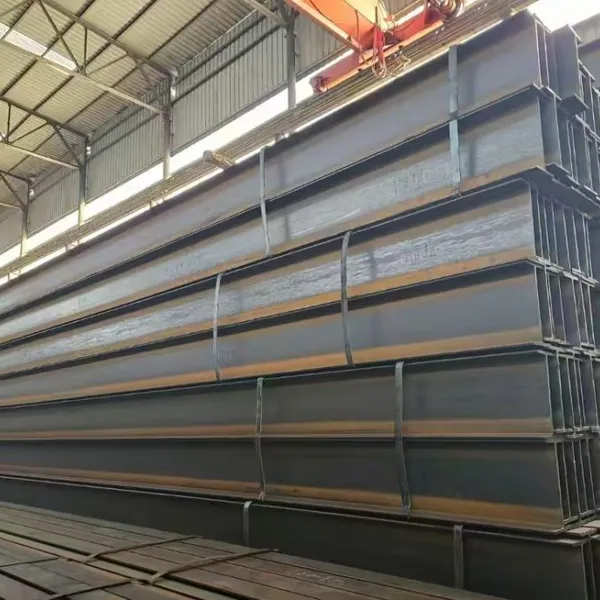
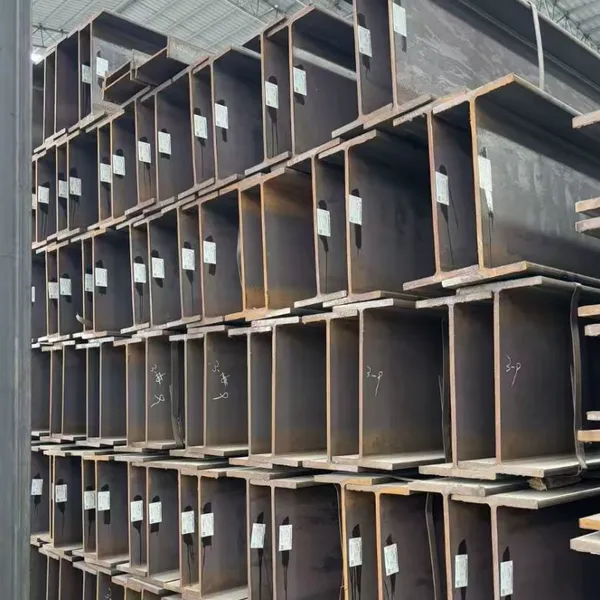
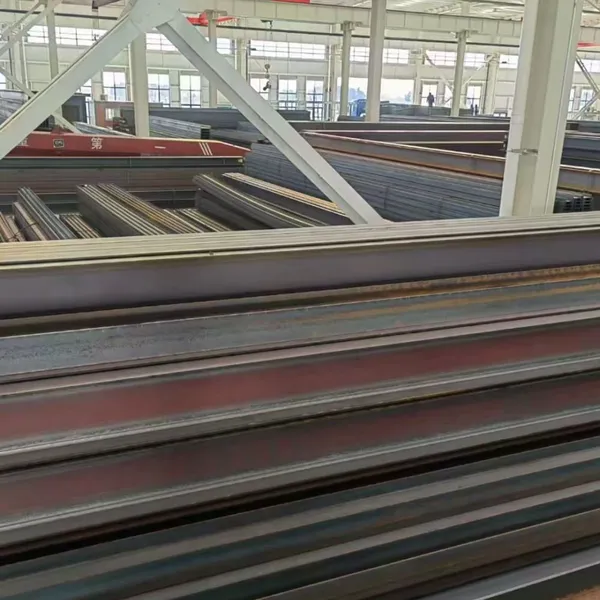
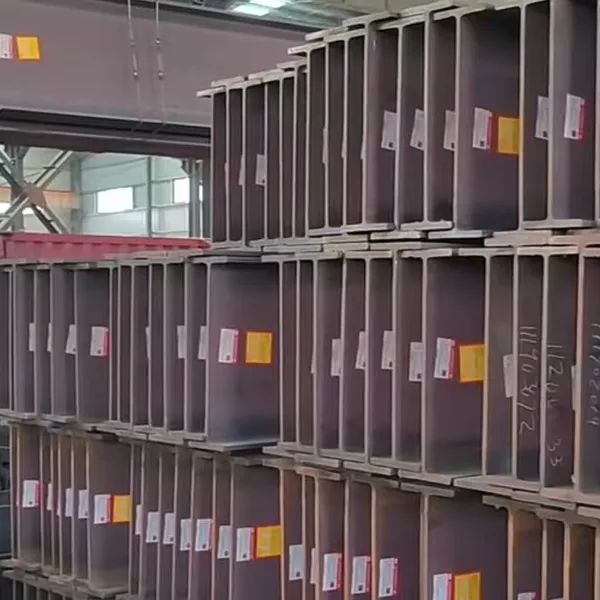
Steel H Beam & Load-Bearing H Beam,Q235B、Q355B、 Q420B、Q235C/D


Related Products
-
 Steel H Beam & H Beam In Stock,Q235B、Q355B、Q420B、SM490、SS400NegotiableMOQ: 5 Metric Tons
 -
Steel H Beam & H Beam In Stock,Q235B、Q355B、Q420B、SM490、SS400NegotiableMOQ: 5 Metric Tons
-
Steel H Beam & H Beam In Stock,Q235B、Q355B、Q420B、SM490、SS400NegotiableMOQ: 5 Metric Tons
-
Steel H Beam & H Beam In Stock,Q235B、Q355B、Q420B、SM490、SS400NegotiableMOQ: 5 Metric Tons
-
Steel H Beam & H Beam In Stock,Q235B、Q355B、Q420B、SM490、SS400NegotiableMOQ: 5 Metric Tons
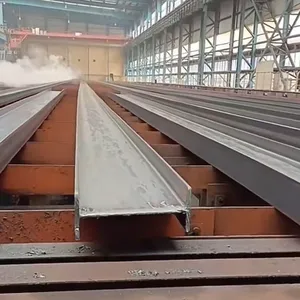
H-steel (H-Section Steel) is an efficient economic section profile with a "H"-shaped cross-section. It gets its name because its cross-section is consistent with the English letter "H", also known as wide-flange I-beam or parallel-flange I-beam. It has the core advantages of reasonable strength-to-weight ratio and excellent cross-sectional mechanical properties, and is the core material for modern steel structure projects.
I. Core Definition and Production Process
1. Cross-Section Composition
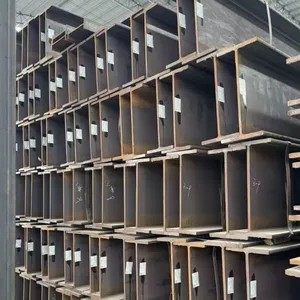
It consists of a web (waist part) and upper and lower flanges (edge parts). The inner and outer sides of the flanges are parallel, and the ends are right angles. The web is thin and the flanges are wide, which is different from ordinary I-beams.
2. Classification of Production Processes
•Hot-rolled H-steel: As the mainstream process, it is formed in one pass by high-temperature rolling, with precise dimensions, stable mechanical properties, low cost and high efficiency, suitable for mass standardized production.
•Welded H-steel: It is formed by cutting and welding steel plates, which can be customized with non-standard dimensions and large-section profiles. It has strong flexibility and is suitable for special load and special-shaped structure scenarios.
II. National Standard Classification, Material Models and Specification Dimensions (GB/T 11263-2017)
It is divided into four categories according to flange width and application. The specification is marked as "Height × Width × Web Thickness × Flange Thickness" (unit: mm). The main materials are Q235B and Q355B, which can be customized for special scenarios. The following are the details of common standard models, specifications and parameters:
1. Wide-Flange H-Steel (HW)
Feature: Flange width ≈ web height (B≈H), the cross-section is close to square, with strong bidirectional bending and torsion stiffness.
Application: Load-bearing columns of high-rise/super high-rise buildings, steel frame columns, bidirectional force beams and columns, and structures in earthquake-prone areas.
|
Material |
Model (Height × Width × Web Thickness × Flange Thickness) |
Cross-Section Height H (mm) |
Flange Width B (mm) |
Web Thickness t1 (mm) |
Flange Thickness t2 (mm) |
Theoretical Weight (kg/m) |
|
Q235B/Q355B |
HW100×100×6×8 |
100 |
100 |
6 |
8 |
17.2 |
|
Q235B/Q355B |
HW125×125×6.5×9 |
125 |
125 |
6.5 |
9 |
23.8 |
|
Q235B/Q355B |
HW150×150×7×10 |
150 |
150 |
7 |
10 |
31.9 |
|
Q235B/Q355B |
HW200×200×8×12 |
200 |
200 |
8 |
12 |
50.5 |
|
Q235B/Q355B |
HW250×250×9×14 |
250 |
250 |
9 |
14 |
72.4 |
|
Q235B/Q355B |
HW300×300×10×15 |
300 |
300 |
10 |
15 |
94.5 |
|
Q235B/Q355B |
HW400×400×14×20 |
400 |
400 |
14 |
20 |
172 |
2. Medium-Flange H-Steel (HM)
Feature: Flange width is slightly less than web height (B≈0.75H), achieving a balance between bearing capacity and economy.
Application: Beams and columns of heavy industrial plants, large equipment supports, bridge load-bearing components, and secondary frames of high-rise buildings.
|
Material |
Model (Height × Width × Web Thickness × Flange Thickness) |
Cross-Section Height H (mm) |
Flange Width B (mm) |
Web Thickness t1 (mm) |
Flange Thickness t2 (mm) |
Theoretical Weight (kg/m) |
|
Q235B/Q355B |
HM150×100×6×9 |
150 |
100 |
6 |
9 |
21.4 |
|
Q235B/Q355B |
HM200×150×6.5×9 |
200 |
150 |
6.5 |
9 |
31.9 |
|
Q235B/Q355B |
HM250×175×7×11 |
250 |
175 |
7 |
11 |
44.1 |
|
Q235B/Q355B |
HM300×200×8×12 |
300 |
200 |
8 |
12 |
57.7 |
|
Q235B/Q355B |
HM350×250×9×14 |
350 |
250 |
9 |
14 |
79.8 |
|
Q235B/Q355B |
HM500×300×11×18 |
500 |
300 |
11 |
18 |
139 |
3. Narrow-Flange H-Steel (HN)
Feature: Flange width ≈ 1/2 of web height (B≈0.5H), "slender and tall type", with outstanding bending resistance and light weight.
Application: Main beams of industrial plants, floor beams, large-span trusses, wall supports, and light steel structure beams.
|
Material |
Model (Height × Width × Web Thickness × Flange Thickness) |
Cross-Section Height H (mm) |
Flange Width B (mm) |
Web Thickness t1 (mm) |
Flange Thickness t2 (mm) |
Theoretical Weight (kg/m) |
|
Q235B/Q355B |
HN150×75×5×7 |
150 |
75 |
5 |
7 |
13.5 |
|
Q235B/Q355B |
HN250×125×6×9 |
250 |
125 |
6 |
9 |
28.2 |
|
Q235B/Q355B |
HN300×150×6.5×9 |
300 |
150 |
6.5 |
9 |
37.3 |
|
Q235B/Q355B |
HN400×200×8×13 |
400 |
200 |
8 |
13 |
66.0 |
|
Q235B/Q355B |
HN600×300×10×16 |
600 |
300 |
10 |
16 |
120 |
4. Pile H-Steel (HP)
Feature: Wide flanges, large thickness, high cross-sectional moment of inertia, and strong compression and lateral displacement resistance.
Application: Foundation steel piles, foundation pit support piles, dike reinforcement, port and terminal foundations, and underground engineering support.
|
Material |
Model (Height × Width × Web Thickness × Flange Thickness) |
Cross-Section Height H (mm) |
Flange Width B (mm) |
Web Thickness t1 (mm) |
Flange Thickness t2 (mm) |
Theoretical Weight (kg/m) |
|
Q235B/Q355B |
HP200×200×10×16 |
200 |
200 |
10 |
16 |
63.6 |
|
Q235B/Q355B |
HP300×300×12×18 |
300 |
300 |
12 |
18 |
108 |
|
Q235B/Q355B |
HP350×350×14×20 |
350 |
350 |
14 |
20 |
144 |
|
Q235B/Q355B |
HP400×400×16×22 |
400 |
400 |
16 |
22 |
187 |
5. Supplementary Core Parameters and Tolerances
•Material Extension: In addition to the mainstream Q235B and Q355B, Q420B (high strength), Q235C/D (resistant to -20℃/-40℃ low temperature), and Q355NHD (weathering steel, suitable for outdoor and coastal areas) can be customized for special scenarios.
•Dimension Tolerance: Height ±3.0mm, flange width ±3.0mm, web thickness ±0.7mm; bending degree ≤1.5mm/m, total bending degree ≤0.15% of total length.
•Length Specification: Regular lengths are 6m, 9m, and 12m; any length from 6m to 18m can be customized (production needs to be communicated in advance).
III. Core Performance Advantages
•Excellent Mechanical Properties: The section modulus and moment of inertia are much higher than those of ordinary I-beams of the same weight. It has strong bending, torsion and compression resistance, the bearing capacity is increased by 30%-50%, and metal is saved by 10%-40%.
•Light Weight and Low Cost: Compared with reinforced concrete structures, the self-weight is reduced by 50%-70%, the foundation engineering quantity is reduced, and the comprehensive cost is reduced by 10%-20%.
•Efficient Construction: The flanges are parallel and the ends are right angles, which is convenient for welding and bolt assembly. The workload of connectors is reduced by 25%, dry construction is adopted, noise is low, and the construction period is shortened by more than 30%.
•Strong Seismic Resistance: The steel structure has good toughness and strong deformation capacity, which can absorb energy during earthquakes, reduce the risk of collapse, and is suitable for earthquake-prone areas.
•High Space Utilization Rate: Large span and small component section increase the building usable area by 5%-8%, suitable for large-span plants, exhibition halls and high-rise buildings.
•Green and Environmentally Friendly: Steel can be 100% recycled and reused, with no dust and less pollution during construction, meeting the requirements of green buildings.
IV. Main Application Scenarios
•Building Steel Structure: Frame beams and columns of high-rise/super high-rise buildings (office buildings, residential buildings), industrial plants (main steel structure frames, roof beams, crane beams), large-span public buildings (gymnasiums, convention and exhibition centers, airport terminals).
•Transportation Engineering: Main beams, piers, supports of highways/railway bridges, highway guardrails, and ship skeletons.
•Industrial Equipment: Heavy machinery supports, blast furnace body frames, power plant/chemical plant equipment supports, mine support, and offshore oil platforms.
•Foundation Engineering: Foundation steel piles, foundation pit support, dike reinforcement, port and terminal foundations, and underground comprehensive pipe gallery support.
V. Materials and Surface Treatment
1. Detailed Description of Common Materials
•Q235B: Ordinary carbon steel with moderate strength, good toughness and low price, yield strength ≥235MPa, suitable for normal temperature and non-heavy load scenarios (such as ordinary plants and low-rise buildings).
•Q355B: Low-alloy high-strength steel, whose strength is 40% higher than that of Q235B, with low temperature resistance (-20℃ impact qualified) and corrosion resistance, suitable for heavy plants, high-rise buildings, bridges and engineering in low temperature areas.
•Special Materials: Q420B (yield strength ≥420MPa, high-strength scenarios), Q235C/D (resistant to -20℃/-40℃ low temperature, severe cold areas), Q355NHD (weathering steel, resistant to atmospheric and seawater corrosion, outdoor and coastal engineering).
2. Surface Treatment
•Black Skin (Hot-Rolled Original Color): Lowest cost, suitable for indoor dry environment, requiring regular anti-rust maintenance.
•Anti-Rust Paint/Corrosion-Resistant Paint: Spraying epoxy zinc-rich paint and polyurethane paint, which are anti-rust and corrosion-resistant, suitable for outdoor and humid environments.
•Hot-Dip Galvanizing: Thick galvanized layer, strong adhesion, corrosion-resistant service life of more than 20 years, suitable for strong corrosion scenarios such as coastal areas, chemical industry and mines.
•Shot Blasting Derusting: Remove surface scale and rust, improve coating adhesion, and enhance anti-corrosion effect.
VI. Packaging, Transportation and Storage
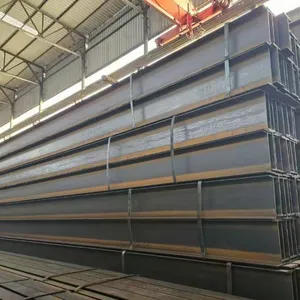
•Packaging: Hot-rolled H-steel is usually packaged in bundles (2-5 tons per bundle), fixed with straps at both ends, marked with specifications, materials and batch numbers; welded H-steel is packaged individually to avoid deformation.
•Transportation: Road transportation/sea transportation, padded and fixed during loading to avoid collision and bending; extra-long specifications (>12m) need special vehicles for transportation.
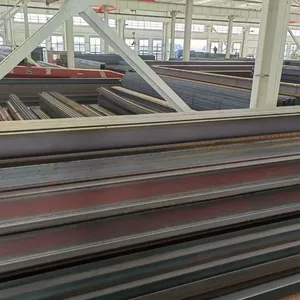
•Storage: Store in a dry and ventilated indoor warehouse, padded with I-beams/square tubes at the bottom, more than 100mm above the ground to avoid moisture and rust; stack different specifications and materials separately to avoid mixing.
VII. Quality Standards and Acceptance
1. Implementation Standards
GB/T 11263-2017 "Hot-Rolled H-Section Steel and Split T-Section Steel", GB/T 706-2016 (Dimension and Shape), GB/T 1591-2018 (Low-Alloy High-Strength Steel).
2. Acceptance Items
•Appearance: No cracks, scars, folds or rust on the surface, no burrs or deformation at the ends.
•Dimensions: Measure height, width, web/flange thickness with calipers and tape measure, which meet the tolerance requirements.
•Material: Check the material certificate (heat batch number, chemical composition, mechanical properties), and conduct sampling re-inspection (tensile and impact tests) if necessary.
•Weight: Weigh by scale, the deviation between theoretical weight and actual weight ≤±5%.

Send Inquiry to This Supplier



You May Also Like
-
Steel H Beam & H Beam In Stock,Q235B、Q355B、Q420B、SM490、SS400NegotiableMOQ: 5 Metric Tons
-
Steel H Beam & H Beam In Stock,Q235B、Q355B、Q420B、SM490、SS400NegotiableMOQ: 5 Metric Tons
-
Steel H Beam & H Beam In Stock,Q235B、Q355B、Q420B、SM490、SS400NegotiableMOQ: 5 Metric Tons
-
Steel H Beam & H Beam In Stock,Q235B、Q355B、Q420B、SM490、SS400NegotiableMOQ: 5 Metric Tons
-
Steel H Beam & H Beam In Stock,Q235B、Q355B、Q420B、SM490、SS400NegotiableMOQ: 5 Metric Tons
-
Steel Angle & Thickened Angle Steel,GB/T 706-2016、GB/T 2101-2017、GB/T 700、GB/T 1591NegotiableMOQ: 5 Metric Tons
-
Steel Angle & Thickened Angle Steel,GB/T 706-2016、GB/T 2101-2017、GB/T 700、GB/T 1591NegotiableMOQ: 5 Metric Tons
-
Steel Angle & Thickened Angle Steel,GB/T 706-2016、GB/T 2101-2017、GB/T 700、GB/T 1591NegotiableMOQ: 5 Metric Tons
-
Steel Angle & Thickened Angle Steel,GB/T 706-2016、GB/T 2101-2017、GB/T 700、GB/T 1591NegotiableMOQ: 5 Metric Tons
-
Steel Angle & Thickened Angle Steel,GB/T 706-2016、GB/T 2101-2017、GB/T 700、GB/T 1591NegotiableMOQ: 5 Metric Tons


