








 Contact Platform Support
 Help Center
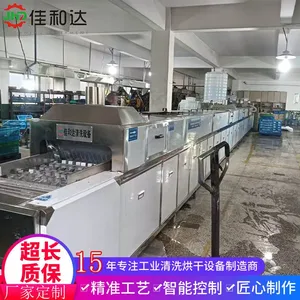
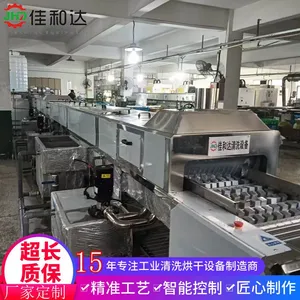
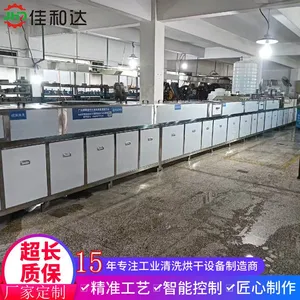
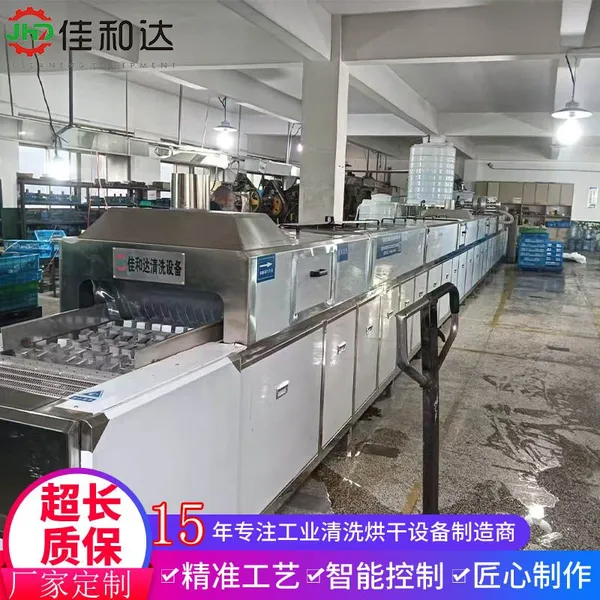
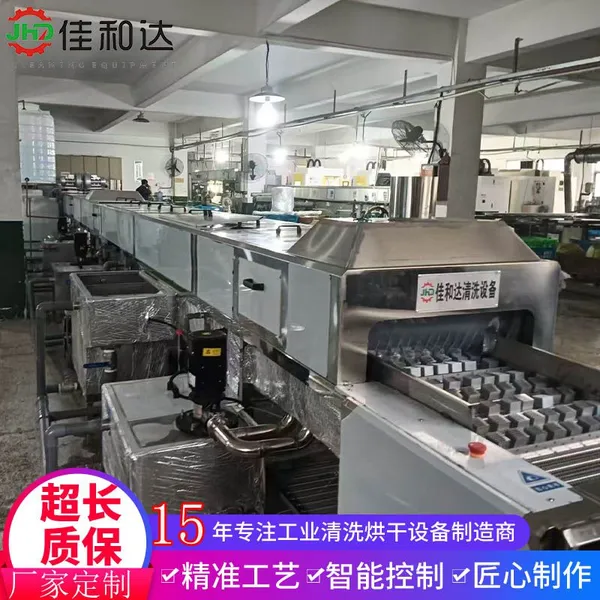
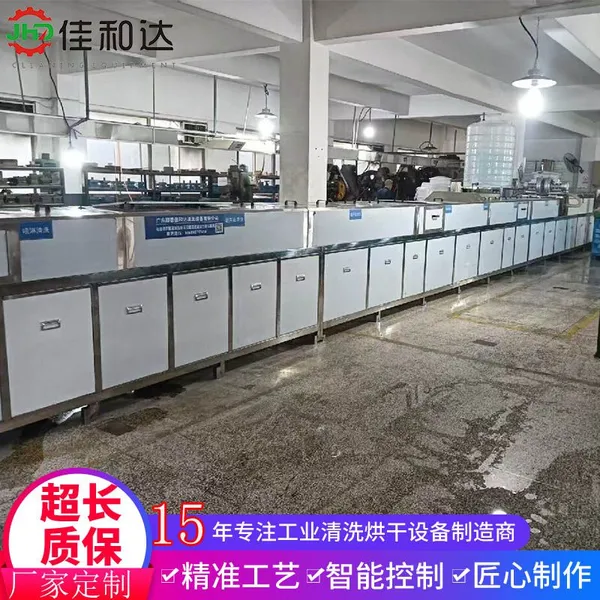
Radiator-through Ultrasonic Cleaning and Drying Line
Product Spotlights
2.Neutral formula, no damage, no discoloration, no corrosion for aluminum & copper-aluminum radiators.



Related Products
-
 Automatic Through Type Ultrasonic CleaningNegotiableMOQ: 1 Piece
 -
Full Automatic Servo Step Conveyor Ultrasonic Cleaning Machine With Rinsing & Hot Air Drying SystemNegotiableMOQ: 1 Piece
-
Industrial Ultrasonic Cleaning Machine for EV Battery Aluminum Sheets, Remove Oil & Aluminum Dust Without Water SpotsNegotiableMOQ: 1 Combo
-
High-efficiency Continuous Sprinkler Cleaning Line of Turnover BoxNegotiableMOQ: 1 Piece
-
Terminal Block Cleaning DryerNegotiableMOQ: 1 Piece
I. Overview of equipment
The radiator-through ultrasonic cleaning machine is an industrial cleaning equipment specially designed for batch, high-efficiency and automatic cleaning of all kinds of radiators. It mainly targets the characteristics of the complex structure of the radiator (such as dense fins and internal waterways), and combines the automation advantages of pass-through transmission and the deep cleaning ability of the ultrasonic caviation effect. It can completely remove the oil, metal debris, polishing paste, dust and other pollutants left by the radiator during the production process to ensure heat dissipation. The cleanliness of the device before assembly, so as to ensure its heat dissipation performance.
II. Main application objects
· Aluminum/copper CPU radiator
· Graphics card heat dissipation module
· Water-cooled radiator (cold drain)
· Electric power electronics radiator
· Car intercooler and water tank
· Other metal parts with complex geometric structures
III. Core working principle
The core cleaning principle of this equipment is ultrasonic catation, combined with multi-stage spraying and drying process.
1. Ultrasonic cleaning:
· The equipment tank is equipped with an ultrasonic transducer, and its high-frequency electrical signal (usually 28kHz or 40kHz) is converted into high-frequency mechanical vibration through the transducer.
· These vibrations spread in the cleaning liquid, producing countless tiny vacuum bubbles ("cavited bubbles"). These bubbles form rapidly under pressure changes and burst violently.
· The implosion will generate a local high-pressure and high-speed microjet of more than 1,000 atmospheres in an instant, impacting every surface of the radiator, including between the fins and the fins, the roots of the welding point and other brushes or blind areas that are hard to reach by spraying, thus peeling off and shattering stubborn stains.
2. Pass-through automation:
· The radiator is placed on a special tray or fixture, driven by a set of adjustable-speed transmission system (usually a motor-driven chain or mesh belt), and passed through the various functional chambers of the washing machine in turn.
· The whole process does not require manual intervention, and continuous assembly line operation is realized, which greatly improves production efficiency.
IV. Core components and technological processes of the equipment
A standard pass-through ultrasonic cleaning machine usually contains the following core parts and runs according to the preset process:
Standard process flow: loading → ultrasonic rough washing → ultrasonic washing → circulating spraying and rinsing → cutting/blowing → hot air drying → unloading
1. Feeding area:
· The operator places the radiator to be cleaned on the tray of the conveyor belt.
2. Cleaning section (core area):
· Ultrasonic coarse washing tank:
· Function: Remove most of the heavy oil stains and large particles. The trough is equipped with a high-power ultrasonic vibrating plate and a high-power heating tube (usually heated to 50-65°C).
· Cleaning agent: Use alkaline or neutral industrial cleaning agent, combined with ultrasound, to achieve preliminary strong decontamination.
· Equipped with: oil-water separator or oil skinker, which is used to automatically remove floating oil on the liquid surface and extend the life of the cleaning liquid.
· Ultrasonic washing tank:
· Function: Carry out deep cleaning to remove residual trace oil stains and impurities. Make sure that the surface of the radiator is highly clean.
· Environment: The cleaning liquid of this tank is cleaner than that of the coarse washing tank, and the temperature may be slightly lower.
· Equipped with: independent filtration and circulation system, the filter core continuously filters the suspended particles in the cleaning liquid.
3. Rinsing section:
· Circulating spray rinsing tank/room:
· Function: Use pure water (or deionized water) to spray the radiator in an all-round way through the nozzle of multiple angles to wash away the residual cleaning liquid and the dirt that has been peeled off on its surface.
· Purpose: To prevent the cleaning agent from forming white spots or scale on the surface of the workpiece.
· Equipped with: continuous circulation and filtration system to keep the rinse water clean.
4. Dry section:
· Water cutting/strong wind drying room:
· Function: Blow away most of the water droplets on the surface and gaps of the radiator through the high-speed airflow generated by multiple sets of high-pressure fans. This is crucial to prevent dense fins from water storage.
· Hot air drying room:
· Function: Built-in high-efficiency electric heating tube and high-temperature fan to produce continuous and uniform hot air.
· Purpose: Evaporate the residual trace amount of water to ensure that the radiator is completely dry without any water stains, and can directly enter the next production process.
5. The unloading area:
· The cleaned and dried radiator is sent out with the conveyor belt, which is removed by the operator or automatically palletized by the robotic arm.
6. Control system:
· Core: PLC (Programmable Logic Controller) + Human-Computer Interface Touch Screen.
· Function:
· Set and control the speed of the conveyor belt, the temperature of each slot, the ultrasonic power and the drying temperature.
· Monitor the operating status, liquid level, temperature and other parameters of the equipment in real time.
· It has safety functions such as fault alarm and emergency stop.
· A variety of radiator cleaning programs can be stored and called with one click.
V. Main technical characteristics and advantages
1. Thorough cleaning, no dead angle: Ultrasound can penetrate small gaps, and the cleaning effect is incomparable to traditional manual brushing or simple spraying.
2. High efficiency and automation: Continuous mass production is realized through design, which significantly reduces labor and improves production capacity.
3. No damage to the workpiece: Physical cleaning avoids mechanical damage or deformation to the precise and fragile heat dissipation fins.
4. High consistency: Each product has undergone exactly the same cleaning process, and the quality is stable and reliable.
5. Environmental protection and energy saving:
· Most equipment is designed with cleaning liquid filtration, circulation and recycling systems to reduce waste liquid discharge and chemical consumption.
· Heating systems and ultrasonic power supply usually adopt energy-saving design.
6. Easy to operate: Humanized control interface, operators can start work after simple training.
VI. Factors for selection and customization
When purchasing or customizing such equipment, the following parameters should be clarified:
· Radiator size: determine the width and height of the conveyor belt of the equipment.
· Capacity requirements: Determine the speed and overall length of the conveyor belt.
· Type of pollutant: determine the formula and cleaning process of the cleaning agent.
· Cleanliness standard: determine the number of stages and filtration accuracy of the cleaning section and the rinsing section.
· Site restrictions: Determine the overall layout of the equipment (linear, U-shaped, etc.).
· Public facilities: clarify the demand for electricity, compressed air, pure water/deionized water.

Send Inquiry to This Supplier


You May Also Like
-
Sink Cleaning and Drying LineNegotiableMOQ: 1 Piece
-
Mold Cleaning LineNegotiableMOQ: 1 Piece
-
Bearing Drill Cleaning EquipmentNegotiableMOQ: 1 Piece
-
An Eco-friendly Pallet Washing Machine With Water Circulation Filtration.US$ 10000 - 15000MOQ: 1 Piece
-
Five-slot Semi-automatic Ultrasonic Cleaning MachineNegotiableMOQ: 1 Piece
-
Single-slot Machine With Lifting and ThrowingNegotiableMOQ: 1 Piece
-
Stove Hanging Cleaning LineNegotiableMOQ: 1 Piece
-
Flat Cleaning DryerNegotiableMOQ: 1 Piece
-
Dual-tray Ultrasonic Cleaning MachineNegotiableMOQ: 1 Piece
-
Single-slot Ultrasonic Cleaning MachineNegotiableMOQ: 1 Piece


